Archive / listen
Listen
500 narrated stories. Play them all or start from any one; the player keeps going while you read other pages.
-
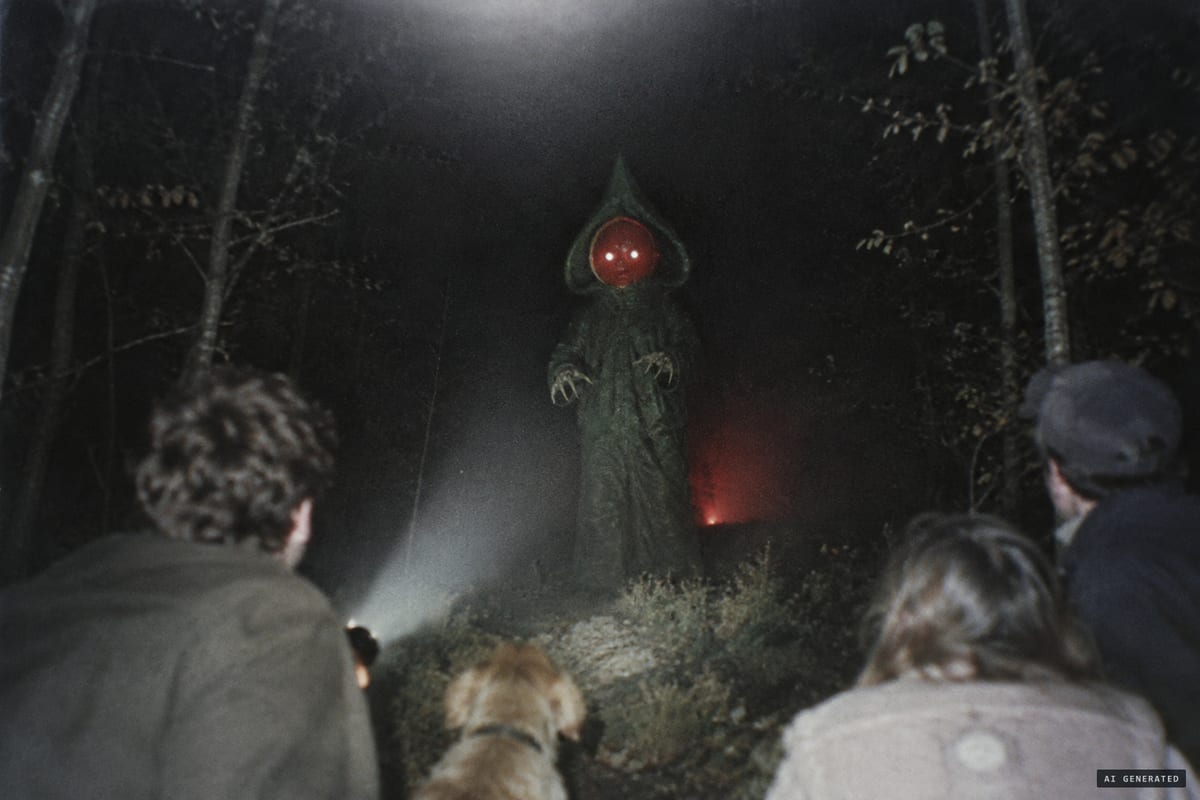 The Flatwoods Monster
September 12, 1952. Flatwoods, West Virginia. Three boys watched a bright object cross the evening sky and seem to come down on a hillside farm. Kathleen May led a group up the hill, among them a 17-year-old National Guardsman and the family dog. Near the top, a red light pulsed. They walked into a foul-smelling mist.
-
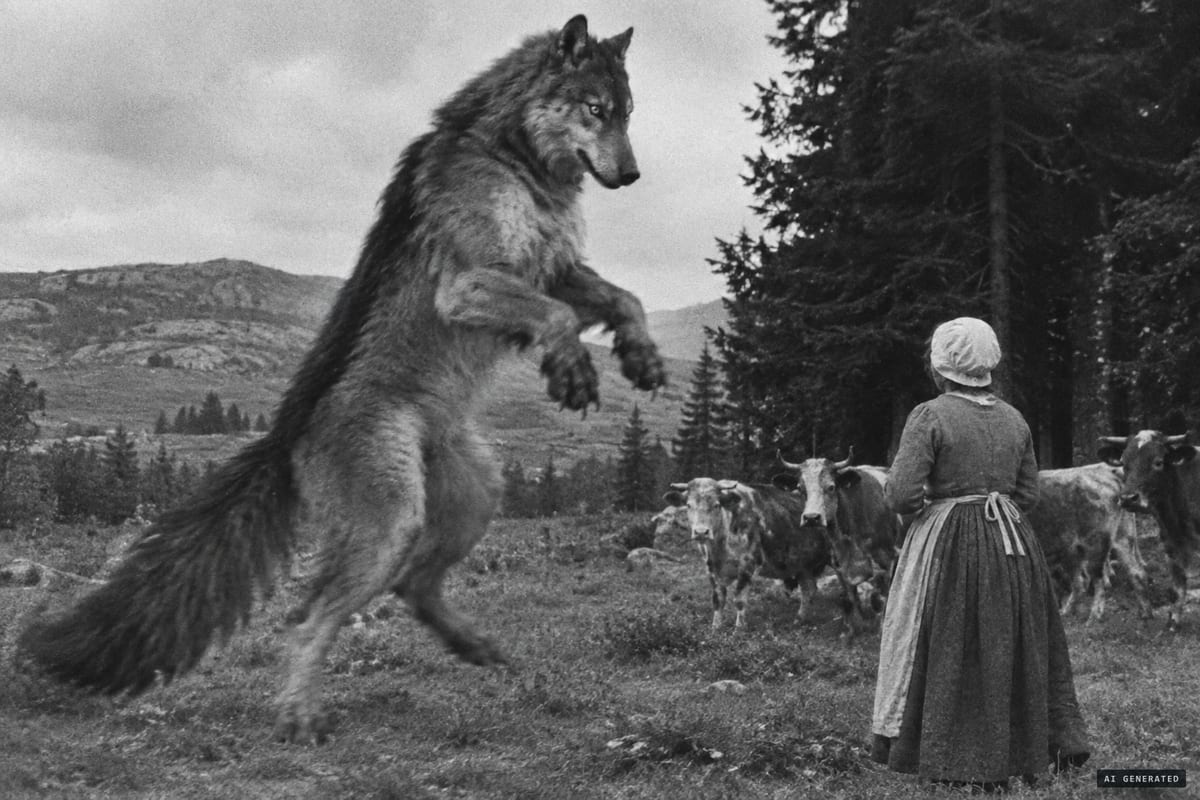 The Beast of Gévaudan
June 1764. A young woman tending cattle in the Mercoire Forest near Langogne saw a beast come at her. "Like a wolf, yet not a wolf." Her herd defended her.
-
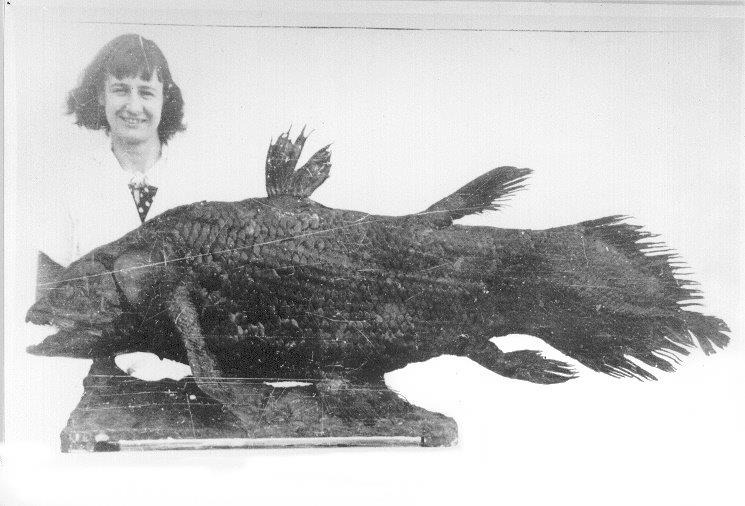 The first modern coelacanth: the Nerine's catch off East London, 1938
December 1938. A trawler off South Africa's eastern coast hauled up a fish no one aboard could name. Five feet long. Steely blue. Coated in heavy scales, with fins like limbs. When the captain touched it, it heaved itself up and snapped at his hand.
-
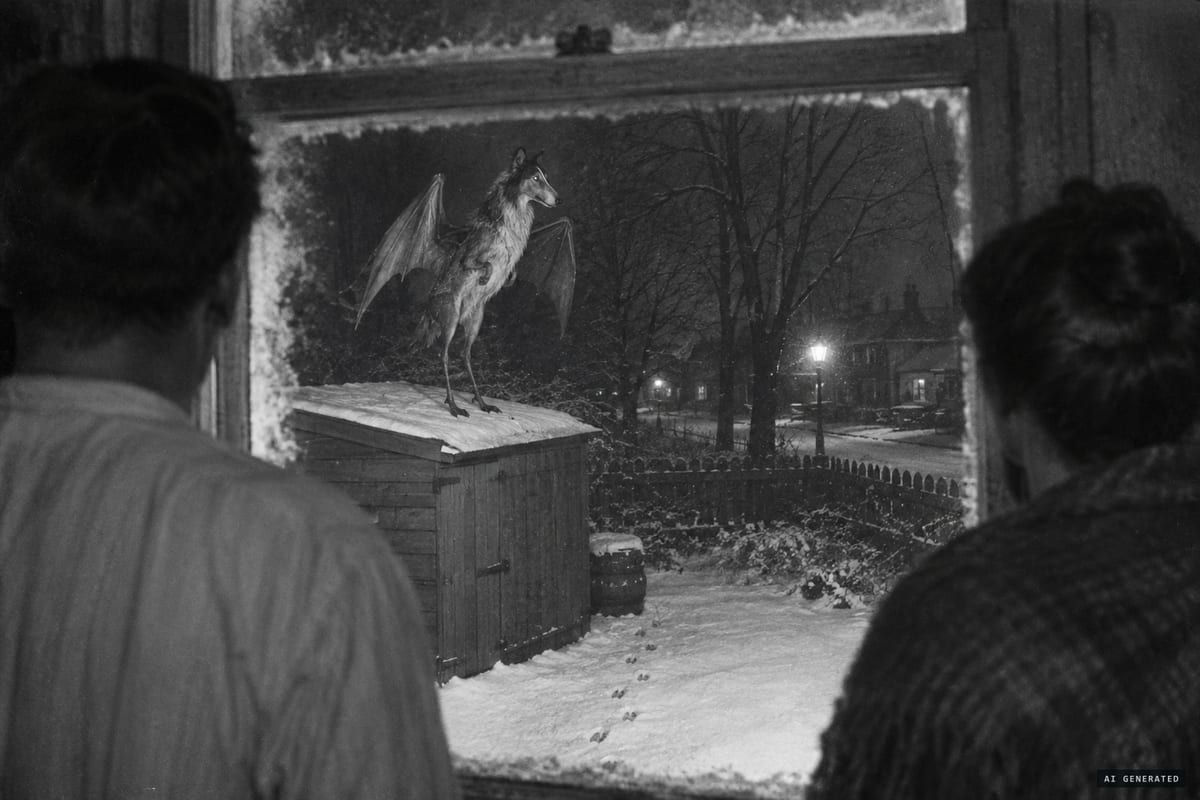 Phenomenal Week: the 1909 Jersey Devil sighting wave
January 1909. Bristol, Pennsylvania. Around two in the morning, a patrolman on Buckley Street saw a peculiar animal. It hopped like a bird. It let out a terrible scream. He fired his revolver twice.
-
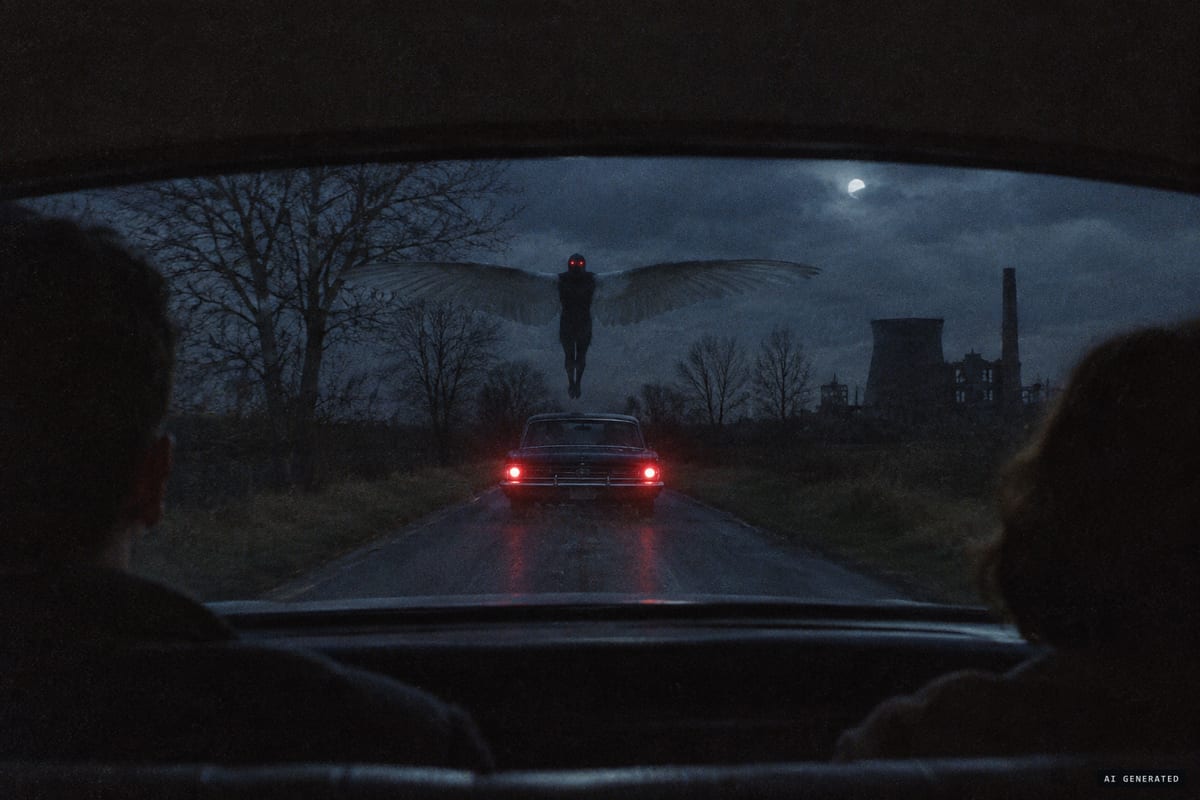 The Mothman of Point Pleasant
November 15, 1966. Close to midnight. Two young couples from Point Pleasant, West Virginia, were in the TNT area, an old wartime munitions works north of town. Near the old power plant, they saw something. It was shaped like a man, six or seven feet tall, with wings. Its red eyes were six inches apart. They drove away fast. It followed, gliding over their car at about 100 miles an hour.
-
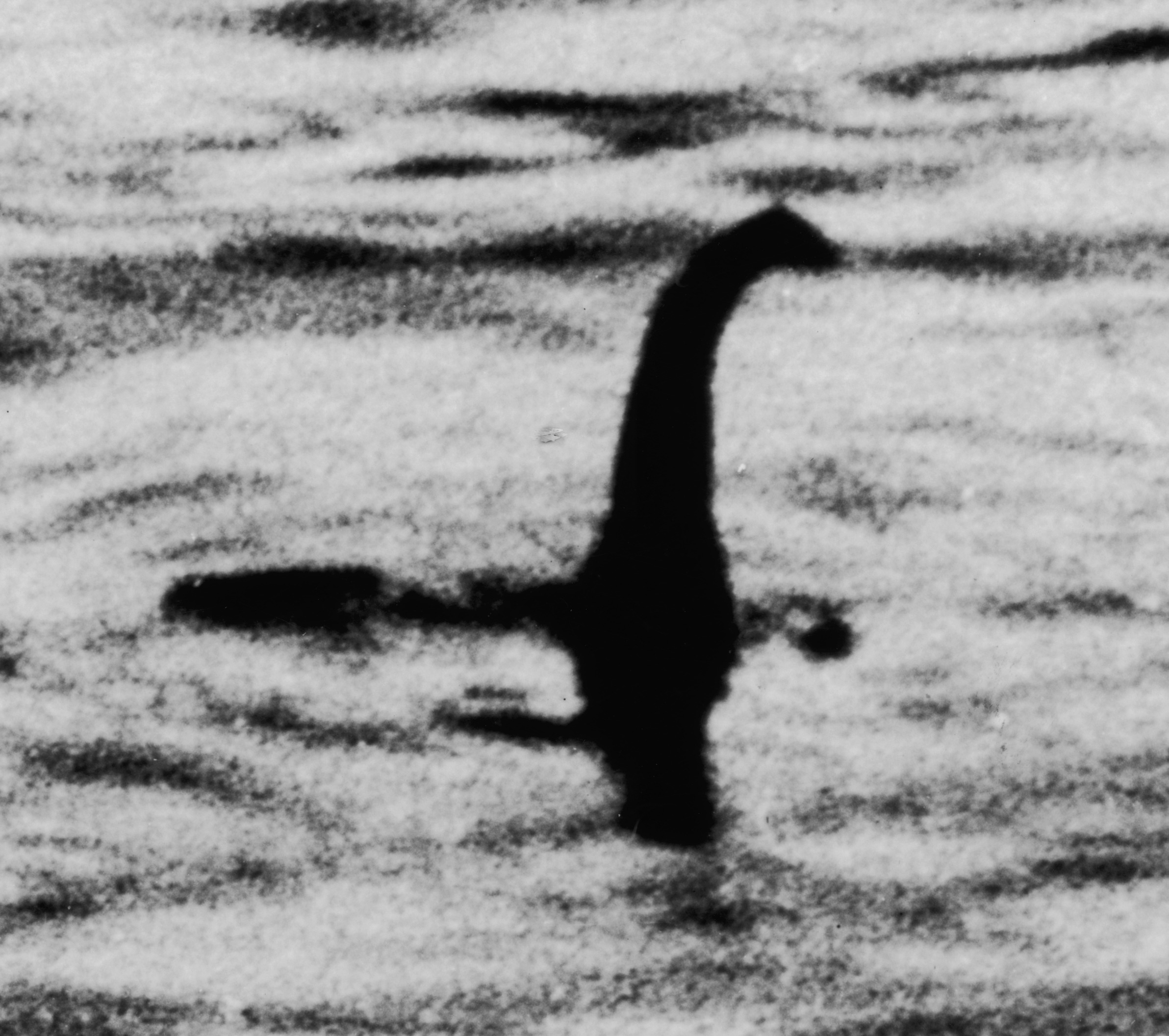 Loch Ness Monster: the Surgeon's Photograph
April 1934. A London surgeon was on the north shore of Loch Ness. Robert Kenneth Wilson said he noticed a considerable commotion on the surface, perhaps two or three hundred yards out. Then something broke the surface. A small head. A slender neck, swan-like, rising about three feet above the loch. He made four exposures. By then the object had completely disappeared.
-
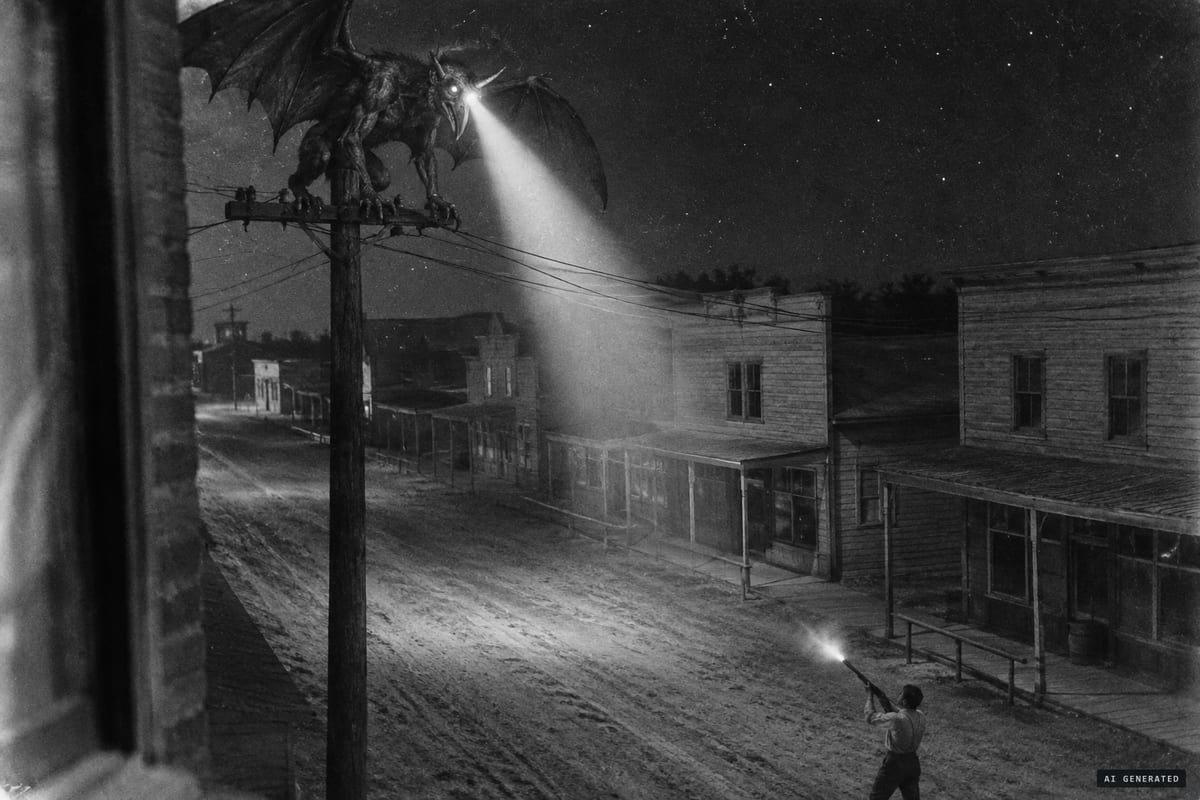 The Van Meter Visitor
Van Meter, Iowa. Autumn 1903. A coal town of about 1,000 people, its mine played out.
-
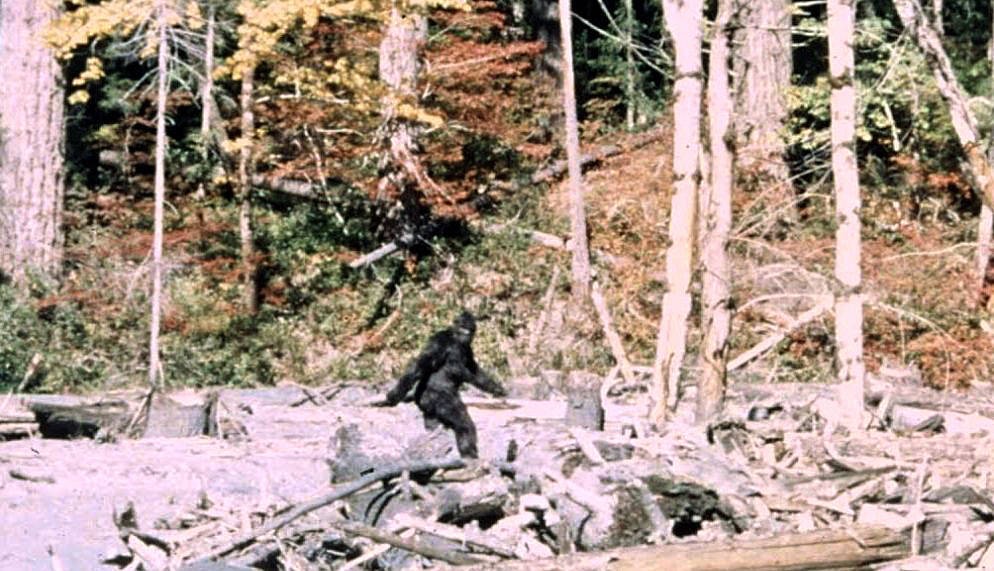 The Patterson-Gimlin Bigfoot Film
October 20, 1967. Early afternoon on Bluff Creek, deep in the Six Rivers National Forest of northern California. Two former rodeo riders from Yakima, Roger Patterson and Bob Gimlin, round an overturned tree on horseback. Across the creek, something is standing. The horses spook. Patterson grabs his rented 16 mm camera and runs.
-
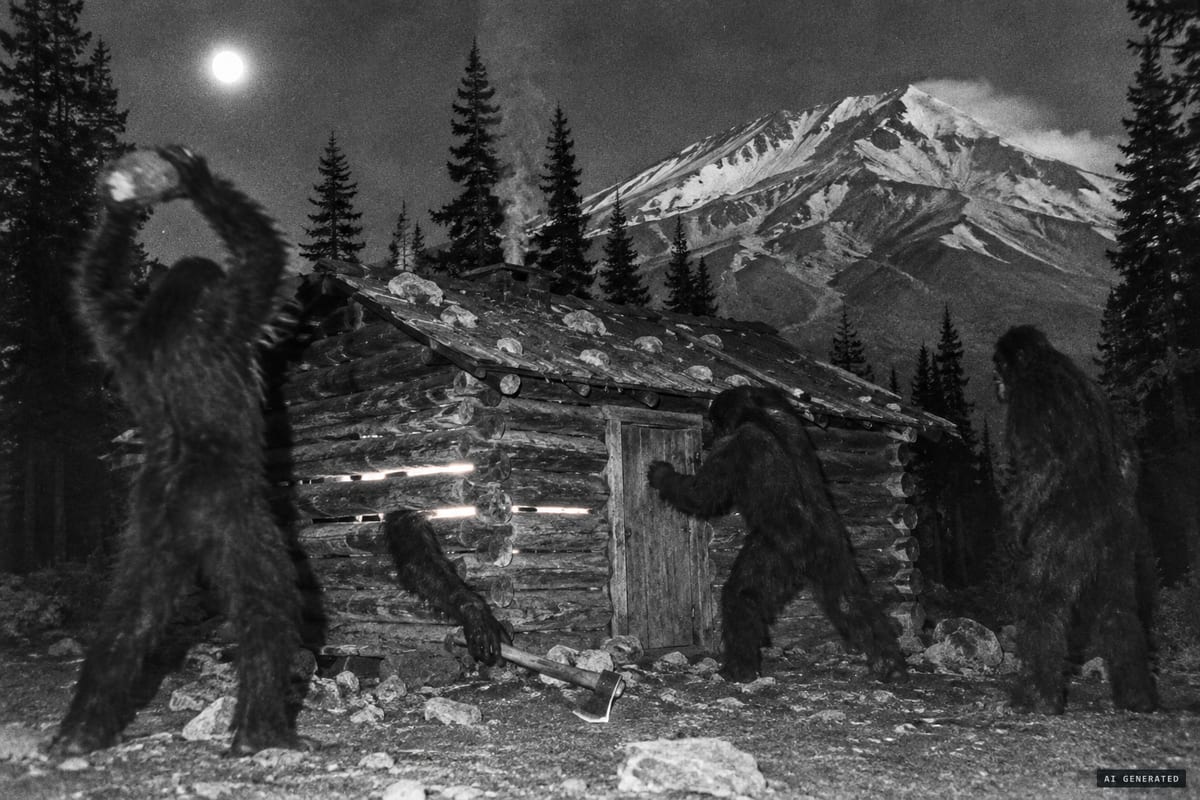 The Battle of Ape Canyon
July 1924. Mount St. Helens. Five gold prospectors had spent days hearing whistles and booming thumps in the dark around their log cabin. Then two of them saw it. A hairy creature, seven feet tall, standing by a pine tree. They opened fire.
-
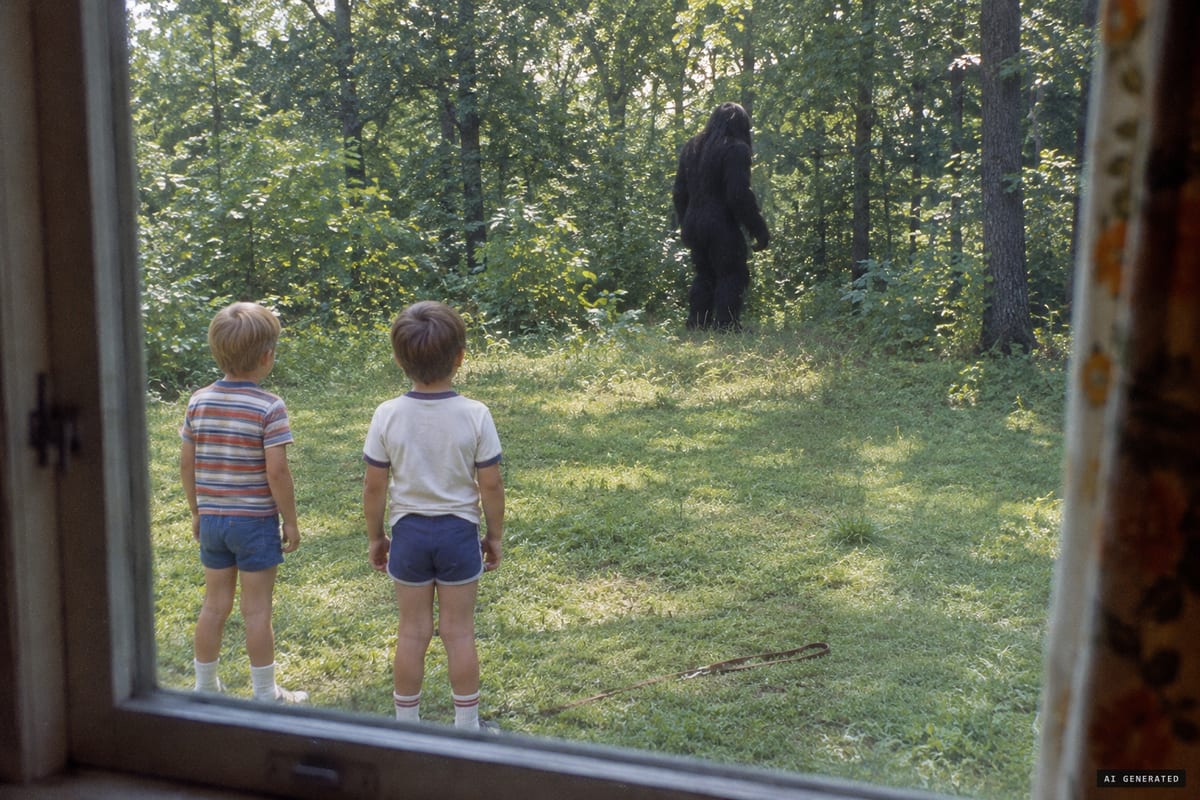 Momo, the Missouri Monster: the Harrison sighting on Marzolf Hill
11 July 1972. Louisiana, Missouri. Fifteen-year-old Doris Harrison heard her little brothers scream in the yard. She looked out the window. At the edge of the woods stood something about 7 feet tall. Black. Shaggy. It stood like a man. Under one arm it held a dead dog. A putrid smell drifted into the house.
-
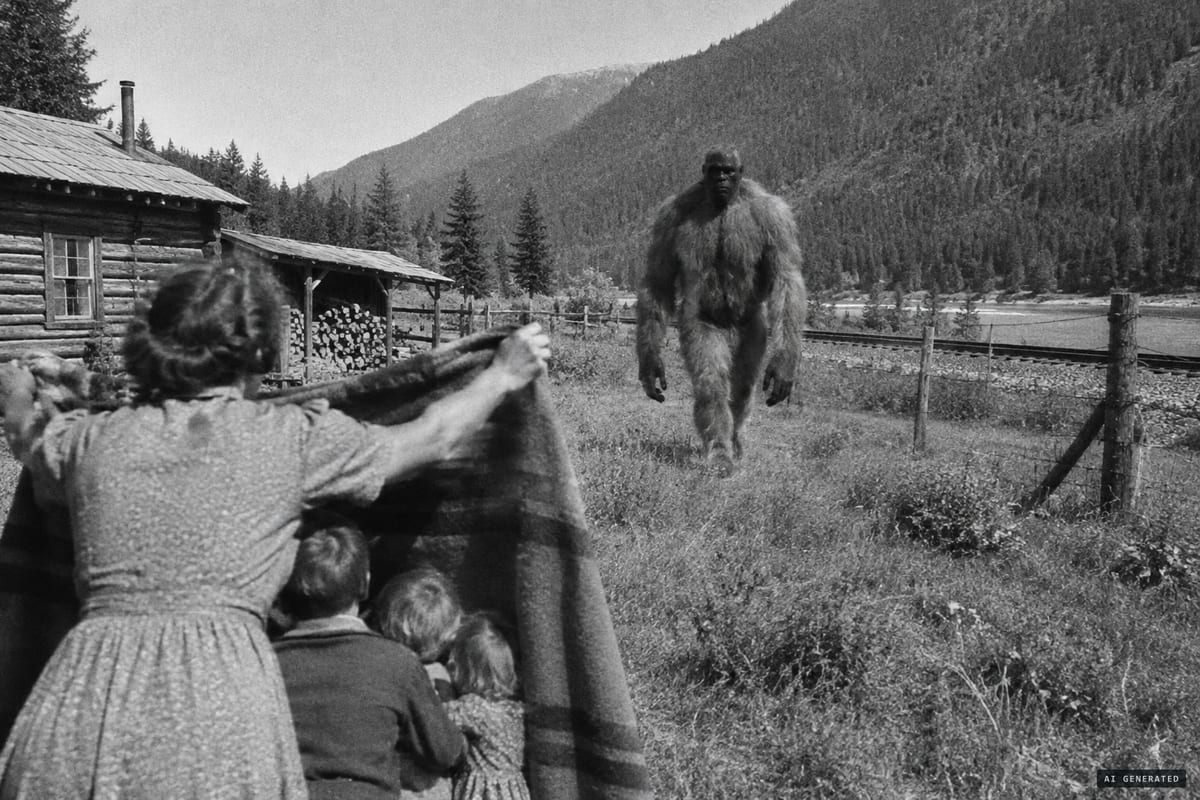 Jeannie Chapman and the Ruby Creek Sasquatch
British Columbia. 1941. A sunny afternoon on the Fraser River, near the small settlement of Ruby Creek. Jeannie Chapman's eldest son ran in to say a cow was coming down out of the woods. It was not a cow. Jeannie saw a huge man covered in hair, about 7½ feet tall, walking straight toward the house.
-
 The Dover Demon
April 21, 1977. Dover, Massachusetts. A quiet, wealthy town about 15 miles southwest of Boston. Bill Bartlett, 17, was driving north on Farm Street at about 10:30 p.m. His headlights caught something on a low stone wall. A small, hairless body. A huge melon-shaped head. Two glowing orange eyes.
-
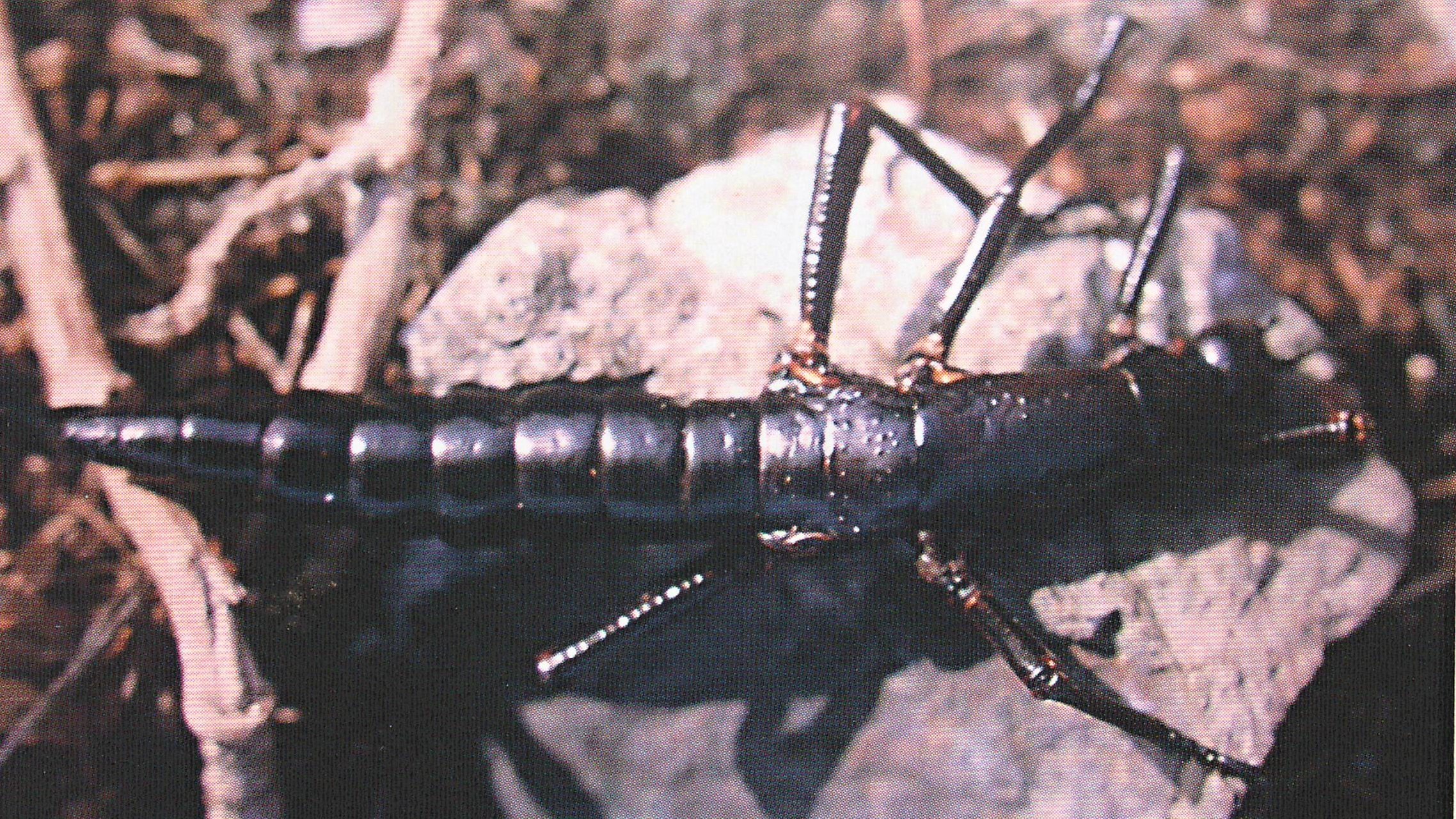 Rediscovery of the 'extinct' Lord Howe Island stick insect on Ball's Pyramid
February 2001. Night on Ball's Pyramid, a sheer volcanic sea stack in the Lord Howe Island group. Two men climb by flashlight to a lone tea-tree shrub growing from a crack in the rock, 65 m above the sea. Earlier that day, their team had spotted large, fresh droppings beneath it.
-
 Discovery of the saola, the "Vu Quang ox", Vu Quang, Vietnam
May 1992. A government survey team was working through the Vu Quang forest in Hà Tĩnh province, Vietnam. Hunters had spoken of wild goats with long, curved horns. On 21 May a local hunter handed over a skull. Its two horns were long, pointed and nearly straight. John MacKinnon of WWF knew of no such goat in Southeast Asia.
-
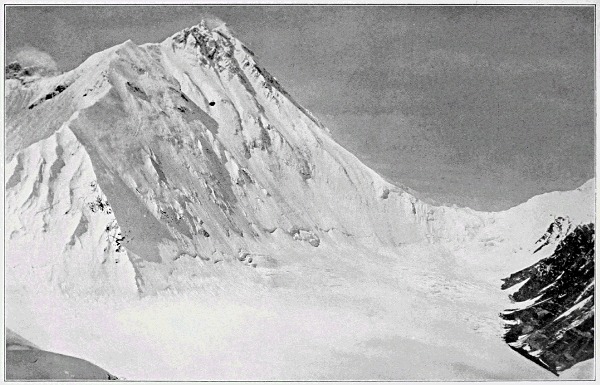 The Metoh-Kangmi Tracks at the Lhakpa La: Howard-Bury and the Birth of the Abominable Snowman
September 1921. A British party climbs toward a high Himalayan pass in bright moonlight, near Mount Everest. In the snow they read the night's traffic. Hares. Foxes. And one mark like a human foot.
-
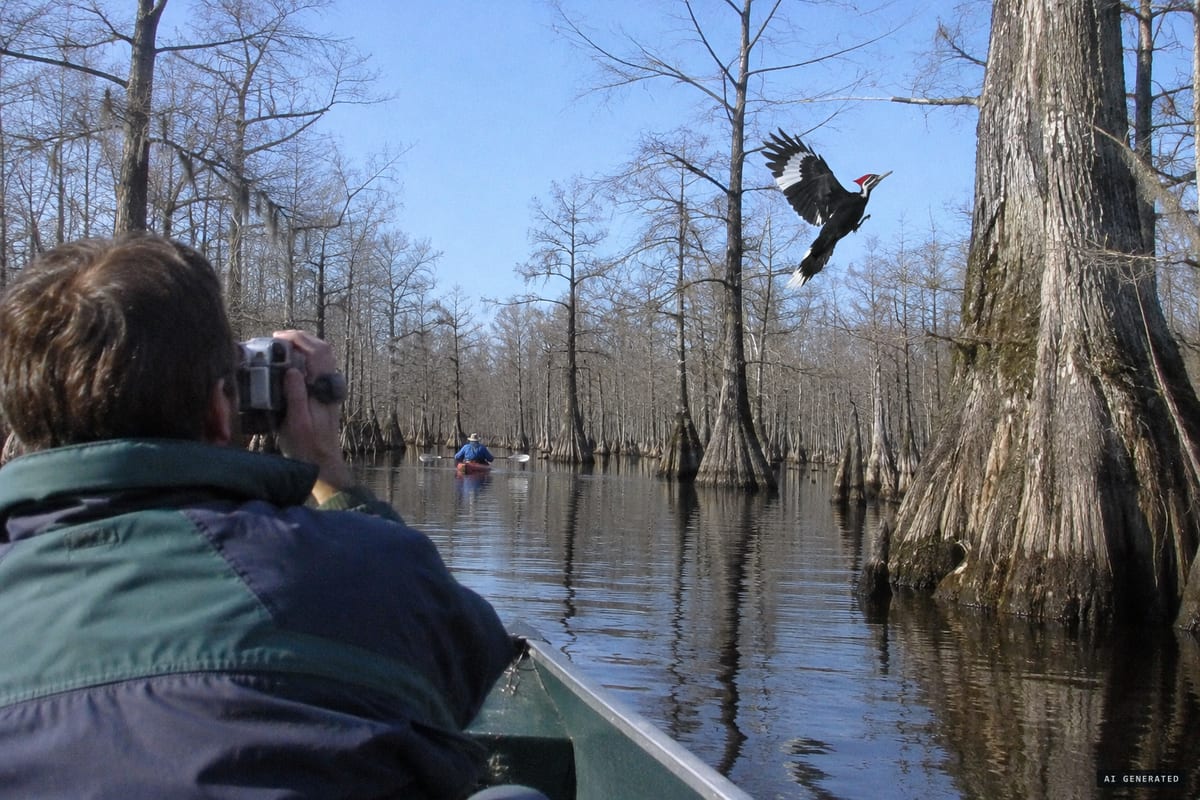 Ivory-billed Woodpecker Sightings at Bayou DeView, Arkansas
February 11, 2004. Gene Sparling was kayaking alone on Bayou DeView, in the tupelo and cypress swamps of eastern Arkansas. A bird landed on a tree about 20 metres ahead. It was unusually large. It had a crest showing some red and extensive white on the folded wing. Its movements were jerky and animated, with a cartoonish quality.
-
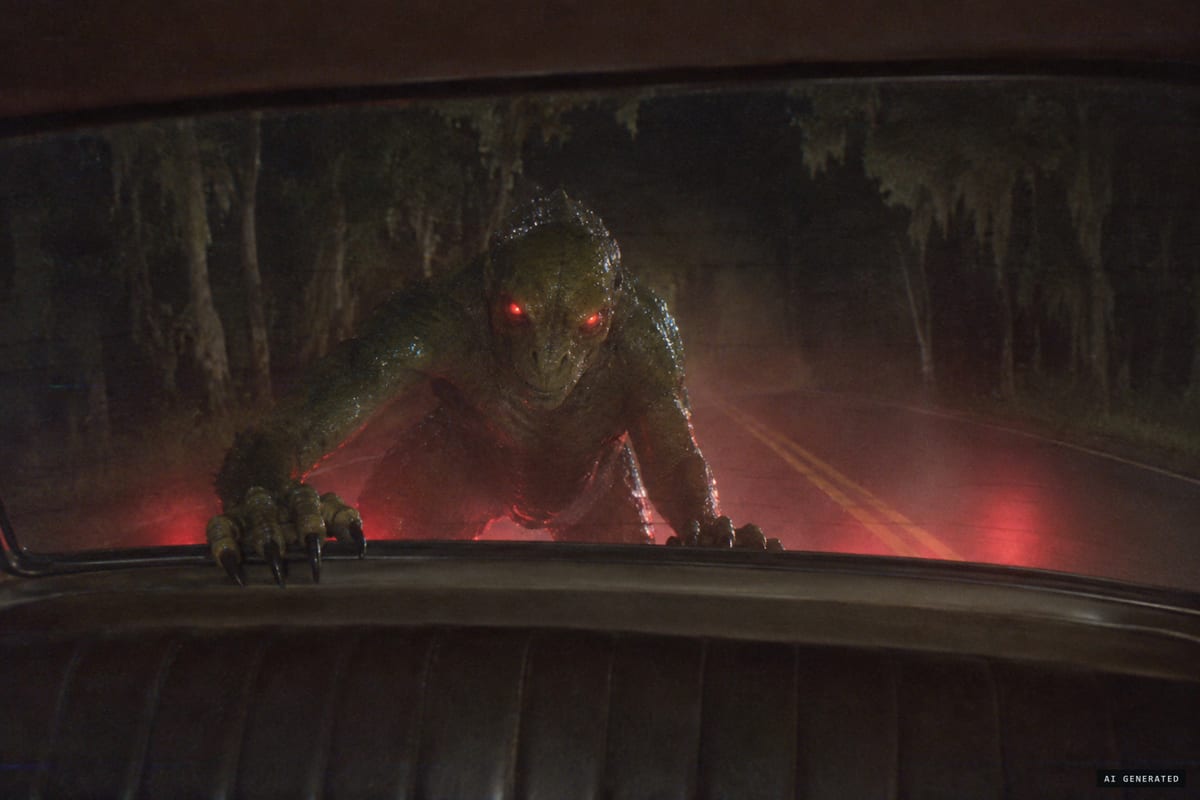 The Lizard Man of Scape Ore Swamp: Christopher Davis's encounter
June 29, 1988. Browntown Road, through Scape Ore Swamp outside Bishopville, South Carolina. Seventeen-year-old Christopher Davis was driving home from a night shift at McDonald's when a tire went flat. He changed it. Then he saw something coming out of the trees, kicking up dust as it ran.
-
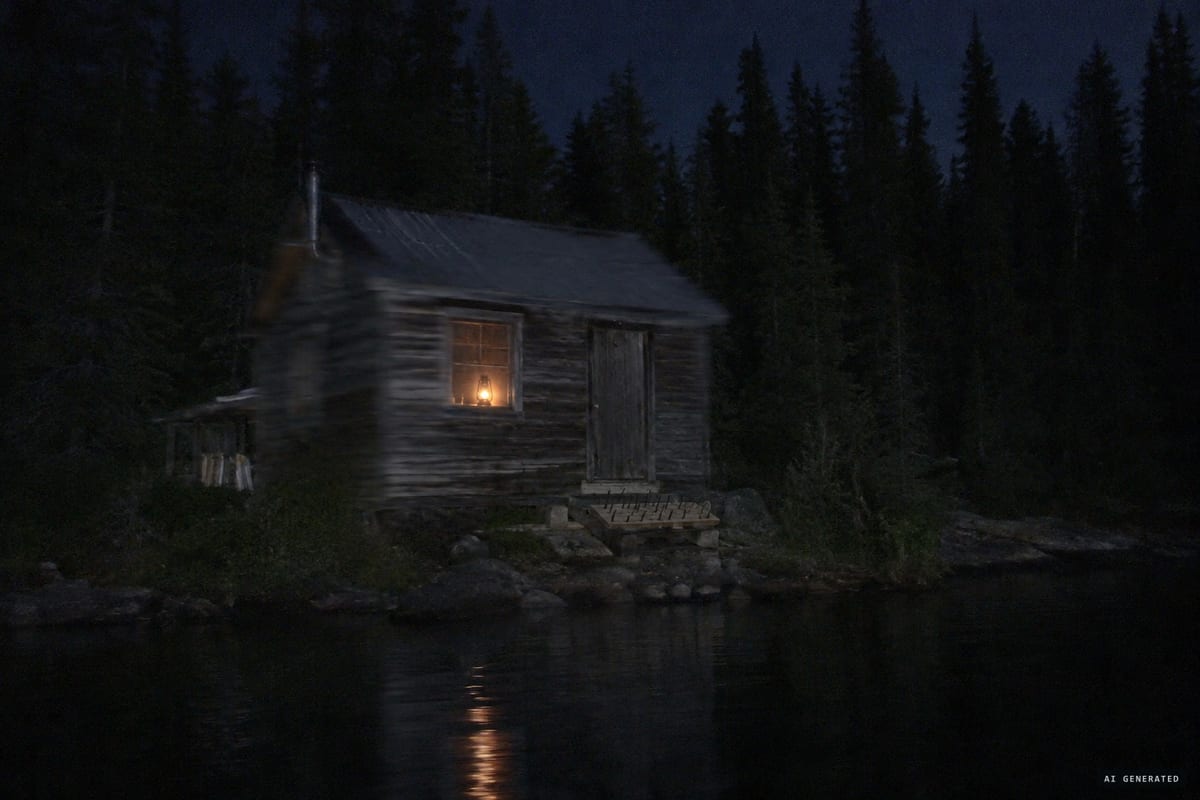 The Snelgrove Lake Cabin Attack
A lone fishing cabin on Snelgrove Lake, deep in northwestern Ontario. October, reportedly 1999. The owner's father found it wrecked while nobody was there. The refrigerator torn from the wall. The stove flipped onto the floor.
-
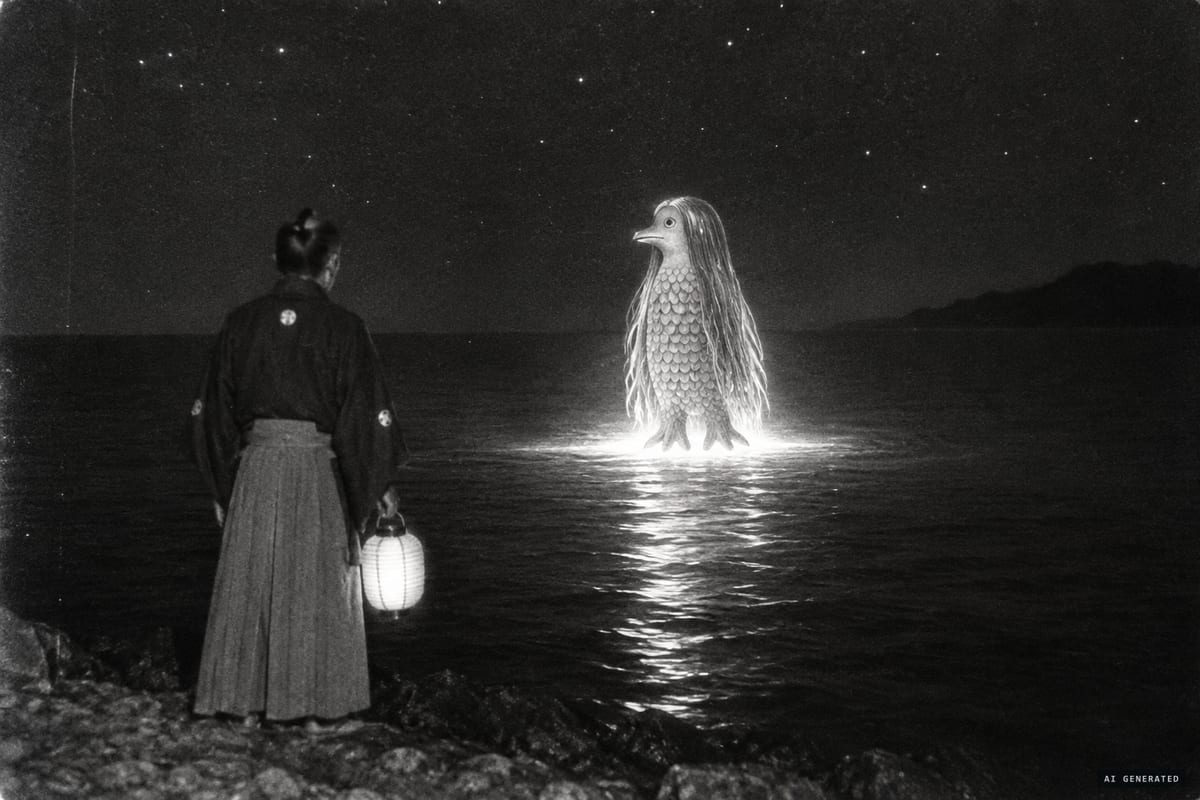 Amabie, the prophetic sea creature of Higo Province (1846)
May 1846. The sea of Higo Province. Every night, a shining thing appeared on the water. The local official went to look.
-
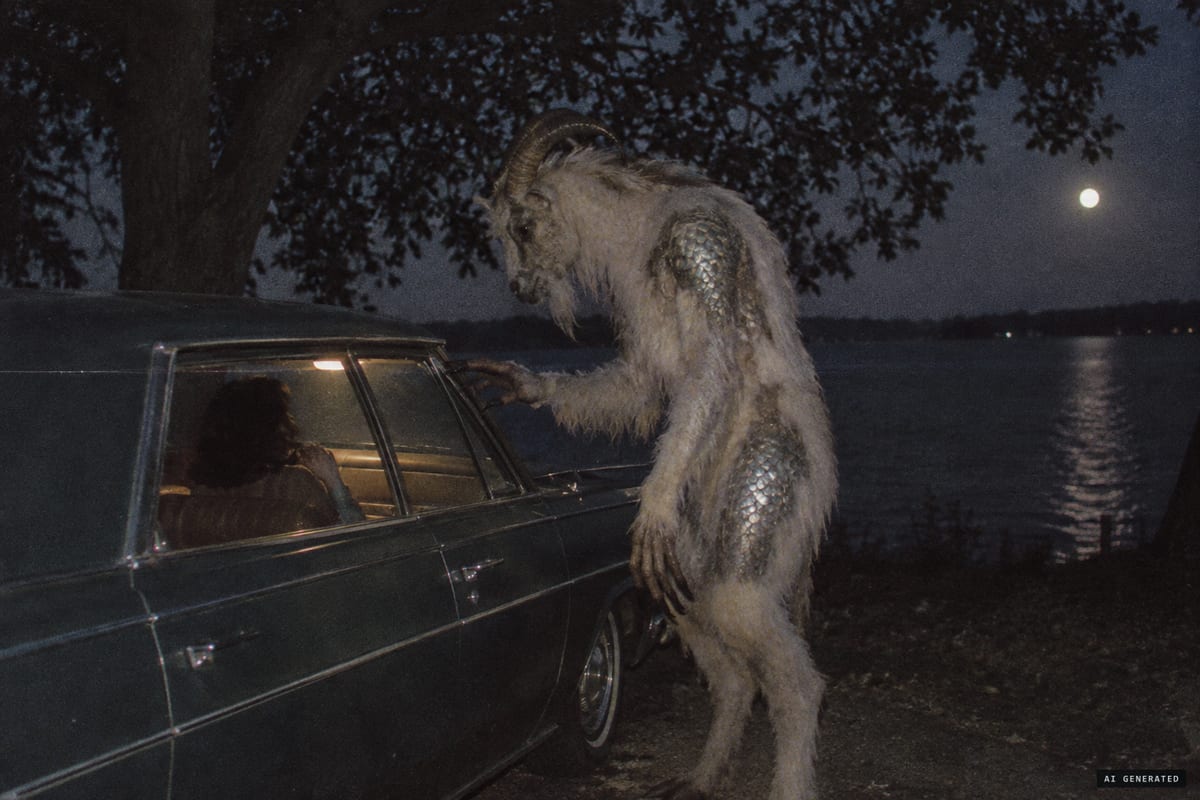 The Lake Worth Monster: the Greer Island Goatman, Fort Worth, 1969
July 1969. Greer Island, on the shore of Lake Worth at the edge of Fort Worth, Texas. Couples parked there after dark.
-
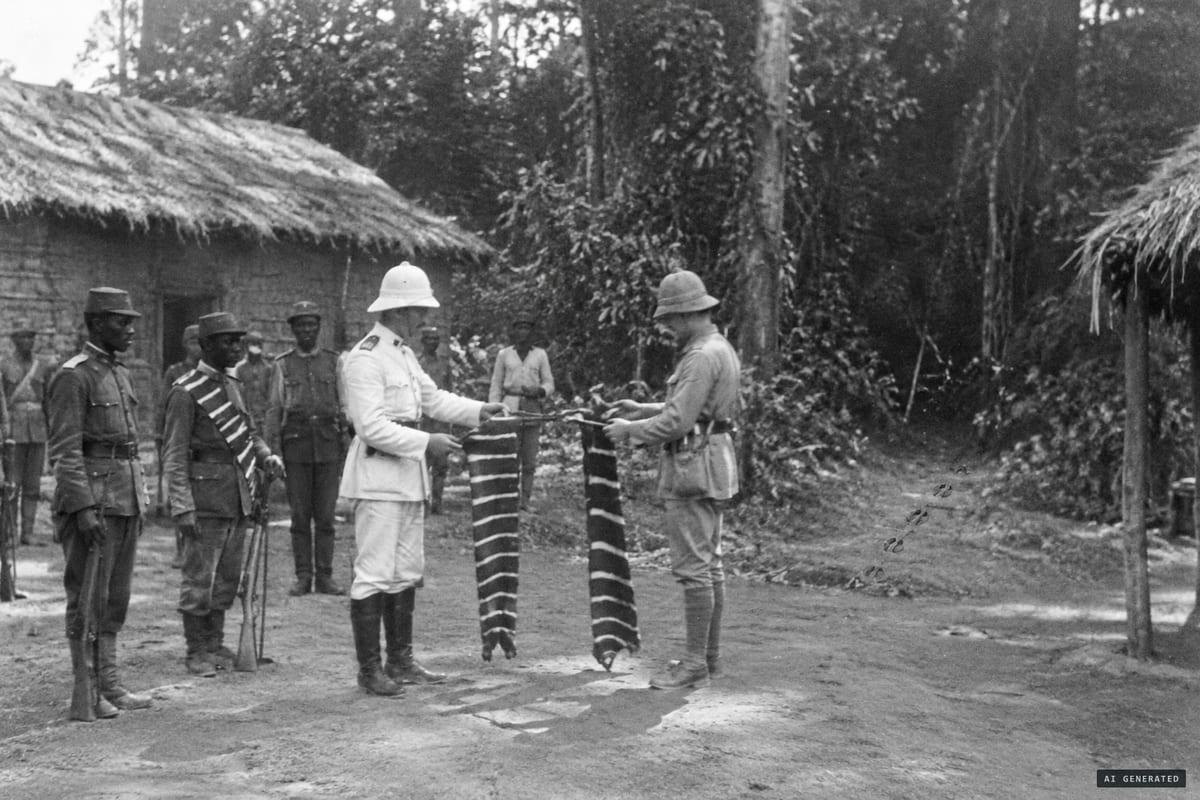 The Okapi: Skins and Skulls from Fort Mbeni
The Ituri forest, 1900. Sir Harry Johnston, British Special Commissioner for Uganda, was chasing a rumour. Henry M. Stanley had written of a forest "donkey" the Wambutti called the atti. Mbuti people gave Johnston another name. O'api. They showed him cloven-hoofed tracks. He imagined he was following a forest-eland.
-
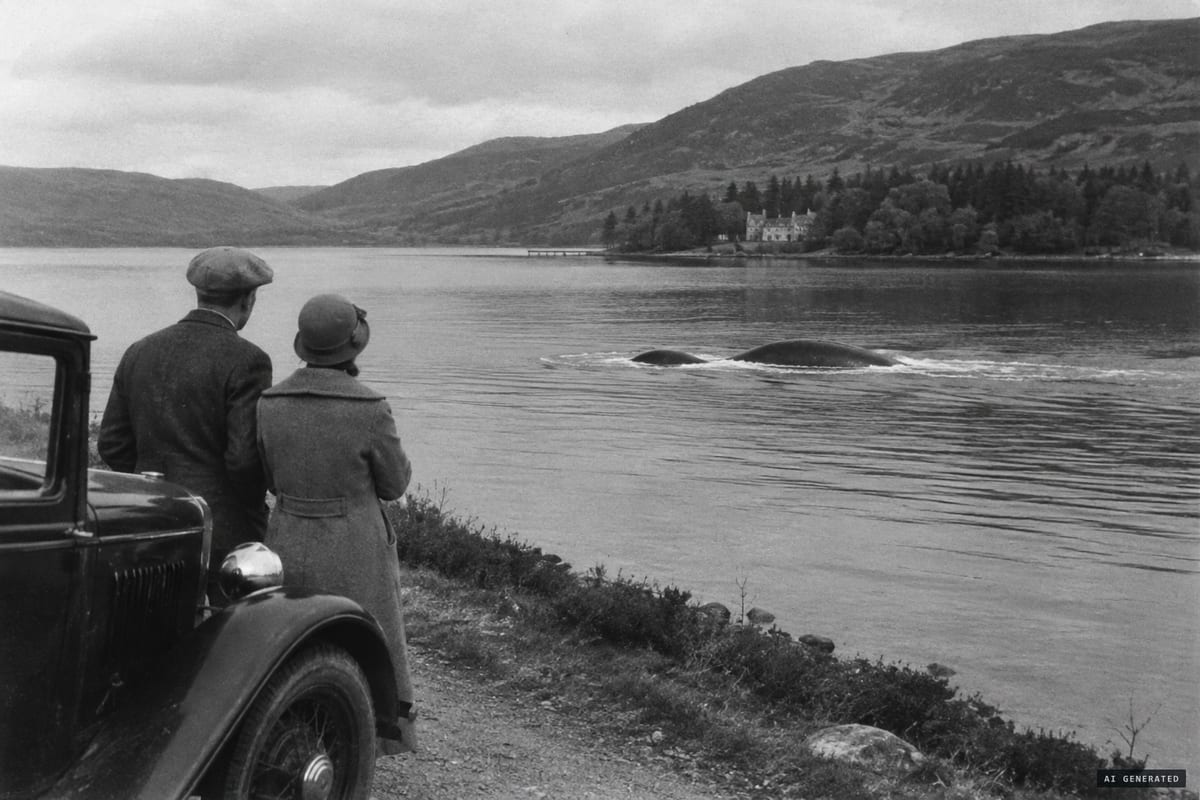 Aldie and John Mackay's Strange Spectacle in Loch Ness
Spring 1933. A couple were driving along the north shore of Loch Ness, near Abriachan Pier. The water was flat calm. Then it wasn't.
-
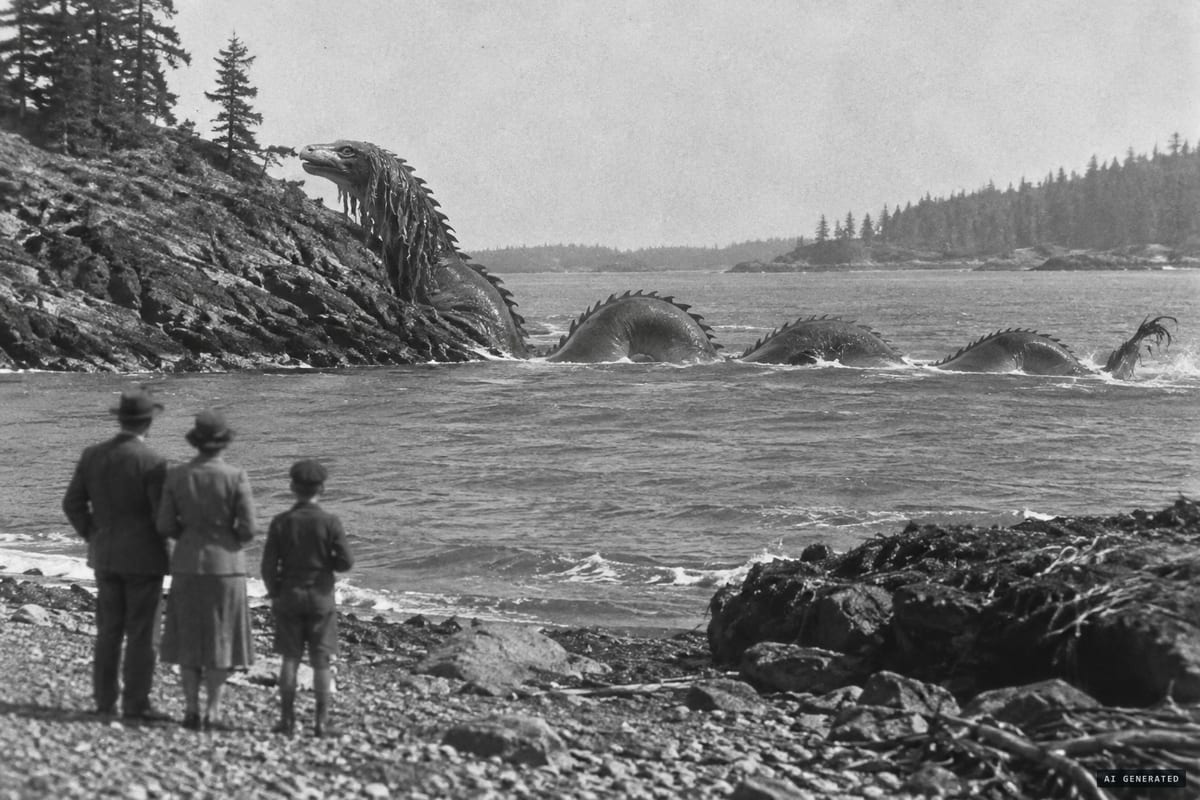 Cadborosaurus: The Langley and Kemp Sightings off Victoria, 1932 and 1933
October 1933. Major William Henry Langley and his wife were sailing in Haro Strait off Chatham Island, near Victoria, British Columbia. First came the sound. A grunt and a snort, accompanied by a huge hiss. Then they saw a huge dome of back, greenish brown, serrated along the top. Langley had been whaling. This was no whale.
-
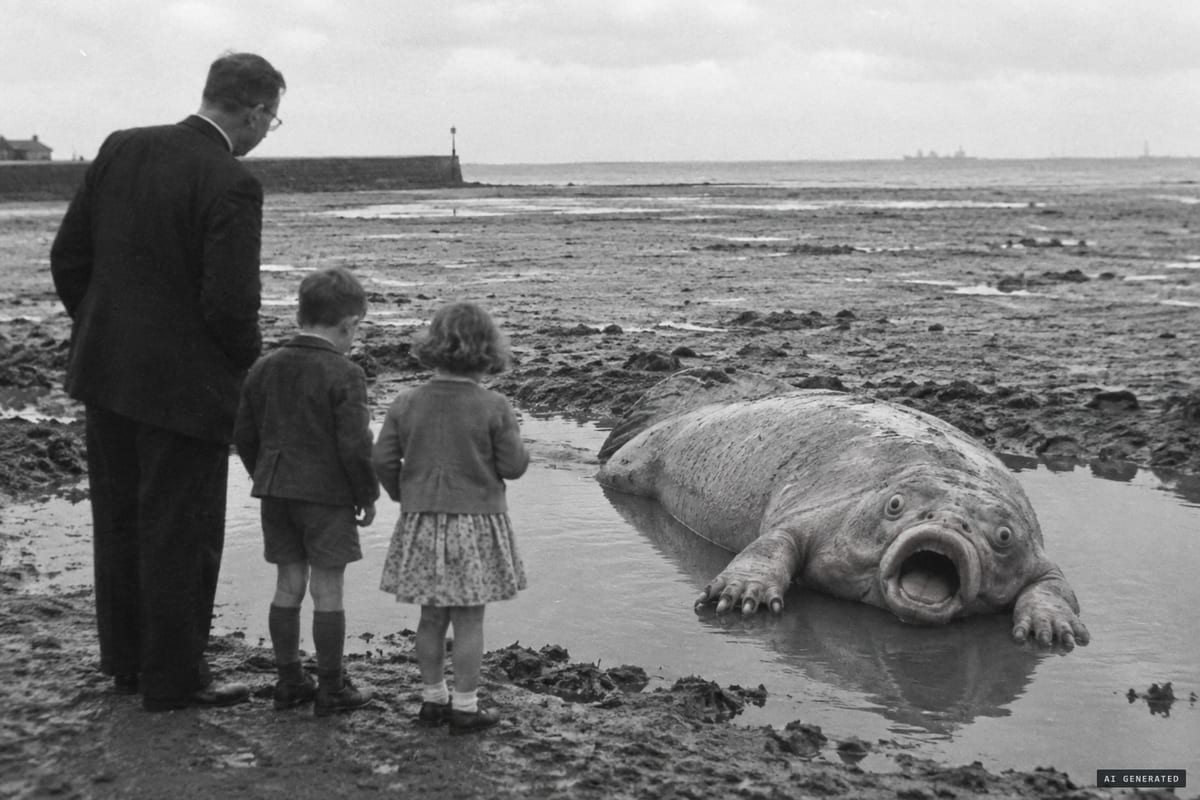 The Canvey Island Monster: the fish with feet (1953 and 1954 carcasses)
August 1954. Canvey Island, in the Thames estuary. The Rev. Joseph D. Overs was walking on the beach with his children. In a small tidal pool, something was bobbing. It was dead. It was over four feet long, with staring eyes and a large mouth. Underneath, on its stomach, it had two feet. Each had five toes.
-
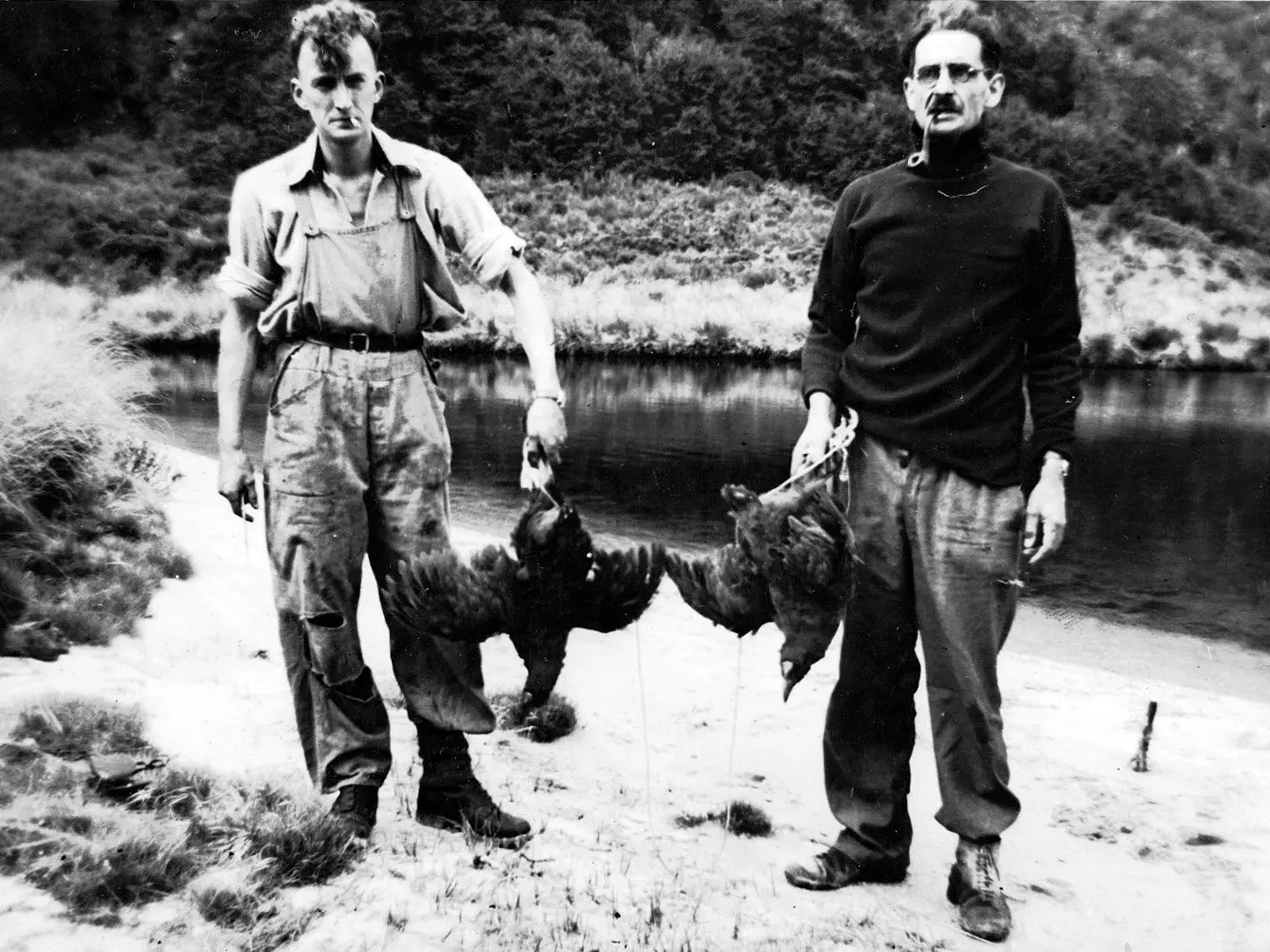 Rediscovery of the takahē, Murchison Mountains, Fiordland (1948)
April 1948. On a deer-hunting trip on the western shore of Lake Te Anau, Invercargill doctor Geoffrey Orbell stopped to rest. He heard a call he did not know. "Deep and long." In the sand lay fresh bird tracks. He etched their size with his pipe.
-
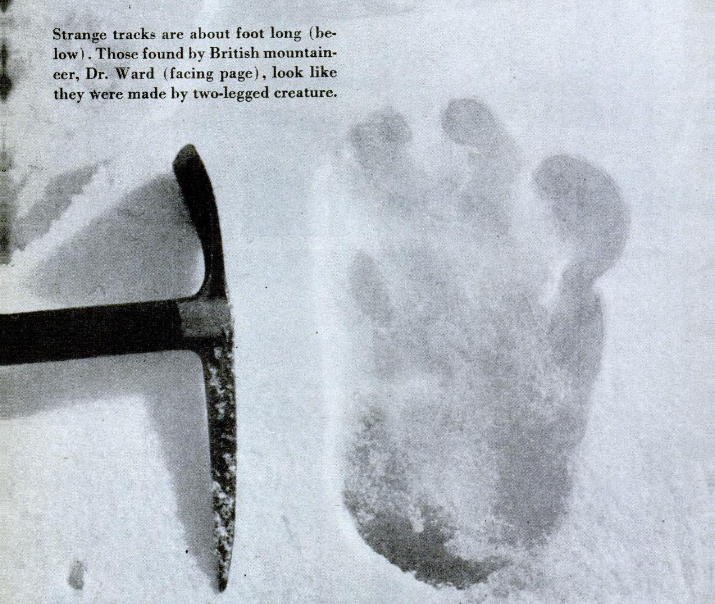 Shipton and Ward Yeti Footprints, Menlung Glacier, 1951
November 1951. High on the Nepal-Tibet watershed, three men come down from the Menlung La onto a glacier. In the snow lies a line of footprints. Large. Fresh. Leading down the ice.
-
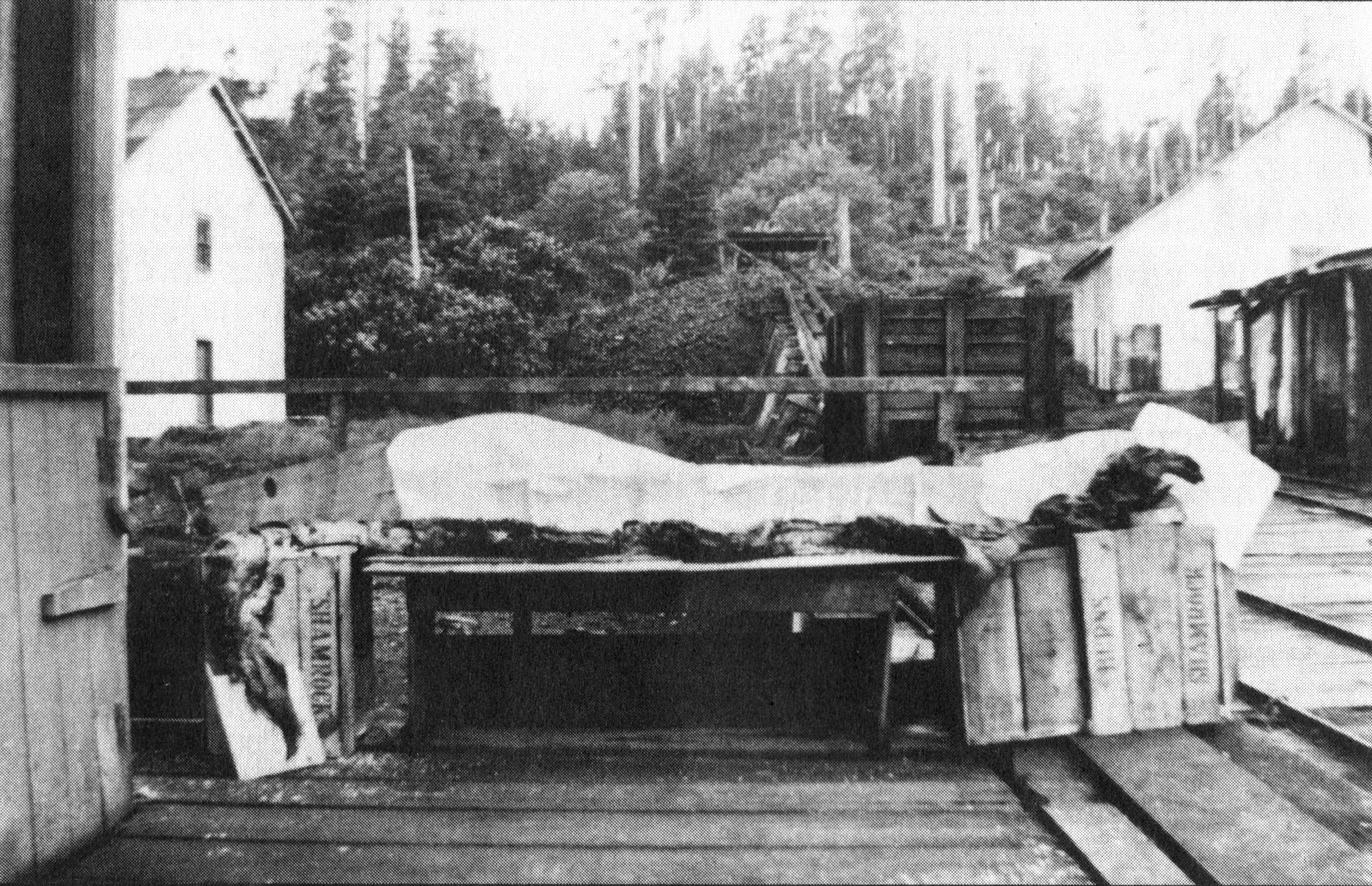 The Naden Harbour Cadborosaurus Carcass
July 1937. Naden Harbour whaling station, on the north coast of Graham Island. Flensers cut open a sperm whale caught off Langara Island. Inside its stomach lay something none of them could name. A sinuous body about 10 feet long. A head said to resemble that of a large dog, with features of a horse and the turn down nose of a camel. Animal-like vertebrae. A reptilian appearance.
-
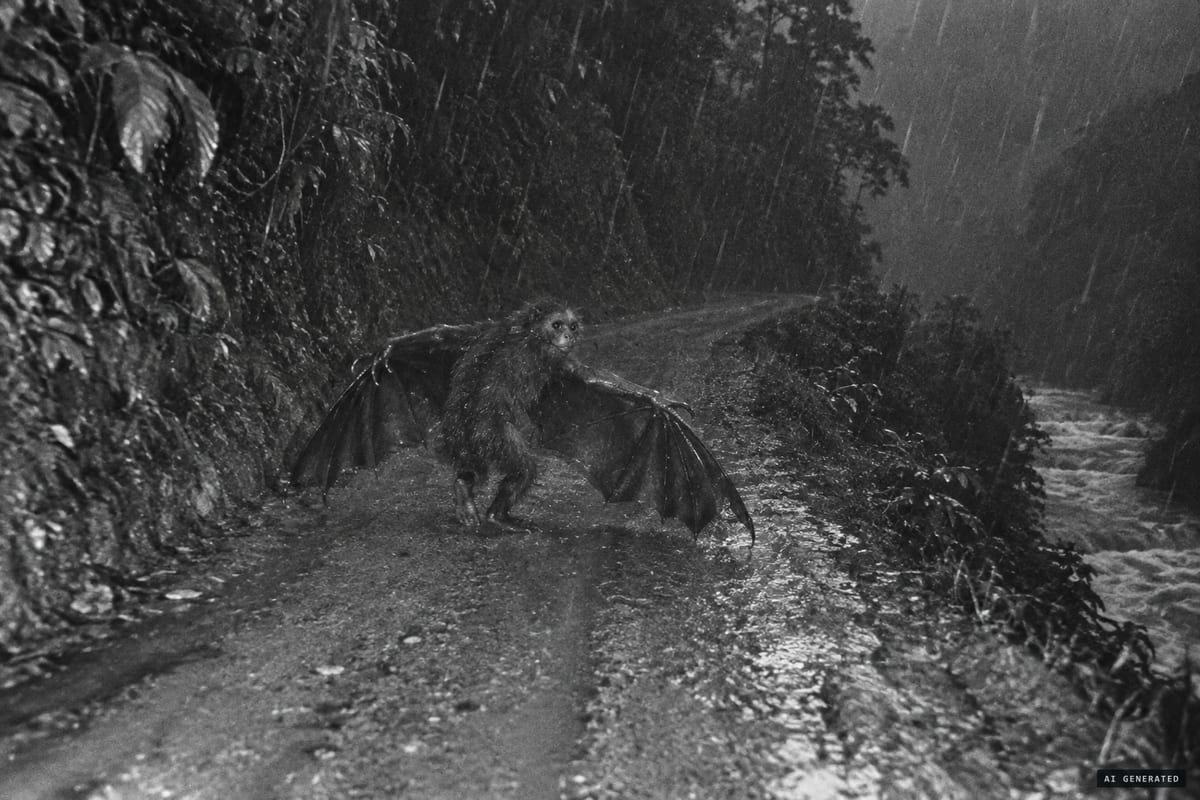 The ahool of Mount Salak (Ernst Bartels, 1925 and 1927)
Western Java. The slopes of Mount Salak. A young naturalist named Ernst Bartels hears of an animal that hides in caves behind waterfalls and pulls fish from beneath the stones of the riverbed. Grey fur. A monkey's head. Claws on its wings. Its name is its call. "A-hool!"
-
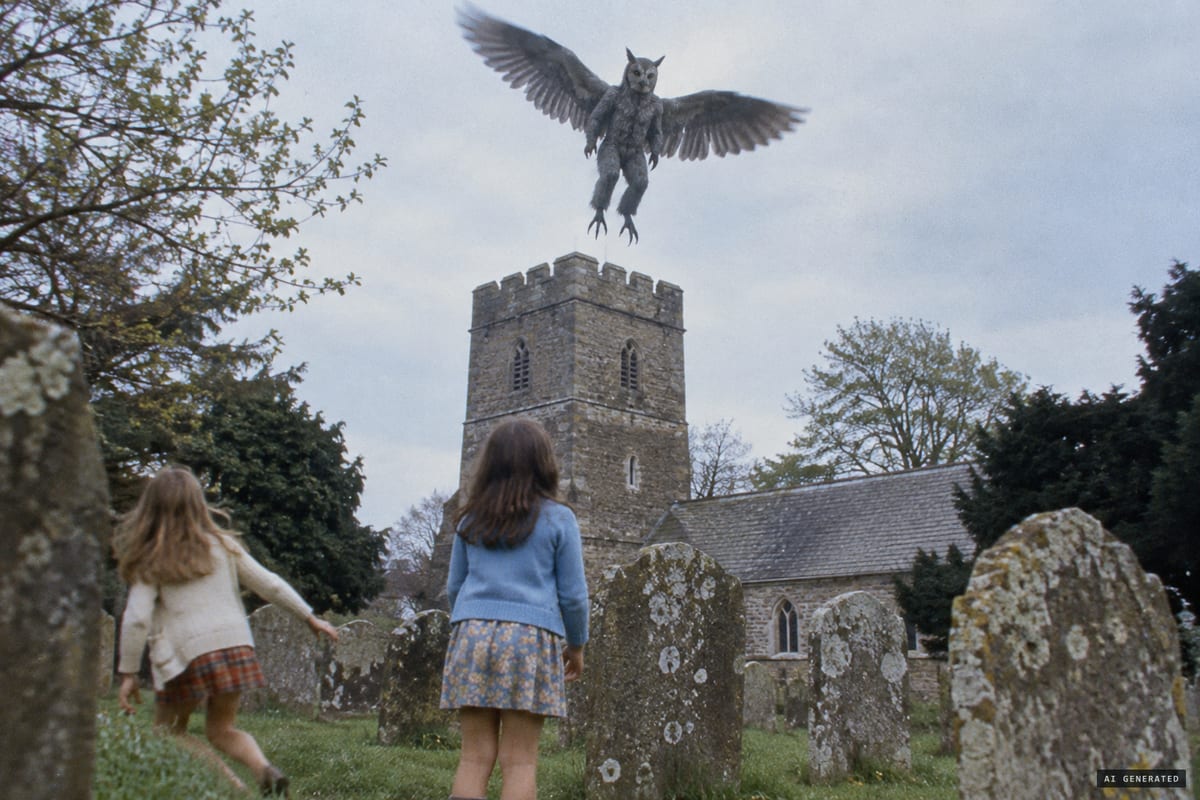 The Owlman of Mawnan, Cornwall
Easter weekend, 1976. Mawnan, on the Cornish coast near Falmouth. Two sisters on holiday, June Melling, 12, and Vicky Melling, 9, looked up at the old church tower and reportedly saw something hovering above it. A "big, feathered bird-man." Their father cut the holiday short.
-
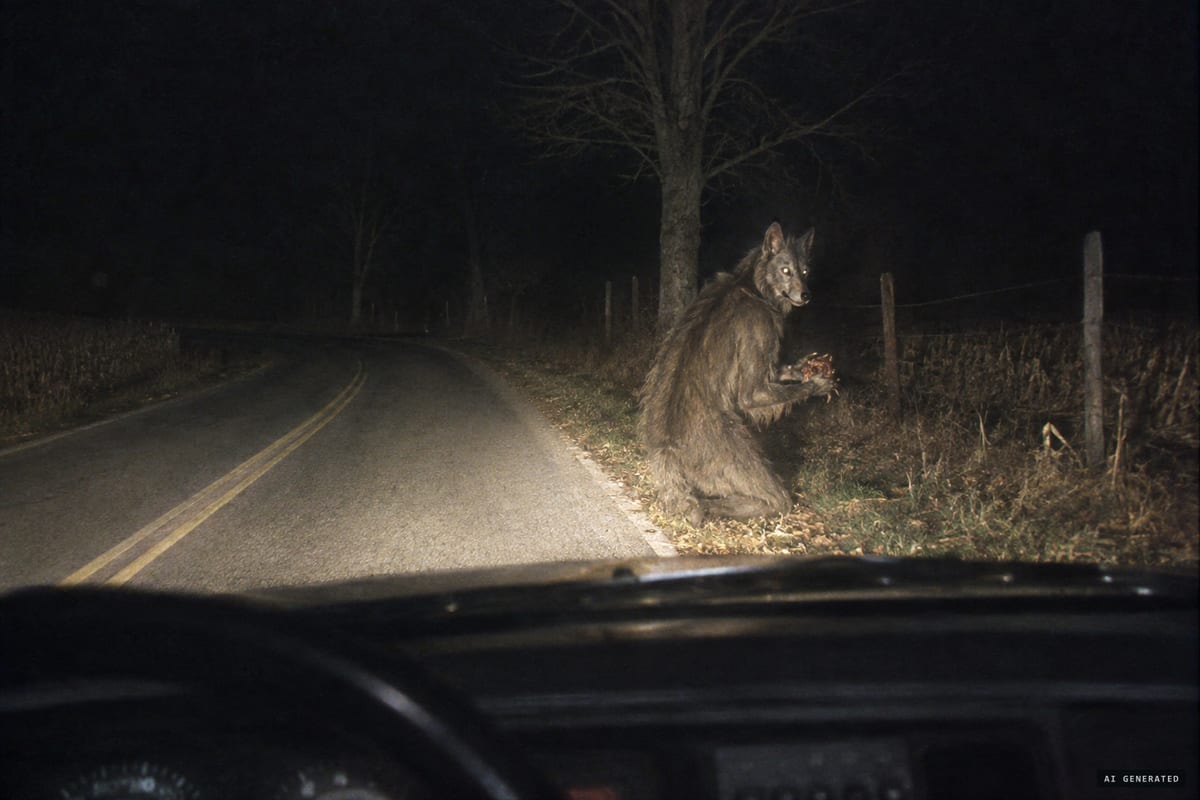 The Beast of Bray Road: the Elkhorn werewolf sightings, Wisconsin (1989 to 1991)
Fall 1989. About 1:30 in the morning. Lorianne Endrizzi was driving home from work along Bray Road, outside Elkhorn, Wisconsin. Something was kneeling at the side of the road. It had pointed ears and long claws. It held what it was eating palms up. Its eyes glowed.
-
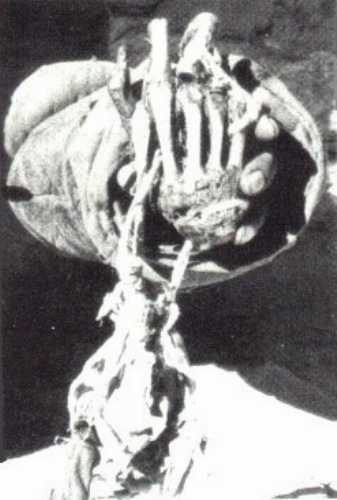 The Pangboche Hand: a Yeti Finger in James Stewart's Luggage
Calcutta. December 1958. At the Grand Hotel, an explorer named Peter Byrne brought a blackened finger to a famous couple. The lamas of Pangboche said it came from a yeti. It went into Gloria Stewart's lingerie case. Her husband was James Stewart, the film star.
-
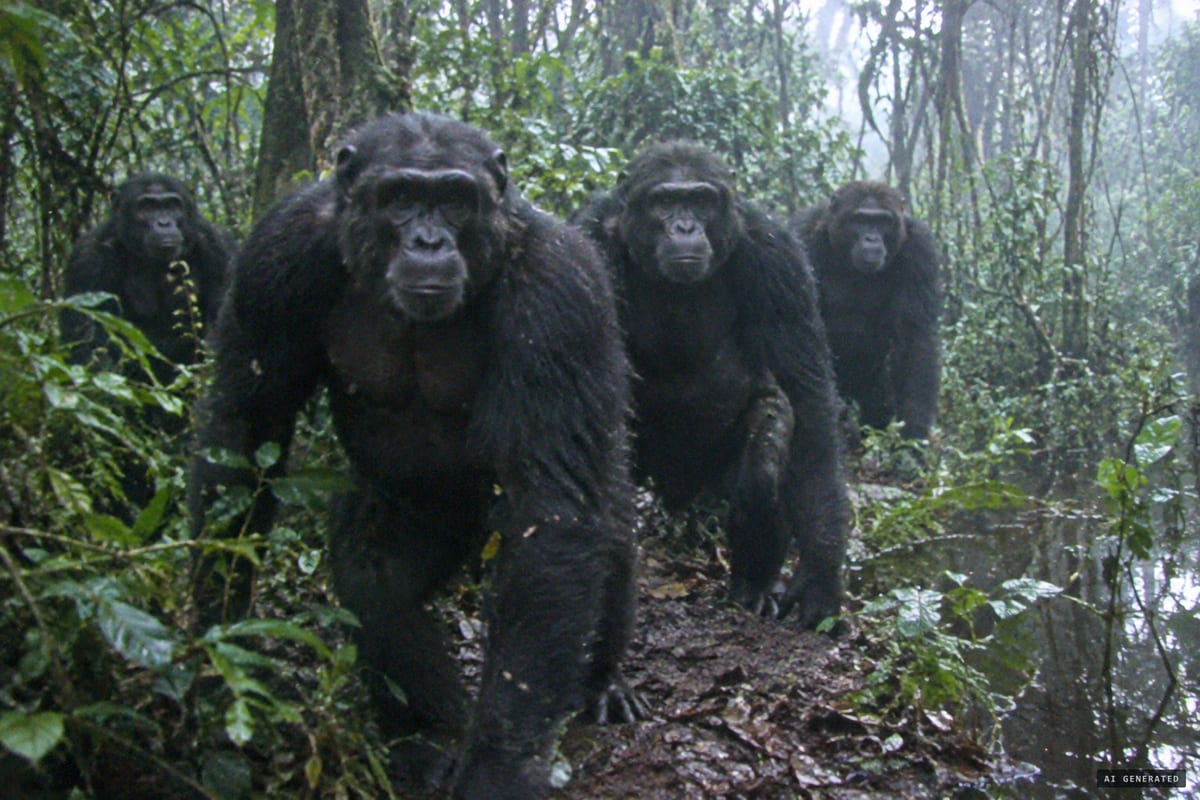 The Bili Apes: The "Lion Killers" of the Congo Forest
The forest around Bili, northern DR Congo. Hunters there spoke of two kinds of ape. The "tree beaters" climbed and could be killed with poison arrows. The "lion killers" were bigger and darker, rarely climbed, and were said to be unaffected by poison. In 1996 the Swiss photographer Karl Ammann came looking for gorillas. He left with a crested skull, footprint casts and a dropping three times the size of a chimp's.
-
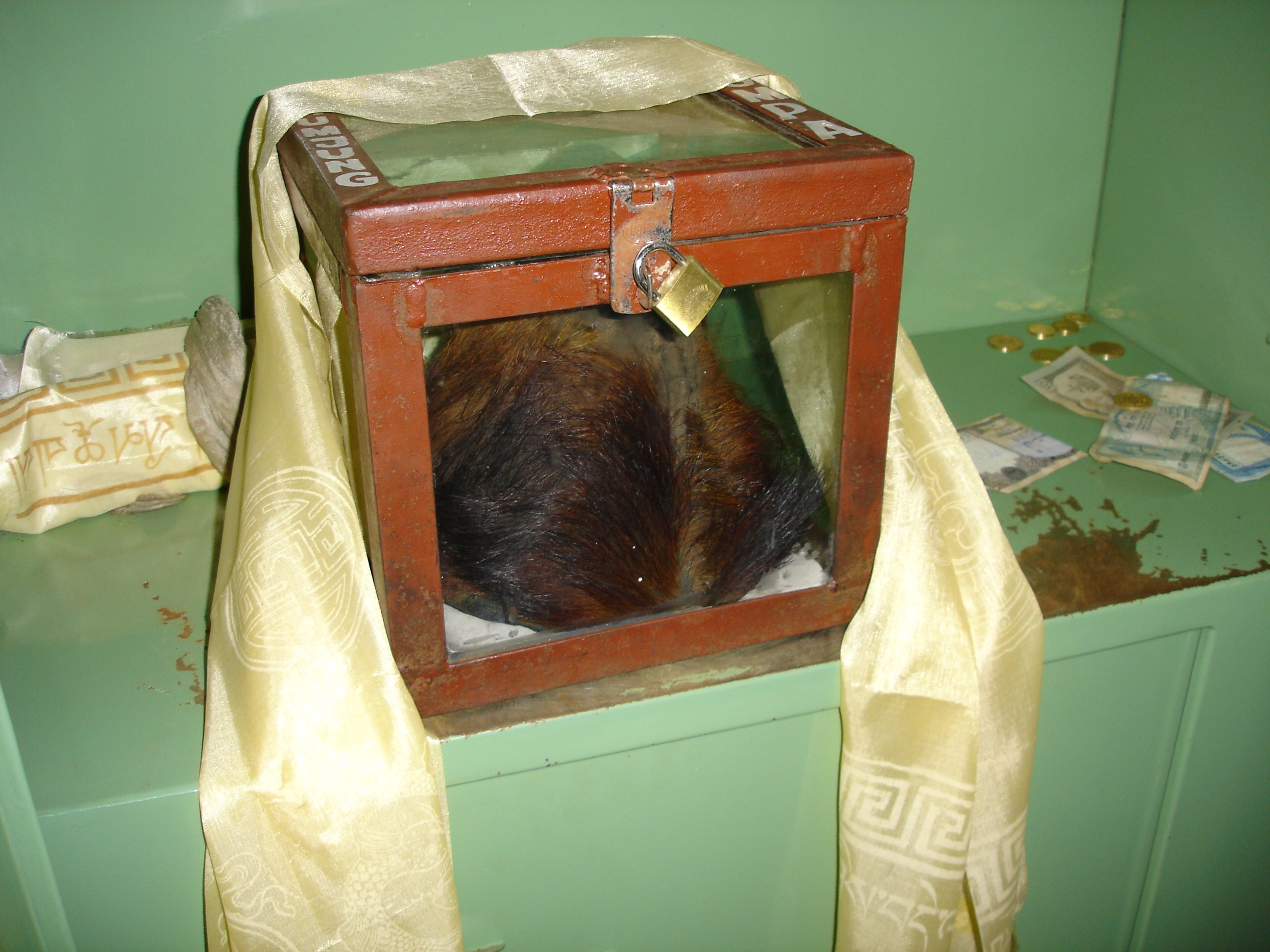 The Khumjung Yeti Scalp Examination
Khumjung, Nepal. High in the Khumbu, a monastery kept a sacred object. The villagers held it to be the scalp of a yeti. Nobody had seen the animal. They had this.
-
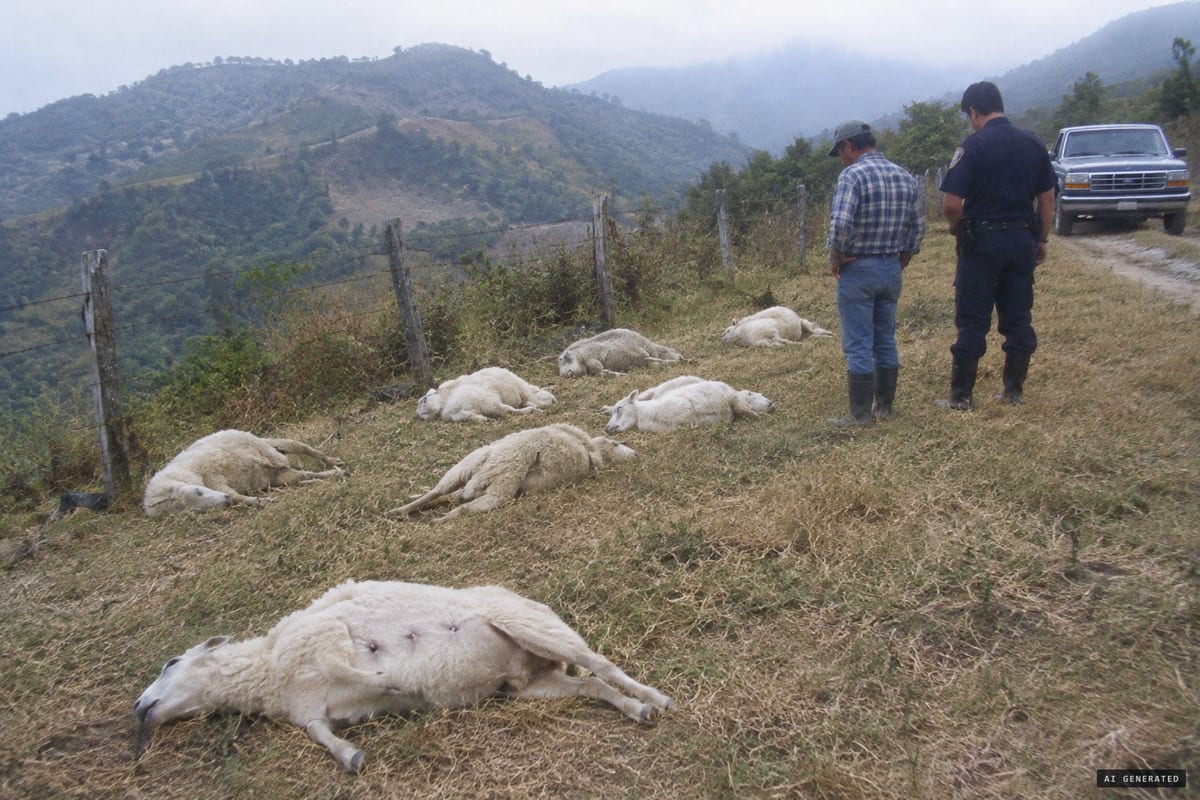 The Orocovis Sheep Killings
March 11, 1995. Orocovis, a mountain municipality in the very heart of Puerto Rico. Eight sheep lay dead. Each reportedly bore three puncture wounds to the chest. Each was said to have been completely drained of blood.
-
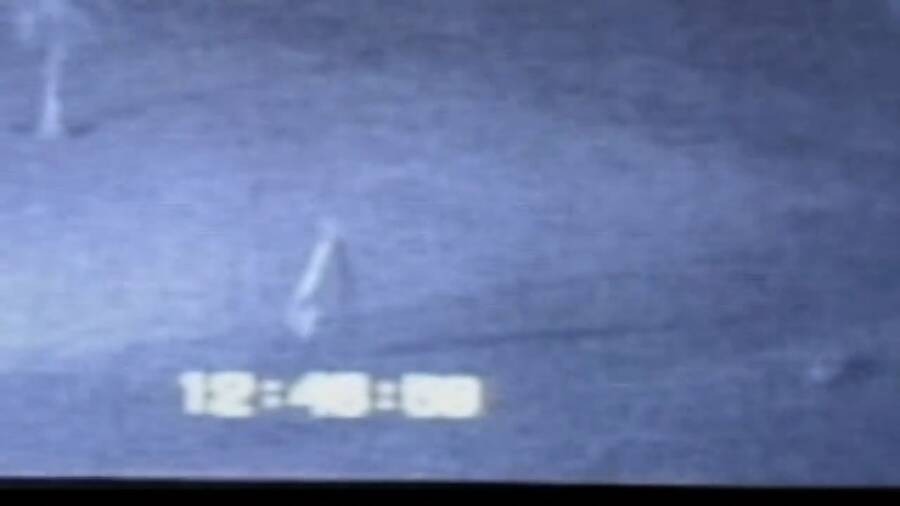 The Fresno Nightcrawler
Just after midnight. Monday, November 5, 2007. A dog is barking in South Fresno, and a homeowner known only as José checks his security monitor. Something white is crossing the front lawn. It looks like a pair of legs. There is no body above them. About five minutes later, a second figure follows the same path.
-
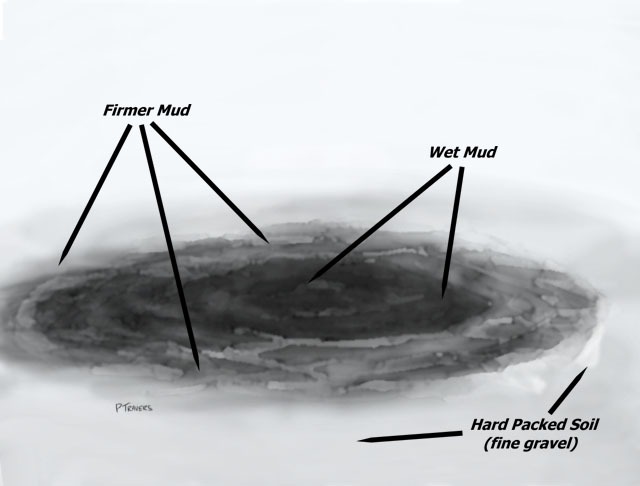 The Skookum Cast
September 2000. A Bigfoot expedition is camped in the Gifford Pinchot National Forest of southern Washington. For several nights the team has broadcast a recorded scream into the dark. At about 3:00 AM, two of them leave fruit beside a rainwater puddle near Skookum Meadow. By morning, three of the six apples are gone.
-
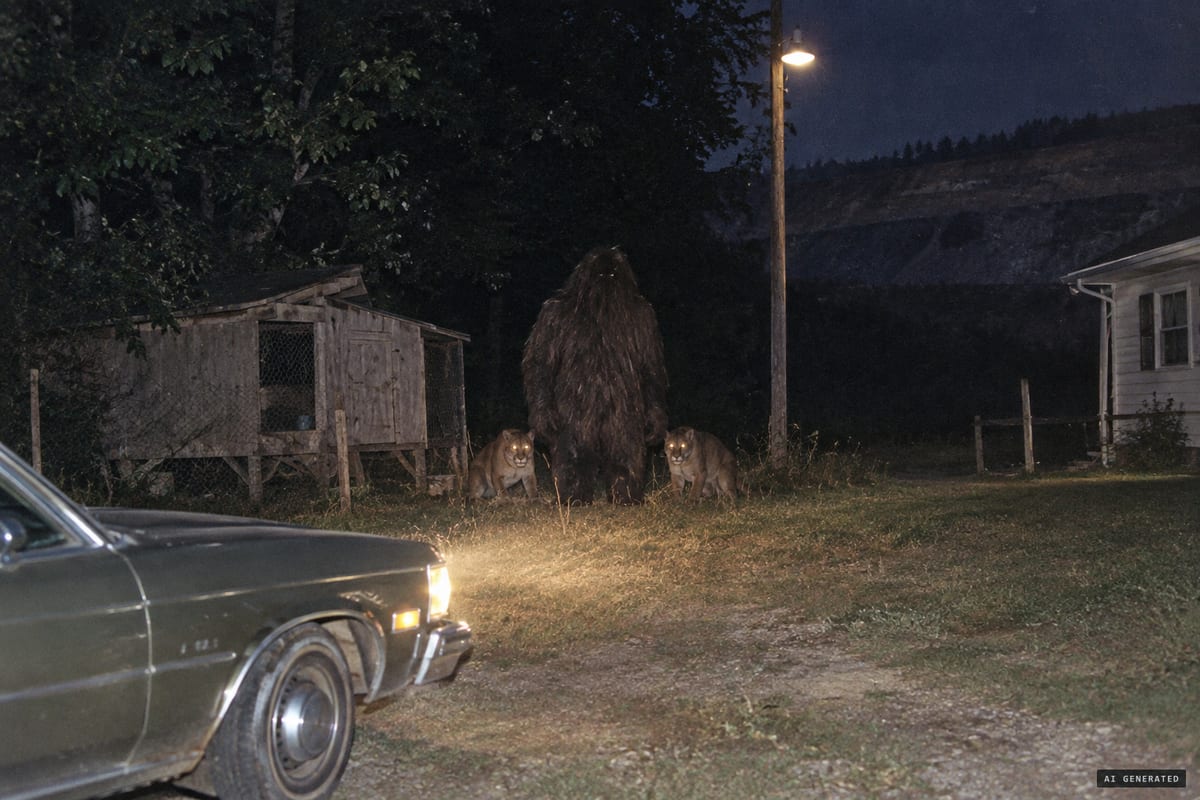 The Minerva Monster: the Cayton Family Encounters
August 1978. A wooded lot two miles west of Minerva, Ohio. Behind the Cayton house lay an old strip mine and a gravel pit. Over several nights, the family and their friends reported a hairy, upright creature about 7 feet tall. It stood at the lit kitchen window for close to ten minutes. It appeared beside two large cats near the old chicken coop. Rocks hit the roof. A deputy arrived to a strong ammonia-sulphur stench.
-
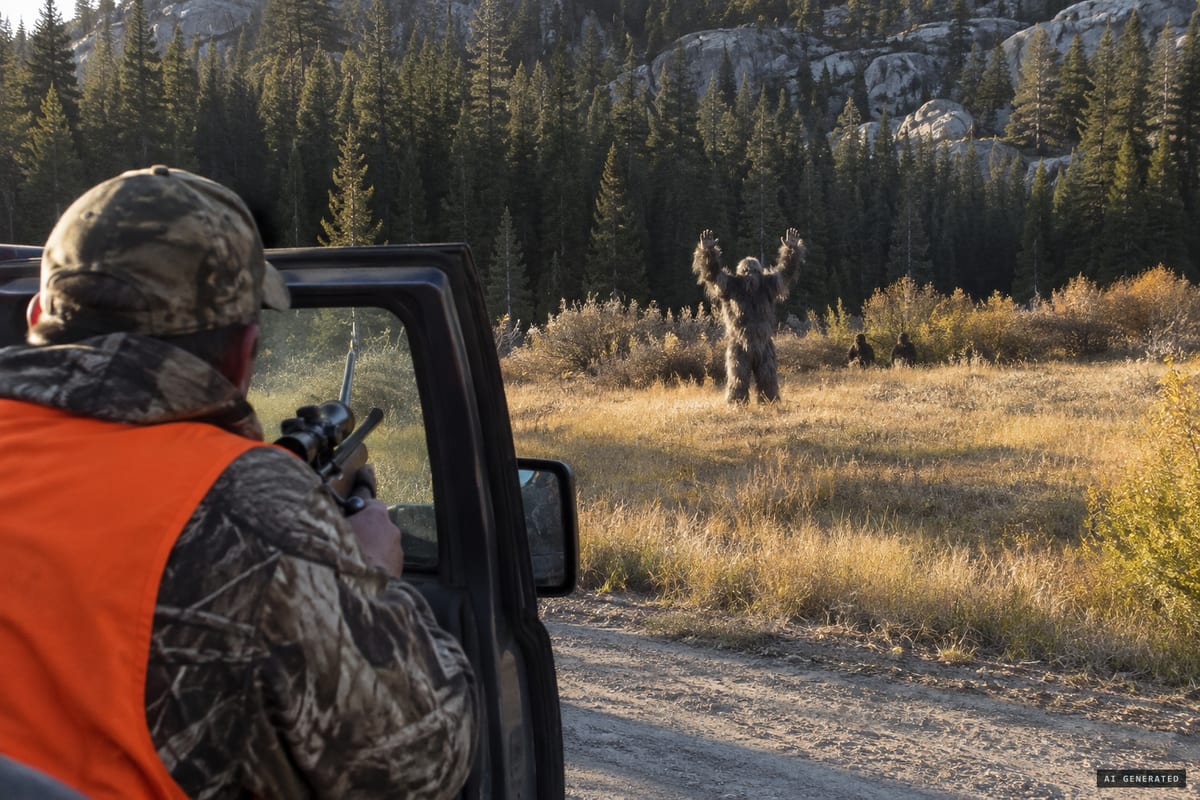 The Sierra Kills: Justin Smeja's claim to have shot two Bigfoots
October 8, 2010. About 5 p.m. in the northern Sierra Nevada. Bear hunter Justin Smeja and a friend were driving a dirt road beside a small meadow. Something stood in it. Large. Upright. Covered in hair, its arms above its head. Smeja fired. It fell, got up, and ran. Then two smaller creatures came out of the brush. Smeja fired again.
-
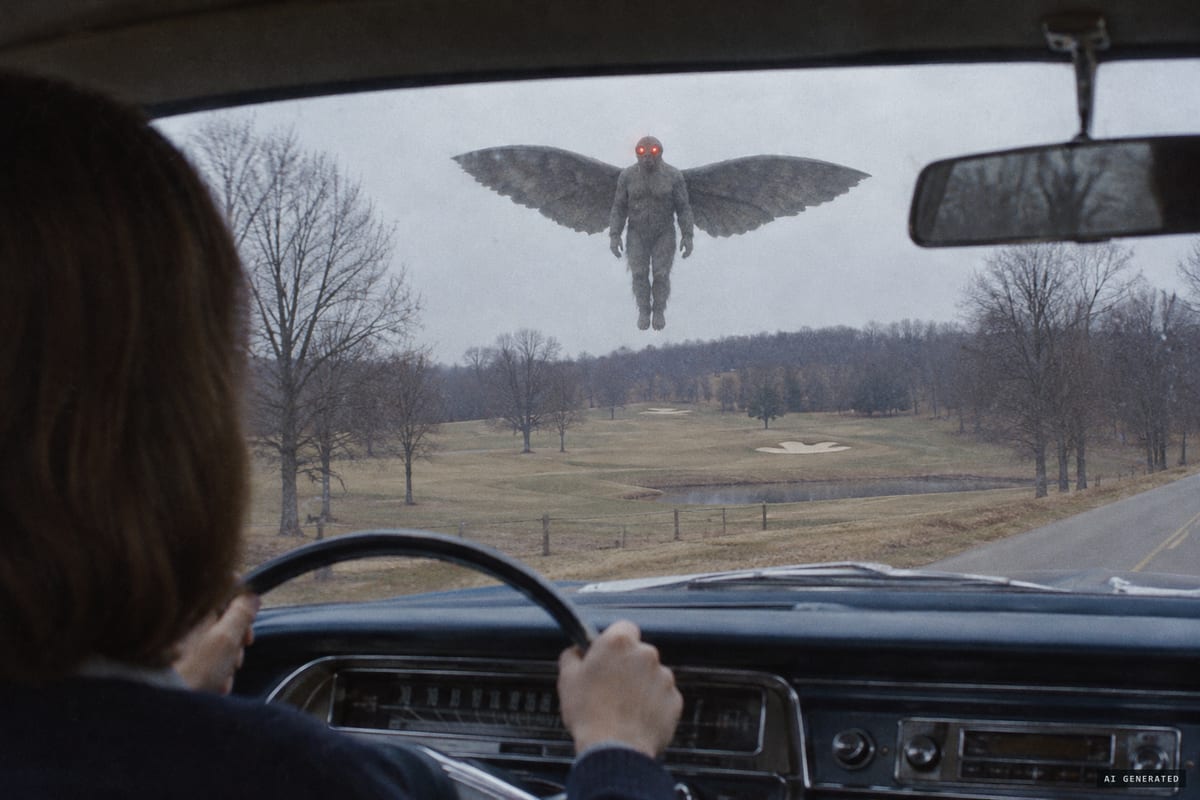 Connie Carpenter's Daylight Mothman Sighting
Sunday morning. 27 November 1966. Connie Carpenter, eighteen, was driving home from church past the deserted greens of a golf course in Mason County, West Virginia. It was 10:30 A.M. Broad daylight.
-
 The rediscovery of the cahow, Castle Harbour, Bermuda
For three centuries, the cahow was a ghost. Bermuda's most abundant bird had been hunted, robbed of its eggs and given up for extinct by the 1620s. Its eerie nocturnal cries had once frightened sailors. After that, only a handful of stray birds.
-
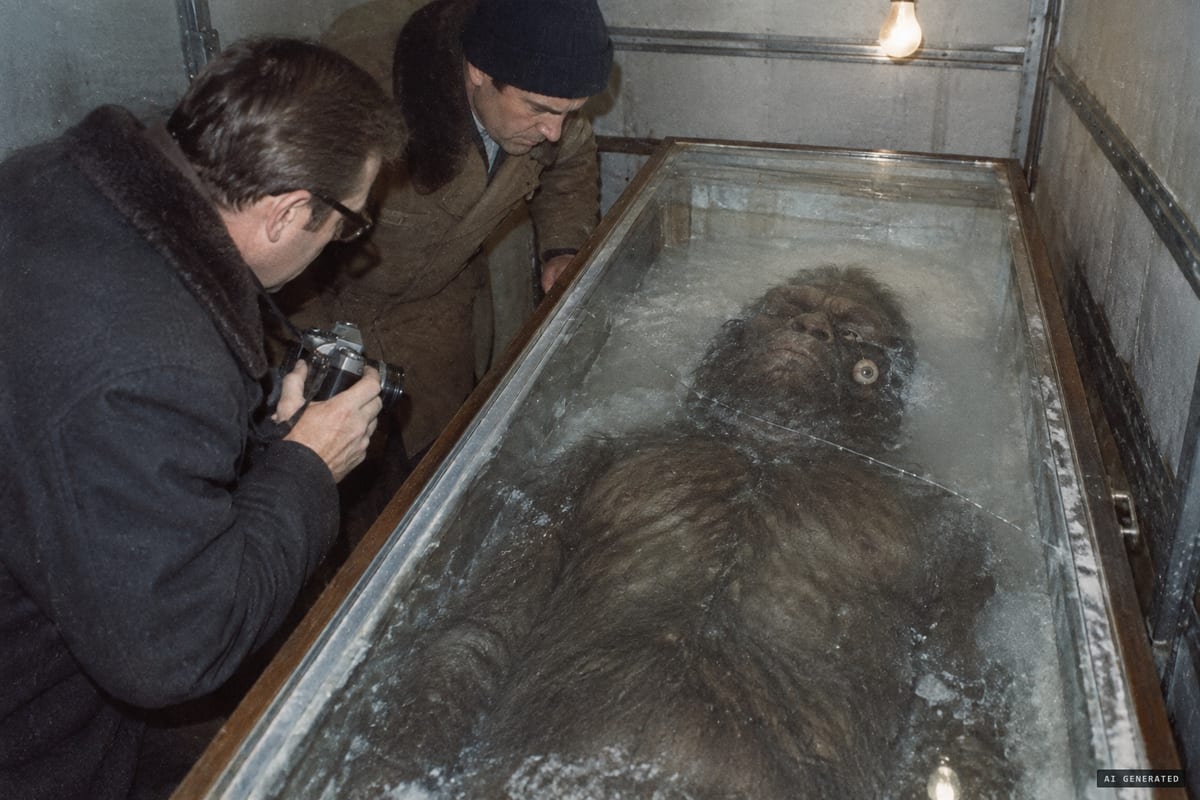 The Minnesota Iceman
December 1968. A farm near Rollingstone, Minnesota. A refrigerated trailer holds a glass-topped coffin, and inside the coffin is a block of ice. For three days two naturalists lean over it. Ivan T. Sanderson and Bernard Heuvelmans see a hairy, barrel-chested male about 6 ft tall. One eye dangles from its socket. The glass cracks, and out comes the stench of rotting flesh.
-
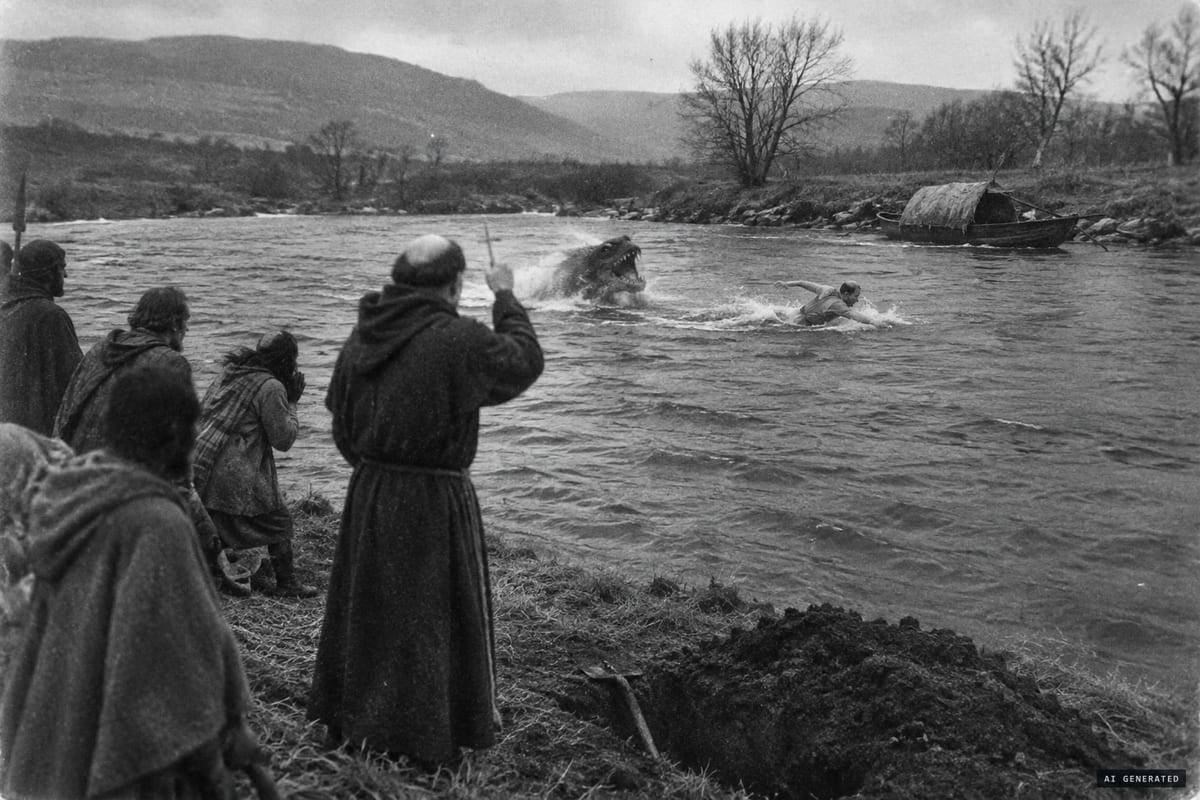 Saint Columba and the Beast of the River Ness
The River Ness. The province of the Picts, traditionally AD 565. Columba and his monks reach the water and find locals burying a man. A monster seized him as he swam. Columba sends his companion Lugne Mocumin into the river to fetch a boat from the far bank. The beast rises from the bottom of the stream. It gives an awful roar and darts after him, mouth wide open. Then the saint raises his hand.
-
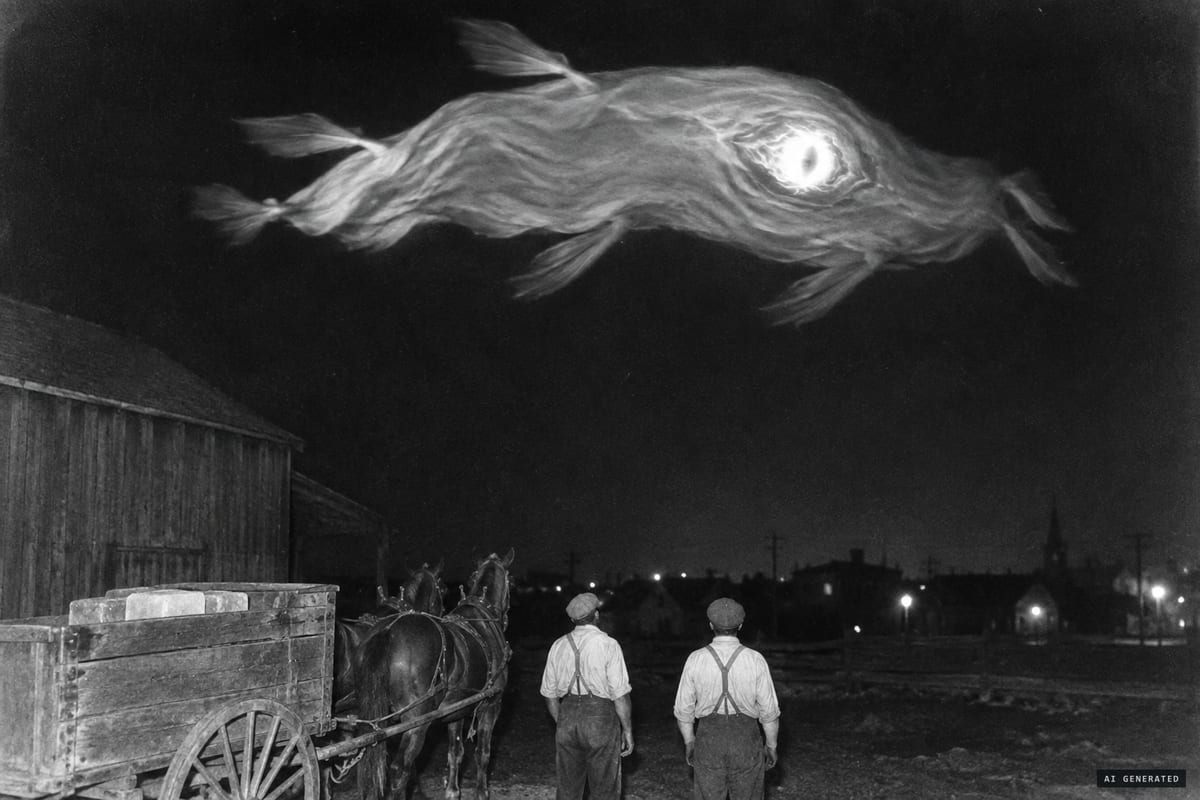 The Crawfordsville Monster
Crawfordsville, Indiana. September 1891. About two in the morning. Two icemen, Marshall McIntyre and Bill Gray, were harnessing their wagon when they looked up. Something hung in the sky, three or four hundred feet above them. It was pure white, about eighteen feet long, and it moved by means of several pairs of side fins. No head. No tail. Just one great flaming eye, and a wheezing, plaintive sound from a mouth they could not see.
-
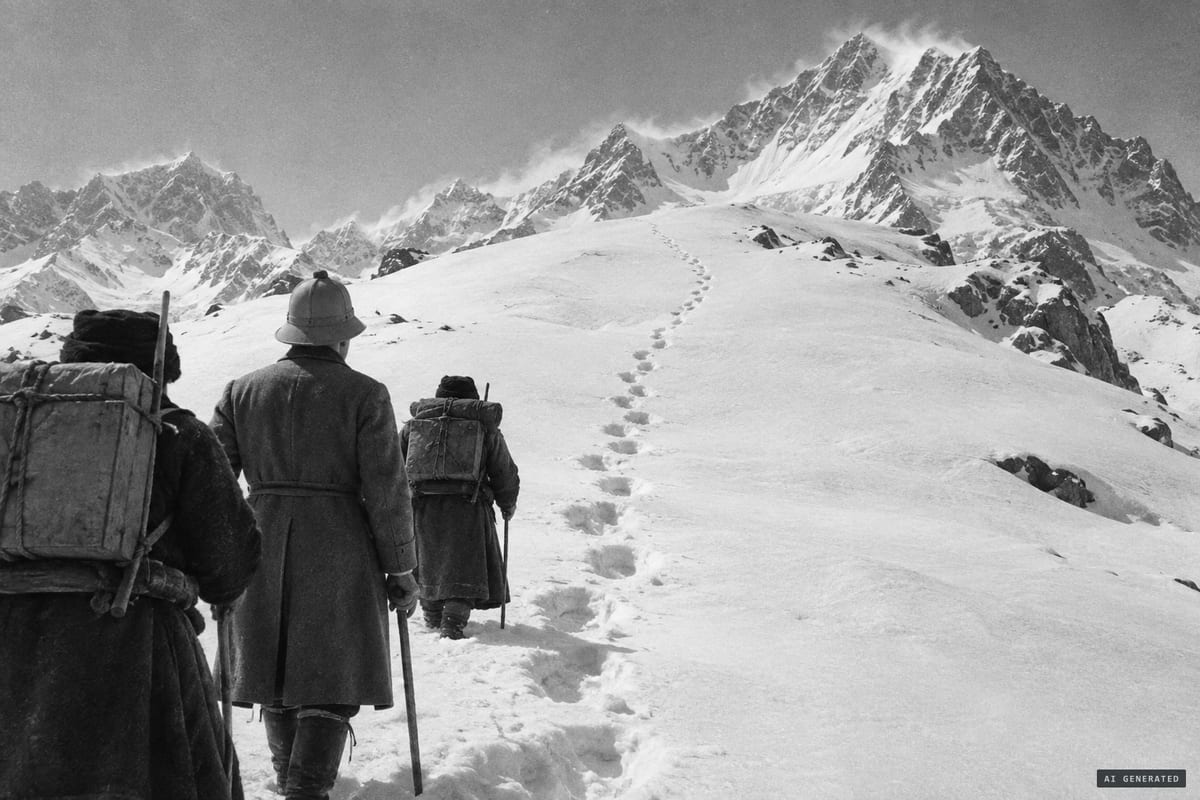 Laurence Waddell's 'hairy wild men' footprints in northeast Sikkim
1889. Northeast Sikkim. Major Laurence Austine Waddell of the Indian Medical Service was crossing the snow with his party. Then they found them. A line of large footprints led across their route and climbed away toward the higher peaks.
-
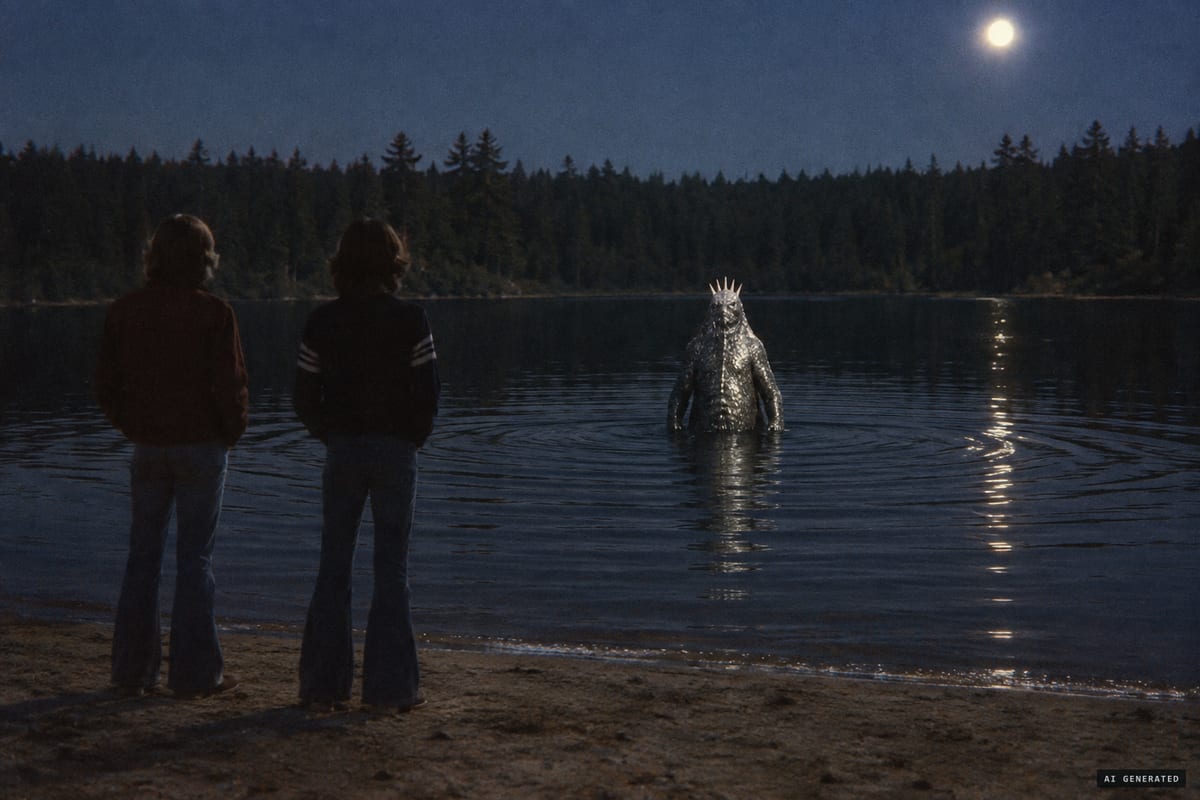 The Thetis Lake Monster
August 19, 1972. Thetis Lake, about 12 km from downtown Victoria on Vancouver Island. It was dark at the beach. Two teenagers, Gordon Pike and Robin Flewelling, watched something appear on the surface of the lake. Silver. Scaled. Roughly five feet high, with sharp points on its head. It chased them from the beach. Flewelling reported a cut on one hand.
-
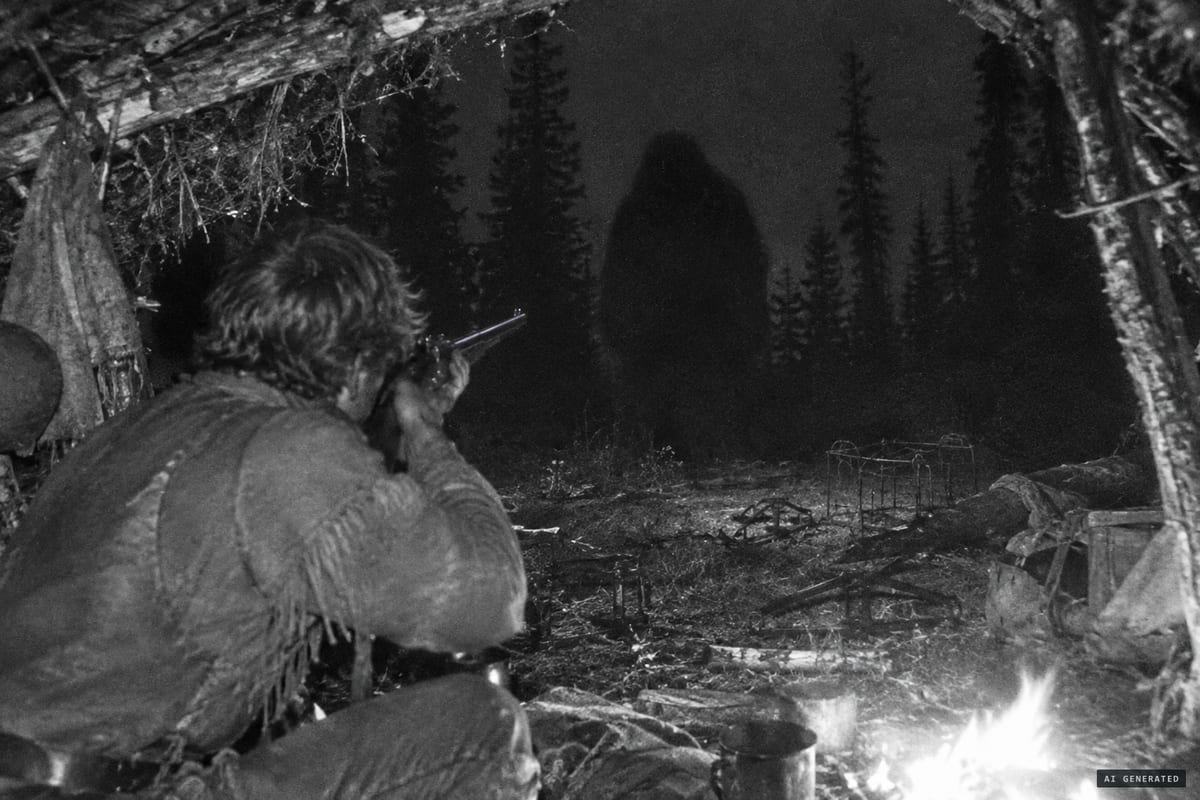 The Bauman Goblin-Beast: Theodore Roosevelt's Tale from The Wilderness Hunter
Somewhere on the border of Idaho and Montana. A wild and lonely pass with a bad name. Two young trappers went in for the beaver. Something wrecked their camp, circled their fire and moaned in the dark. Its tracks seemed to walk on two legs.
-
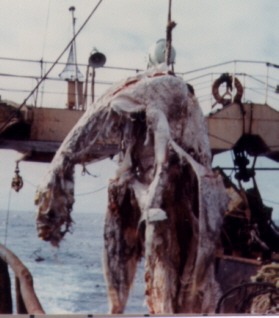 The Zuiyō Maru carcass: a 'plesiosaur' in the nets off Christchurch (1977)
April 25, 1977. The Japanese trawler Zuiyō Maru was fishing for mackerel off Christchurch, New Zealand. Something heavy came up in the nets from about 300 metres down. It was hoisted above the deck. Then it slipped and fell.
-
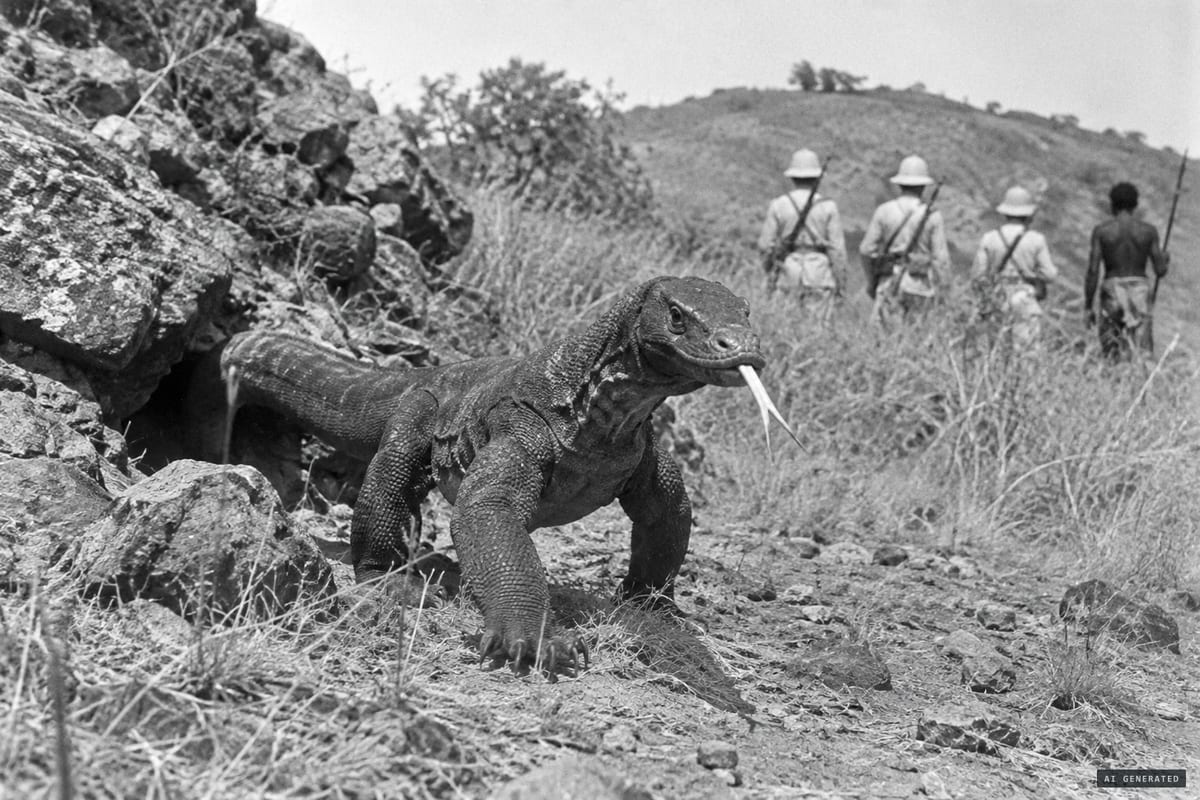 The Land Crocodile of Komodo and the First Komodo Dragon Specimens
Flores, Dutch East Indies. Lieutenant Jacques Karel Henri van Steyn van Hensbroek heard a story. Local people spoke of a boeaja darat. A land crocodile. Pearl hunters working at Komodo Island said it reached 6 to 7 metres.
-
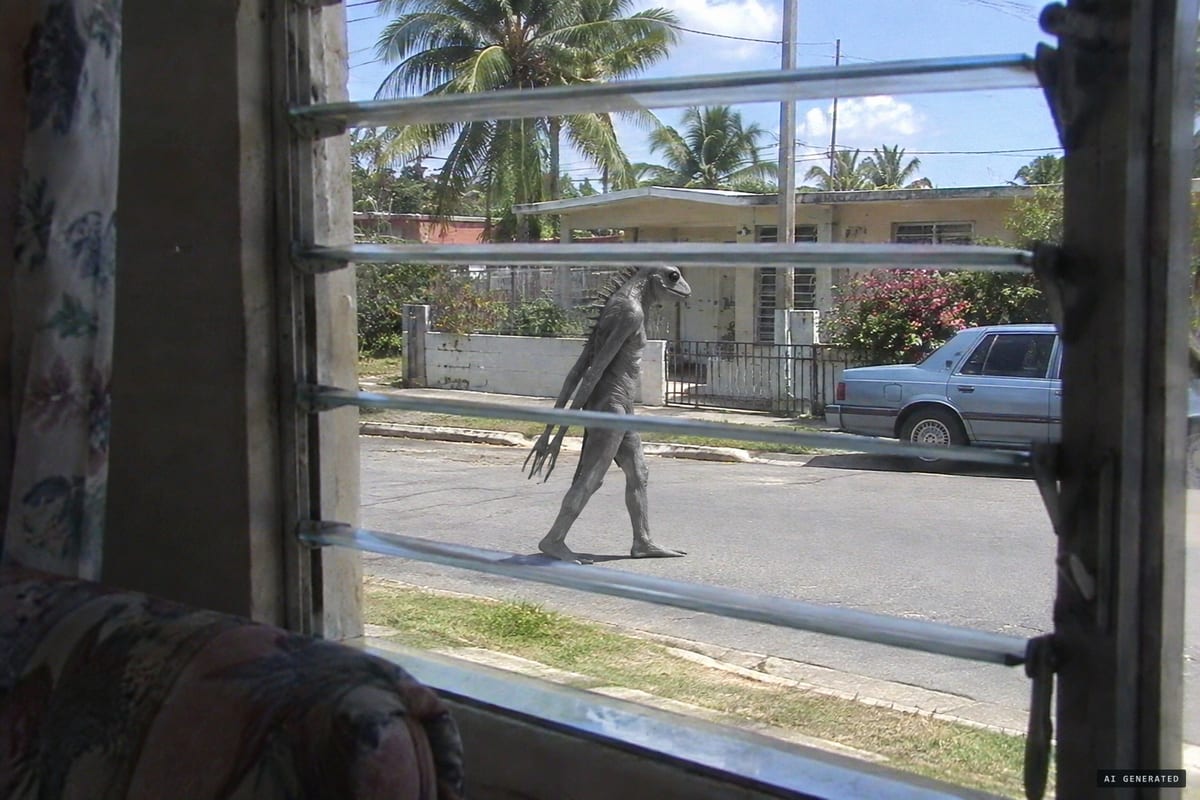 Madelyne Tolentino's Chupacabra Sighting, Canóvanas, Puerto Rico
Canóvanas, Puerto Rico. The second week of August 1995. Livestock had been dying across the island, and nobody knew why. Madelyne Tolentino was at her mother's house when she looked out of the window.
-
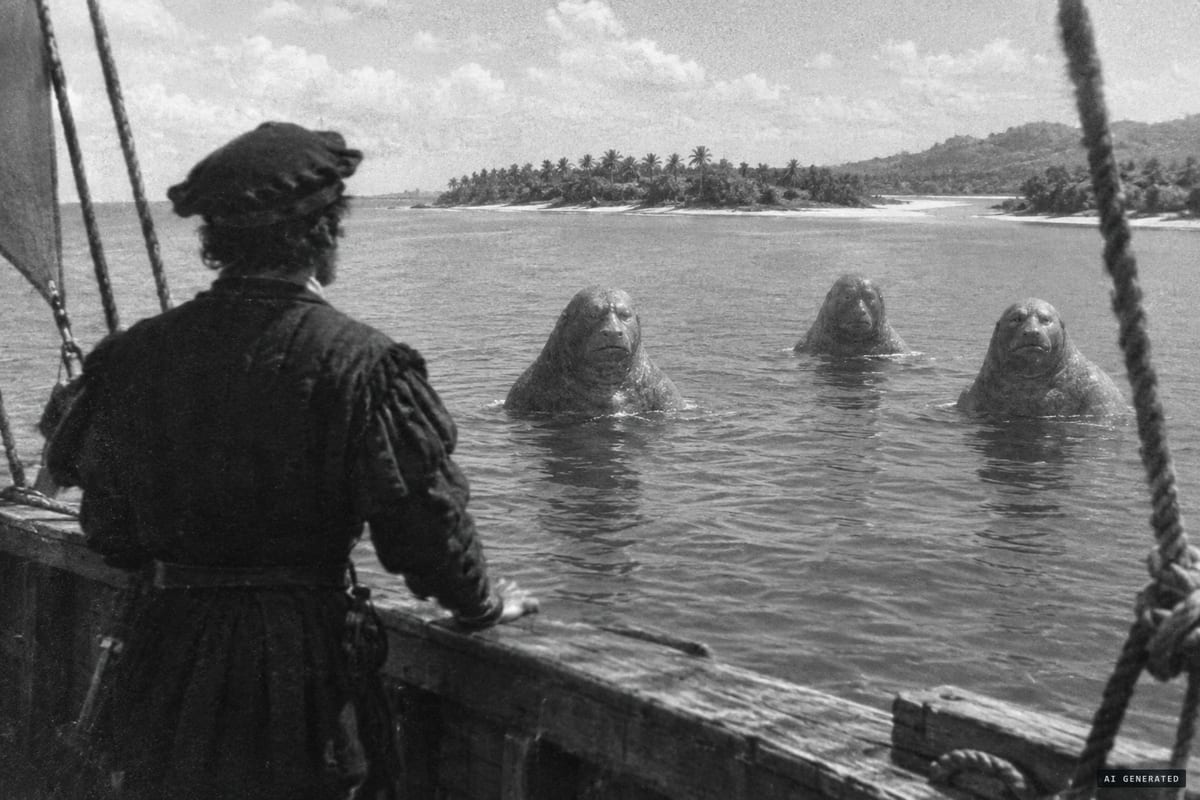 Christopher Columbus's three mermaids off Hispaniola
January 1493. Christopher Columbus is nearing the end of his first voyage, sailing along the north coast of Hispaniola. On the way to a river he has named the Río del Oro, he sees three figures in the water. They rise well out of the sea. He calls them sirens. Mermaids.
-
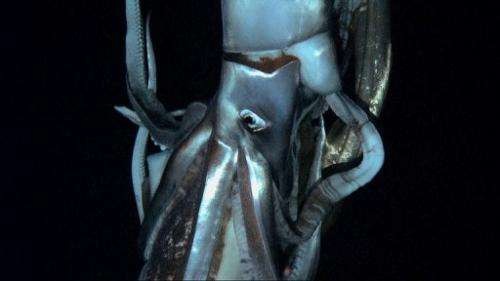 The first video of a live giant squid in the deep sea, Ogasawara Islands (2012)
July 2012. Off the Ogasawara Islands, about 1,000 km south of Tokyo. A three-person submersible waited in the dark, its electronics shut down to stay quiet. Then the animal arrived. A giant squid, Architeuthis, silver-coloured with huge black eyes. It held a bait squid in its arms and swam against the current. Zoologist Tsunemi Kubodera watched from inside the sub as it fed, its skin shifting between gold and silver. "It was shining and so beautiful," he said.
-
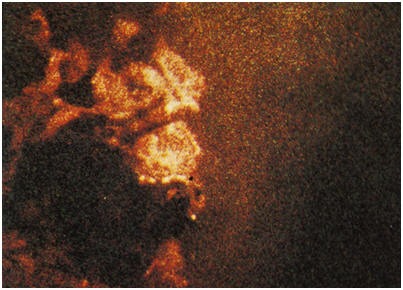 The Loch Ness "body" and "gargoyle head" underwater photos, Urquhart Bay 1975
June 1975. Loch Ness. Forty feet below the surface of Urquhart Bay, a camera fired its strobe every 75 seconds into murky water. Nobody was watching. There was no eyewitness at all. When the team studied the frames, the Academy of Applied Science group led by Robert H. Rines saw what they believed was an animal. A long neck. A bulbous body. Flippers. In another frame, a horned, knobbly head loomed out of the gloom.
-
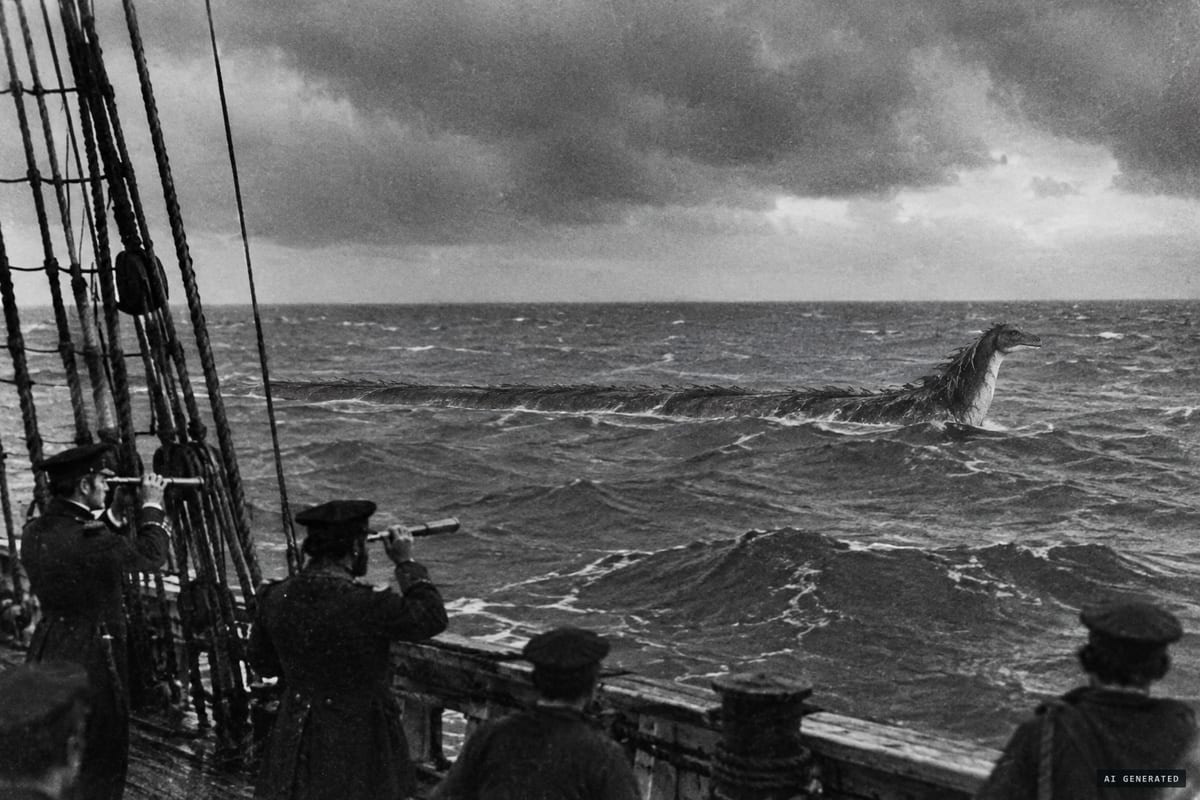 HMS Daedalus sea serpent: Captain M'Quhae's report and the Richard Owen dispute, 1848
6 August 1848. The South Atlantic, somewhere between the Cape of Good Hope and St Helena. The sky is dark and cloudy. A long swell runs under the frigate HMS Daedalus, homeward bound from the East Indies.
-
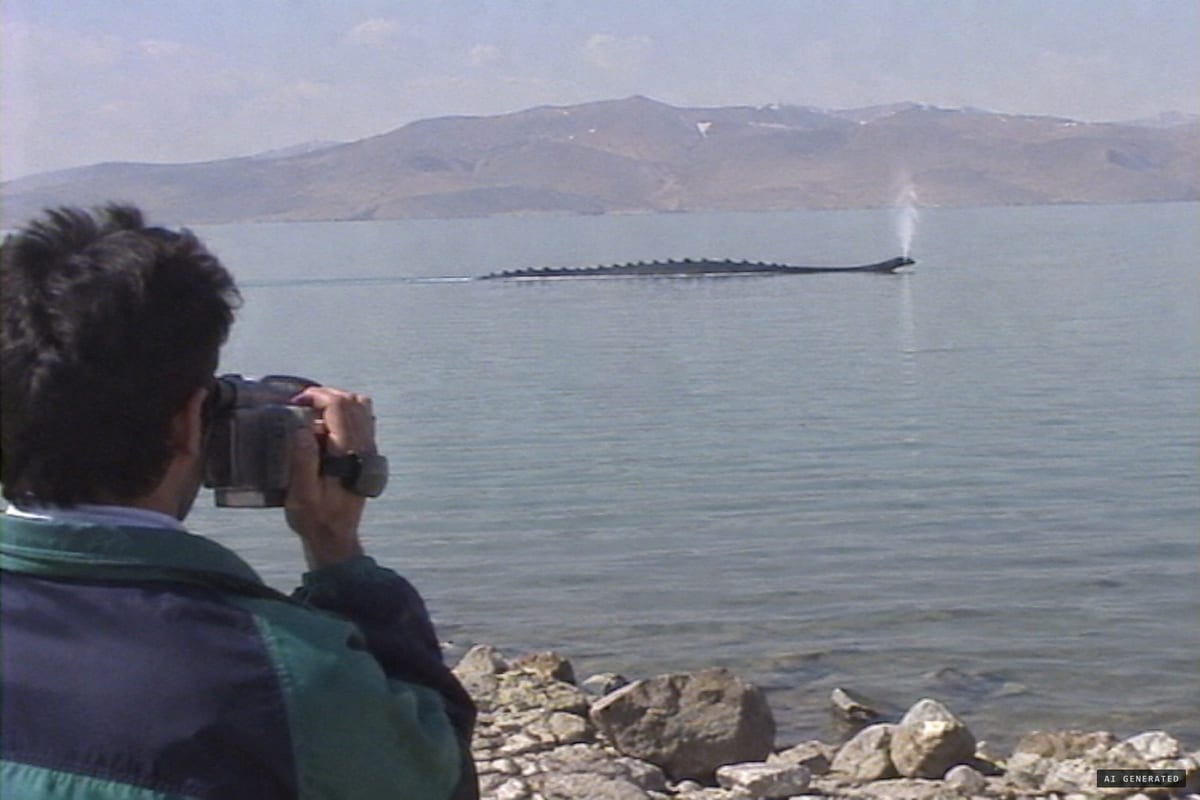 Ünal Kozak's Lake Van Monster video
Lake Van, eastern Turkey. 1997. Ünal Kozak was 26, a teaching assistant at Yüzüncü Yıl University. Since 1995, locals had been reporting something in the water. He interviewed about 1,000 of them. Then he waited at the spots where most sightings had been reported. He said he saw it three times. And he filmed it.
-
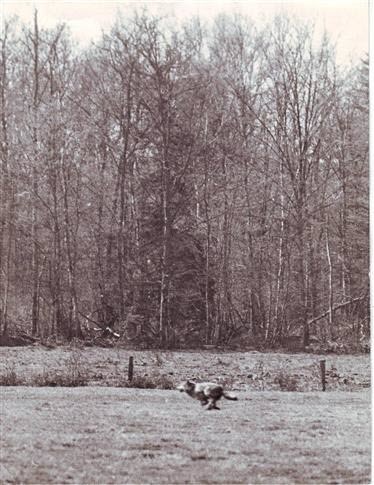 The Beast of the Vosges (La Bête des Vosges), 1977
March 1977. In an enclosure at Domèvre-sur-Durbion, in the Vosges, seven sheep lay dead. It was the first kill. By November, the attacks had spread from the plain near Rambervillers into the high Vosges.
-
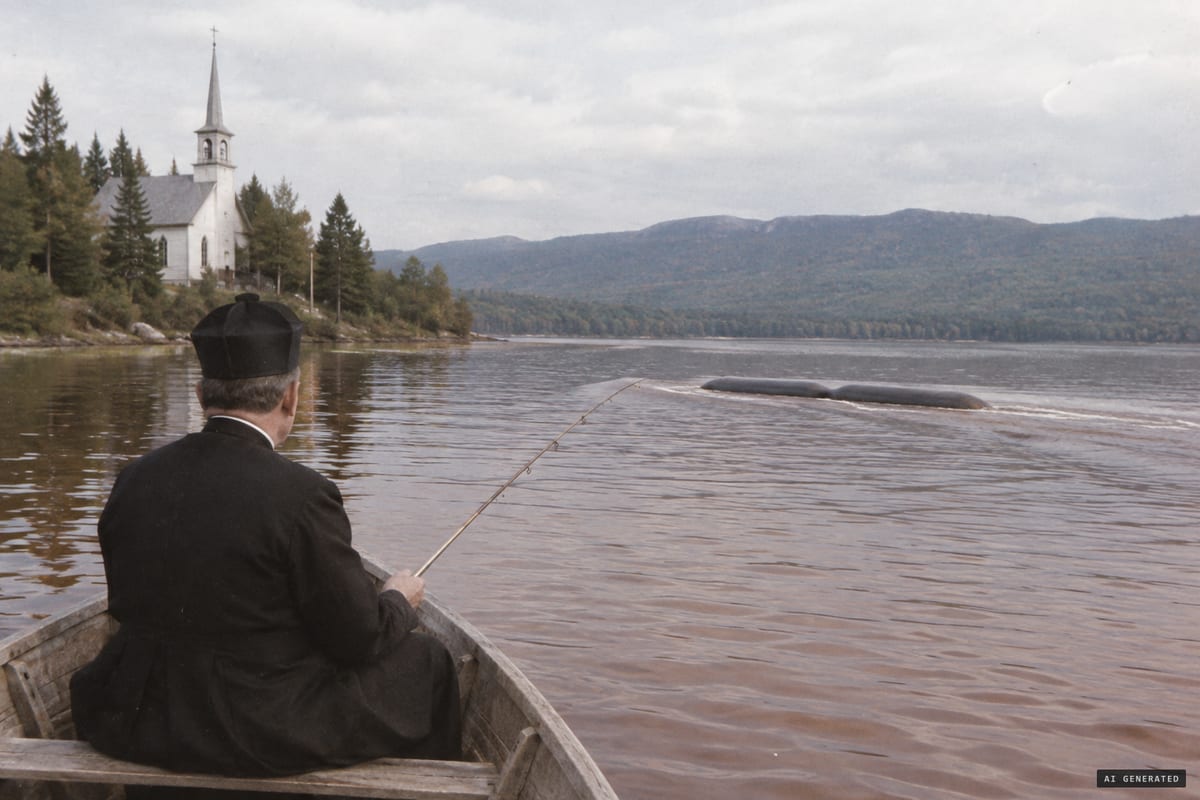 Ponik: the 1957 sightings at Lac Pohénégamook and Father J.-Léopold Plante's "overturned canoe"
Lac Pohénégamook, Quebec. 1957. The parish priest of Saint-Éleuthère was fishing near his church. Out on the water floated a big, black thing. It looked like two pieces, with a depression in the middle. In another telling, it was a long overturned canoe crossing the lake, leaving a wake behind.
-
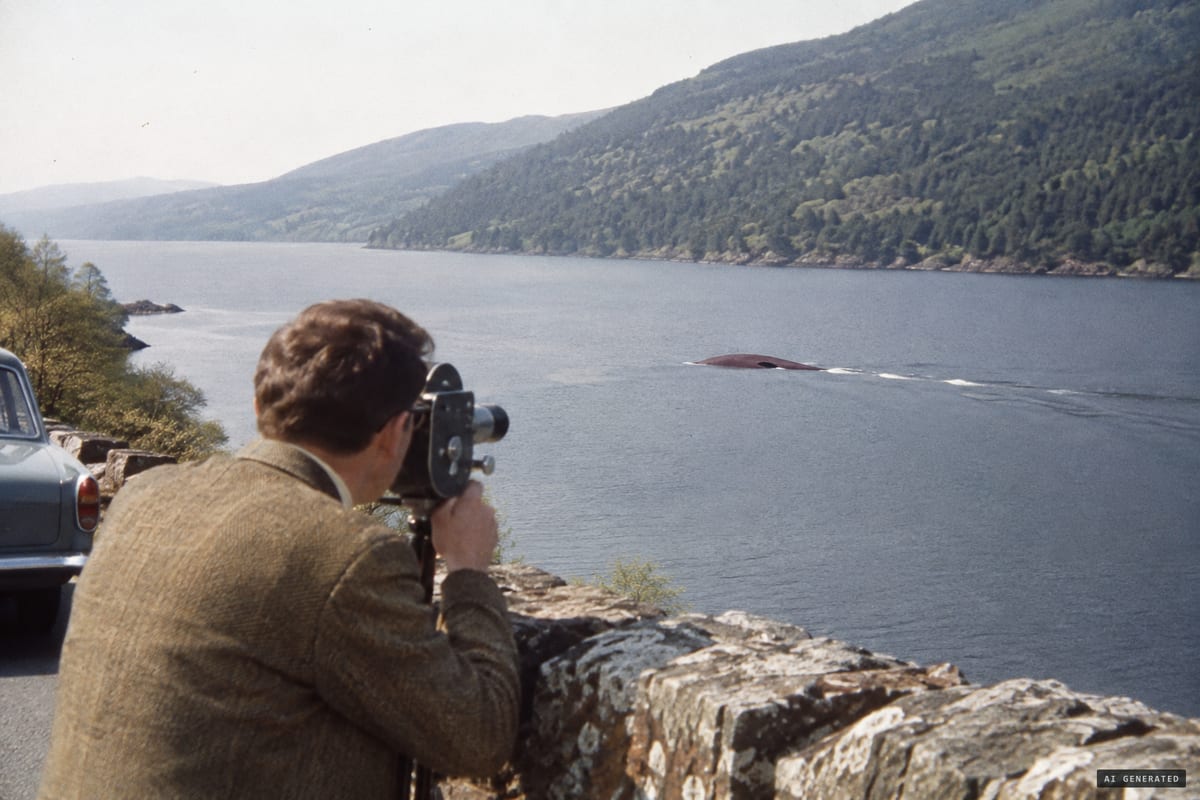 Tim Dinsdale's Loch Ness Film, Foyers Bay (1960)
23 April 1960. Loch Ness. Aeronautical engineer Tim Dinsdale was on the last morning of a six-day watch, alone on a road high above Foyers Bay. Then he saw it. Through binoculars, a long oval hump lay on the water. A distinct mahogany colour. A huge dark blotch on its flank, "like the dapple on a cow."
-
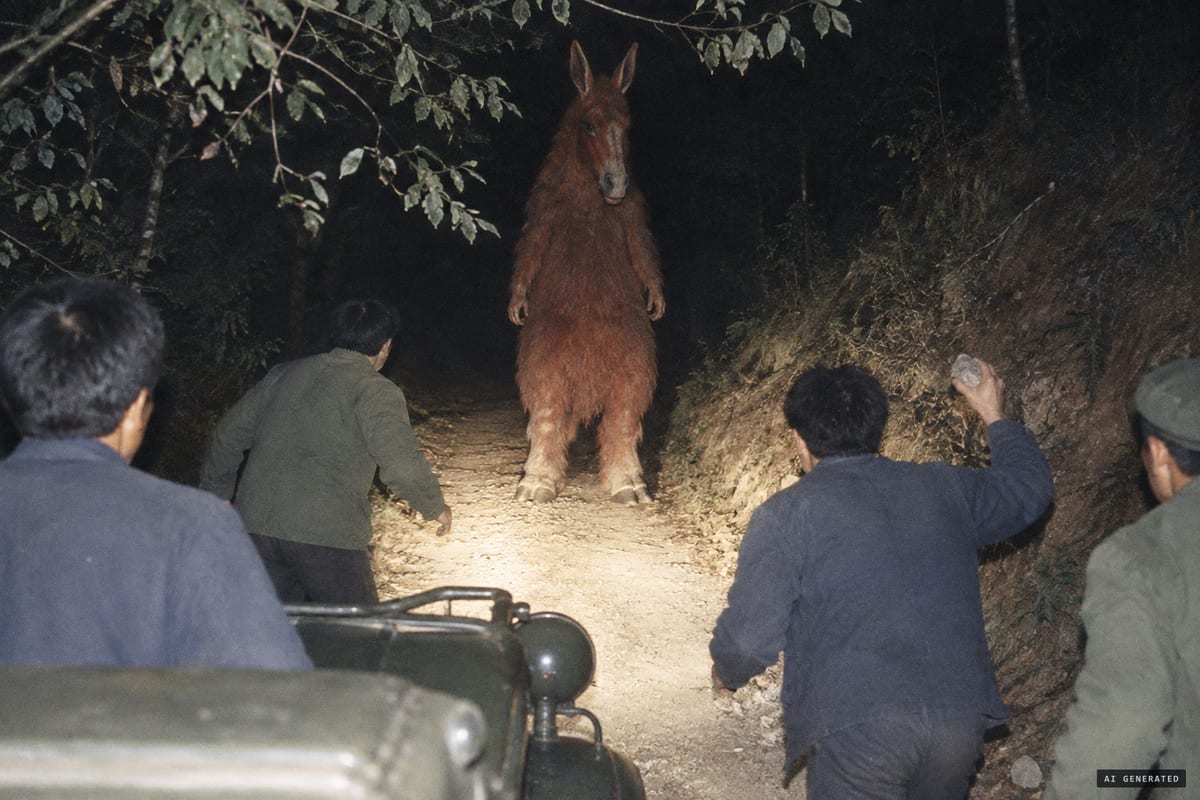 Shennongjia Jeep Encounter with a Red-Haired Yeren
May 1976. A jeep climbed through the mountains of Hubei in the dark. Inside were five senior officials of the Shennongjia Forestry District and their driver, heading home to Songbai. At the Chunshuya pass, the headlights caught something on the track. The driver thought it was a wild goat. It was not. It stood as tall as a tall man, red hair all over, and walked on its hind legs.
-
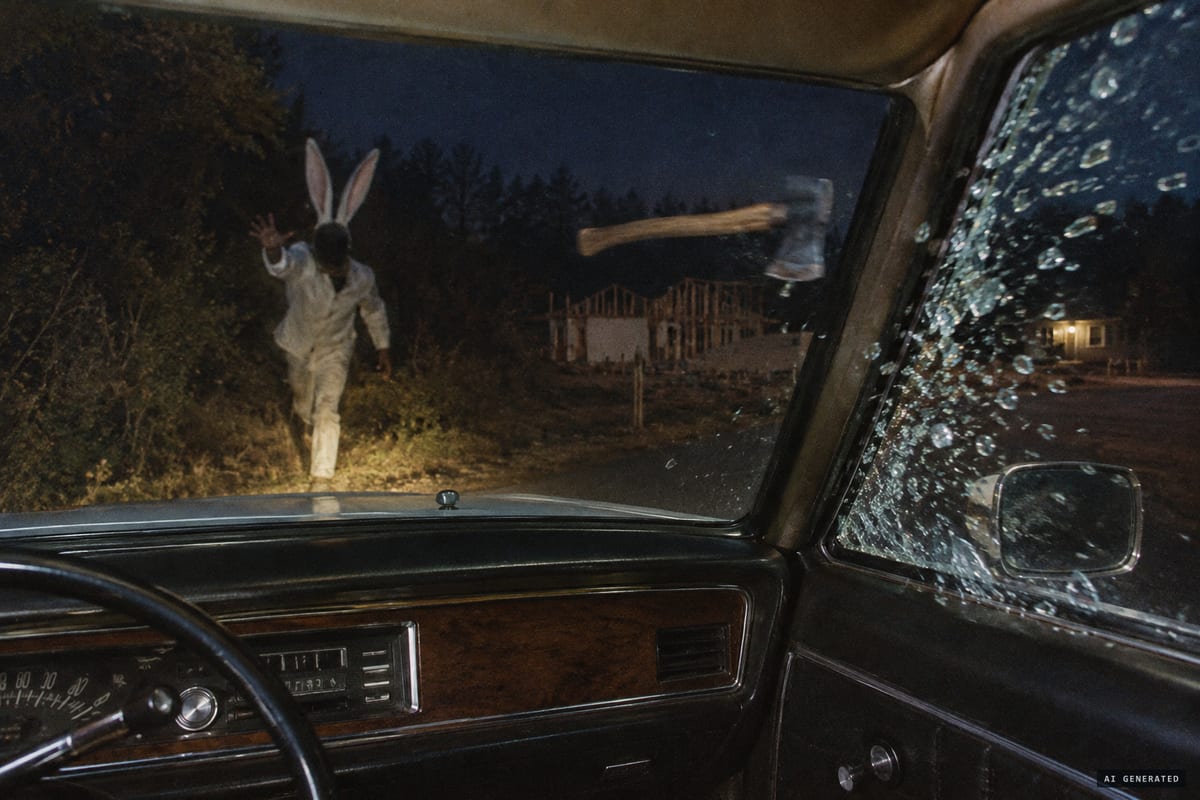 The Bunny Man Hatchet and Axe Attacks on Guinea Road, Burke, Virginia
October 1970. Guinea Road, Burke, Virginia. Shortly after midnight, a young Air Force Academy cadet and his fiancée sat in a parked car with the motor running. A man ran from the bushes. He wore a white suit with long bunny ears. He shouted that they were on private property. Then a wooden-handled hatchet came through the right front window.
-
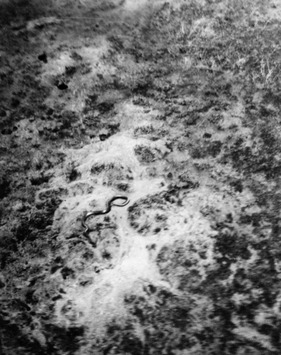 Col. Remy Van Lierde's giant snake (the Congo snake or Katanga snake)
August 1959. Katanga, Belgian Congo. Colonel Remy Van Lierde was flying a helicopter back to Kamina Air Base over the savanna. Someone aboard spotted what looked like a moving tree trunk.
-
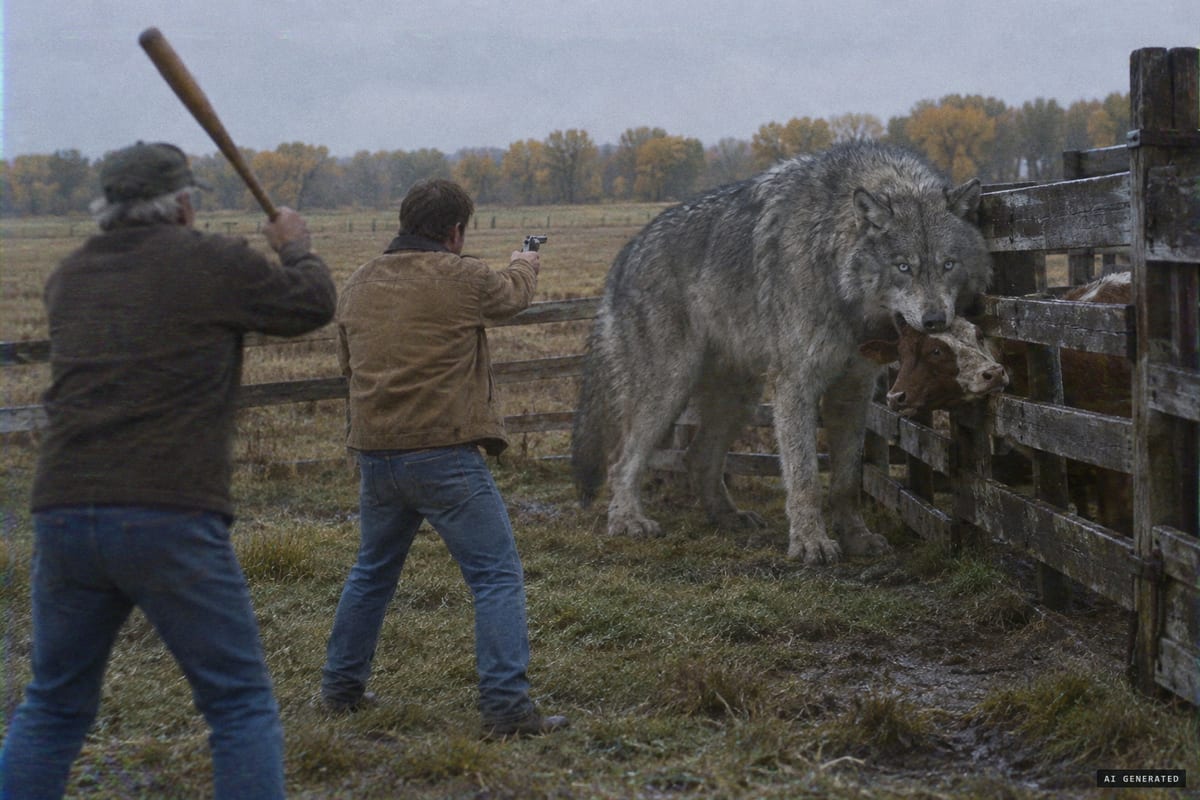 Terry Sherman's Bulletproof Giant Wolf at Skinwalker Ranch
Autumn 1994. A ranching family had just taken over a remote cattle property near Fort Duchesne, Utah. Within days, a wolf came loping across the field toward them. It was huge. Grey-silver, heavily muscled, with eyes of a startling light blue. It let them pet it. Then it seized a calf through the corral bars.
-
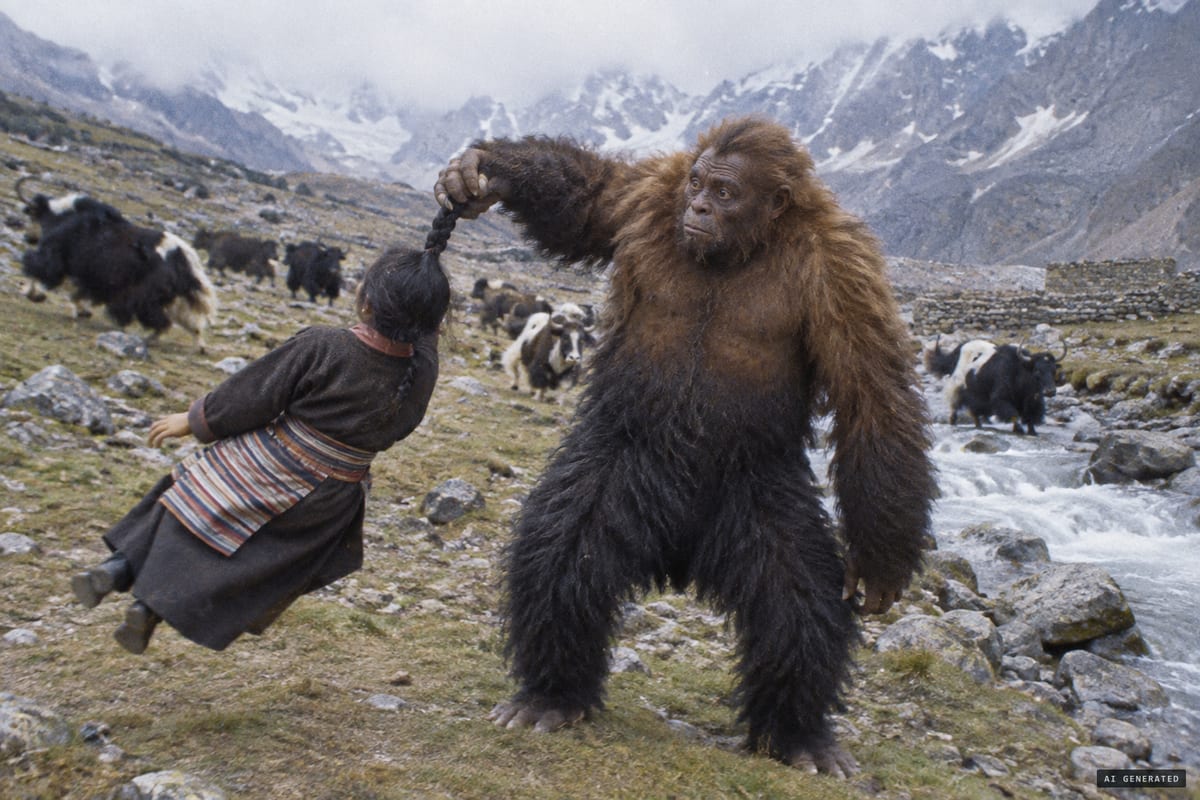 The Machermo Yeti Attack on Lhakpa Domani Sherpa
July 1974. The summer pasture at Machermo, high in Nepal's Khumbu below Gokyo. A young Sherpa woman named Lhakpa Domani Sherpa was herding yaks. Then something came up behind her.
-
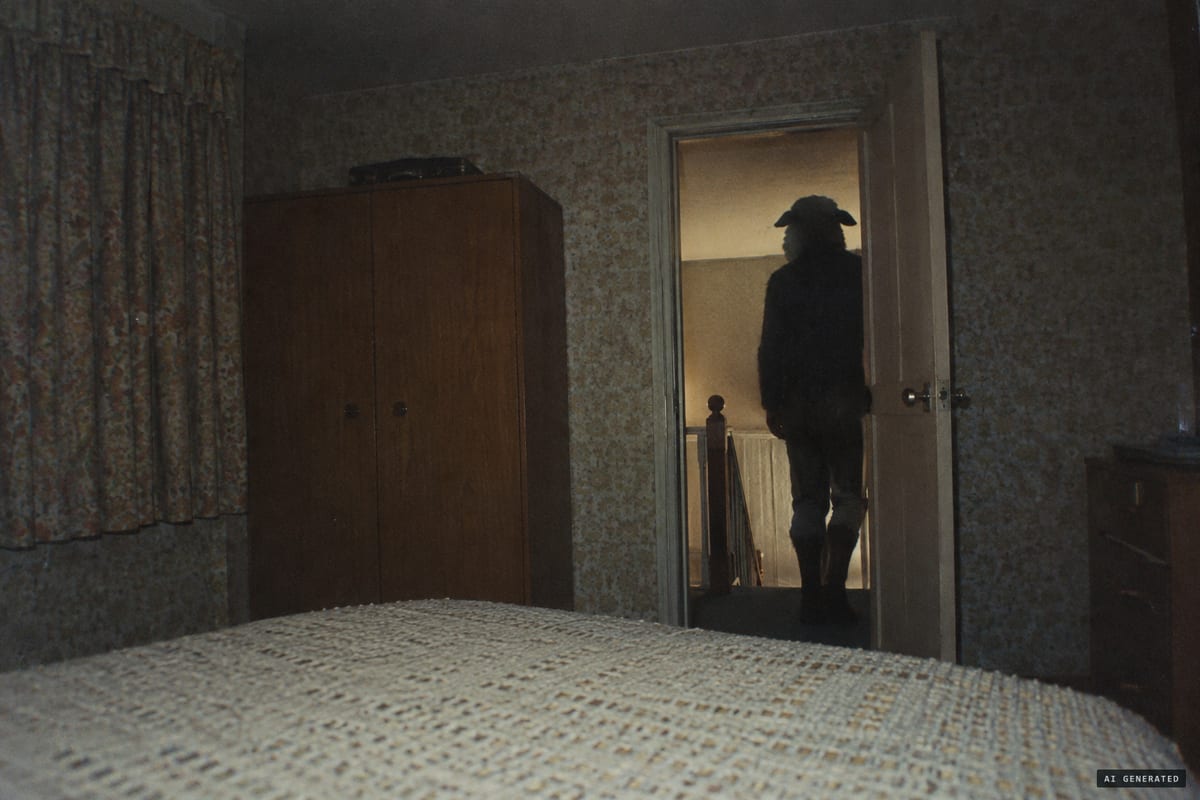 Nellie Dodd's Half-Man, Half-Sheep Creature (the Hexham Heads)
Hexham, Northumberland. Around 1971. Two brothers dig up a pair of small stone heads in their back garden on Rede Avenue. Soon the house is restless. The heads turn by themselves. Bottles fly.
-
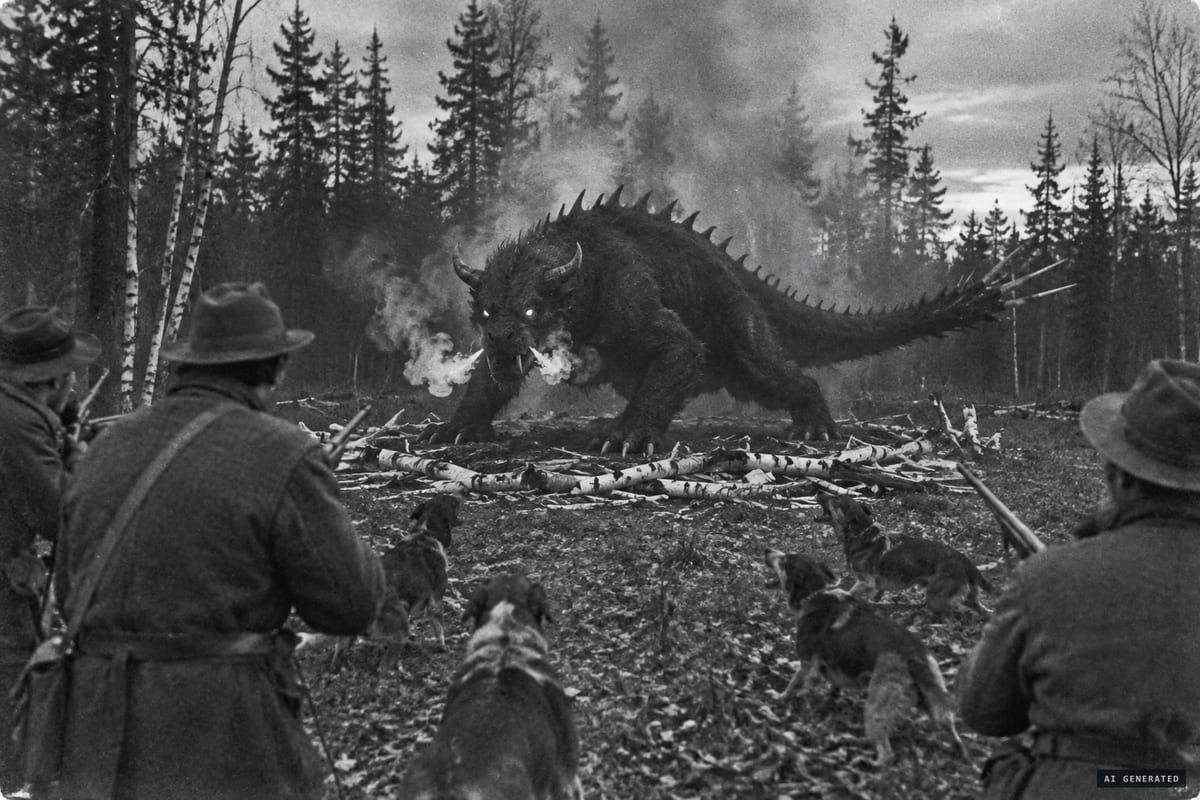 The Hodag of Rhinelander
Autumn 1893. The woods near Rhinelander, Wisconsin. Eugene Simeon Shepard, a timber cruiser and well-known practical joker, said he and a party of lumbermen had cornered a monster. Seven feet long. Short black hair, green eyes, fangs, horns, and spikes down its back. They piled birch bark around it and set off dynamite.
-
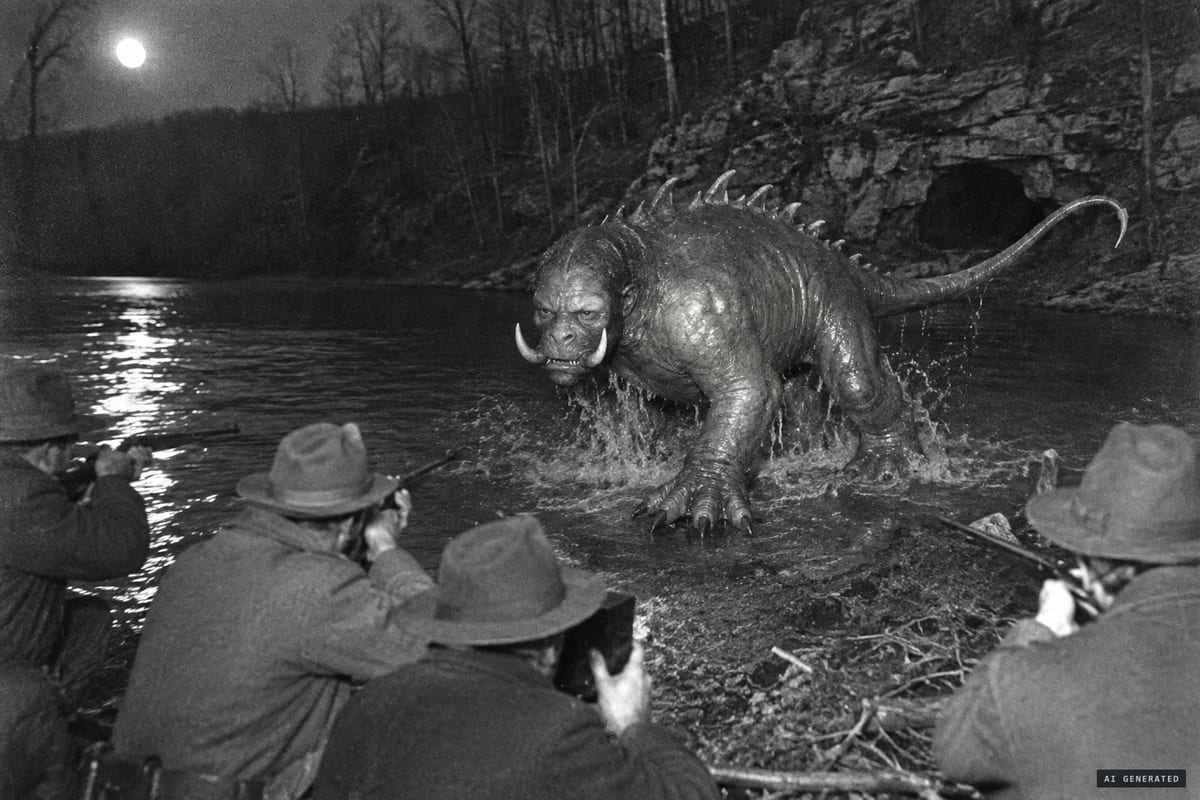 The Gowrow: William Miller's Posse and the Searcy County Monster
Searcy County, Arkansas. Something was killing livestock and pets around Blanco. Locals said it came down from the mountains in the night, crying a single word. Gowrow.
-
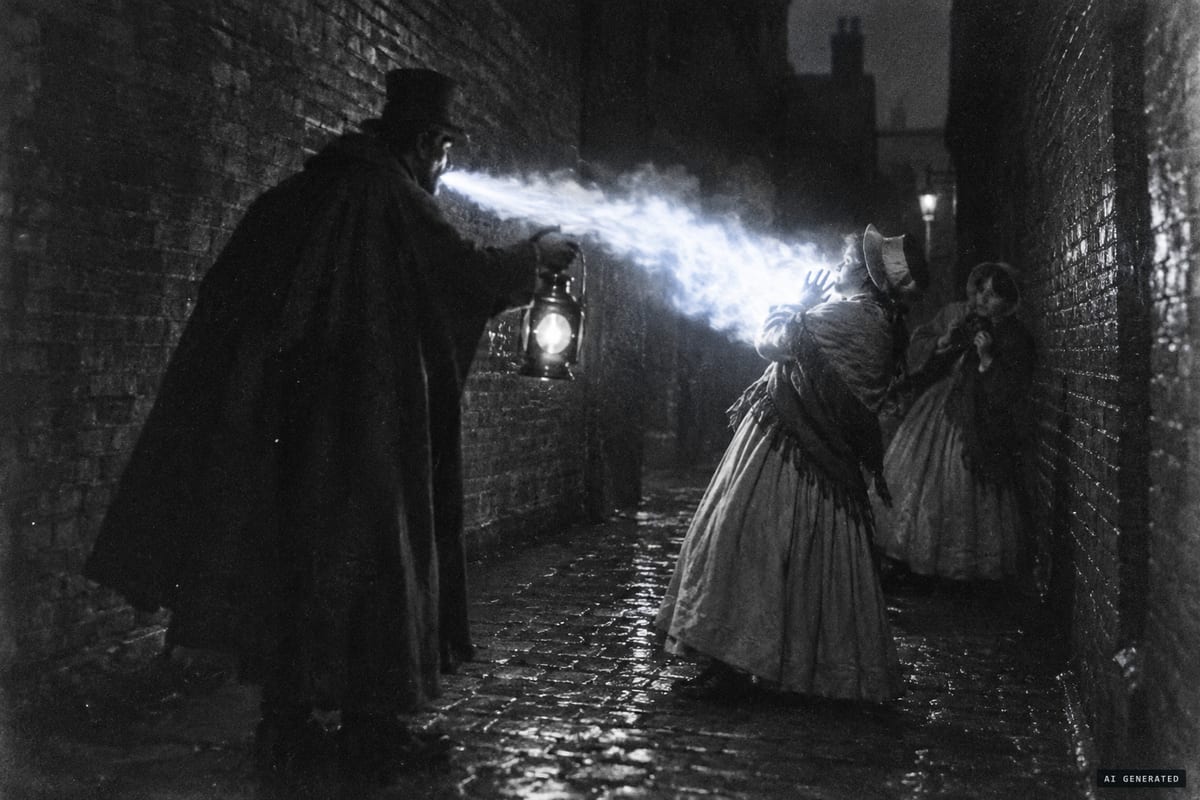 Lucy Scales and Spring-heeled Jack, Green Dragon Alley, Limehouse
Limehouse. A Wednesday evening in February 1838. Lucy Scales and her sister were walking home from their brother's house in Narrow Street. It was about half past eight. In Green Dragon Alley, a figure stood in an angle of the passage. Tall. Thin. Gentlemanly in appearance, wrapped in a large cloak, a small lamp held before him.
-
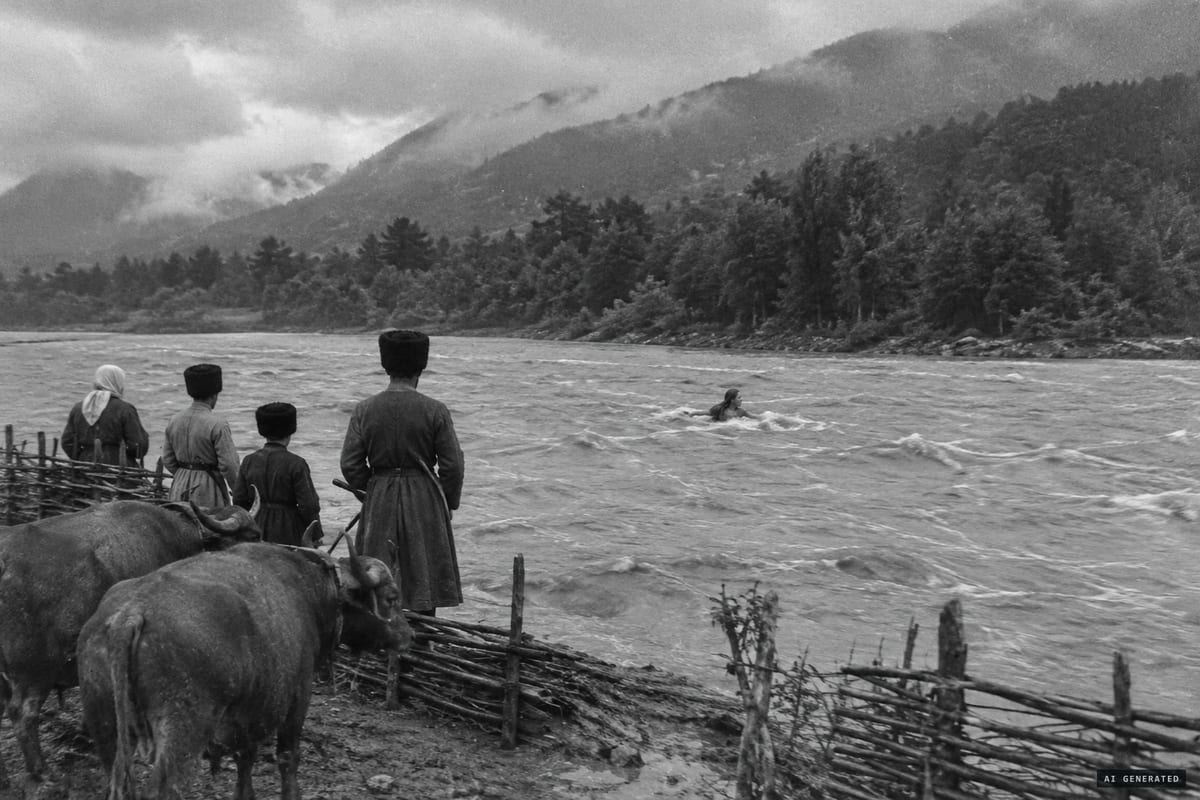 Zana of Tkhina, the abnauayu wild woman of Abkhazia
Abkhazia, on the Black Sea coast of the Caucasus. The 1850s. Hunters in the forest captured a woman no one could place. She was very tall and very strong. Her skin was dark and her body was covered in reddish hair. Locals called her an abnauayu, a wild woman of the woods. They named her Zana.
-
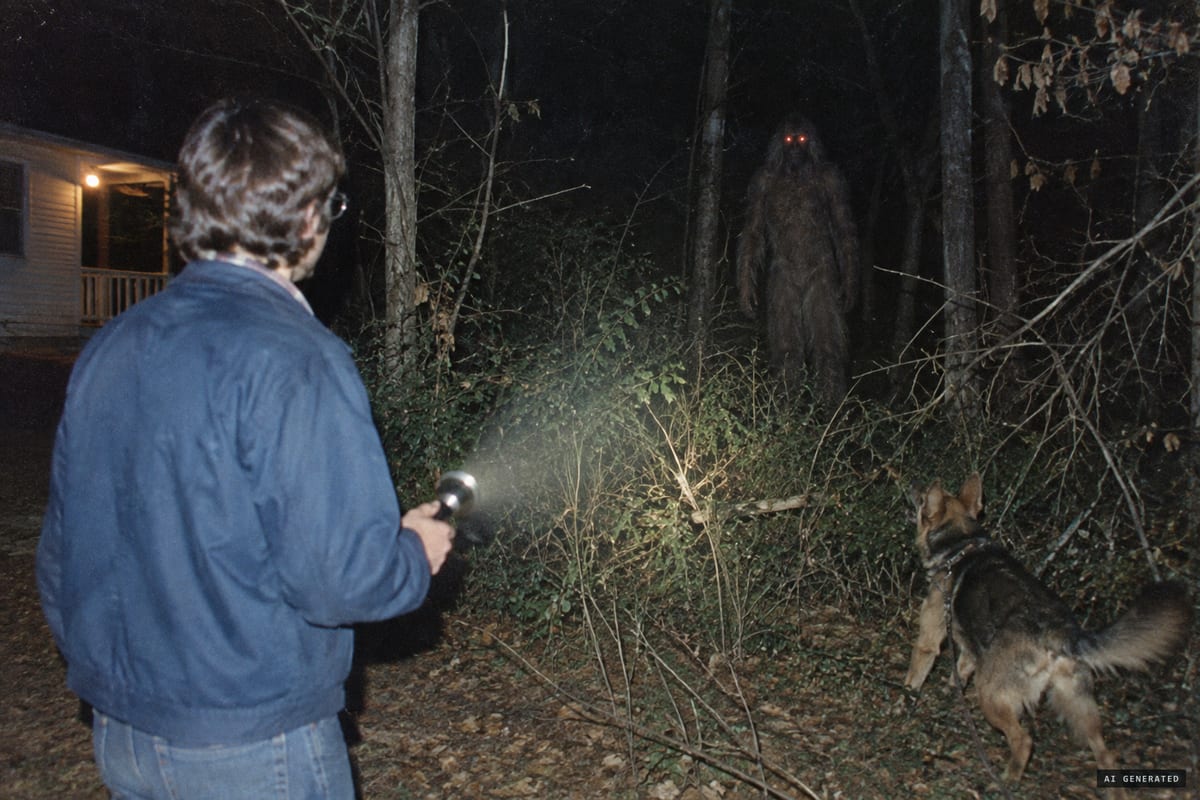 The Sykesville Monster, Carroll County, Maryland, 1973
Sykesville, Maryland. May 29, 1973. About 10:30 at night. Anthony Dorsey's dog was fighting something in the woods behind his house on Norris Avenue. He went in. He heard a crashing sound. Then his flashlight caught two large eyes, reflecting red, more than 2 metres off the ground.
-
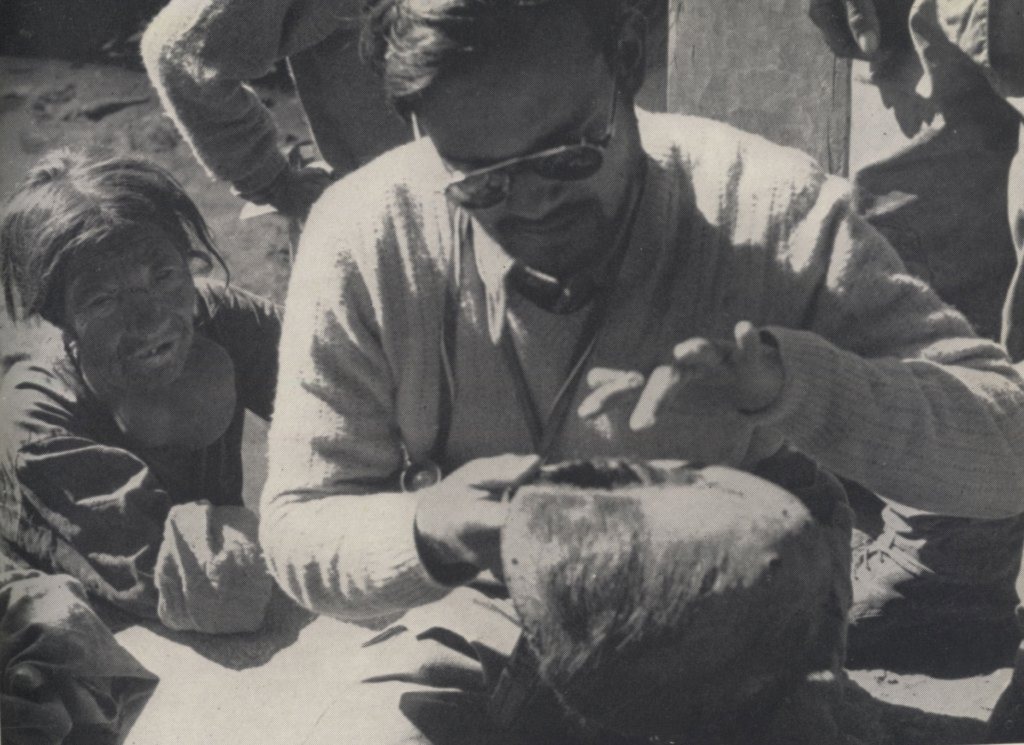 The Daily Mail Snowman Expedition Footprints
Early 1954. The Khumbu region of Nepal, near Everest. A newspaper had sent men into the snow to find the abominable snowman.
-
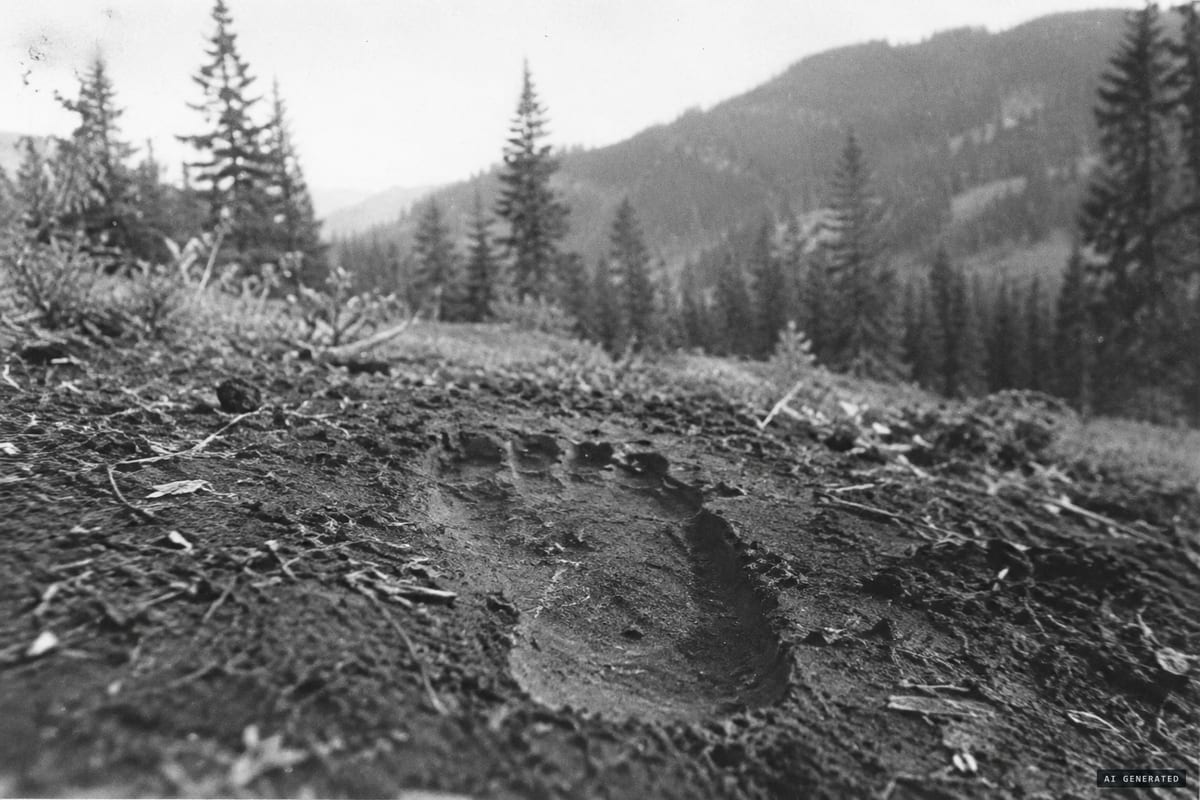 Hoopa Bigfoot Footprint Photograph
September 1962. Hoopa, California. A newspaper page holds almost everything that survives of this story. The Eureka Humboldt Times of 4 September printed a photograph of an alleged Bigfoot footprint under a plain headline. "Bigfoot Leaves Prints While Touring."
-
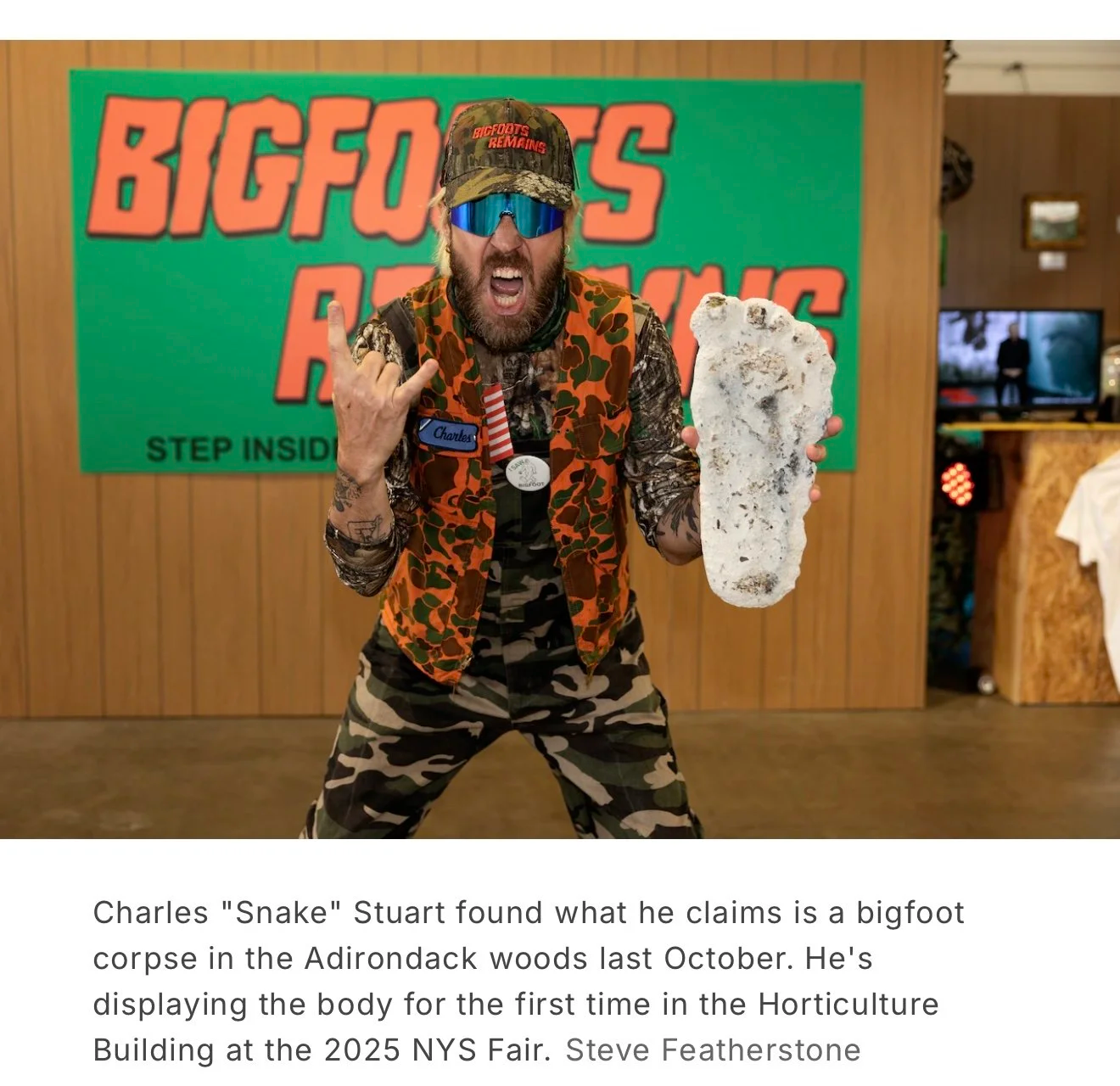 Dack, the Adirondack Bigfoot Corpse
Autumn 2024. The Adirondack Mountains. Charles "Snake" Stuart says he and his team came upon a body sitting in a patch of poison ivy. About 8 feet tall. Roughly 300 pounds. A thick, layered coat of hair. And the smell of decay. He named it Dack, after the region, and took it home.
-
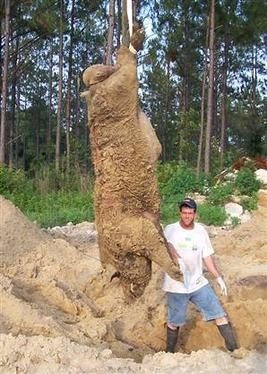 Hogzilla: The Half-Ton Hog of Alapaha, Georgia
June 17, 2004. A fish farm and hunting preserve near Alapaha, Georgia. Hunting guide Chris Griffin was picking up after hunters when he saw the hog. He grabbed a rifle from his truck and fired. The animal ran into the swamps and collapsed.
-
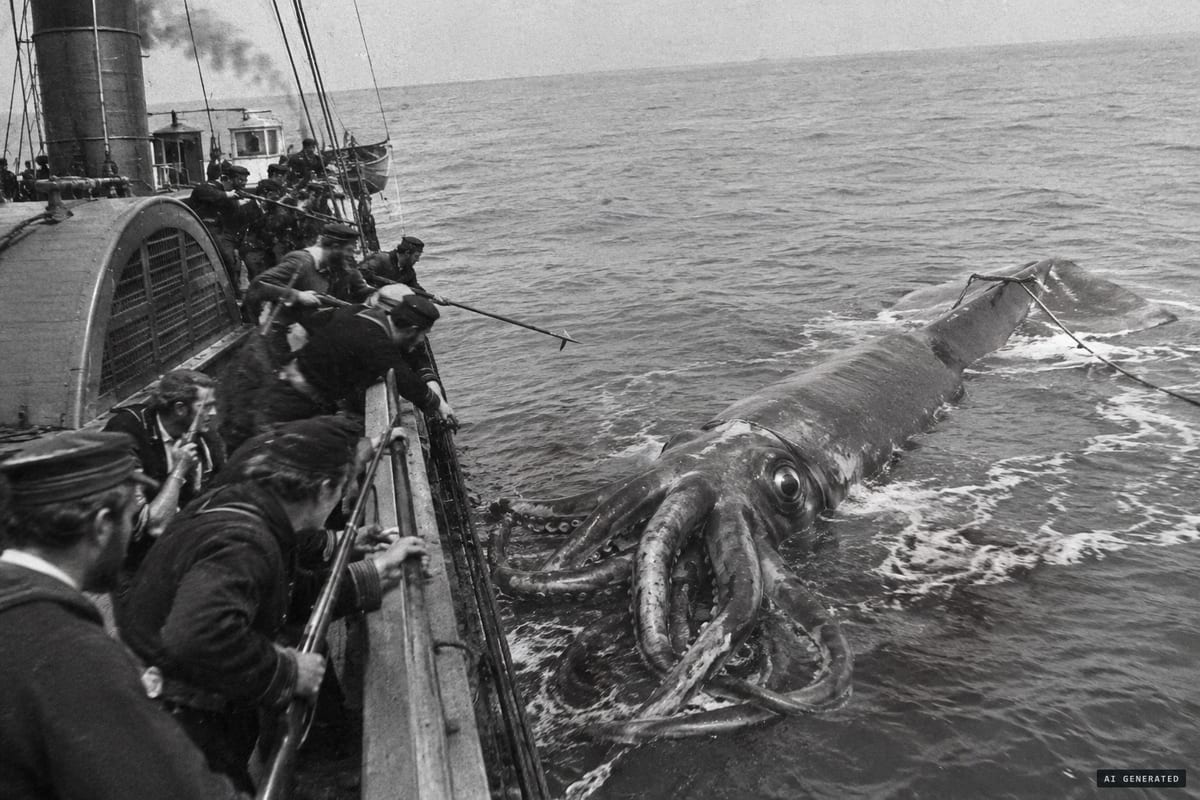 The Alecton Giant Squid Encounter off Tenerife (the "Bouyer Kraken")
30 November 1861. The French Navy dispatch steamer Alecton was bound from Toulon to Cayenne, some forty leagues from Tenerife. Around two in the afternoon, something brownish red lay floating at the surface. It was a gigantic squid. Eighteen feet from head to tail, by the commander's estimate. Eight arms. Eyes the size of a plate.
-
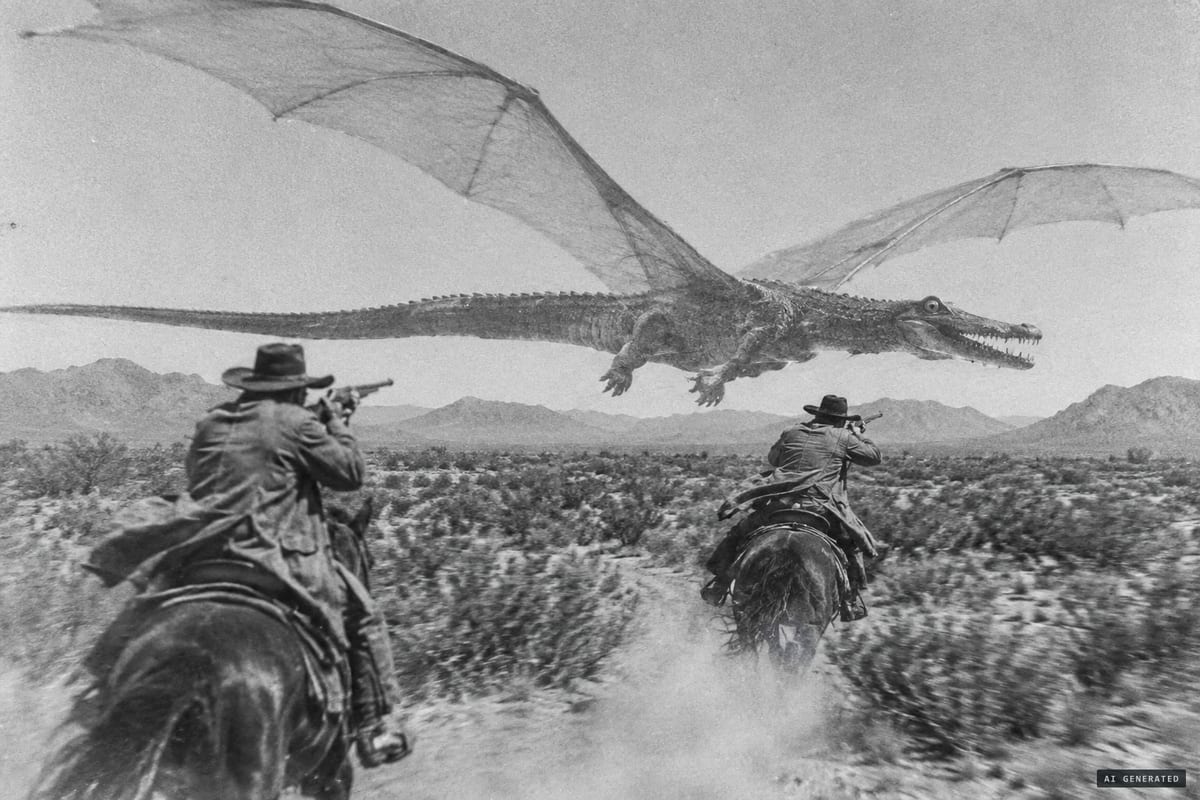 The Tombstone Thunderbird: the Winged Monster of the Huachuca Desert
A Sunday in April 1890. Two ranchers were riding home from the Huachuca Mountains across the open desert of Arizona Territory. There they found it. A winged monster, like a huge alligator, with an extremely elongated tail and wings the Tombstone Epitaph put at about 160 feet tip to tip. It was exhausted. It could fly only a short distance at a time. The men gave chase on horseback for several miles and opened fire with their Winchesters.
-
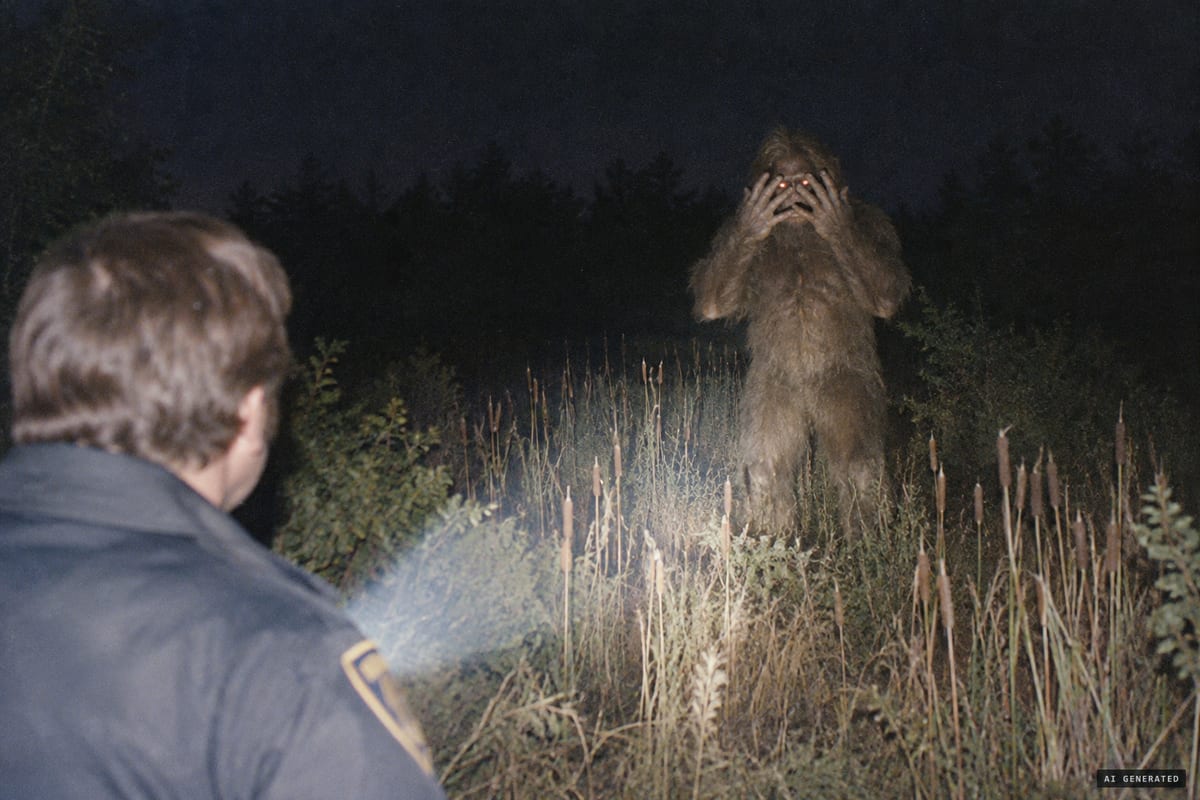 The Abair Road Bigfoot, Whitehall, New York (1976)
August 24, 1976. Whitehall, New York. Three teenagers in a pickup spotted a "large human form" standing beside a field off Abair Road. They turned around for a better look. It screamed. Then it ran at the truck. The driver left a measured fifty seven feet of rubber on the road.
-
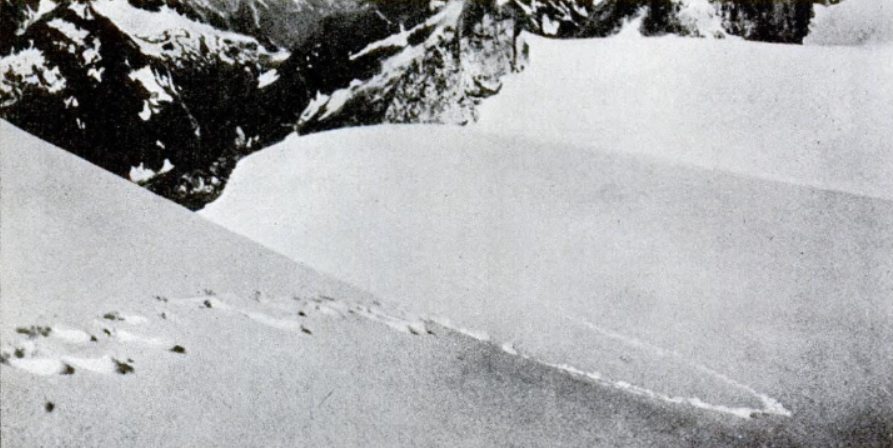 Frank Smythe's Yeti Footprints, Bhyundar Valley
July 17, 1937. A glacier pass above the Bhyundar Valley, high in the Garhwal Himalaya. Frank Smythe and three Sherpas found a line of fresh prints in the snow. Huge. Five-toed. Apparently made by something walking on two legs.
-
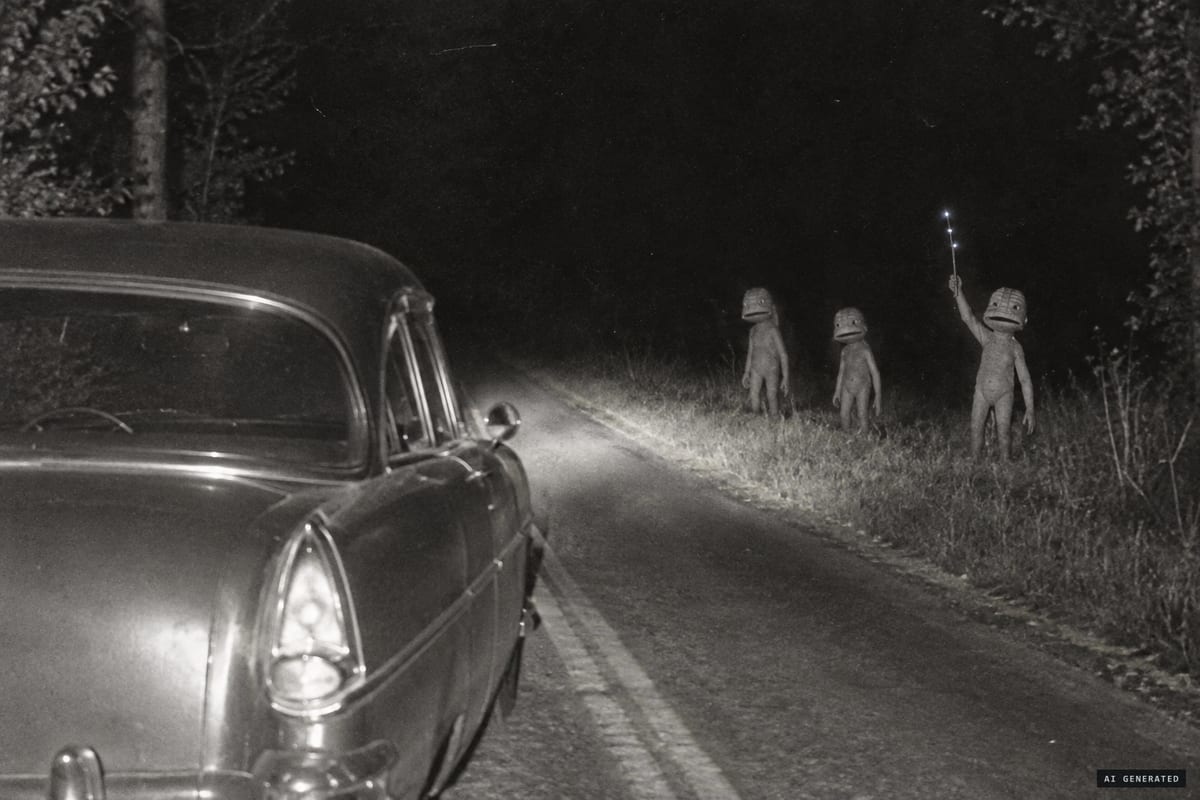 Robert Hunnicutt's frog-faced roadside figures, Branch Hill, Ohio (1955)
May 25, 1955. About 3:30 in the morning. Robert Hunnicutt was driving northeast through Branch Hill, on the Madeira-Loveland Pike near Loveland, Ohio. His headlights caught three short figures standing in the grass beside the road.
-
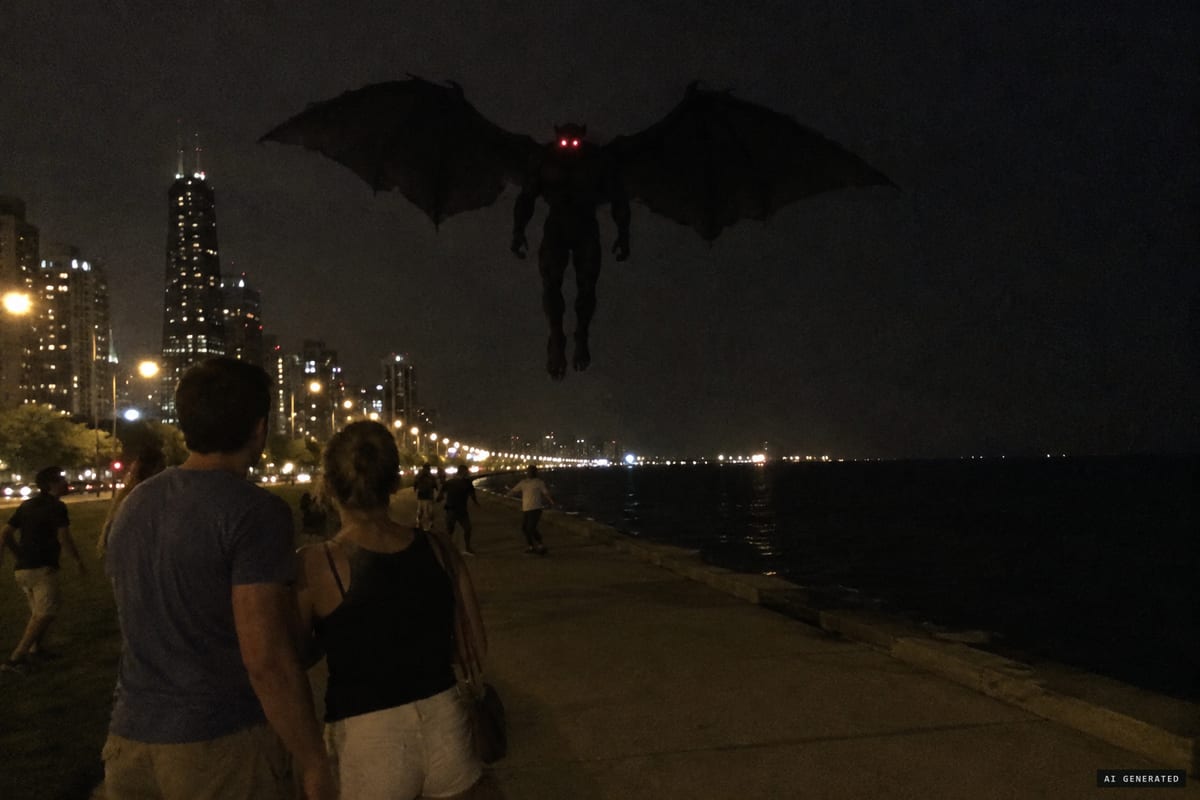 The Chicago Mothman Sighting Wave
Chicago, 2017. Something large and winged was being seen over the city. A married couple on North Lake Shore Drive watched it hover about 5 ft above the sidewalk, its red eyes bright, before it shot up into the night sky. During the eclipse, witnesses on Northerly Island heard a scream like squealing truck brakes. They looked up and saw a black, bat-like shape with arms and legs flying low over Burnham Harbor.
-
 The Tiger of Sabrodt (Tiger von Sabrodt)
Northern Upper Lusatia. The first years of the 20th century. Something was killing poultry, young goats and game in the forests. Reportedly a foal too. Wolves were thought long gone. Some locals claimed they had seen a tiger. The press named it after the village of the first kill. The Tiger von Sabrodt.
-
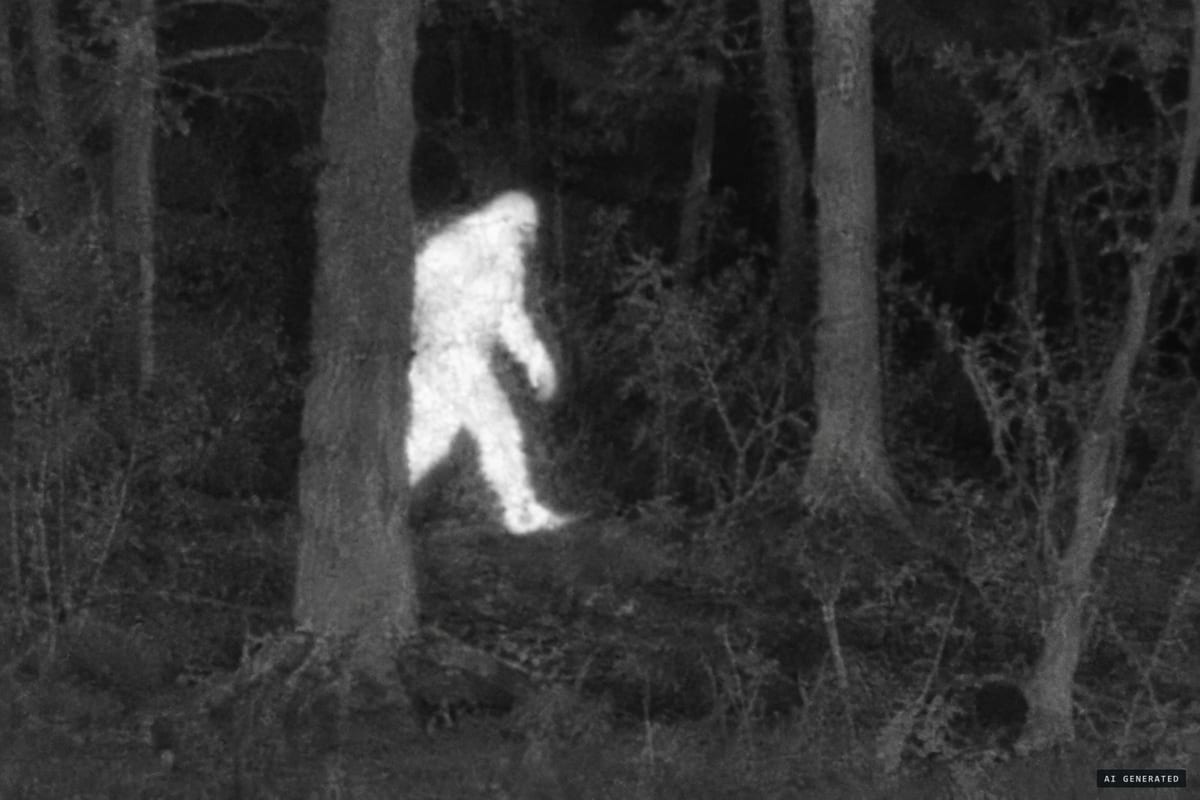 The Brown Thermal Footage: Torreya State Park Skunk Ape
May 8, 2012. Somewhere between midnight and 1 am. Stacy Brown Sr. and his son Stacy Brown Jr. were camping in the Florida woods, metal music playing, ribs cooking. Then came a knock. Then another. Then a grunt.
-
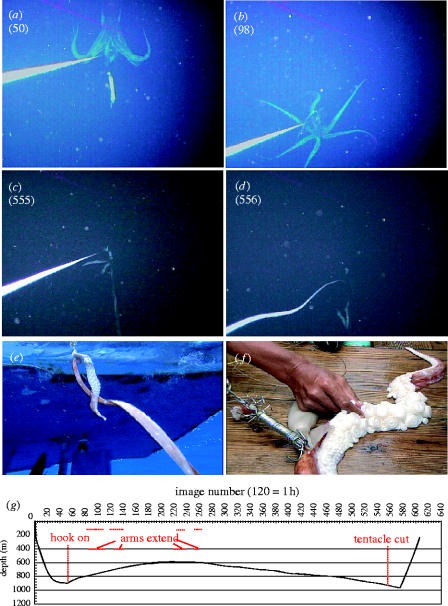 First Photographs of a Live Giant Squid in the Wild, Ogasawara Islands, 2004
30 September 2004. Open ocean off Chichijima, in Japan's Ogasawara Islands. At 9:15 in the morning, 900 metres down, something seized the bait. An automated camera fired once every 30 seconds. It caught the strike. Long tentacles wrapped in a ball around the lure.
-
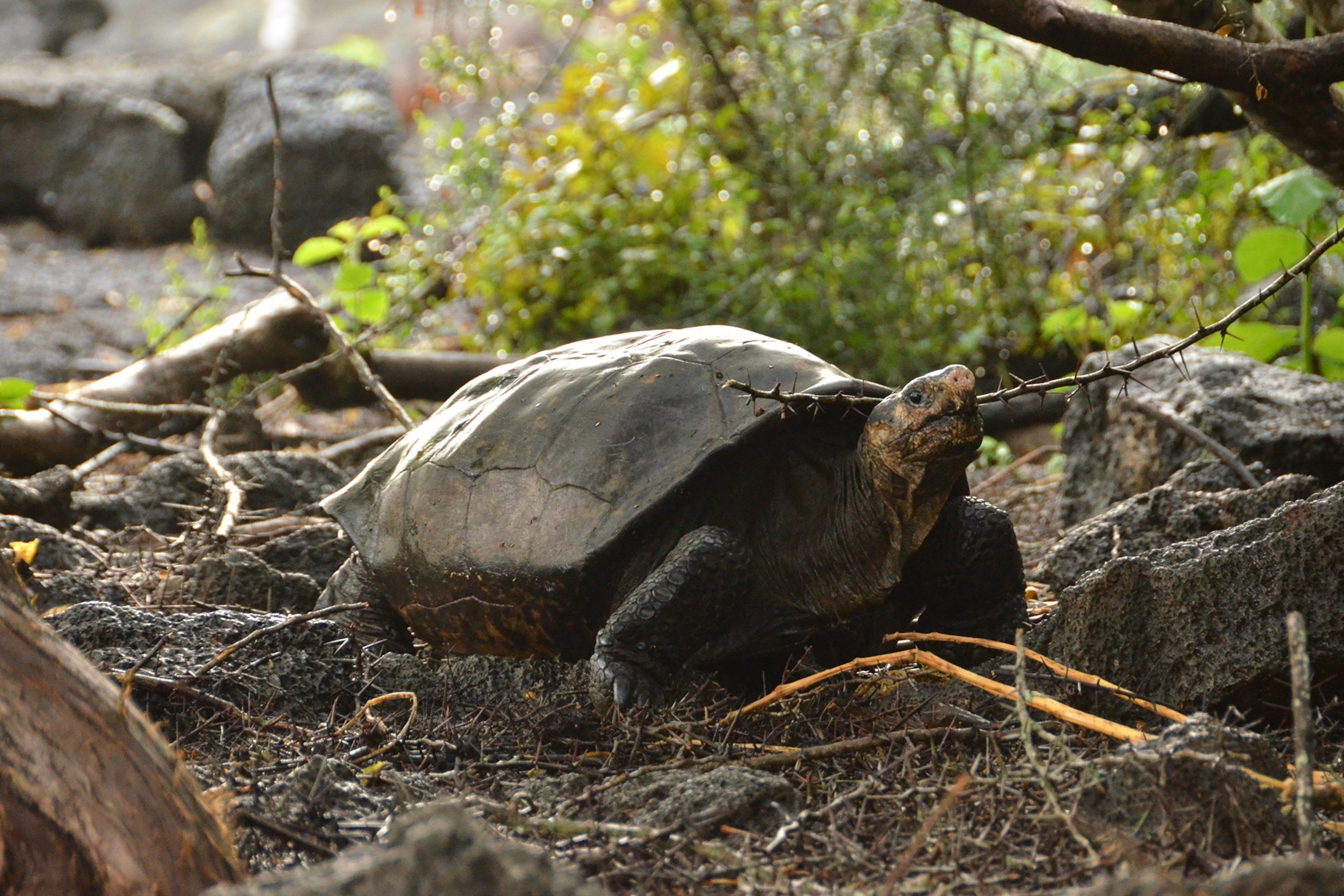 Fernanda, the Fernandina Island Giant Tortoise Found Alive
February 17, 2019. Fernandina Island, the youngest and westernmost of the Galápagos. A search team crossed about 3 miles of hardened lava toward a patch of dry vegetation. First came possible droppings. Then a tortoise bed in the soil, with prints of shell and feet. Then, under a pile of brush, an old female giant tortoise.
-
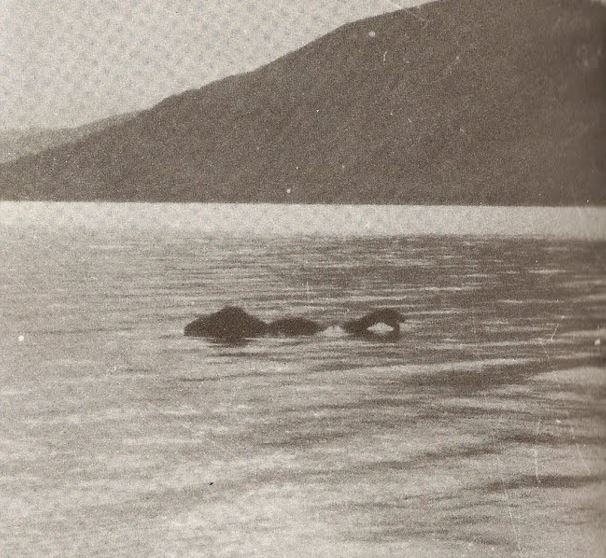 Frank Searle's Loch Ness Monster Photographs
21 October 1972. About 6 p.m. Frank Searle was out on his boat on Loch Ness. By his account, the water broke with a tremendous splash. A head and neck. A large hump. Big flippers, he thought, where the neck met the body. Then it turned away, set up a large wake and disappeared.
-
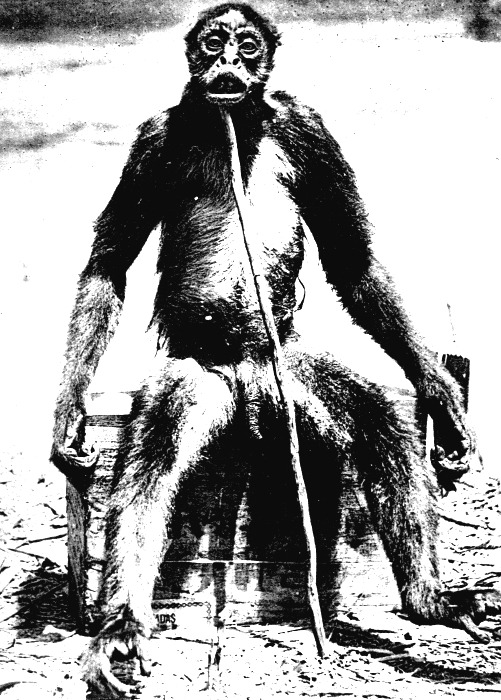 De Loys's Ape (Ameranthropoides loysi), Tarra River, Venezuela
Venezuela. The forests south-west of Lake Maracaibo. A Swiss oil geologist named François de Loys is camped on a tributary of the Tarra River. Two large creatures approach. At first he takes them for bears. Then he sees them clearly. Hairy. Tailless. Ape-like. They howl, tear at branches and advance on the party. The men open fire. The female falls.
-
 The Beast of Exmoor: the 1983 South Molton sheep killings and the Royal Marines hunt
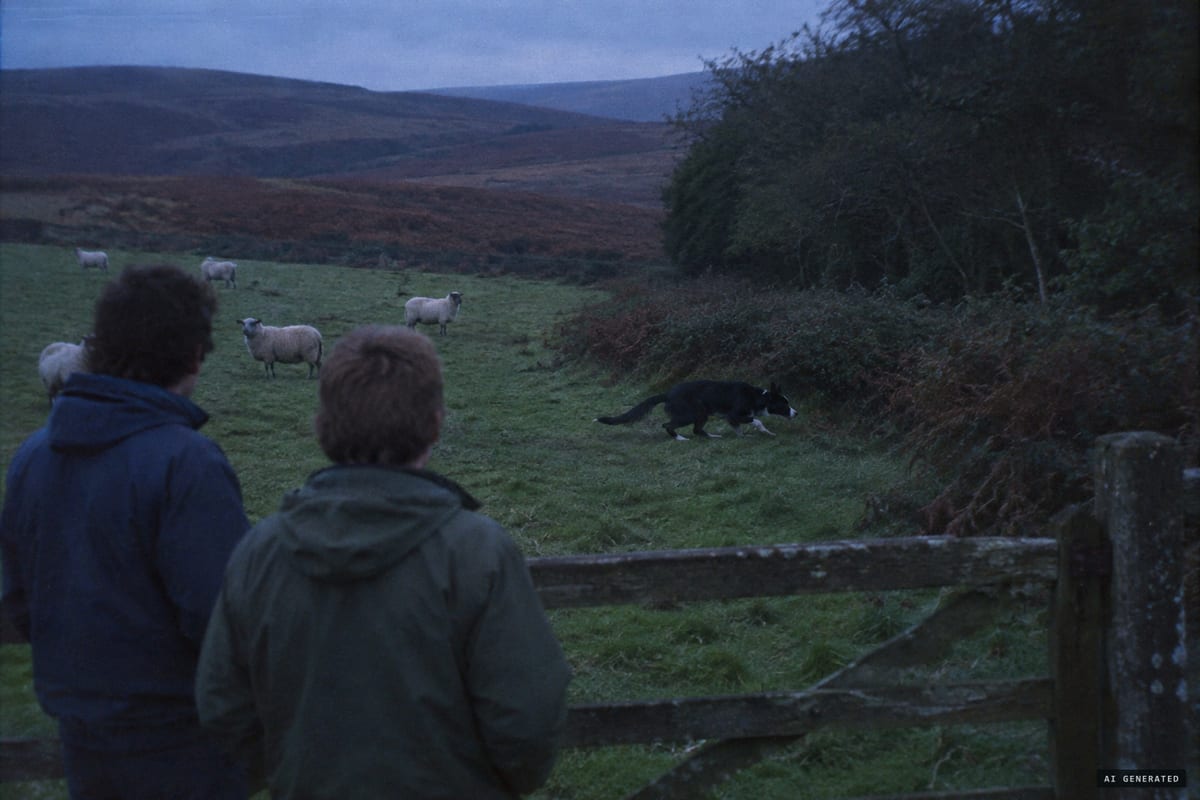
Spring 1983. Near South Molton, on the edge of Exmoor, a farmer counted his dead sheep. Throat wounds. By one account over 100 animals in three months. The story reached the national papers. The Daily Express offered a reward for footage. Then Devon police asked for help, and a team of Royal Marines snipers was sent from Lympstone to hunt the killer.
-
 Norman Collie and the Big Grey Man (Am Fear Liath Mòr) of Ben Macdui
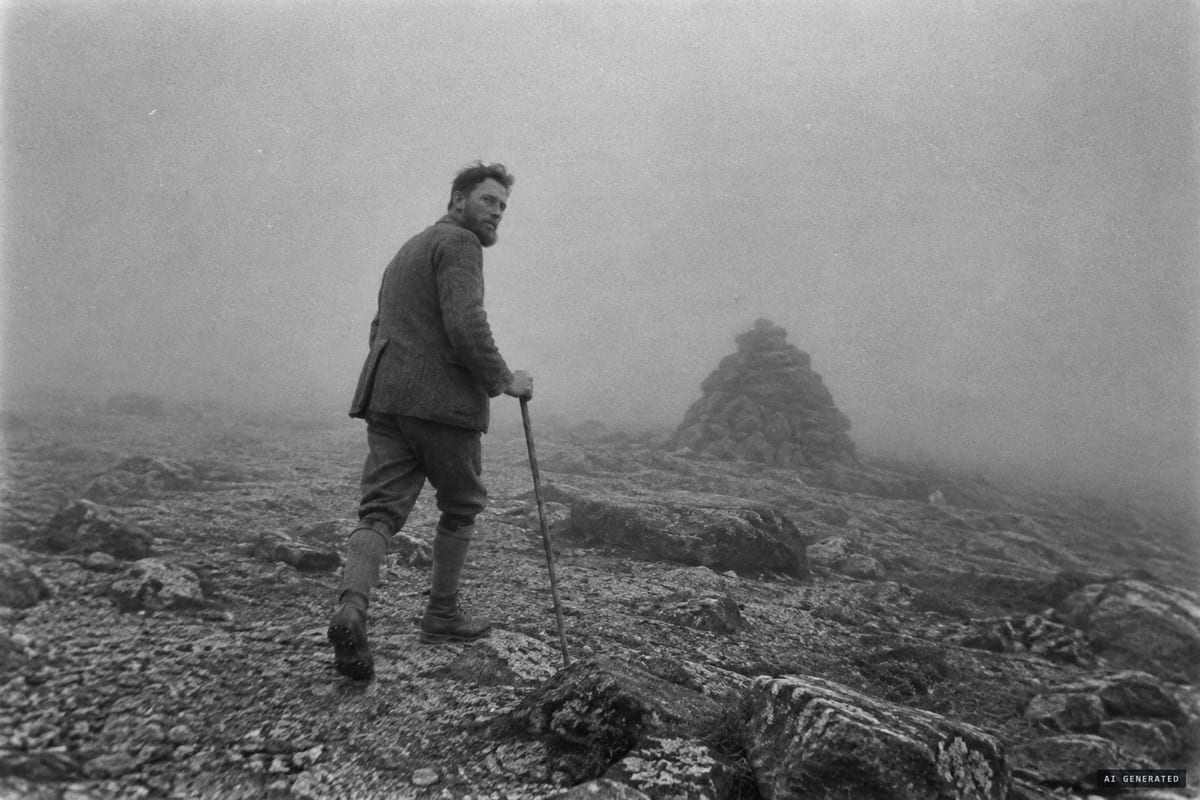
1891. Ben Macdui, the second-highest mountain in the British Isles. Norman Collie is coming down from the summit cairn. He is alone, in mist. Then he hears it. A crunch. Then another. Something is walking after him, taking steps three or four times the length of his own.
-
 Steller's Sea Ape in the Gulf of Alaska
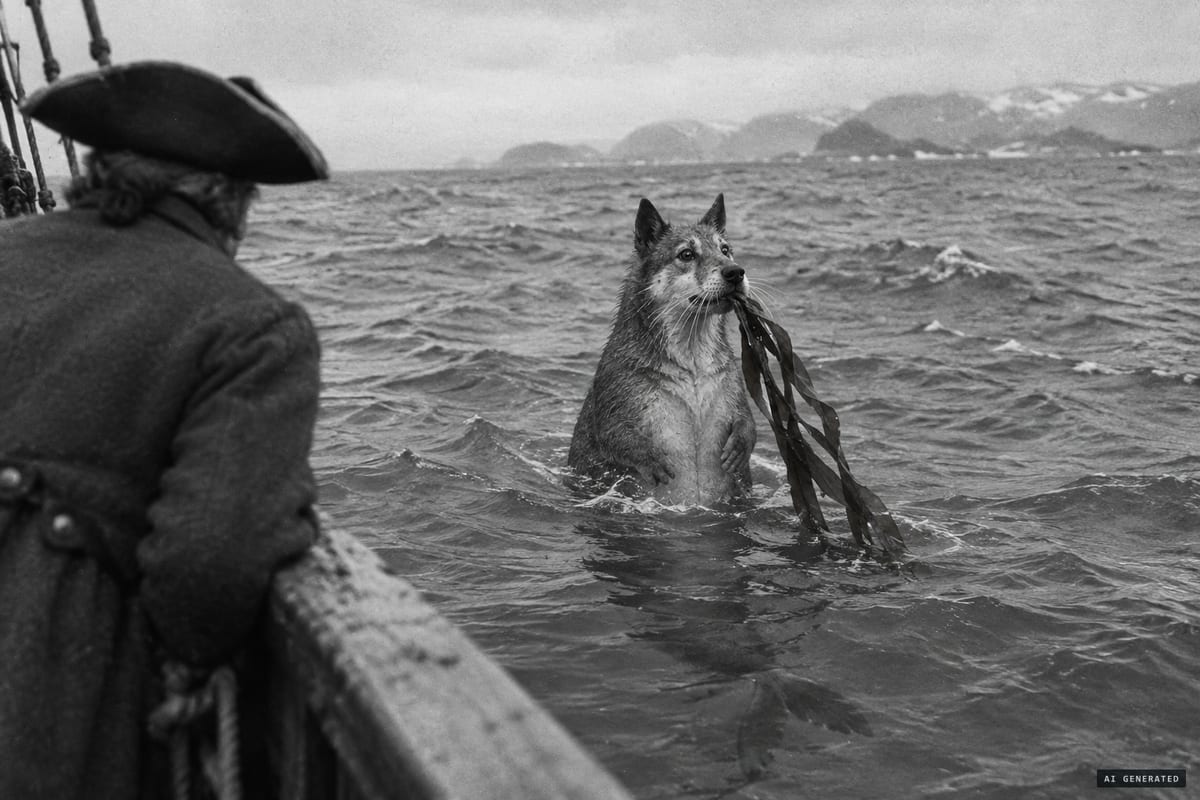
10 August 1741. Vitus Bering's ship, the St. Peter, was heading west across the Gulf of Alaska. Naturalist Georg Wilhelm Steller looked over the side. Something was looking back.
-
 The Turner Mystery Beast (Androscoggin Creature), Maine, 2006
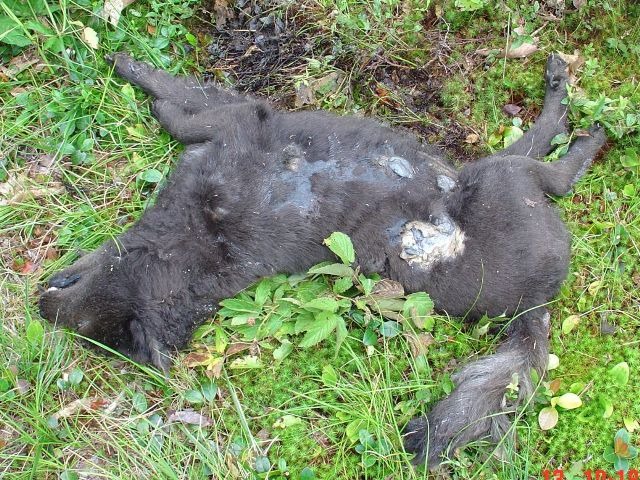
Turner, Maine. Early August 2006. Michelle O'Donnell locked eyes with something near her yard. "It was evil, evil-looking," she said. "And it had a horrible stench I will never forget." Then it took off.
-
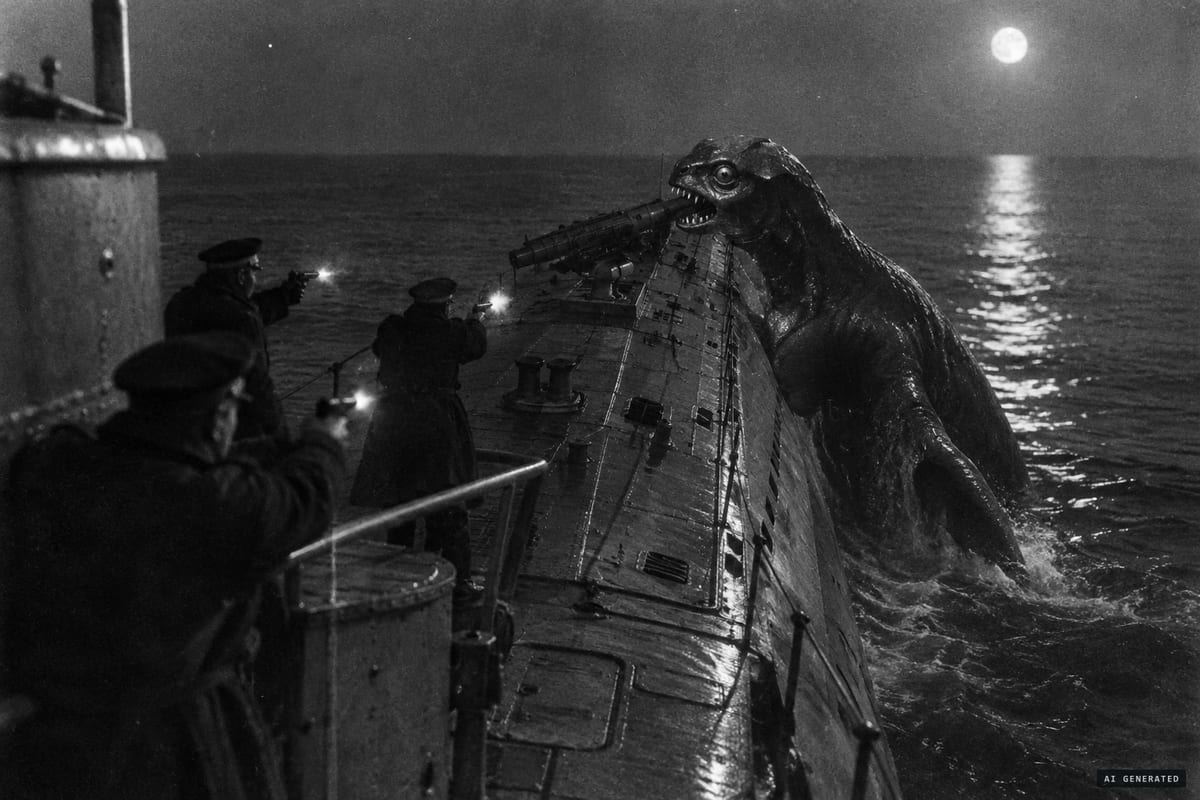 UB-85's sea monster, North Channel (1918)
North Channel. The night of 29 to 30 April 1918. The German submarine UB-85 lies on the surface, charging its batteries. Then something rises out of the deep and climbs onto the starboard bow. Large eyes. A horny sort of skull. Teeth glistening in the moonlight. It seizes the deck gun and refuses to let go, while the men on watch fire their sidearms at it.
-
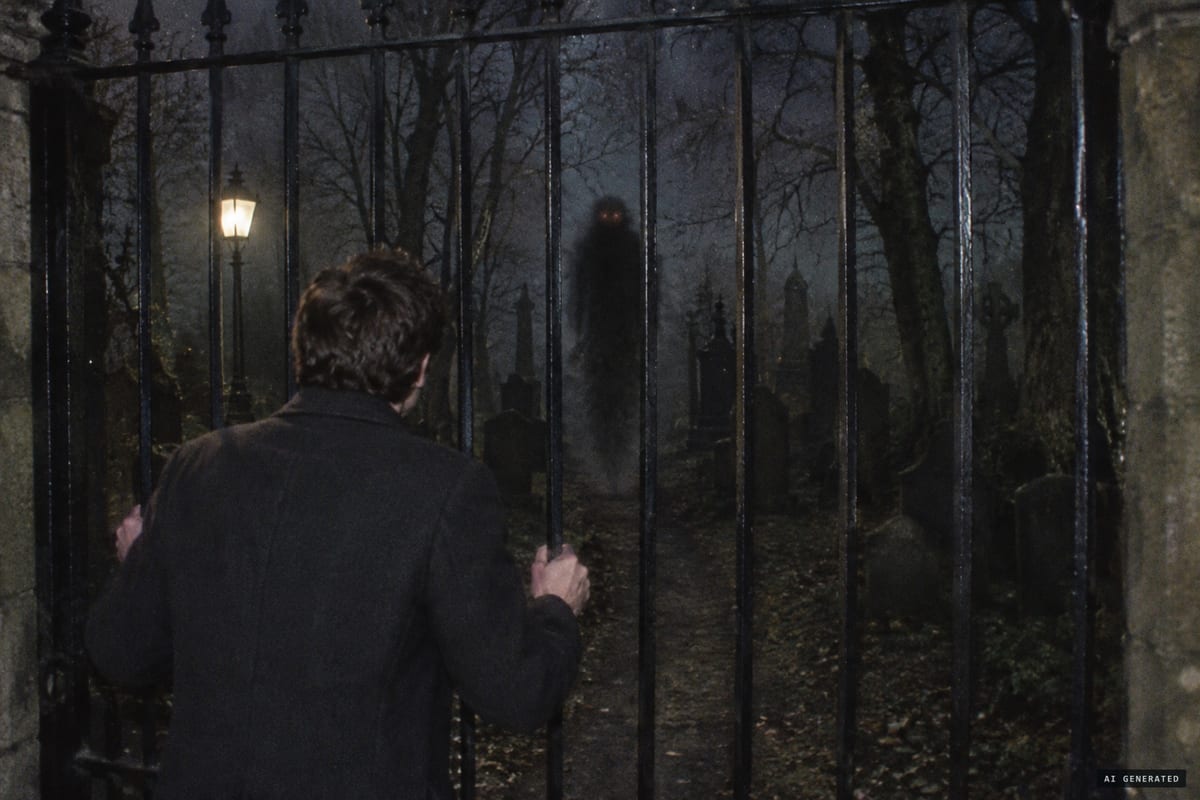 The Highgate Vampire: David Farrant's grey figure and the Highgate Cemetery vampire hunt
December 1969. David Farrant walks Swain's Lane in Highgate, London, and stops at the top gate of the cemetery. Through the bars he sees a tall dark shape. Over seven feet. No features. Only two reddish eyes, "dull and penetrating like some hungry wolf." Then it is gone.
-
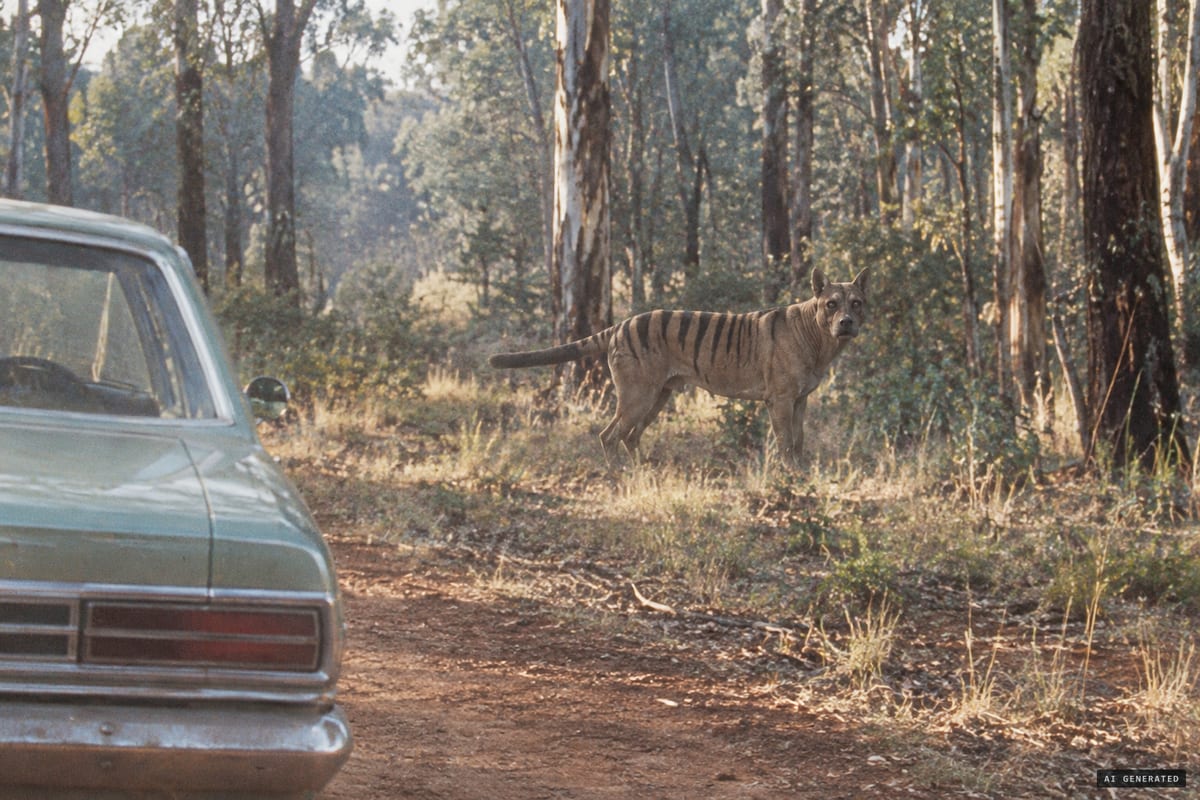 The Nannup Tiger and the 1971 tiger hunt
Nannup, Western Australia. A timber town in the forest on the Blackwood River. In the late 1960s and early 1970s, people here kept seeing something in the trees. A dog-like animal with a big head, heavy shoulders and dark bands around its body. It moved with a bound like a kangaroo's. Members of the local car club recorded the sightings and gave it a name. The Nannup tiger.
-
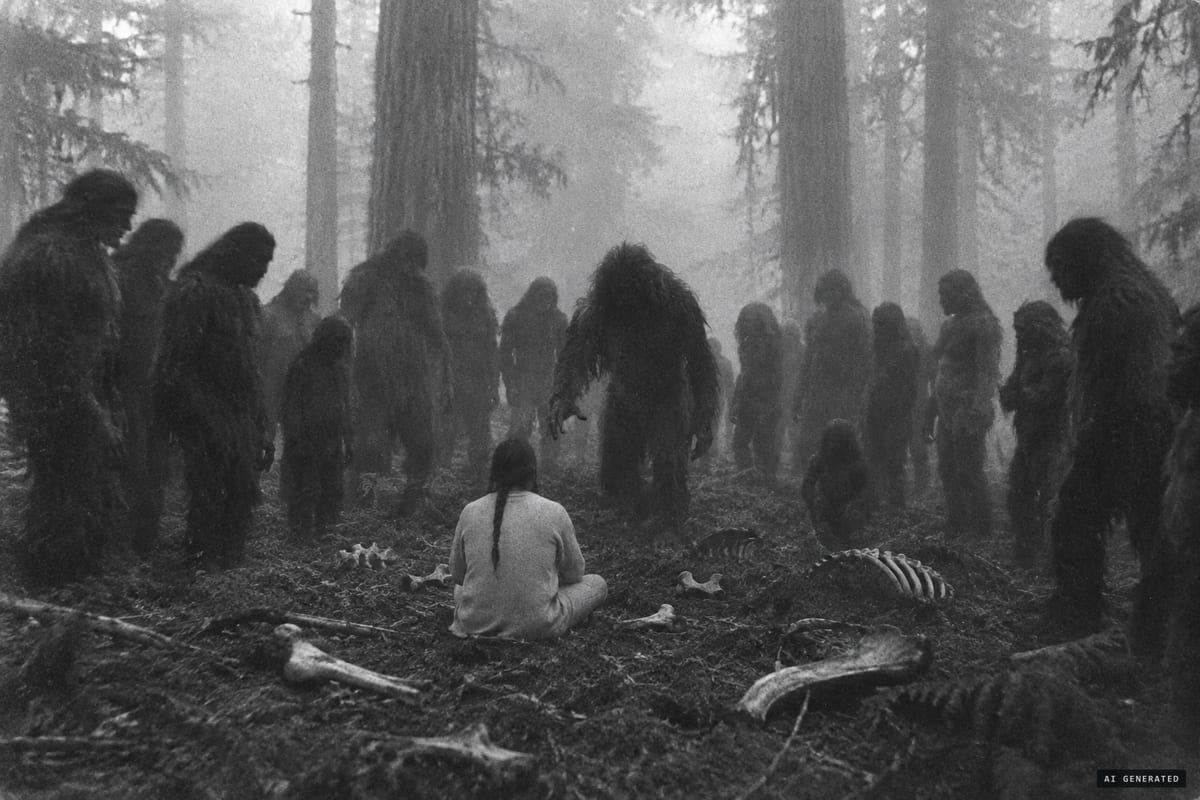 Muchalat Harry carried off by a Sasquatch (Conuma River, Vancouver Island, 1928)
Autumn, 1928. The Conuma River, Vancouver Island. Muchalat Harry, a Nuu-chah-nulth trapper, dozed by his fire in his woollen underwear, wrapped in blankets. Then he was picked up and thrown over someone's shoulder. A huge male Sasquatch carried him off into the hills.
-
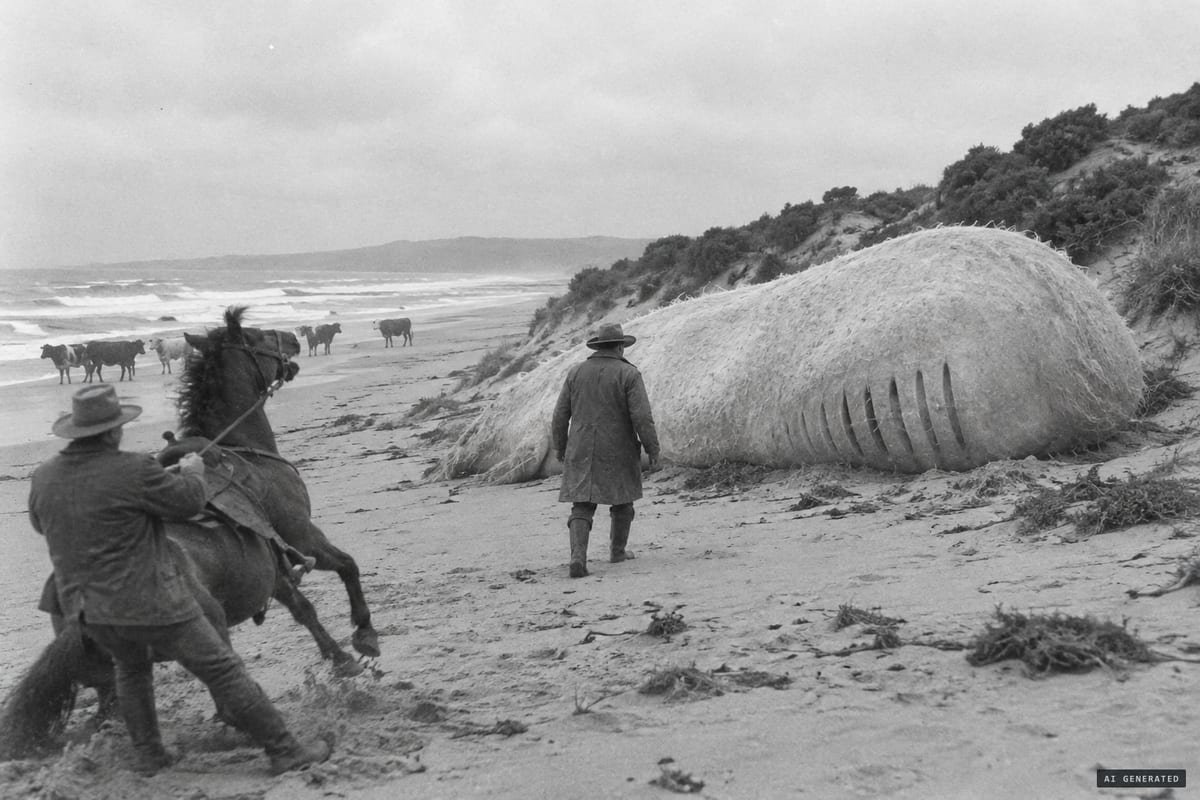 The Tasmanian Globster: the West Coast Monster of Interview River (1960)
Winter, 1960. Stockmen moving cattle along Tasmania's remote west coast came upon something lying on the sand. A vast, shapeless mass, about 20 feet long and 18 feet wide. Covered in fine hair like sheep's wool. No eyes. No clear head. No bones that anyone could find. A horse refused to go near it.
-
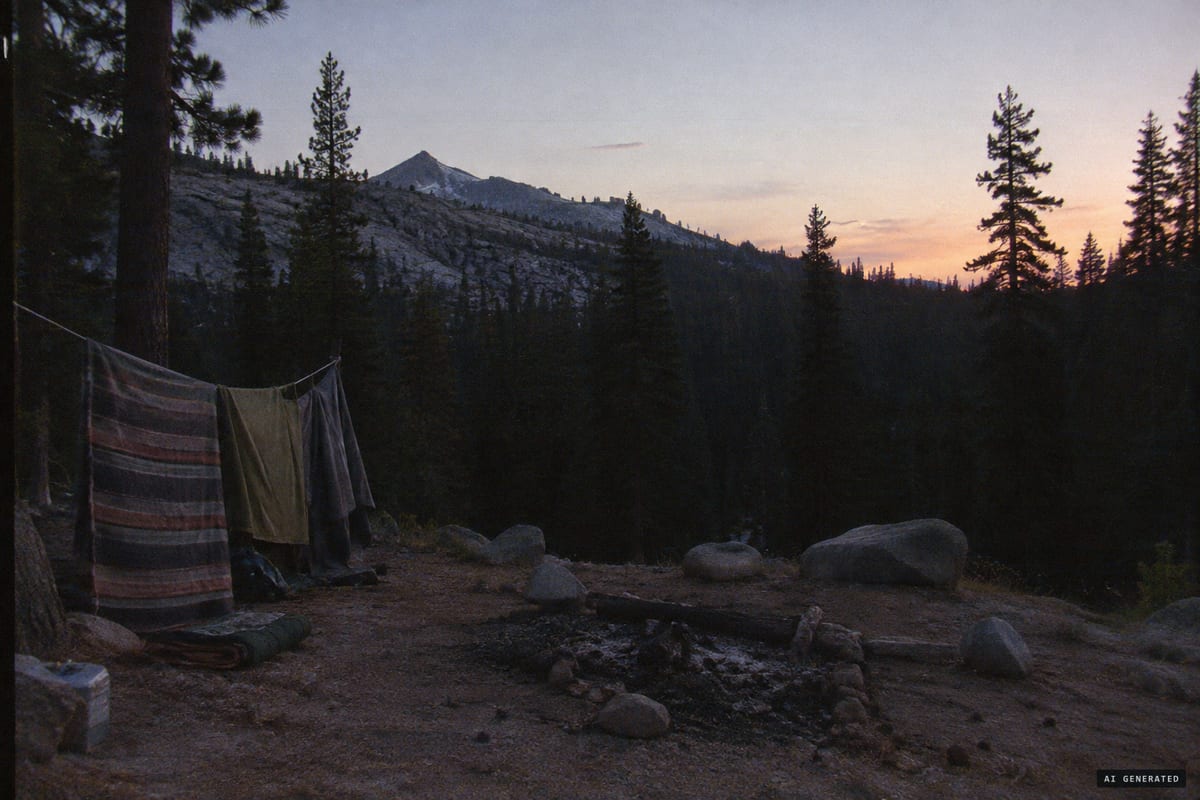 The Disappearance of Theresa Ann Bier: "Bigfoot Took Her" (1987)
June 1, 1987. Theresa Ann Bier, 16, of Fresno, went into the Sierra Nevada with Russell "Skip" Welch, a 43-year-old housepainter and Bigfoot enthusiast. They camped near Shuteye Peak in the Sierra National Forest. A few days later, Welch came back to Fresno alone.
-
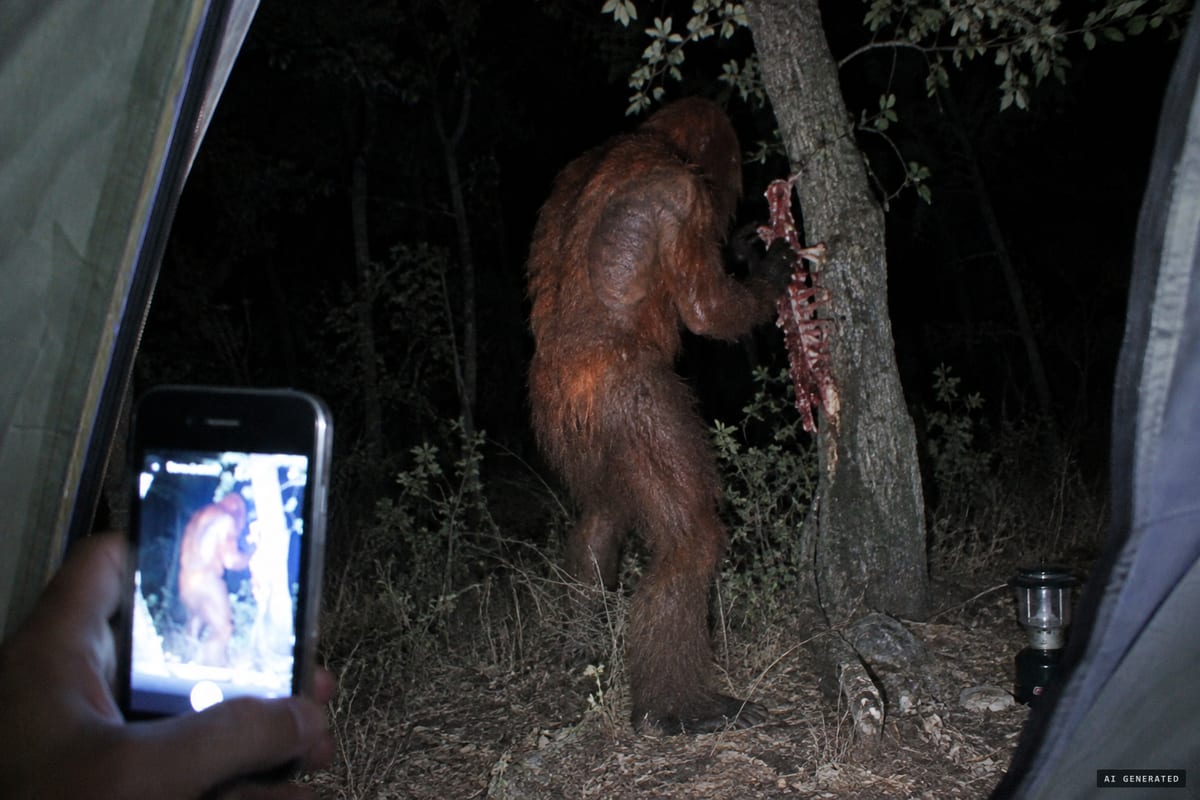 The San Antonio Bigfoot Shooting and the Hank Hoax
Early September 2012. A wooded stretch on the northwest side of San Antonio, Texas. Rick Dyer, a self-described master tracker, nailed pork ribs to the trees. He says a Bigfoot came to eat. He grabbed his cellphone and filmed it outside his tent. Then it came back. This time he reached for a rifle.
-
 The Sulawesi coelacanth: the 'king of the sea' of Manado Tua
September 18, 1997. A fish market in Manado, North Sulawesi. Two honeymooners stopped at a vendor's cart. On it lay a large, strange fish. Several feet long, with stumpy, lobed appendages where other fish have conventional fins.
-
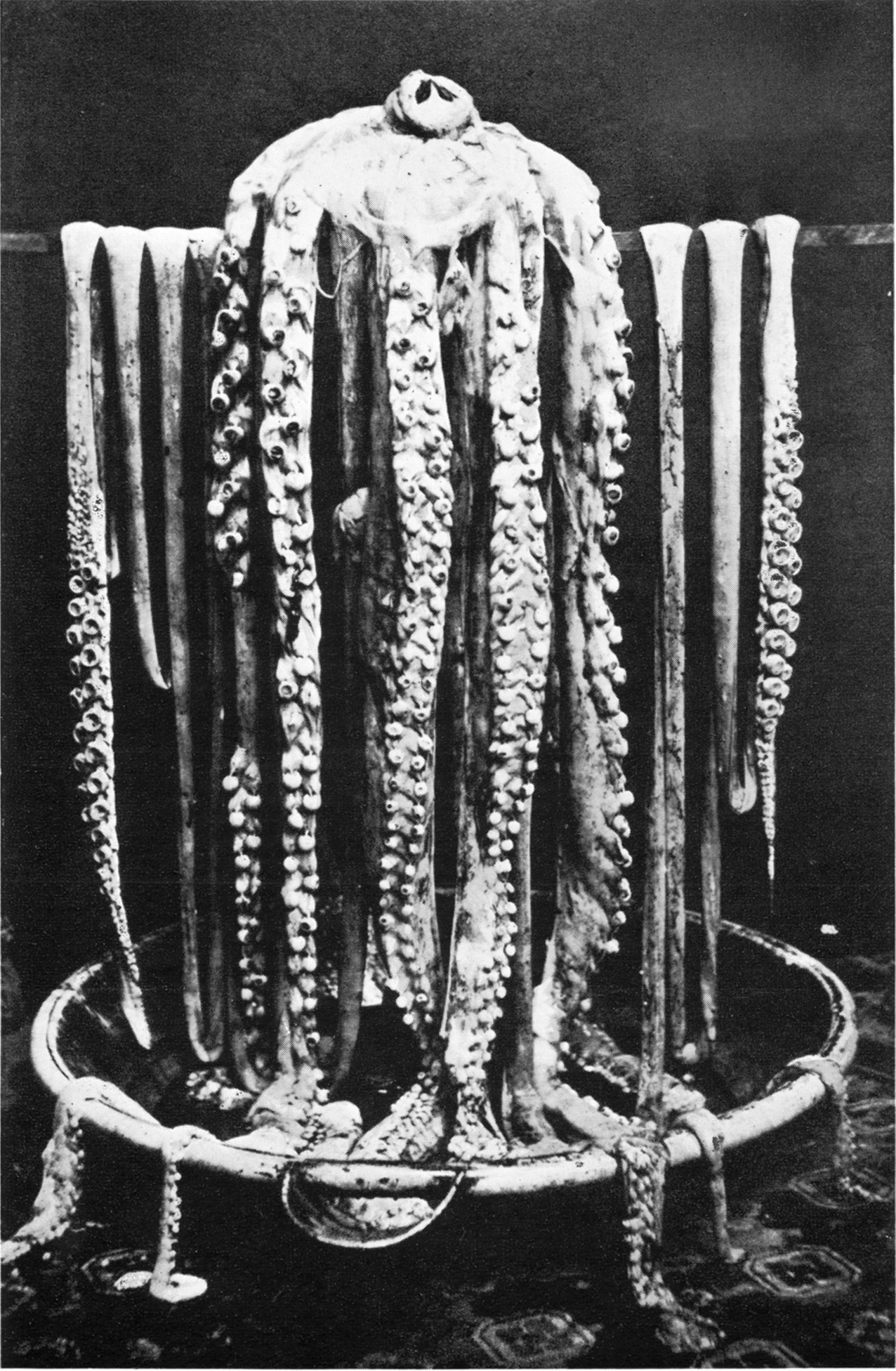 The Logy Bay giant squid, Newfoundland
November 1873. Herring fishermen in Logy Bay, Newfoundland, hauled in their net and found something much bigger than herring. Tangled in the mesh was a whole giant squid. The devil-fish of sailors' tales.
-
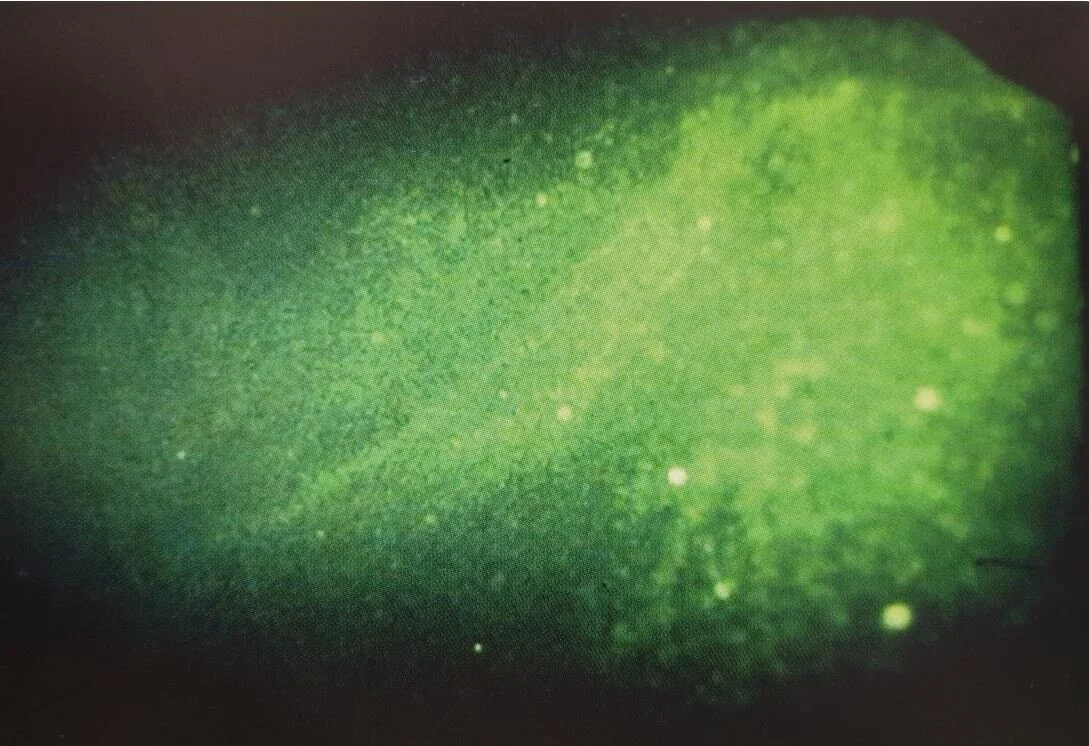 The Loch Ness Flipper Photographs (Rines, Urquhart Bay, 1972)
Urquhart Bay, Loch Ness. August 1972. Two boats sat on the dark water off Temple Pier. One carried a sonar. The other lowered a camera and strobe into the depths, firing every 45 seconds or so.
-
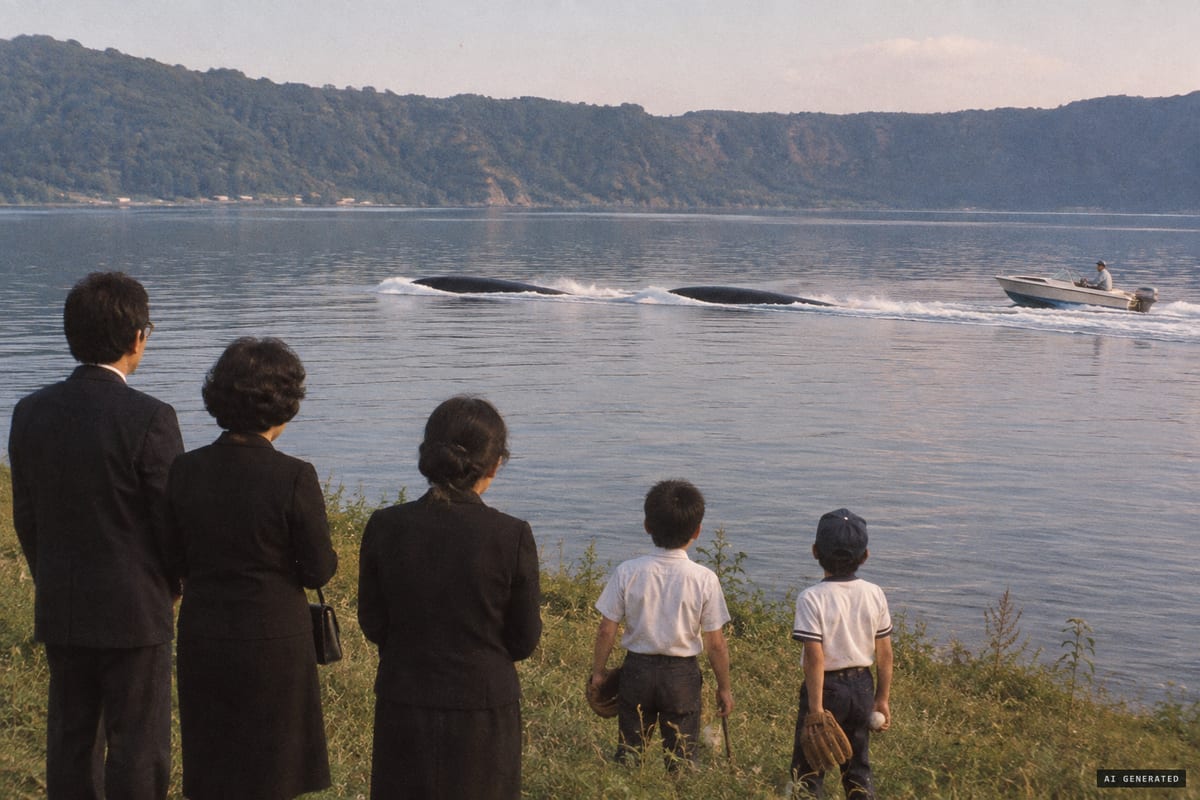 Issie, the Lake Ikeda Monster: The Kawaji Family Sighting
September 3, 1978. Around 6 p.m. Some twenty relatives had gathered at the Kawaji family house on the shore of Lake Ikeda for a Buddhist memorial service. Two boys were playing catch by the water. Then they saw it.
-
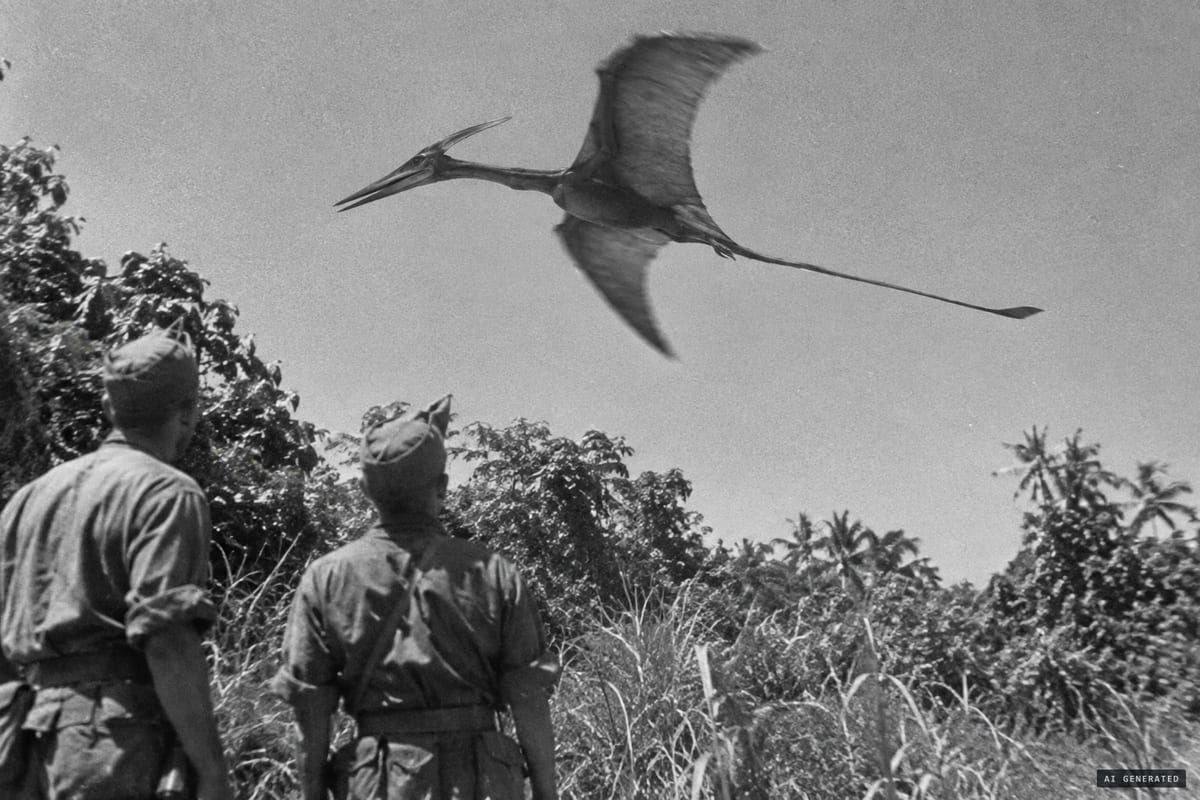 Duane Hodgkinson's "Pterodactyl" Sighting near Finschhafen, New Guinea (1944)
Noon on a clear day in 1944. A young American serviceman named Duane Neil Hodgkinson was walking a jungle trail west of Finschhafen, New Guinea. A grassy clearing. A thrashing in the brush. Something large ran six to ten steps and rose into the air.
-
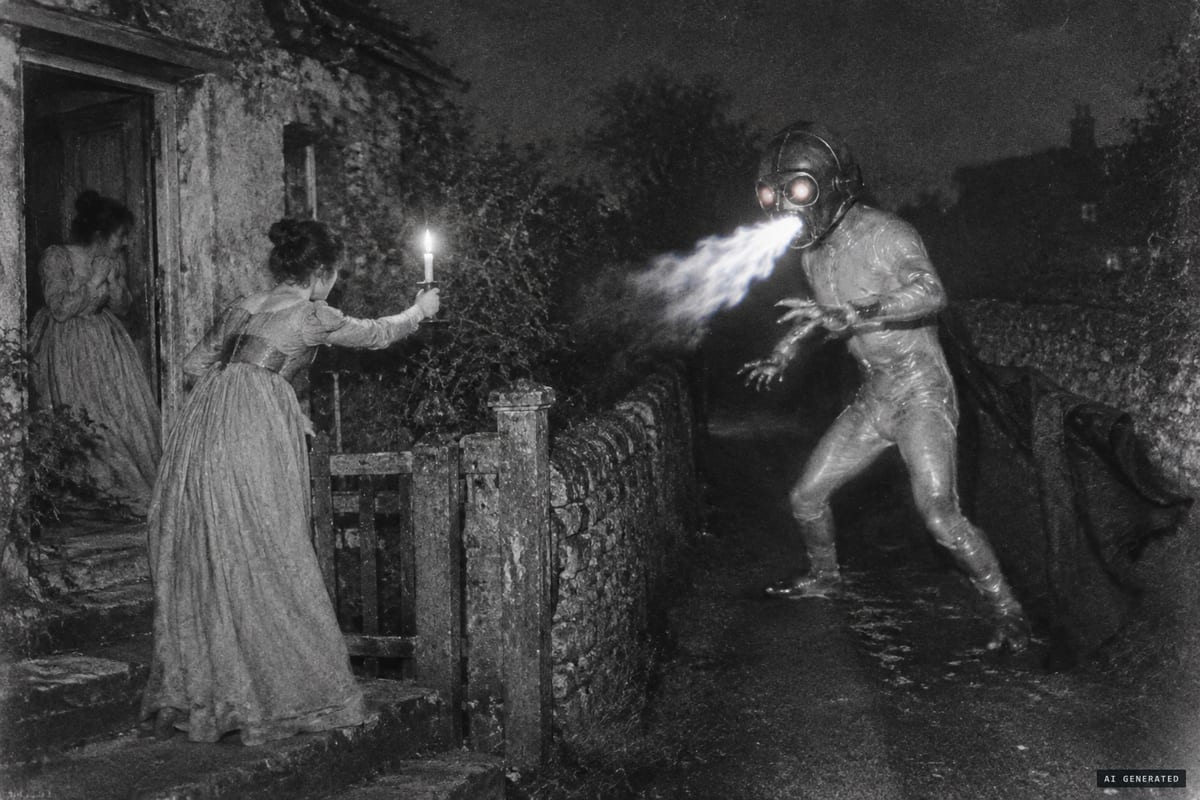 Jane Alsop and Spring-heeled Jack: the Bear-bind Lane attack
February 19, 1838. About a quarter to 9 in the evening. A violent ringing at the gate of Bear-bind Cottage, a lonely spot between Bow and Old Ford. A cloaked man says he is a policeman. "For God's sake, bring me a light, for we have caught Spring-heeled Jack here in the lane."
-
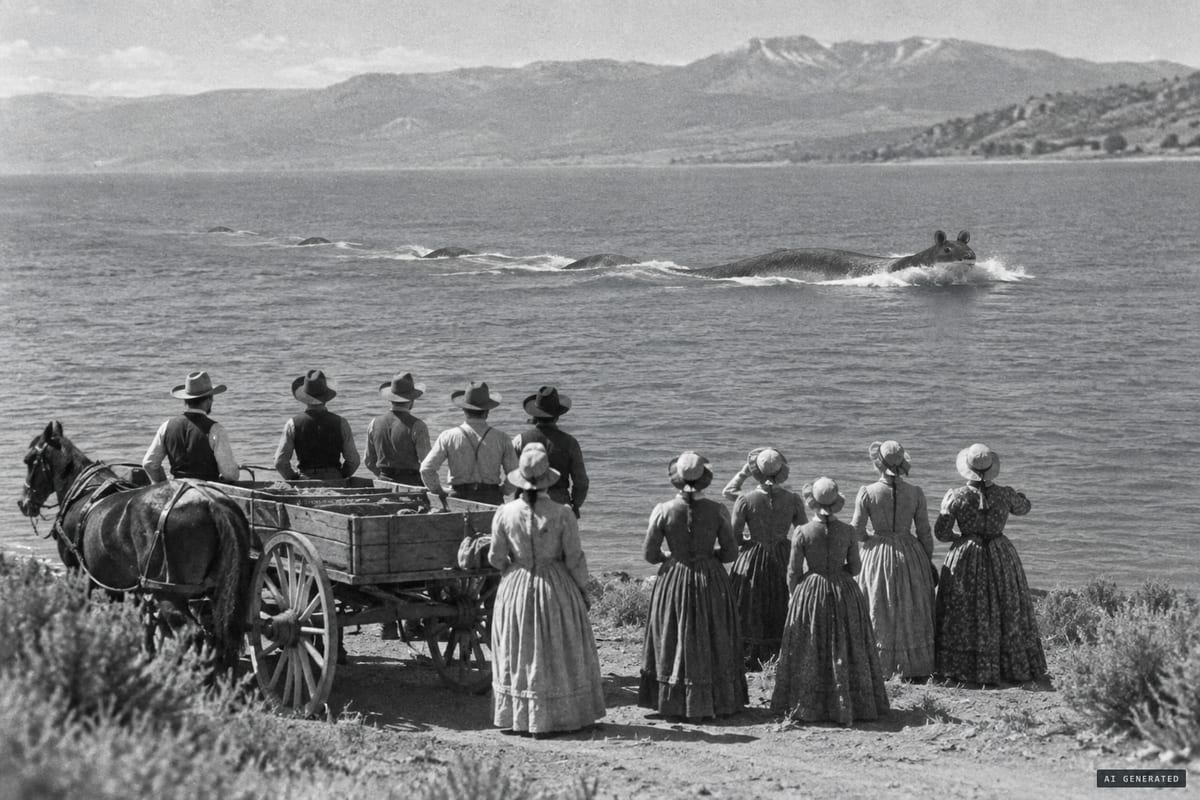 The Bear Lake Monster: Joseph C. Rich's settler sightings
Summer 1868. The west shore road of Bear Lake, between Fish Haven and St. Charles. Four men and six women were driving north. They saw something in the water. Thomas Slight saw the sides of a very large animal. Not less than ninety feet long, he thought. Another witness said forty. It was brownish. It swam southward faster than a horse could run on land, pushing waves three feet high.
-
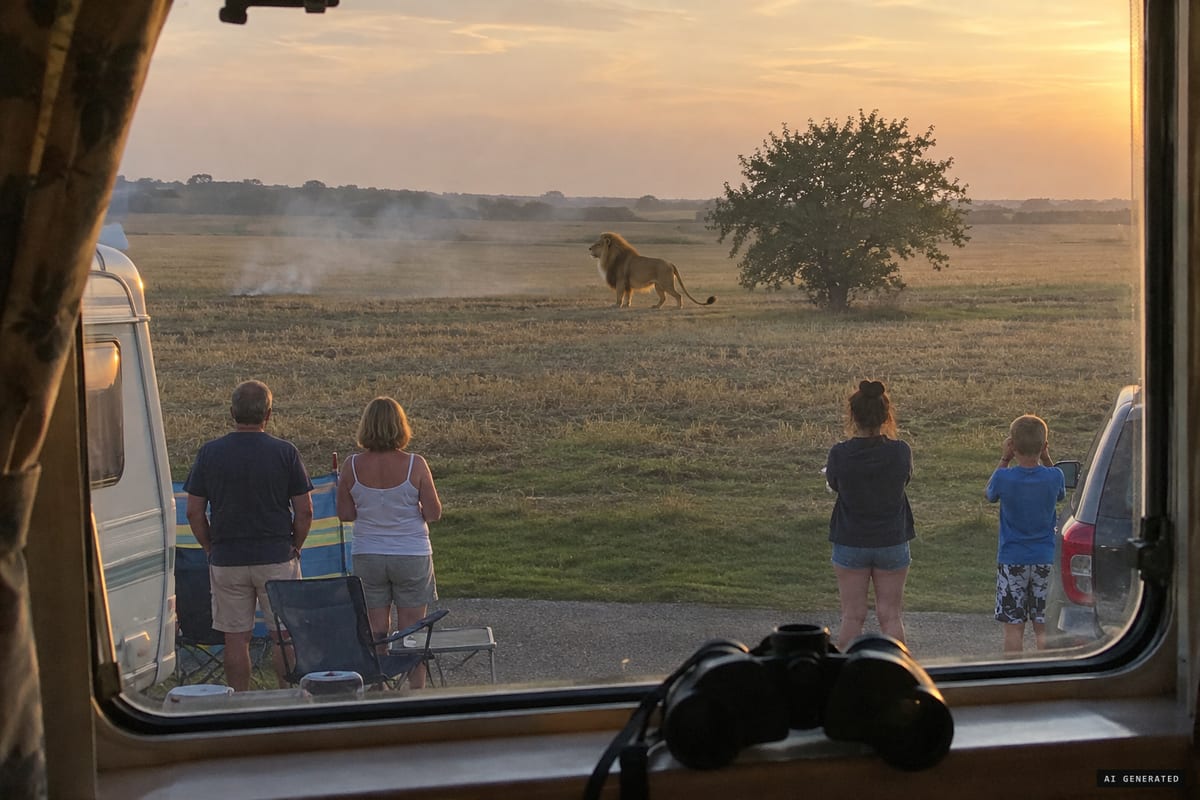 The Essex Lion, St Osyth
Sunday 26 August 2012. A bank holiday evening at the Earls Hall Farm caravan site in St Osyth, Essex. Smoke hung over the field, as if from a bonfire. When it cleared, Denise Martin saw a shape and reached for the binoculars. It looked like a lion. Tan coloured, with a white chest.
-
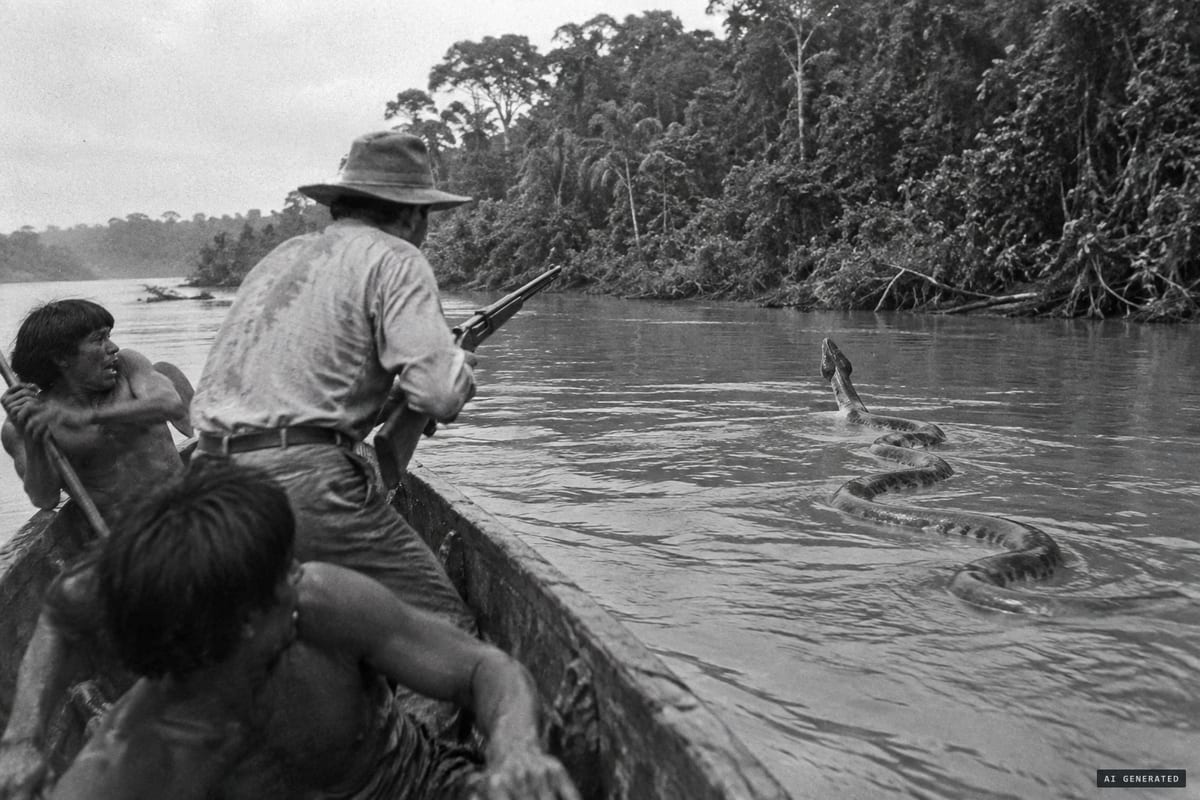 Percy Fawcett's 62-foot anaconda on the Rio Abunã
Early 1907. A canoe drifted on the sluggish current of the Rio Abunã, on the border between Bolivia and Brazil. Aboard was Major Percy Harrison Fawcett, surveying the frontier. Then, almost under the bow, a triangular head rose from the water. Several feet of undulating body followed.
-
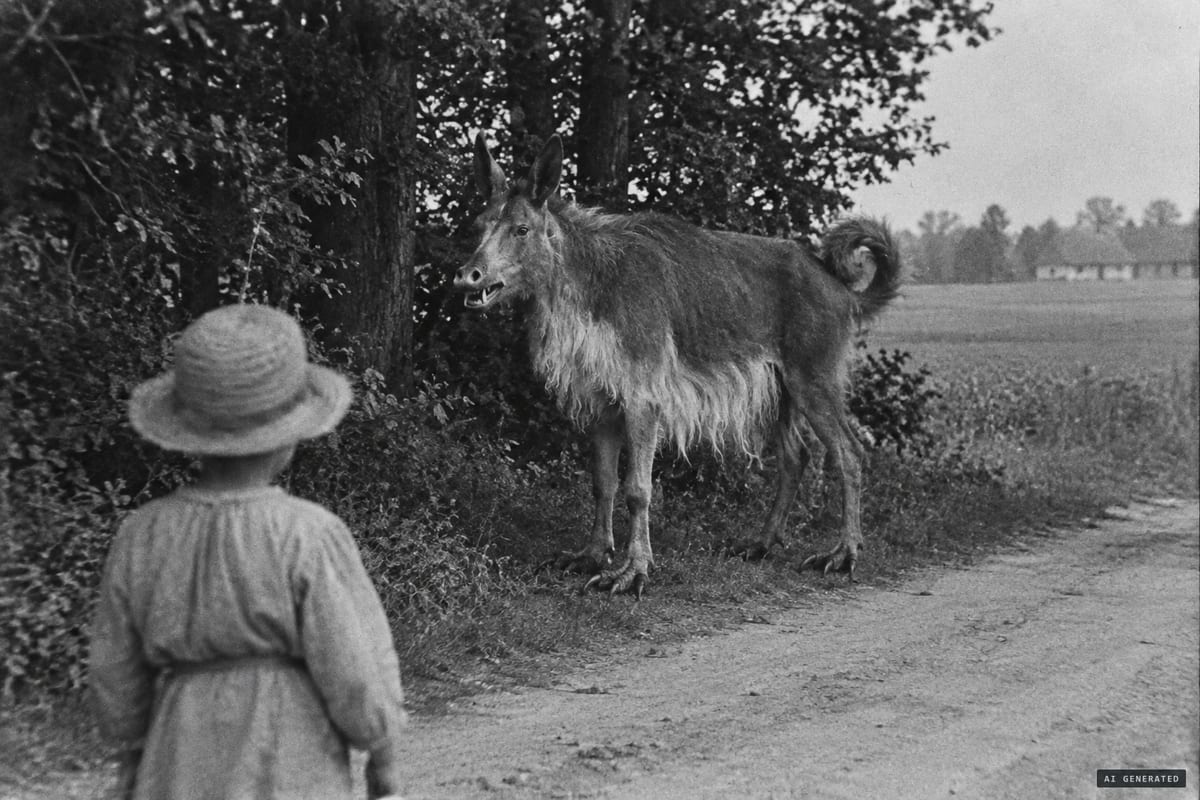 The Beast of Cusago (la Bestia feroce), Duchy of Milan
Summer, 1792. The countryside west and north of Milan. Children sent to look for a cow or walking a country road did not come home. Between early July and September, an animal killed about ten of them, aged 6 to 13, and wounded several more people. A farmer described something as big as an ordinary calf, with a head like a pig's and ears like a horse's. Children spoke of a pointed snout, large teeth and a thick, curly tail.
-
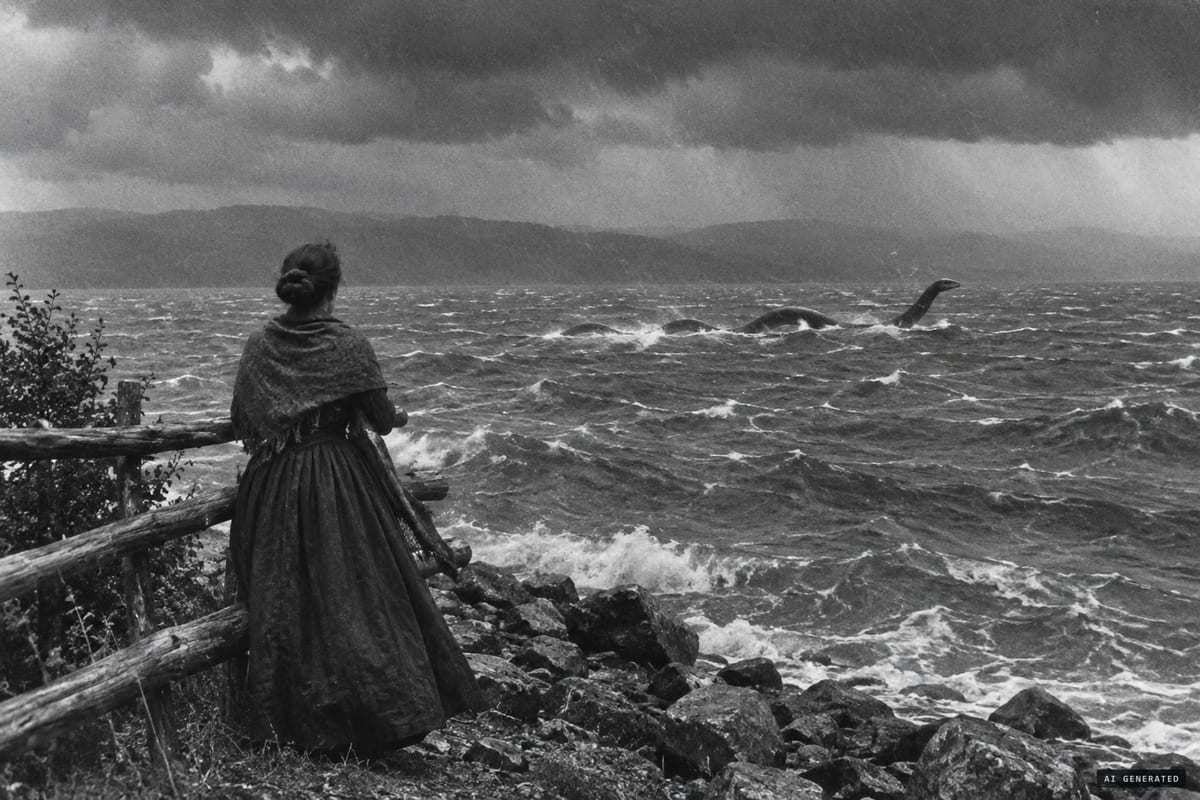 Susan Allison's Ogopogo Sighting, Okanagan Lake
A storm on Okanagan Lake. Susan Allison stood at Sunnyside Ranch on the west shore, watching the water for her husband, John, who was out on the lake.
-
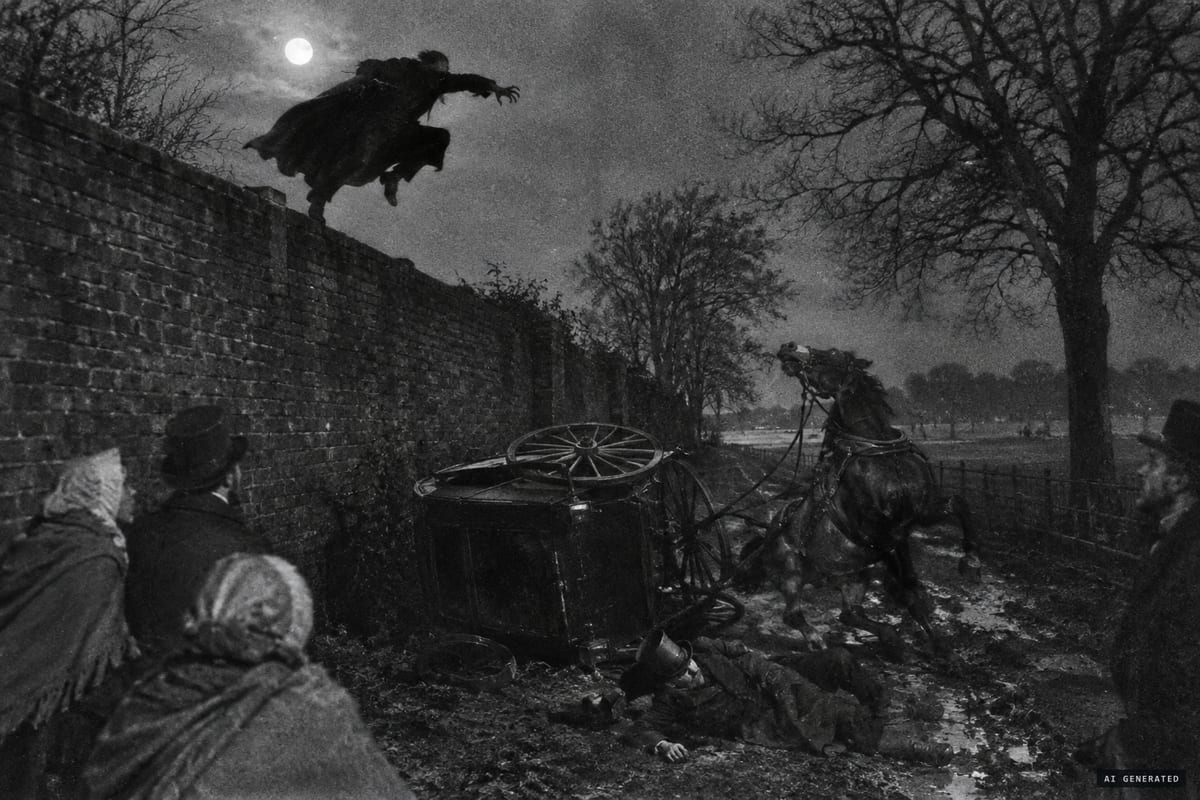 Mary Stevens and the Clapham Common Attacker, 1837
October 1837. A servant named Mary Stevens was crossing Clapham Common alone at night, walking from her parents' home in Battersea to her job at Lavender Hill. A figure leapt at her from a dark alley. It held her in a tight grip, kissed her face and tore at her clothes. Its claws, she said, were "cold and clammy as those of a corpse."
-
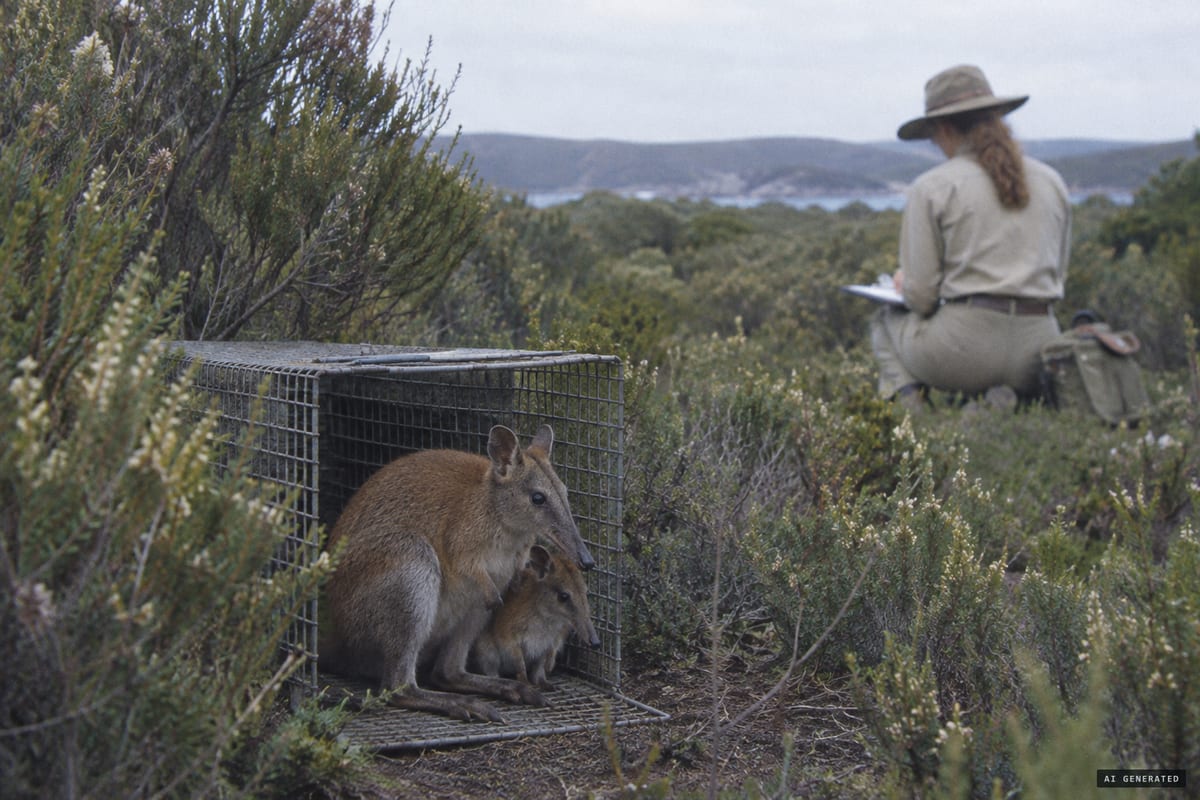 Gilbert's Potoroo Rediscovered at Two Peoples Bay
November 30, 1994. Two Peoples Bay Nature Reserve, east of Albany, Western Australia. Elizabeth Sinclair, a PhD student studying quokkas, checked her traps on the slopes of Mount Gardner. Inside one was an odd looking animal. It looked like a baby. She worried a joey had been separated from its mother.
-
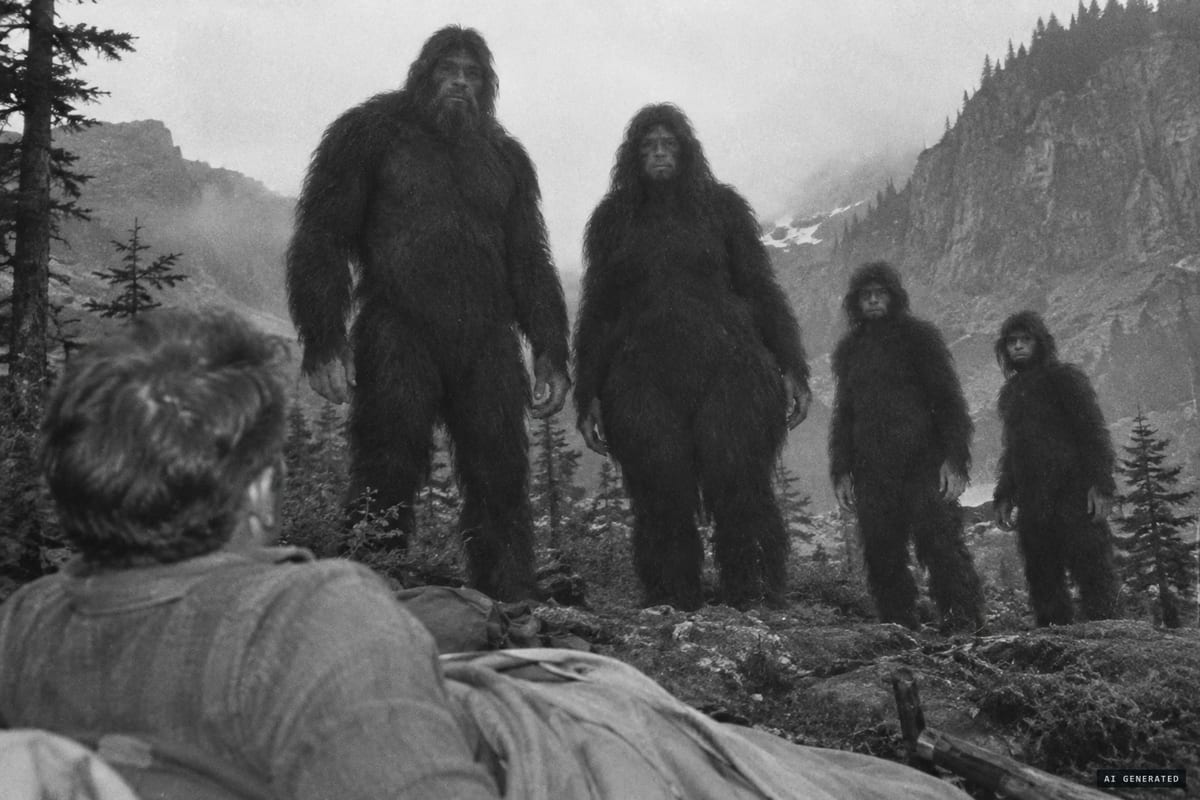 Albert Ostman's claimed abduction by a Sasquatch family, Toba Inlet, British Columbia (1924)
Summer 1924. Toba Inlet, on the British Columbia coast. Albert Ostman, a prospector born in Sweden, was asleep in his sleeping bag. Then something picked him up. For about three hours he was carried through the dark. Uphill, downhill, then at a trot. At dawn he heard chatter. Four figures stood around him, covered in hair. An old man, an old lady and two young ones.
-
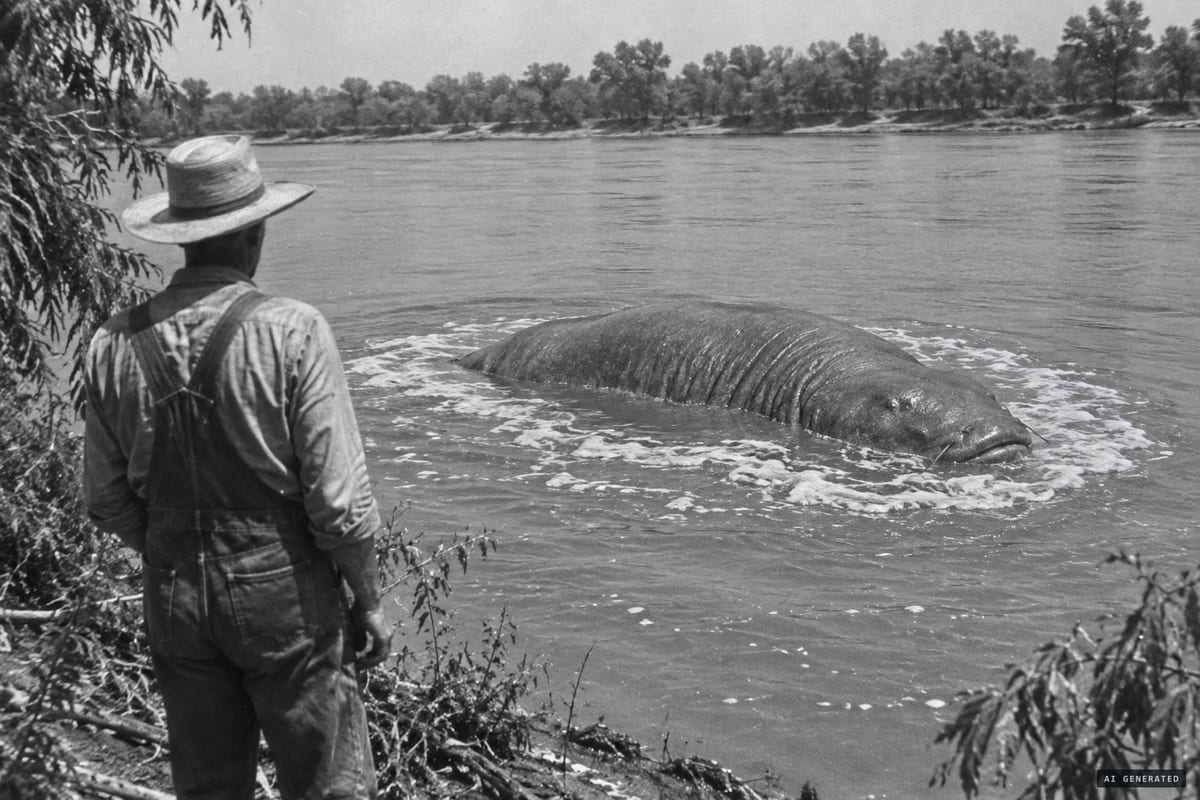 Bramlett Bateman's White River Monster sightings and the Newport monster hunt
July 1, 1937. About one in the afternoon. On a plantation six miles downstream from Newport, Arkansas, Bramlett Bateman watched something rise from a deep eddy of the White River. It was grey. It was smooth. It had the skin of an elephant. It stayed there for some five minutes.
-
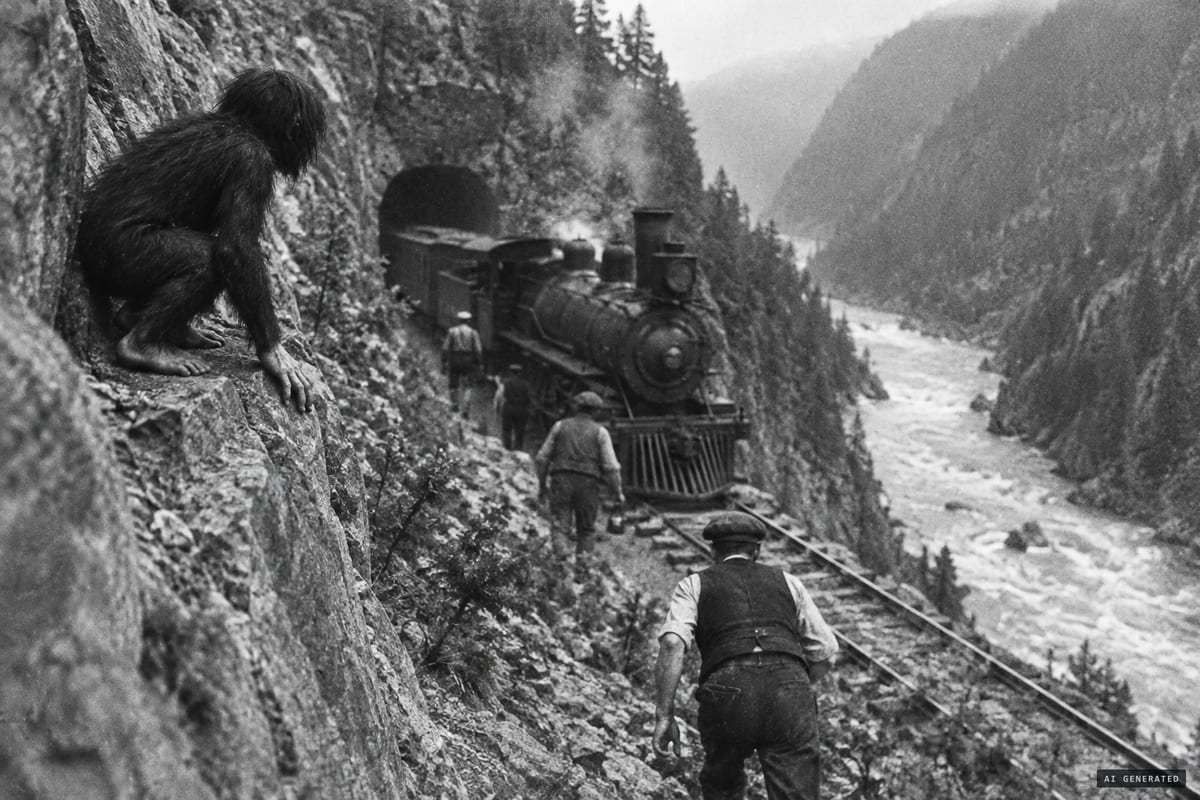 Jacko, the "British Columbia Gorilla" reportedly captured above Yale
July 1884. A train climbs the Fraser Canyon above Yale, British Columbia. Engineer Ned Austin sees what looks like a man asleep beside the track. He signals for the brakes. The figure springs up, gives a sharp quick bark and scrambles up the rock bluff. After five minutes of perilous climbing, the crew has it cornered on a ledge.
-
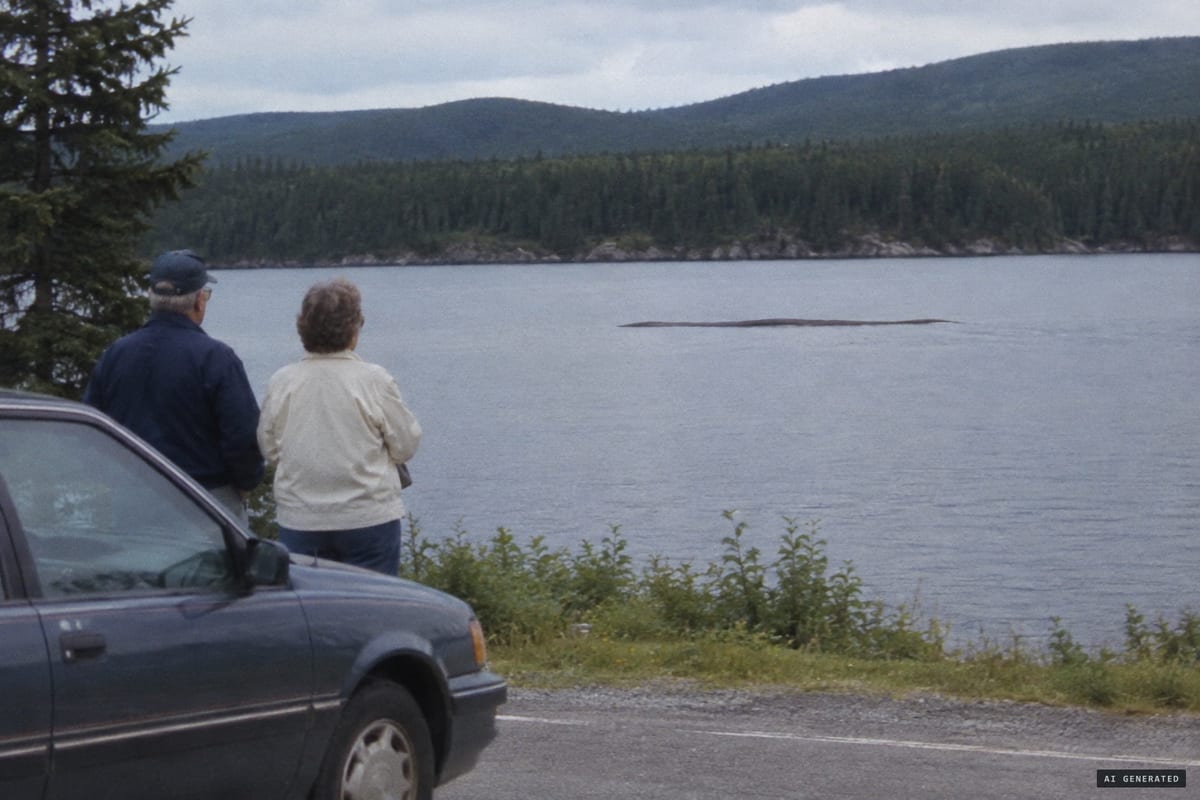 Cressie of Crescent Lake: the Fred Parsons and Pierce Rideout sightings, Robert's Arm, Newfoundland (1991)
July 9, 1991. Around noon. Fred Parsons was driving beside Crescent Lake, next to the small town of Robert's Arm in north-central Newfoundland. His wife was with him. About 100 yards offshore, something lay on the water. Long. Sleek. Dark brownish. Fifteen or twenty feet of it, with no large head.
-
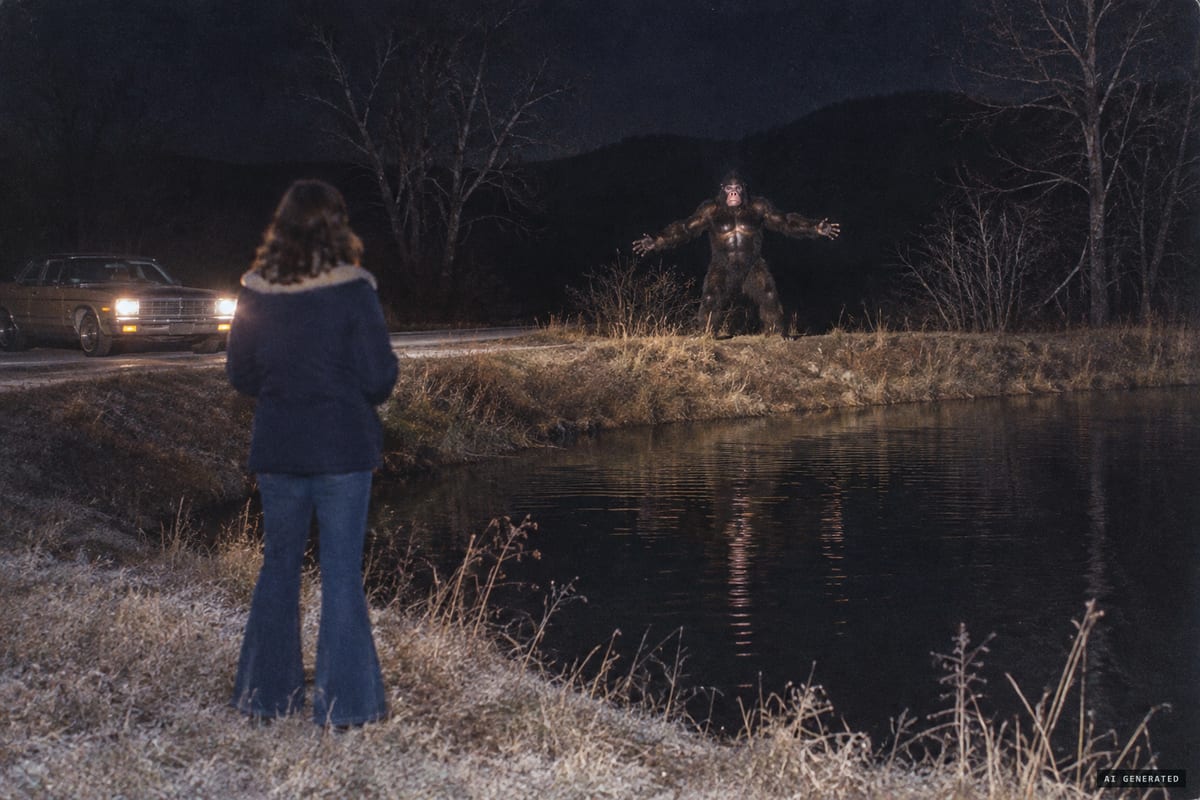 Knobby, the Carpenter's Knob Bigfoot (Cleveland County, North Carolina, 1978 to 1979)
December 21, 1978. Near Toluca, in the hills of upper Cleveland County, North Carolina, 88-year-old Minnie Cook went outside to see what was disturbing her dogs. Afterwards, she never left her house without her rifle in hand.
-
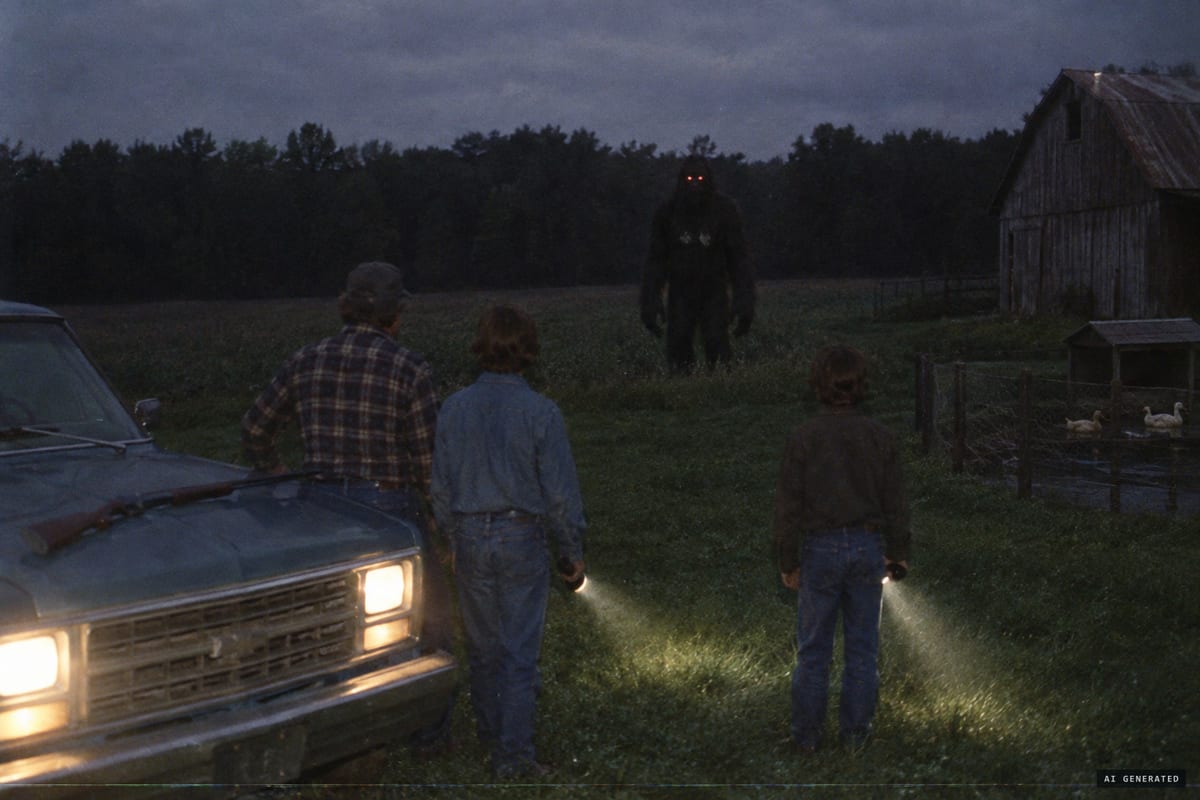 The Rome Township "Night Siege": a farm family besieged by a red-eyed creature, Ashtabula County, Ohio (1981)
June 25, 1981. A farm on Johnson Road in Rome Township, Ashtabula County, Ohio. In the dark, Robert and two of his sons saw a black form on all fours with glowing red eyes going after the family's ducks. Robert fired. It ran down a field, screaming.
-
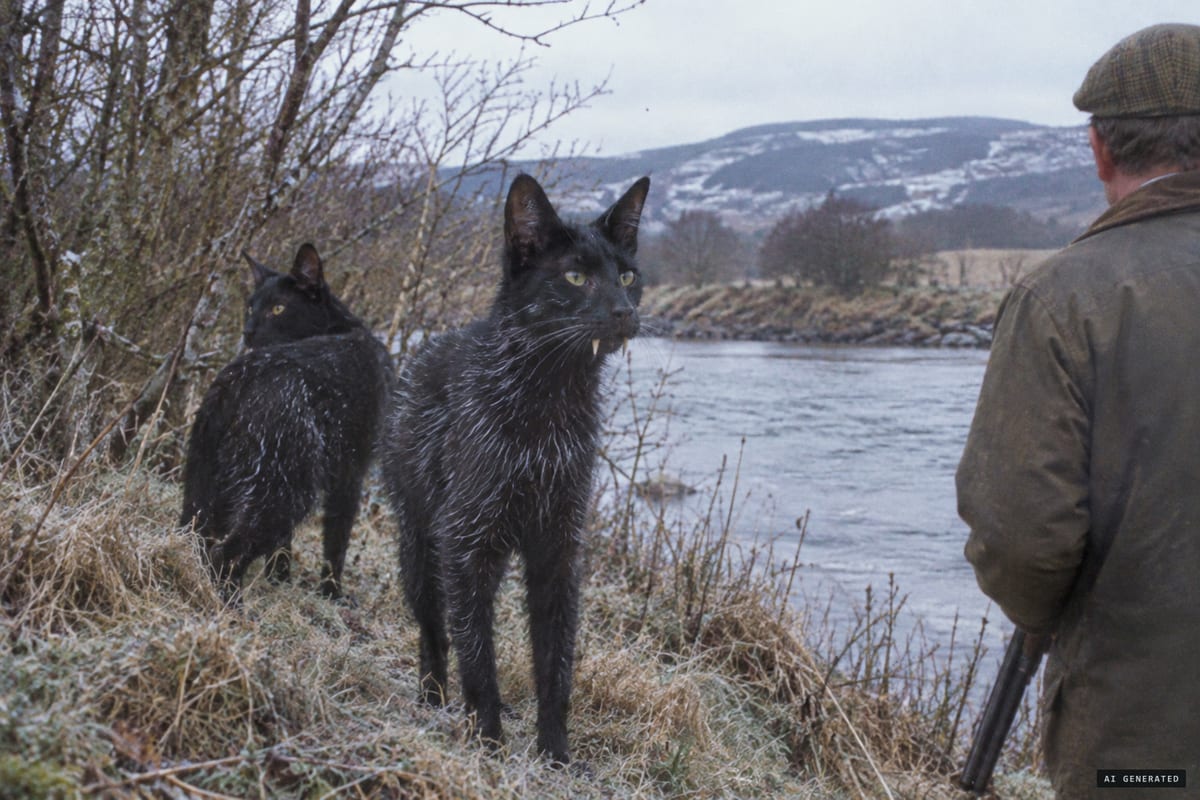 The Kellas Cats: Tomas Christie's Kellas male and the snared Revack cat
January 1983. Near the River Lossie, close to the tiny village of Kellas in West Moray, local laird Tomas Christie observed a pair of black cats. He shot one. The other escaped unharmed.
-
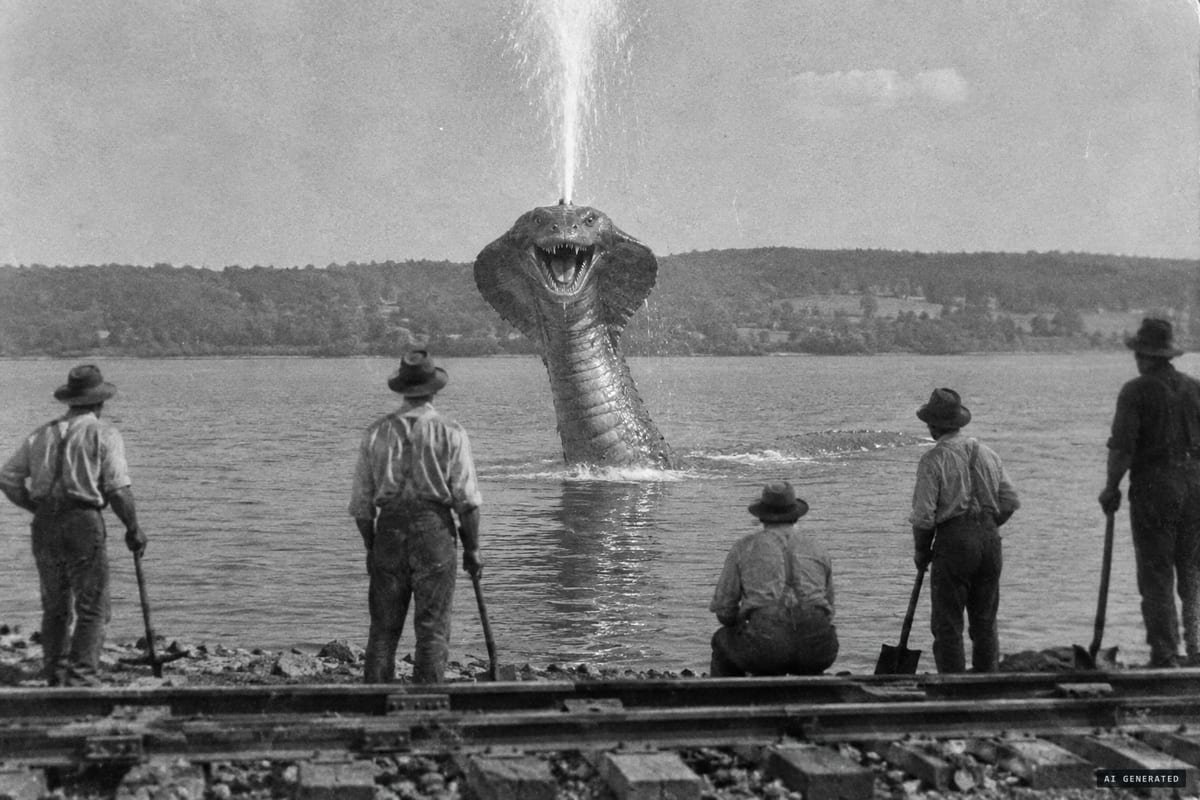 Champ, the 1873 railroad crew sighting and the W. B. Eddy collision, Lake Champlain
July 1873. A crew is laying track along the New York shore of Lake Champlain, near Dresden. Out on the water, something moves. A head breaks the surface. An enormous serpent, coming toward them from the opposite shore.
-
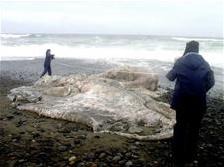 The Chilean Blob: the "giant octopus" of Pinuno Beach, Los Muermos (2003)
June 2003. Pinuno Beach, on the coast of Los Muermos in southern Chile. Fishermen found something the swells had thrown ashore. A mass of grey flesh about 12 metres long, estimated at 13 tons. It did not move.
-
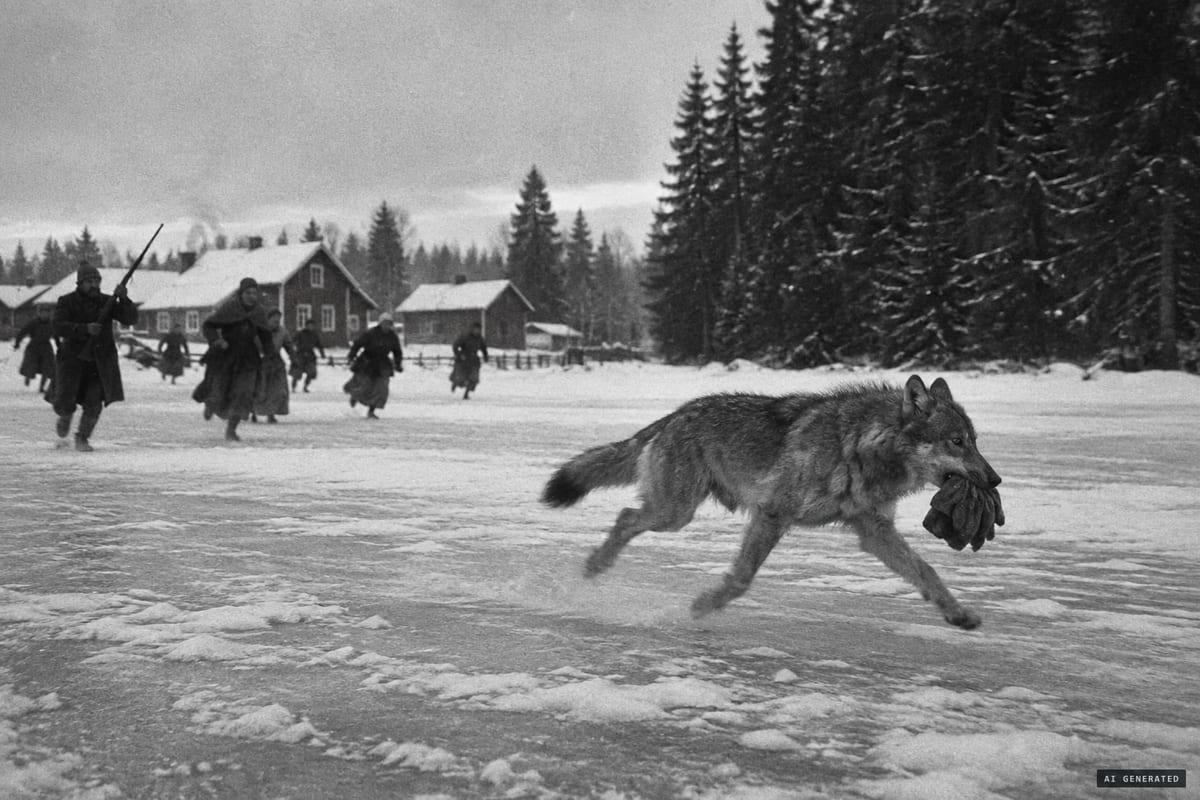 The Wolf of Gysinge (Gysingevargen)
December 30, 1820. At Dragbo, in the parish of Årsunda, a three-year-old boy named Eric was killed by a wolf. He was the first. For three months a large she-wolf hunted the villages around the ironworks at Gysinge, where Gästrikland, Uppland and Dalarna meet. She took children. She dragged a screaming boy across the ice. Thirty-one people were attacked, and most of the dead were children.
-
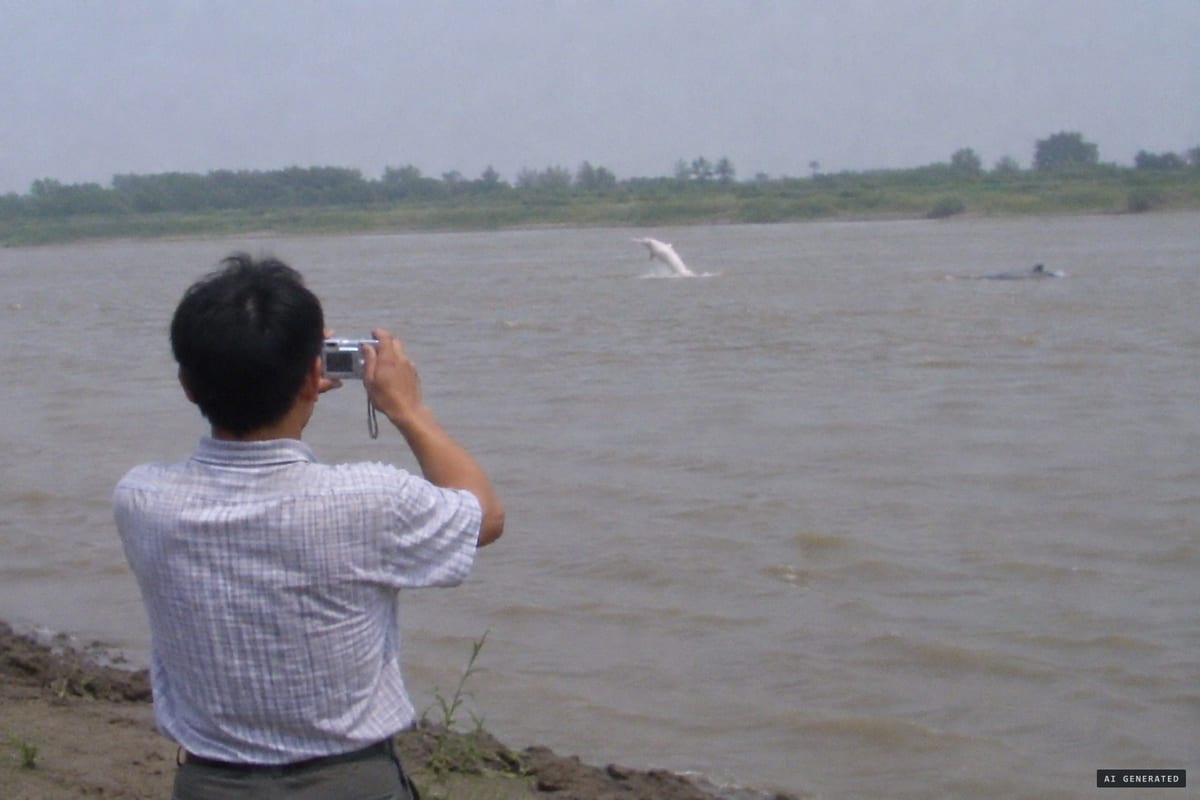 Zeng Yujiang films a "big white animal" at Xuba ferry, Tongling, presumed baiji (2007)
August 19, 2007. Mid-afternoon at Xuba ferry, on a side channel of the Yangtze near Tongling. A local man named Zeng Yujiang saw something pale break the surface, about a kilometre out. Then again. "I never saw such a big thing in the water before, so I filmed it," he said.
-
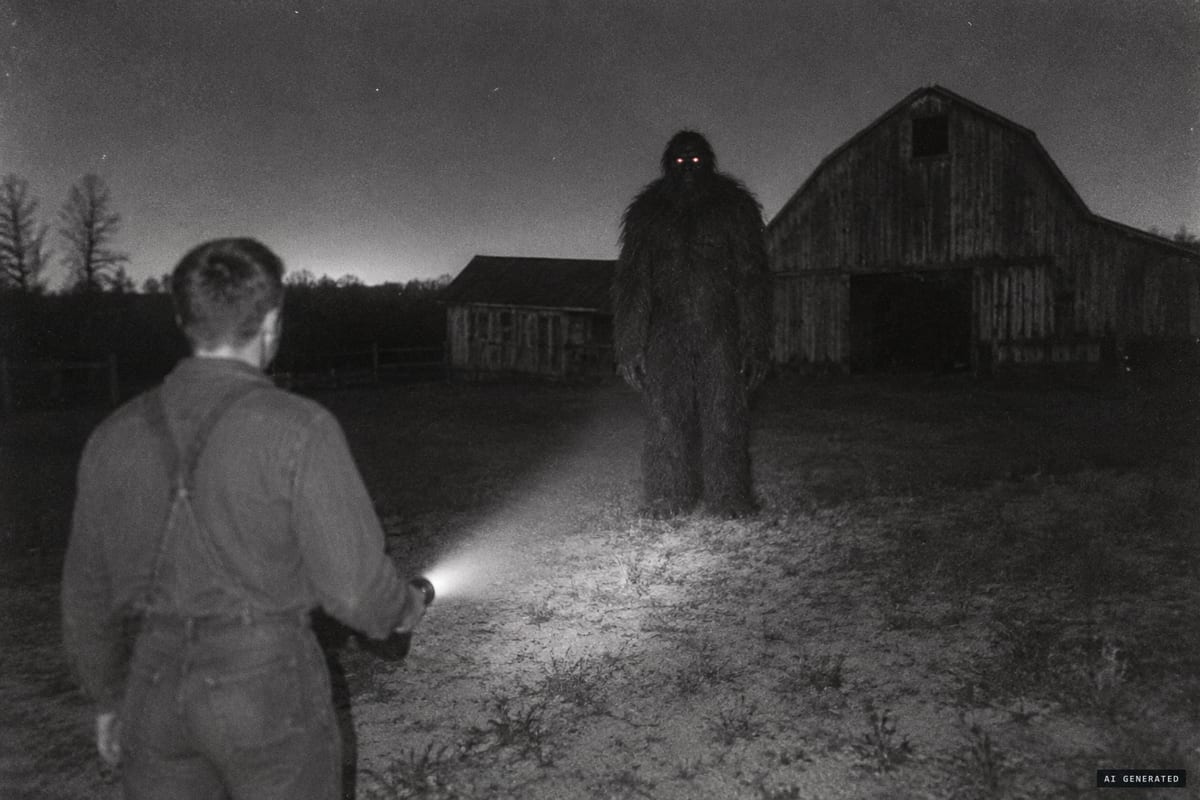 The Sister Lakes Monster of Dewey Lake: Monster Town, U.S.A.
Tuesday night, June 9, 1964. A farm south of Dewey Lake, in Cass County, Michigan. Gordon Brown, his wife Mary, his brother Randall and a neighbour girl pulled in and saw something standing between a barn and a shed. Nine feet tall, they said. Roughly 500 pounds. A black leathery face. Eyes that glowed red.
-
 The Cuero Chupacabra: Phylis Canion's Blue-Skinned Carcasses, Texas 2007
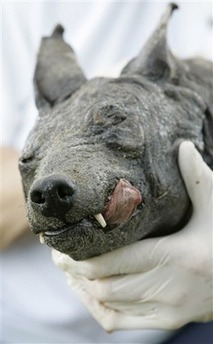
Cuero, Texas. Summer 2007. Phylis Canion had been losing chickens for years. As many as 26 of them, drained of blood, the meat untouched. Then, over four days in July, she and her neighbours found three bodies on and near the road outside her ranch. Each weighed about 40 pounds. Big ears. Large fanged teeth. Grayish-blue, mostly hairless skin. "It is one ugly creature," she said.
-
 The Wolf of Soissons
February 28, 1765. The last day of the month. In the parish of Septmonts, in the countryside around Soissons, a wolf attacked a pregnant woman. It struck again not three hundred yards away. Then it kept moving.
-
 The San Aspiring colossal squid: the heaviest specimen ever landed
The Ross Sea, Antarctica. Early 2007. The longliner San Aspiring was hauling in lines for Antarctic toothfish when something rose near the stern. A colossal squid. It was still hanging onto a hooked toothfish, barely alive, its eyes described as the size of a car tire. Skipper John Bennett and his crew spent about two hours working it into a cargo net. Then it was frozen whole.
-
 The Fouke Monster Attack on the Ford House
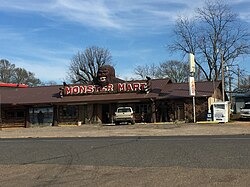
May 1971. A rented frame house just outside Fouke, Arkansas. The Ford family had lived there less than a week. Late at night, Elizabeth Ford lay asleep on a couch in the front room. She saw the curtain move. Then a hand came through the screen window. It was covered in heavy hair. It had claws. Its eyes looked like coals of fire.
-
 The Sandra Mansi "Champ" photograph, Lake Champlain
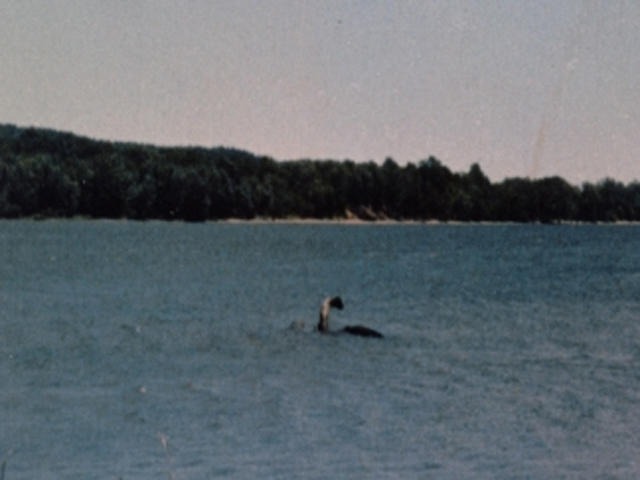
July 5, 1977. Around noon on the Vermont shore of Lake Champlain. Sandra Mansi watched the water stir like a school of fish. Then a head broke the surface. Then a neck. Then a back.
-
 The Valhalla Sea Serpent off Brazil (1905)
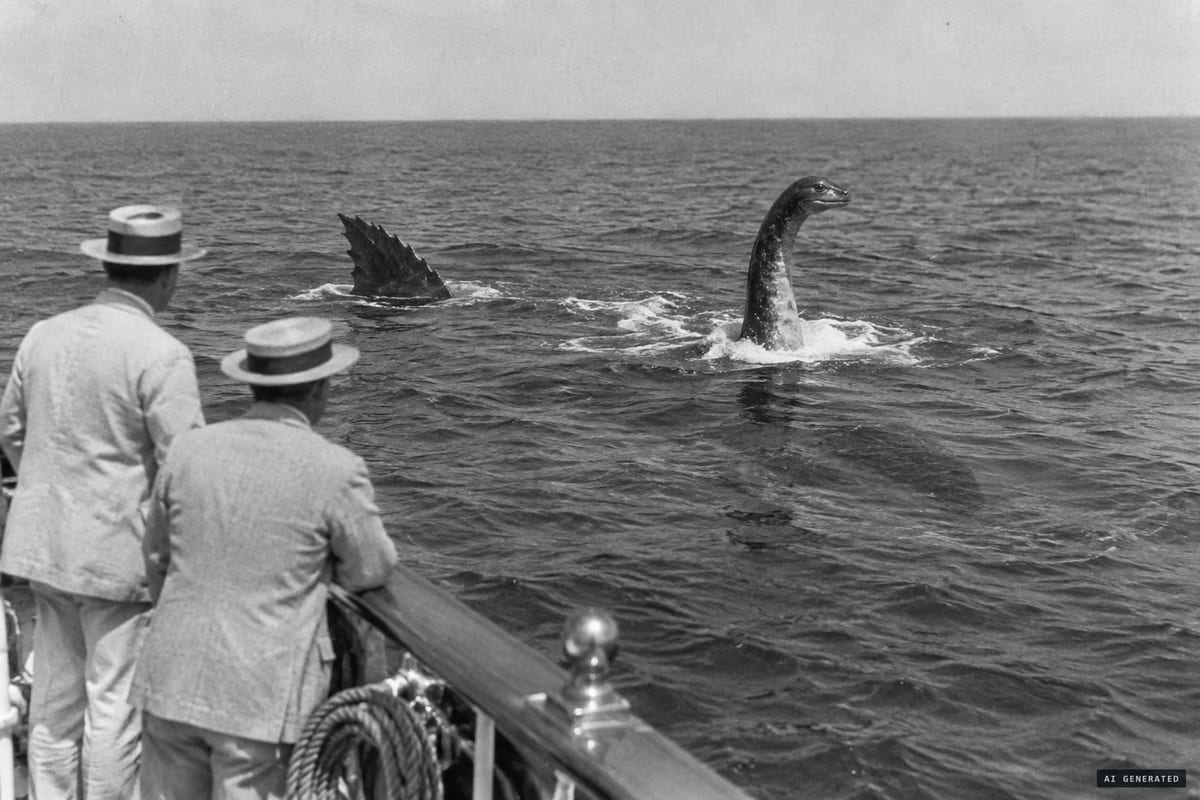
7 December 1905. Morning, off the northeast coast of Brazil. Two naturalists stand on the deck of the Earl of Crawford's steam yacht Valhalla. Edmund Meade-Waldo and Michael John Nicoll are Fellows of the Zoological Society of London. Then they see something that does not fit.
-
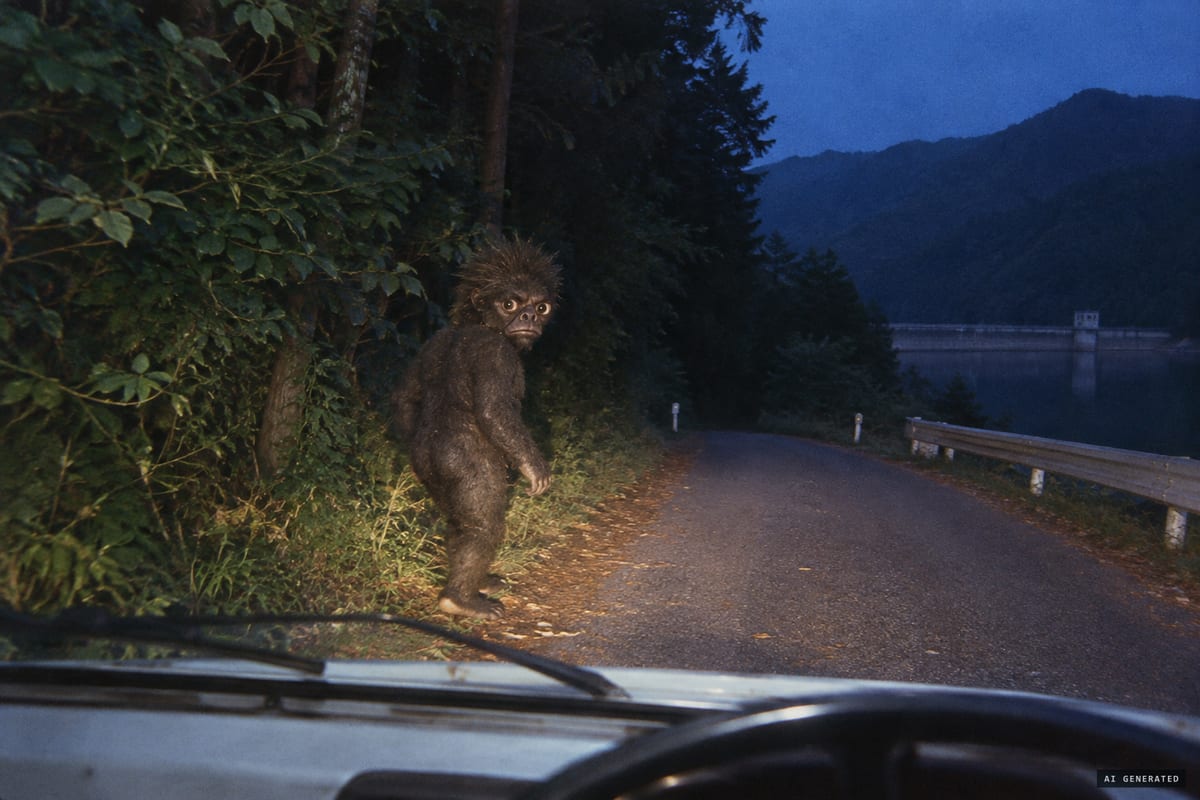 The First Hibagon Sightings at Mount Hiba and Saijō's Hominoid Section
20 July 1970. About 8 pm. A truck moves along a road near the Rokunohara Dam, at the foot of Mount Hiba in Hiroshima Prefecture. Something comes out onto the road. It walks on two legs. It is gorilla-like, about the size of a calf. It notices the driver. Then it slowly goes back into the forest.
-
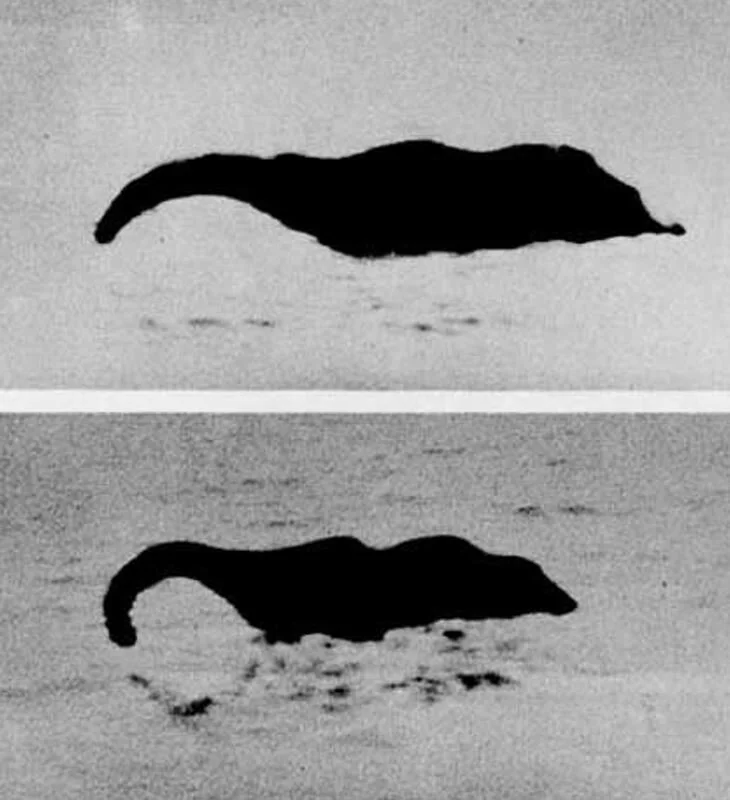 Morgawr of Falmouth Bay: the Scott and Riley sighting and the Mary F photographs
September 1975. Off Pendennis Point, at the mouth of Falmouth harbour, a local woman named Mrs Scott and her friend Mr Riley saw something rise from the water. A humped animal. A long, bristled neck. Stumpy horns. It dived for a few seconds and came back up with a conger eel in its jaws. Mrs Scott said she would never forget "the face on that thing" as long as she lived.
-
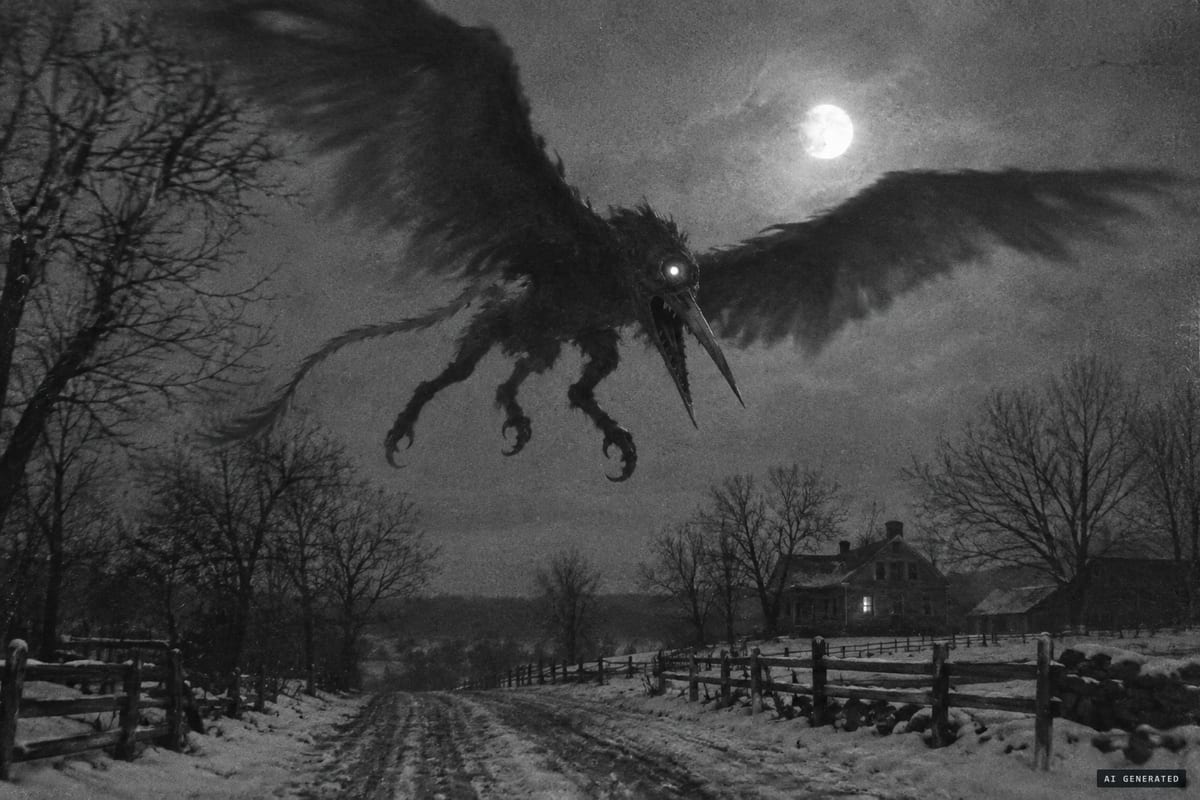 The Snallygaster of Middletown, Maryland (1909)
February 1909. Middletown, Maryland. The weekly Valley Register warned its readers that a terrible beast was on its way. It had enormous wings, a long pointed bill, claws like steel hooks and one eye in the center of its forehead. Its voice was like a locomotive whistle.
-
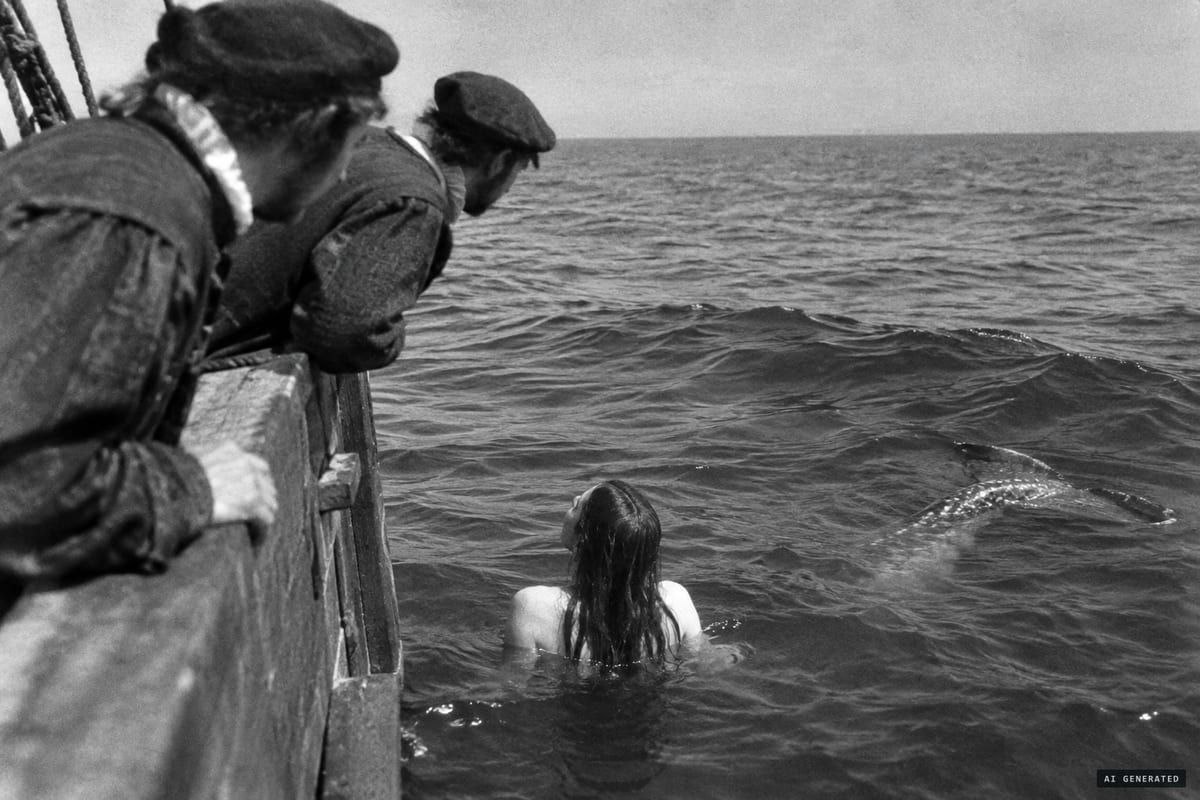 Henry Hudson's crew and the mermaid of the Barents Sea
15 June 1608. The Hopewell is pushing through the Barents Sea under a sun that never sets. Henry Hudson is hunting for a passage to Asia.
-
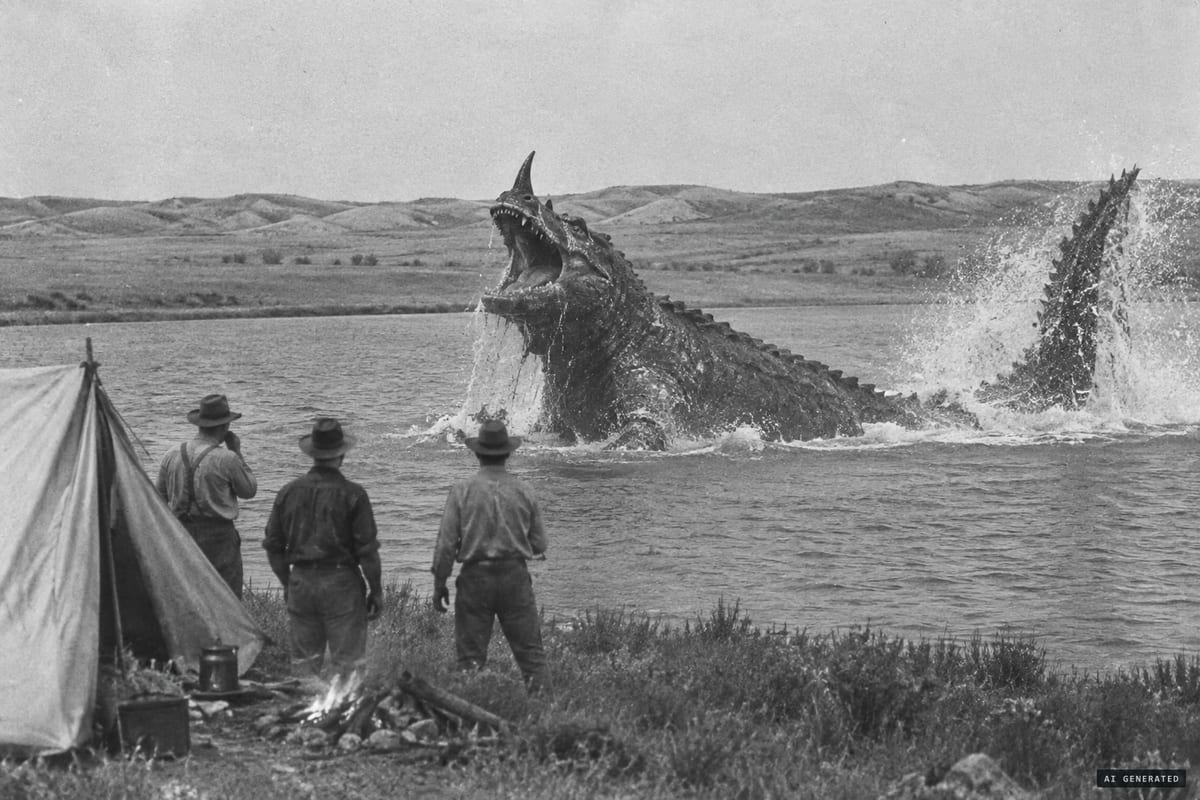 The Walgren Lake Monster: Alkali Lake, Hay Springs, Nebraska
Alkali Lake. A small body of water on the edge of the Nebraska Sandhills, a few miles outside Hay Springs. J. A. Johnson was camping on its shore with two friends. Then something moved through the water. About forty feet long. Built something like an alligator, with a horn-like object between its eyes and nostrils. When it noticed the men, it let out a dreadful roar, thrashed its tail and dove under the water.
-
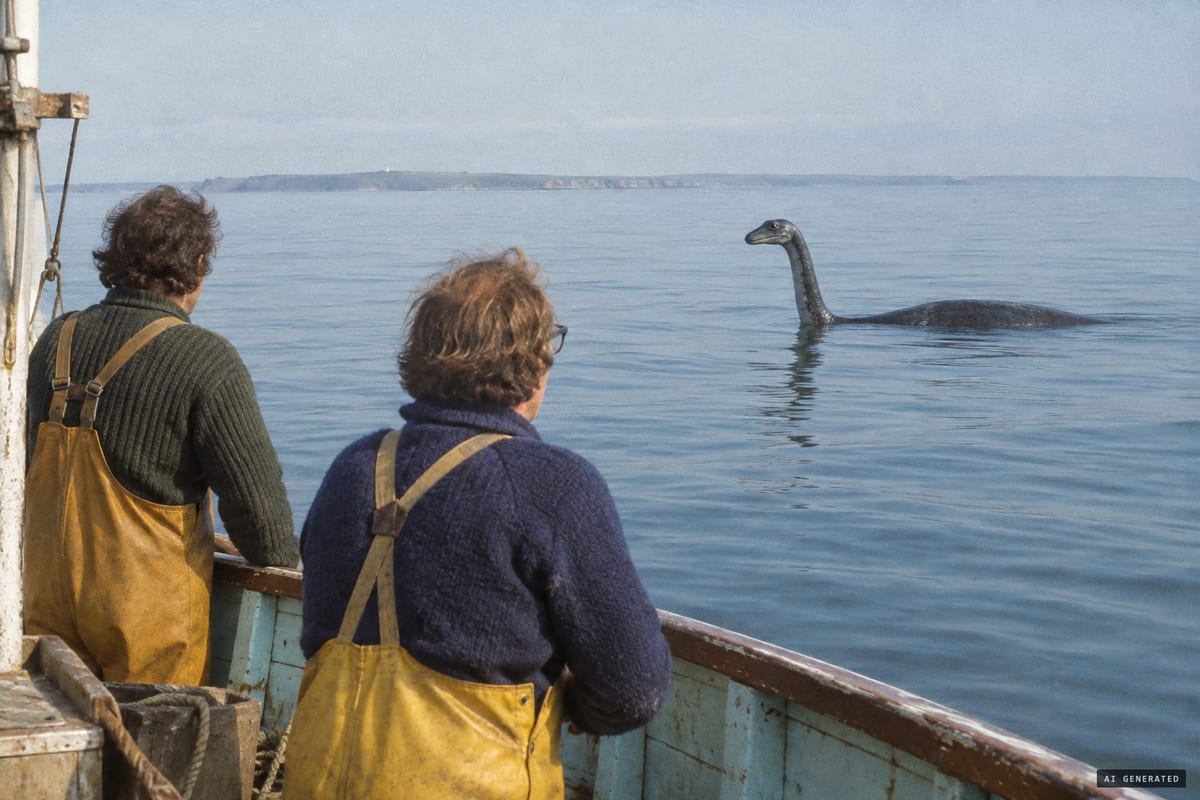 John Cock and George Vinnicombe's Long-Necked Sea Creature off Lizard Point
July 1976. Calm water off Lizard Point, Cornwall. Two fishermen, George Vinnicombe and John Cock, spotted what looked like an upturned boat. They steered closer. Then a head rose out of the sea on a neck about six feet long. And it looked at them.
-
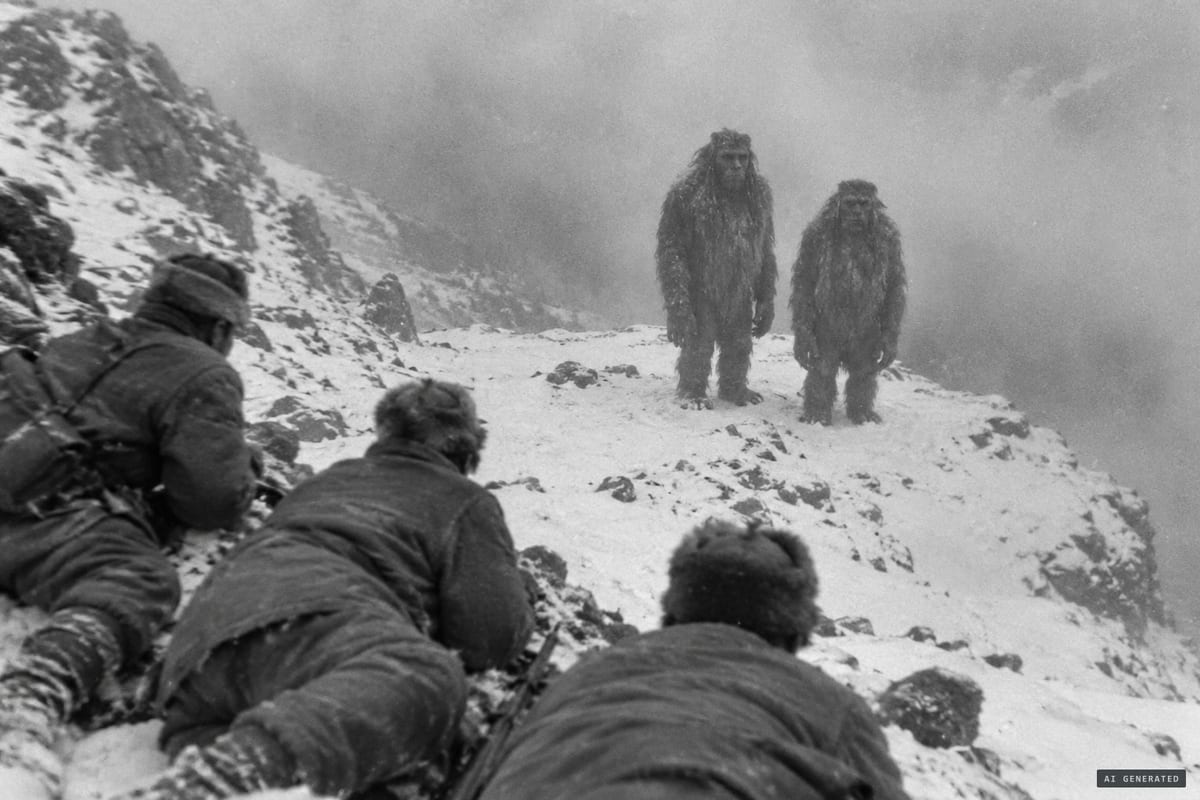 Sławomir Rawicz's Two Yetis in the Himalayas (The Long Walk)
Early 1942. A small party of escaped prisoners is nearing the end of a crossing of the Himalayas. In a misty, snow-covered valley, on a flattish shelf, two figures are moving. They are enormous. They walk on their hind legs.
-
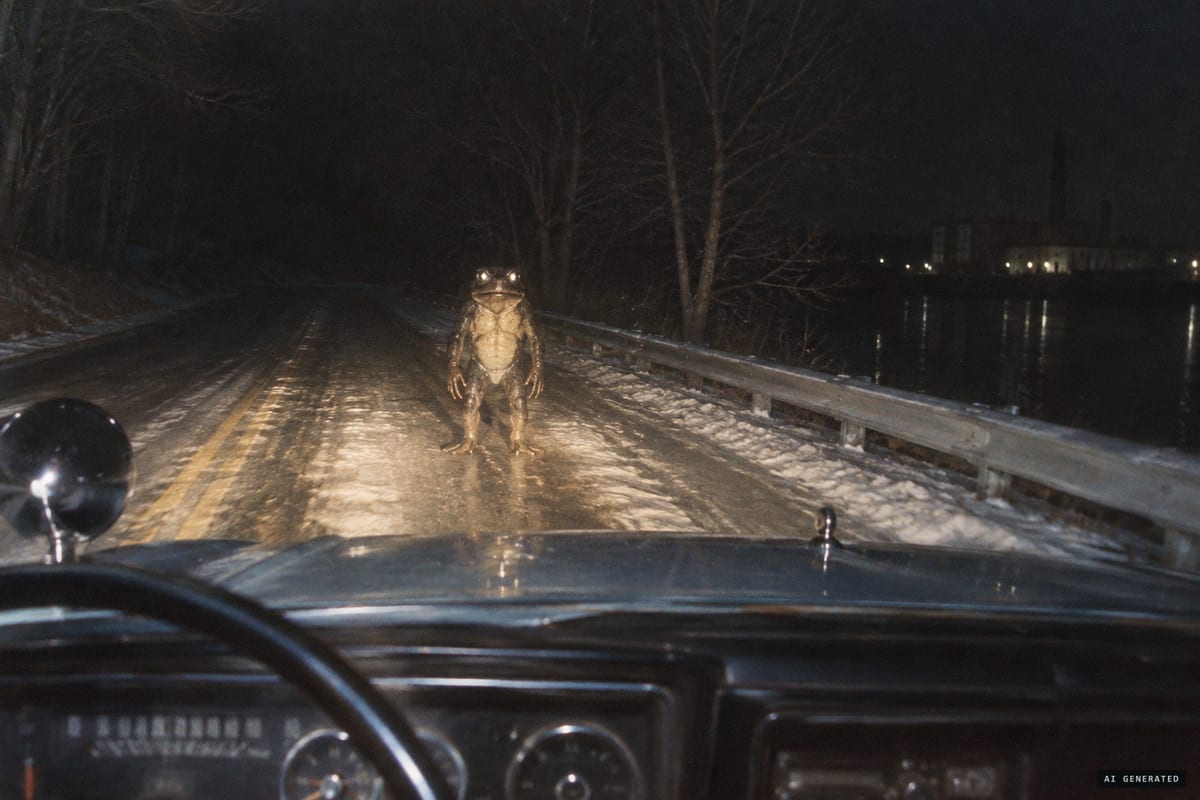 The Loveland Frog: Officer Ray Shockey's sighting on Riverside Drive, Loveland, Ohio
March 3, 1972. About 1:00 a.m. The roads around Loveland, Ohio, were icy. Officer Ray Shockey was driving carefully along Riverside Drive, near the Little Miami River. Something lay in the road. He took it for a dog. Then it rose. Three or four feet tall. Leathery skin, like a lizard or a frog. Eyes throwing back his headlights. It looked at him. Then it went over the guardrail and down toward the river.
-
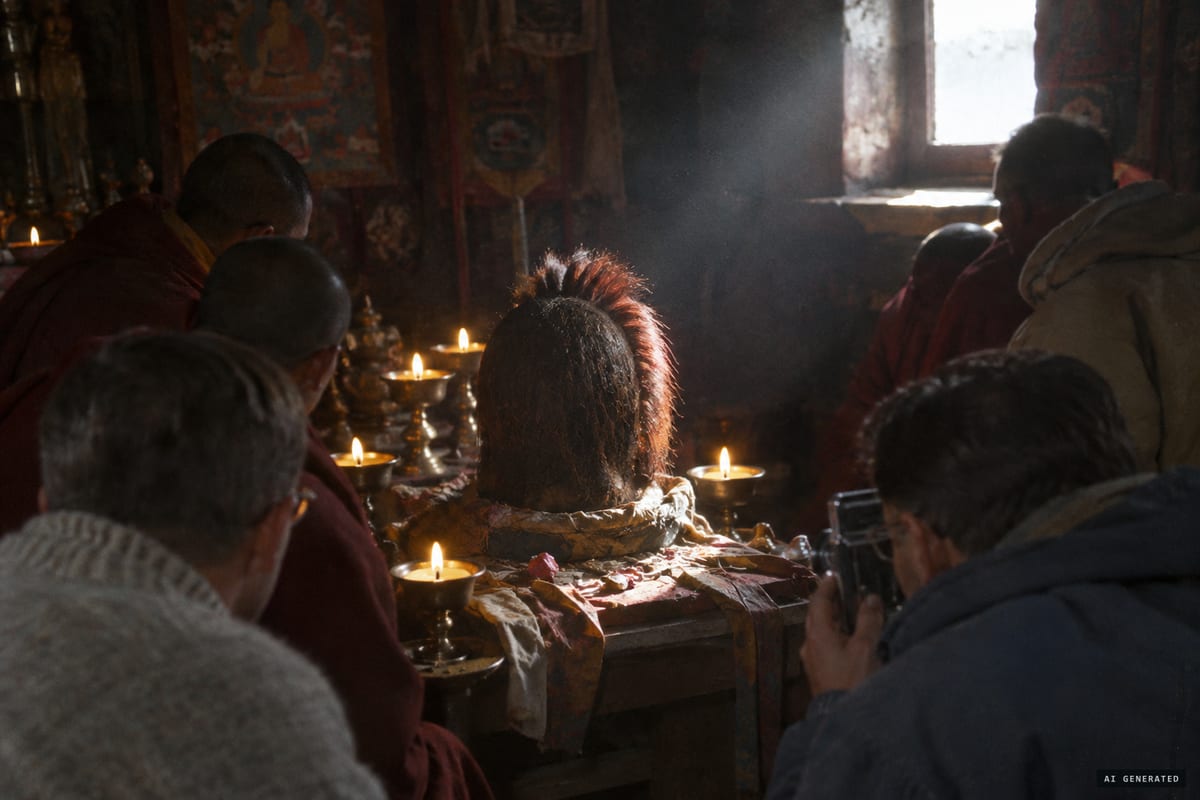 The Pangboche Yeti Scalp Hair Specimens
Pangboche, Nepal. A monastery high in the Khumbu kept a relic wrapped in cloth, its ties sealed with wax. The monks said it was the scalp of a yeti.
-
 The East 123rd Street Sewer Alligator, East Harlem, 1935
February 1935. East 123rd Street, East Harlem. A group of boys was shoveling the last of the recent snow into a gaping manhole near the Harlem River. Something moved in the icy water below. Sixteen-year-old Salvatore Condulucci looked down and shouted, "Honest, it's an alligator!"
-
 Georgie, the Lake George Monster Hoax
Lake George, New York. Summer 1904. A launch carrying Col. William d'Alton Mann and his friends passes through Hague Bay. Then something breaks the surface about ten feet from the boat. A striped head. Big white teeth. Green eyes. Mr. Davies screams. Mrs. Bates beats the water with her parasol. Mann shouts, "Good God, what is it?" And the thing sinks out of sight.
-
 John Young photographs and films a live night parrot in south-western Queensland, 2013
26 May 2013. Somewhere in south-western Queensland, a speaker sits on the ground in the dark. It plays a recording of an unusual call. Within 15 seconds, a squat yellow-green bird comes straight up to the people waiting in the dark.
-
 The Forest Owlet Rediscovered North of Shahada
November 25, 1997. 08:30. A teak forest north of Shahada, in the lower Akrani Hills of Maharashtra. Ben F. King quietly pointed out an owlet "worth a close look." It sat near the top of a bare tree, in the sun.
-
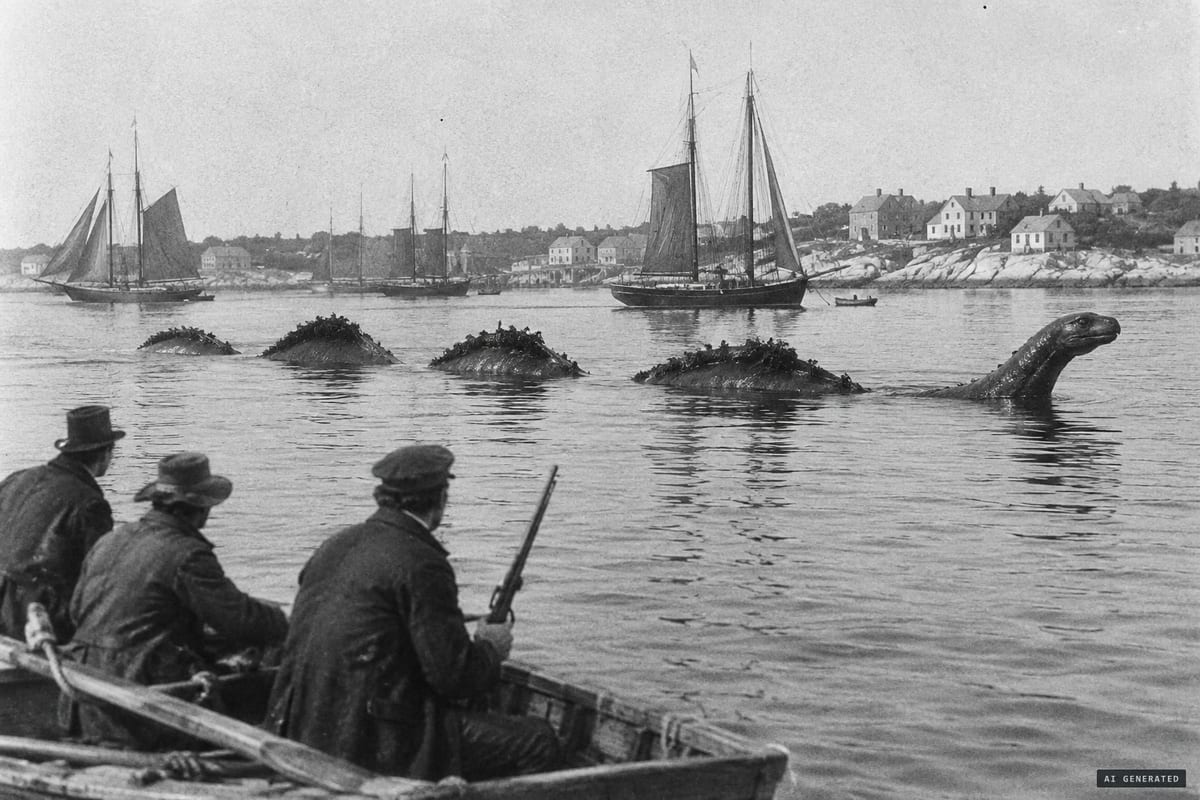 The Gloucester Sea Serpent and the Linnaean Society Inquiry
August 1817. Gloucester Harbor, Massachusetts. Something long and dark moved through the calm water off Cape Ann. Ship masters, merchants and a ship carpenter watched it play in circles, sink straight down and rise again two hundred yards away. One said its head was shaped like a sea turtle's. Another saw bunches along its back.
-
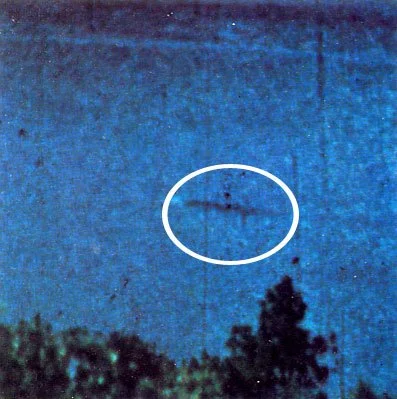 Art Folden's Ogopogo film, Okanagan Lake (1968)
1968. A summer drive along Highway 97, beside Okanagan Lake in British Columbia. Art Folden and his wife saw something large and lifelike moving on the calm water. Folden pulled over and raised his home movie camera.
-
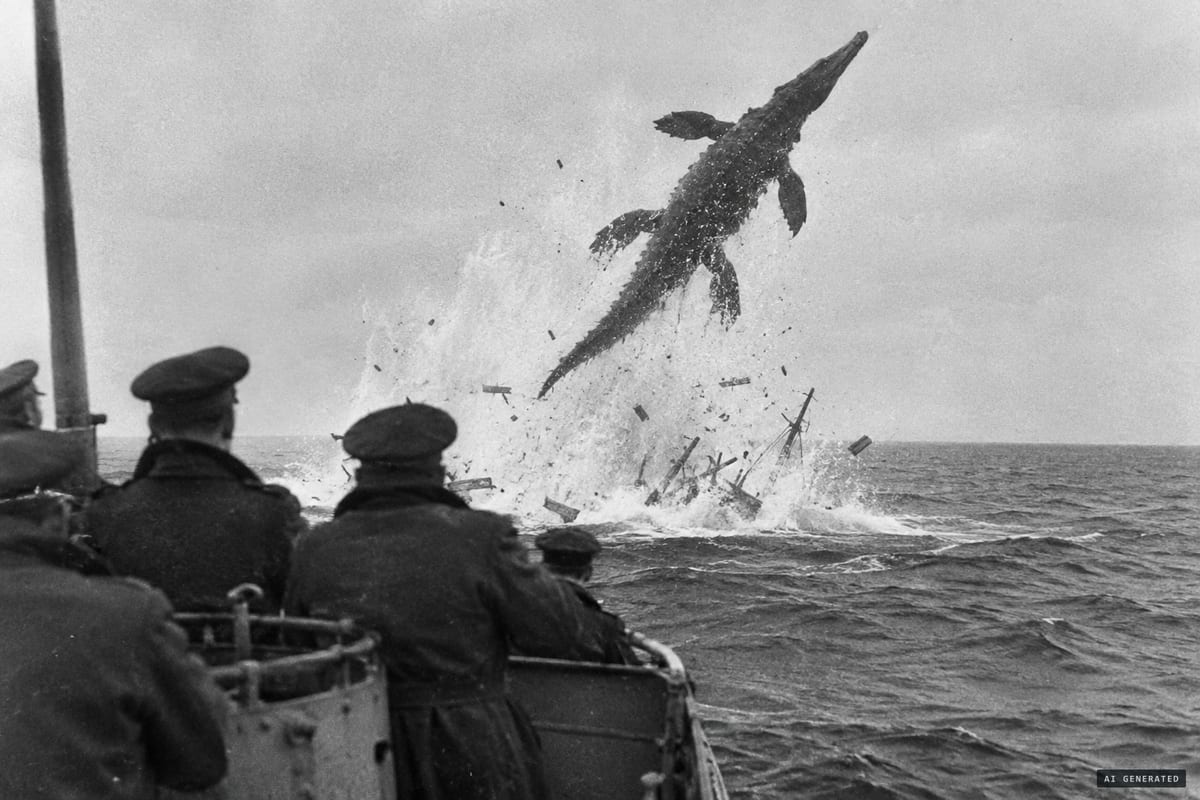 The U-28 'Undersea Crocodile' and the Sinking of the SS Iberian
30 July 1915. Off the south coast of Ireland, the German submarine U-28 sent the British steamer SS Iberian to the bottom. She went down stern first, her hull almost vertical. About 25 seconds later, something exploded beneath the surface. Wreckage burst out of the sea.
-
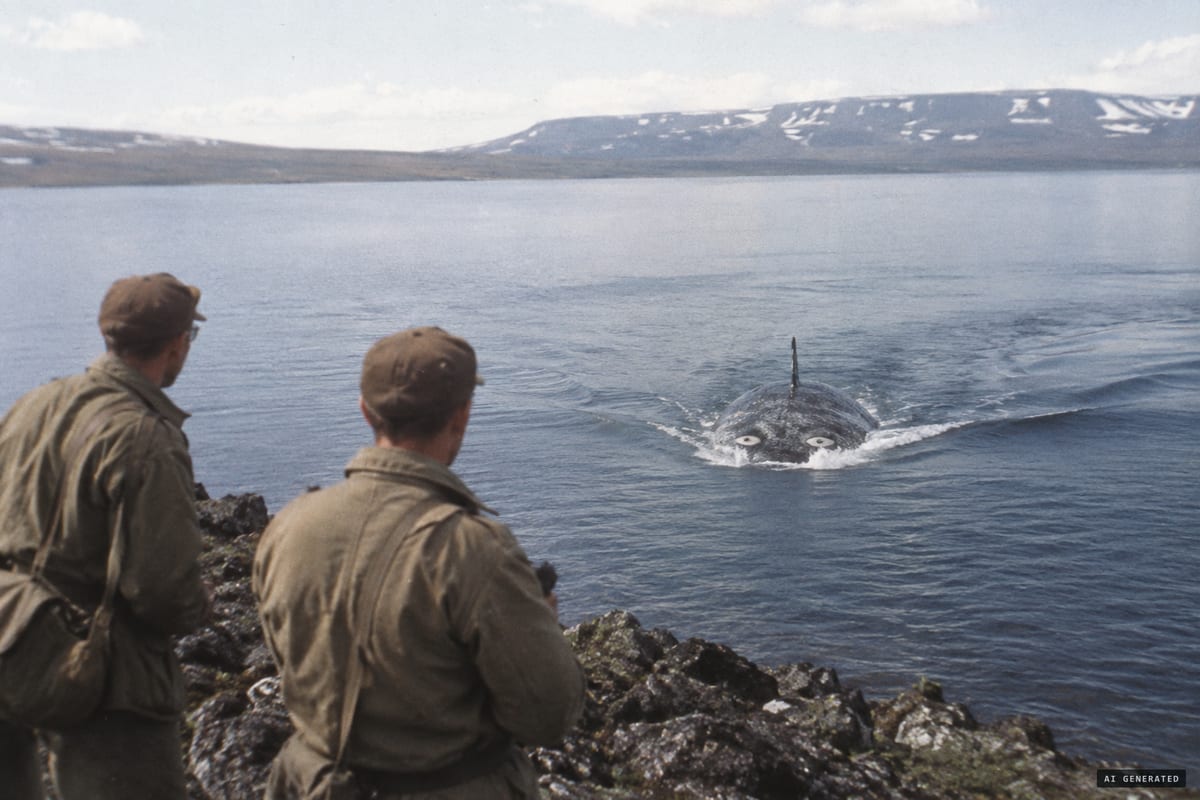 The Lake Vorota Monster: Viktor Tverdokhlebov and the Labynkyr Devil (1953)
30 July 1953. High on the Sordonnokh Plateau in Yakutia, geologist Viktor Tverdokhlebov and Boris Bashkatov watched over Lake Vorota. Something was swimming on the water. Quite close. A dark-grey body rose just slightly above the surface. Two symmetrical light patches stood out, like an animal's eyes. Something like a stick stuck out of its body. A fin, perhaps.
-
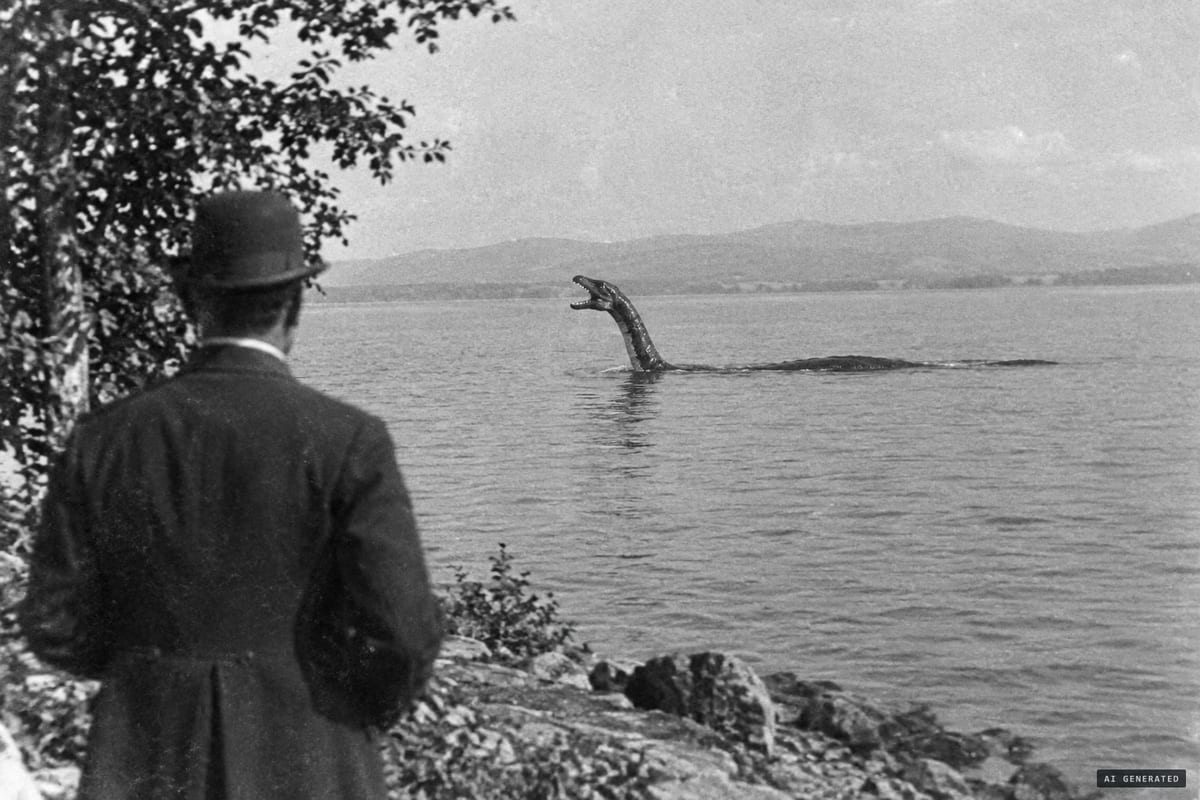 Sheriff Nathan H. Mooney's Lake Champlain Water Serpent (Champ), 1883
Lake Champlain. The New York shore. Some versions say July 1883. Nathan H. Mooney, remembered as the Clinton County Sheriff, looked off to the northwest and saw what he called a gigantic water serpent. It was about 25 to 30 feet long. It rose about five feet out of the water. He was close enough to see round white spots inside its mouth.
-
 Doc Shiels's Loch Ness Monster Photographs (the "Loch Ness Muppet")
Saturday, 21 May 1977. Loch Ness, below Urquhart Castle. Tony "Doc" Shiels, artist, stage magician and self-styled wizard, was on the shore.
-
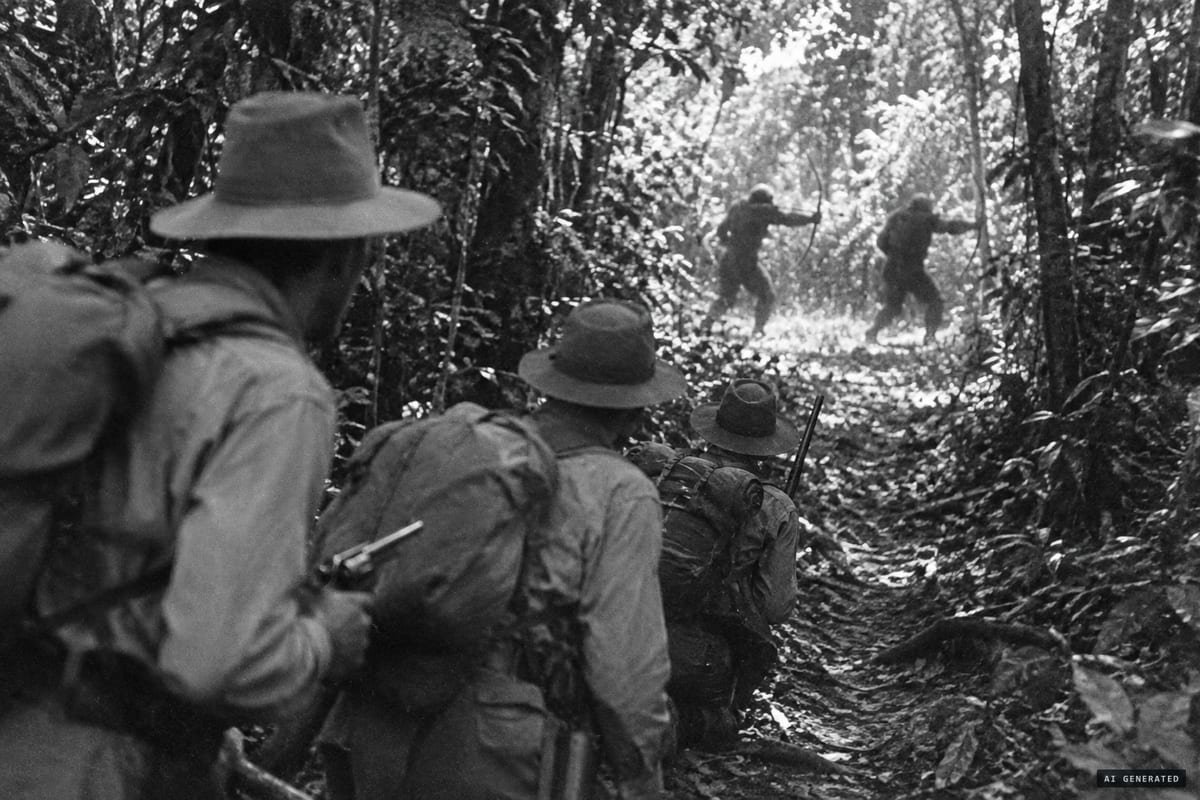 Percy Fawcett and the Maricoxi hairy men
1914. The Guaporé basin, near the Bolivian border, in what is now Rondônia, Brazil. Percy Harrison Fawcett had been warned. His hosts, the friendly Maxubi, spoke of hostile neighbours called the Maricoxi.
-
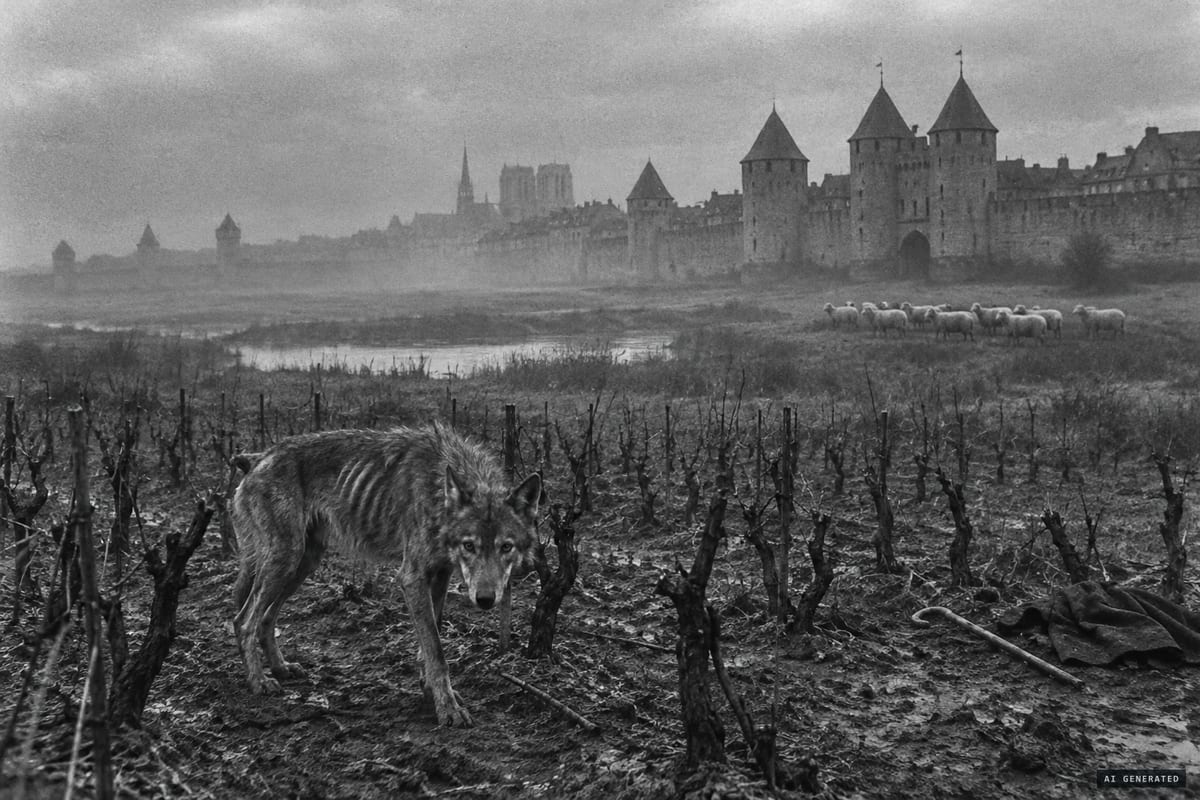 Courtaut, the tailless wolf of Paris
Paris. Autumn 1439. Wolves were hunting in the vineyards and marshes between Montmartre and the Porte Saint-Antoine. In the last week of September they strangled and ate 14 people. One animal frightened the city more than all the rest. It had no tail. Parisians called it Courtaut, and warned each other: "Gardez vous de Courtaut."
-
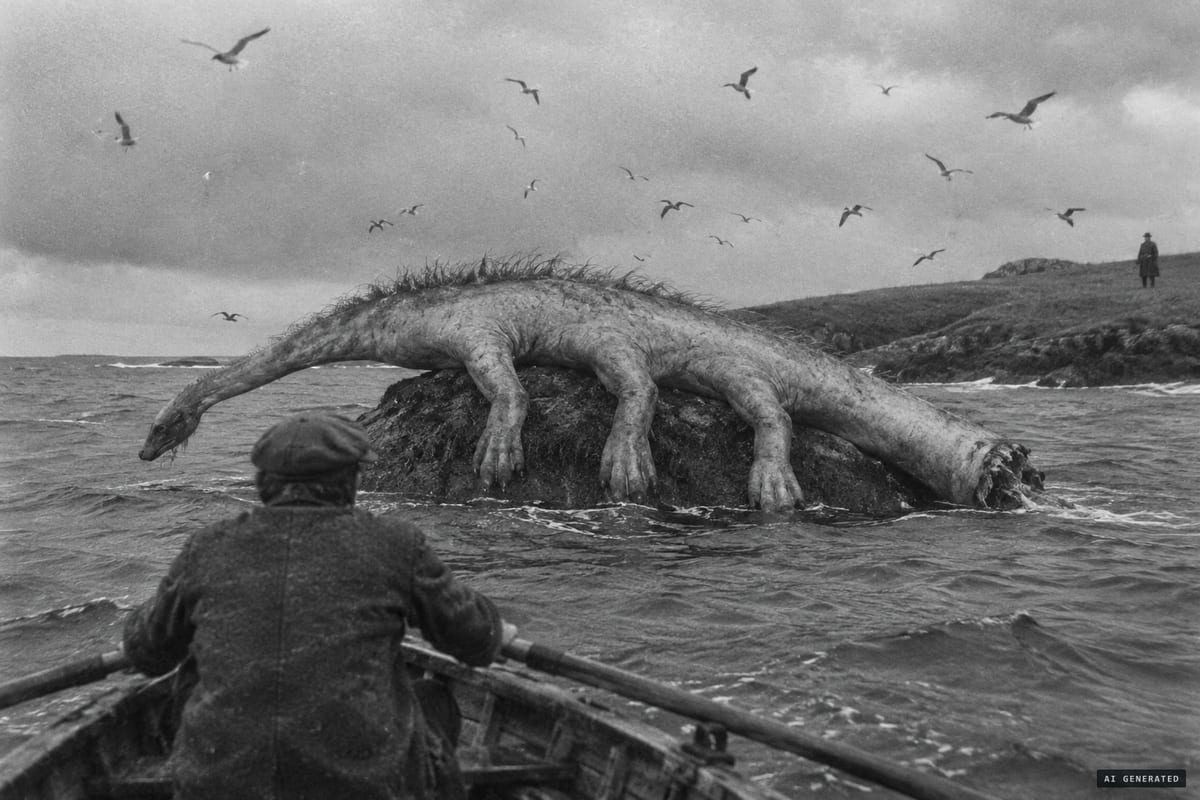 The Stronsay Beast: a 55-foot carcass off Rothiesholm Head, Orkney, 1808
September 1808. Stronsay, Orkney. A storm had passed in the night. The next morning John Peace saw seabirds circling something draped over a submerged rock off Rothiesholm Head. He rowed closer.
-
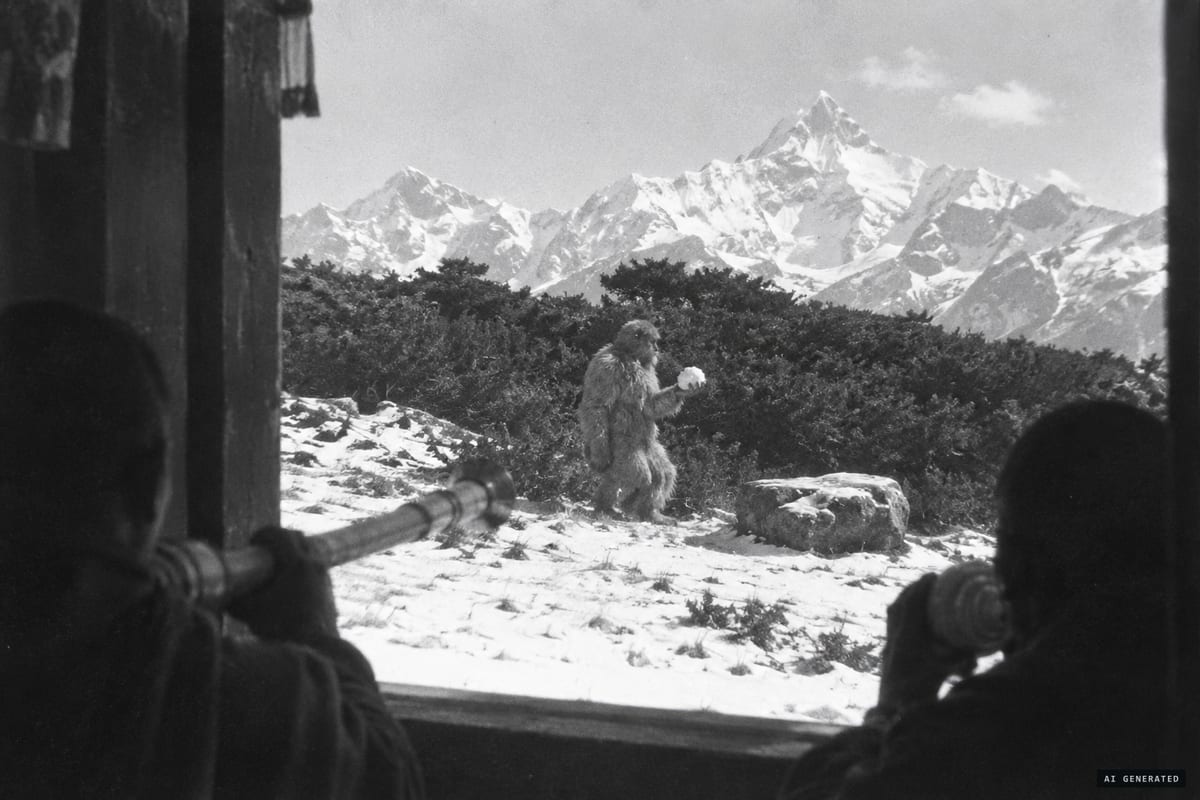 Hillary and Tenzing Everest footprints
1953. The Everest expedition is on the march. Before the season ends, Edmund Hillary and Tenzing Norgay will stand on the summit. And somewhere on the way up, the story goes, they saw large footprints.
-
 The Taguá: An 'Extinct' Peccary Found Alive in Paraguay's Dry Chaco
The hunters of the Chaco knew three kinds of wild pig. The collared peccary. The white-lipped peccary. And a larger third kind, the taguá.
-
 Harry R. Caldwell's blue tiger of Futsing
Spring 1910. In the hills around Futsing, in China's Fukien province, villagers a few miles apart began reporting the same animal. A tiger. But not a yellow one. Its coat was grey-blue, and the people took it for a devil spirit.
-
 A lukwata tries to seize a man from Sir Clement Hill's steam launch
1900. Lake Victoria. Sir Clement Hill, a senior Foreign Office official, was crossing from Kisumu to Entebbe in a small steam launch. Off Homa Mountain, something came up out of the water.
-
 Sinkhole Sam, the Monster of the Big Sinkhole
Kansas. The early 1950s. A sagging depression southeast of Inman, known as the Big Sinkhole. Bert Neufeld, an 18-year-old farm boy, fired at something in the water. It was long and snake-like. It had a fin along its back and a big, non-snakelike grin. Neufeld was sure of a hit.
-
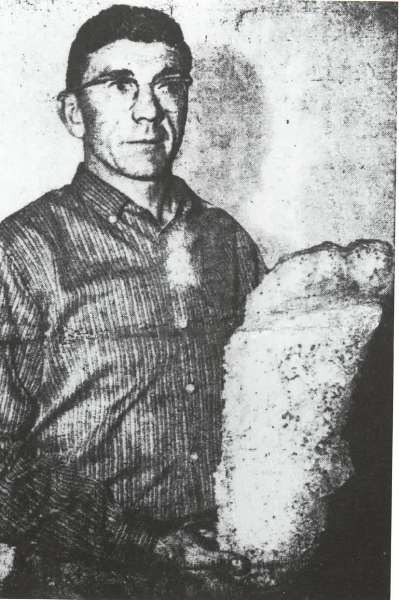 Jerry Crew's Bluff Creek Footprints and the Birth of "Bigfoot"
August 27, 1958. Morning on Bluff Creek Road, a timber road being cut into the Six Rivers National Forest of northern California. Bulldozer operator Jerry Crew found footprints around his machine. Big and manlike. Almost 16 inches long. Pressed deeply into the graded dirt.
-
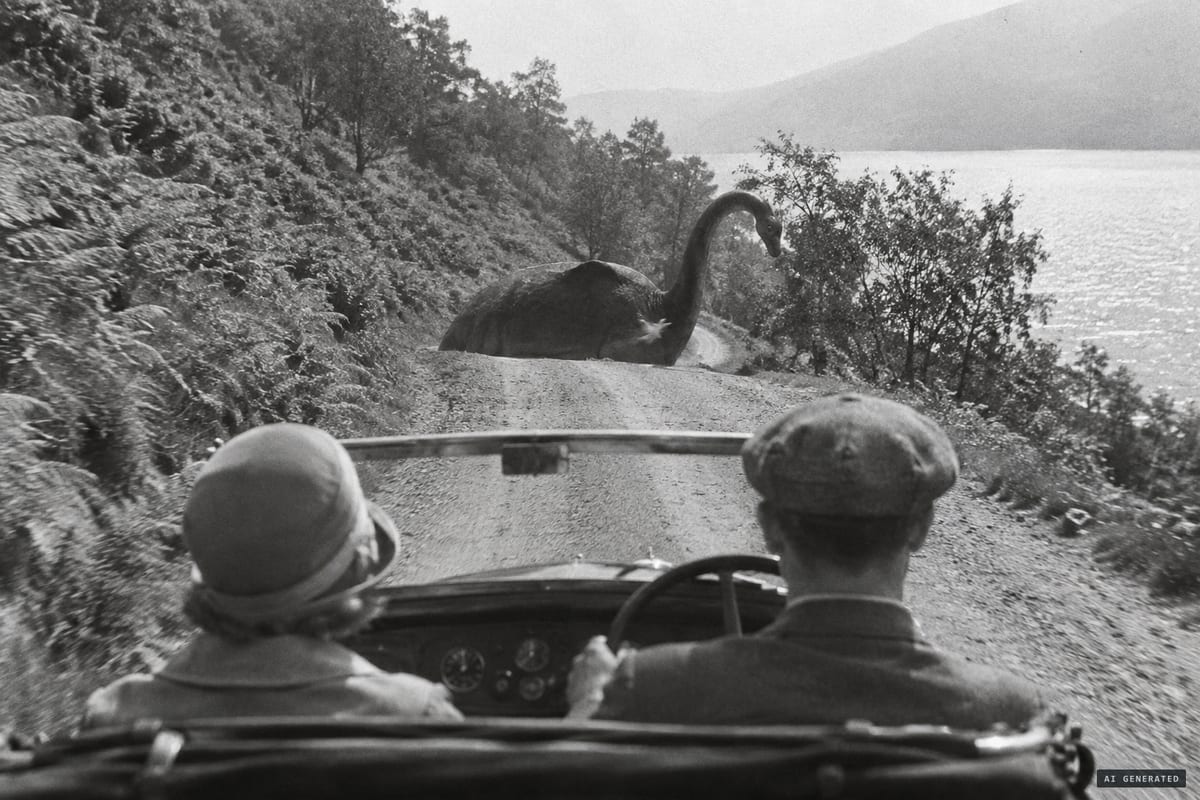 The Spicer Land Sighting of the Loch Ness Monster
July 22, 1933. A hot afternoon on the south-east shore of Loch Ness. George Spicer and his wife were driving their open Austin from Dores towards Foyers. Then something came out of the bracken on their left.
-
 The Montauk Monster carcass, Ditch Plains beach, 2008
July 2008. Ditch Plains beach, Montauk. Jenna Hewitt and three friends found something on the sand they could not name. It was bloated, hairless and sunbaked. Where a snout should be, it had what looked like a beak. "We were kind of amazed, shocked and amazed," Hewitt said.
-
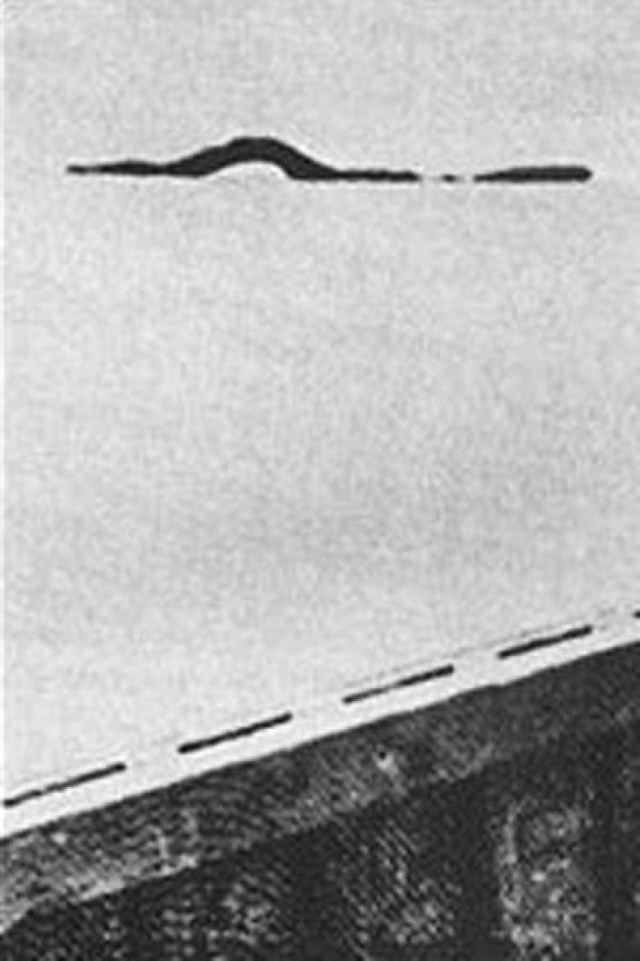 Richard Vincent and John Konefell's Manipogo Photograph, Lake Manitoba (1962)
August 1962. A small motorboat on northern Lake Manitoba, near the mouth of the Waterhen River. Two men on a fishing trip. Richard "Dick" Vincent and John Konefell, both television men. About 300 yards ahead, something long and black moved through the water. Snake-like. A hump in the middle. No head visible.
-
 Marmaduke Wetherell's Loch Ness Monster Footprints
December 1933. The Daily Mail hired a big-game hunter with one job. Track down the beast. After only a few days at Loch Ness, Marmaduke Wetherell found it. Or found where it had been. Fresh prints on a beach near Foyers. Four toes. Pads 8 inches across. Claws and nails. Prints that, by some accounts, led into the water.
-
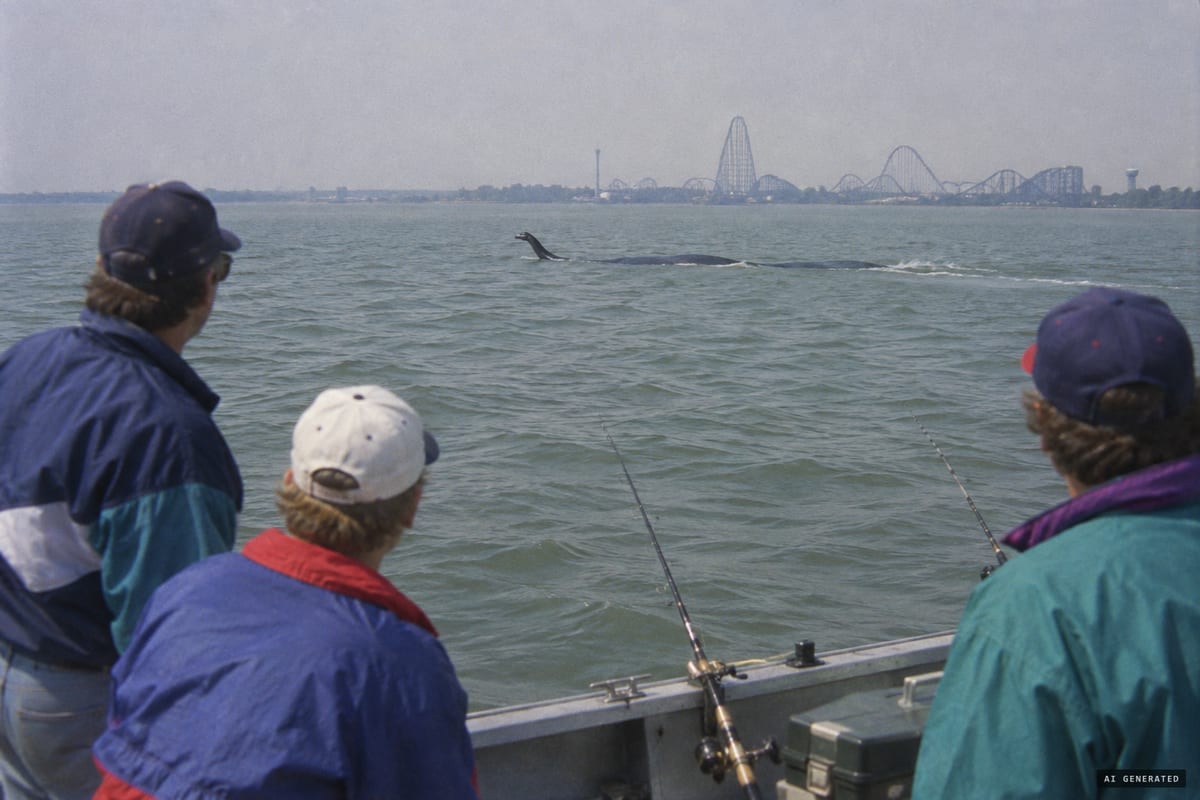 South Bay Bessie: the Lake Erie monster sightings of 1990
September 4, 1990. Harold Bricker, his wife Cora and their son Robert were fishing on Lake Erie, north of Cedar Point Amusement Park. Then something large passed about 1,000 feet from their boat. A black creature, roughly thirty-five feet long, with a head like a snake's. It moved as fast as their boat.
-
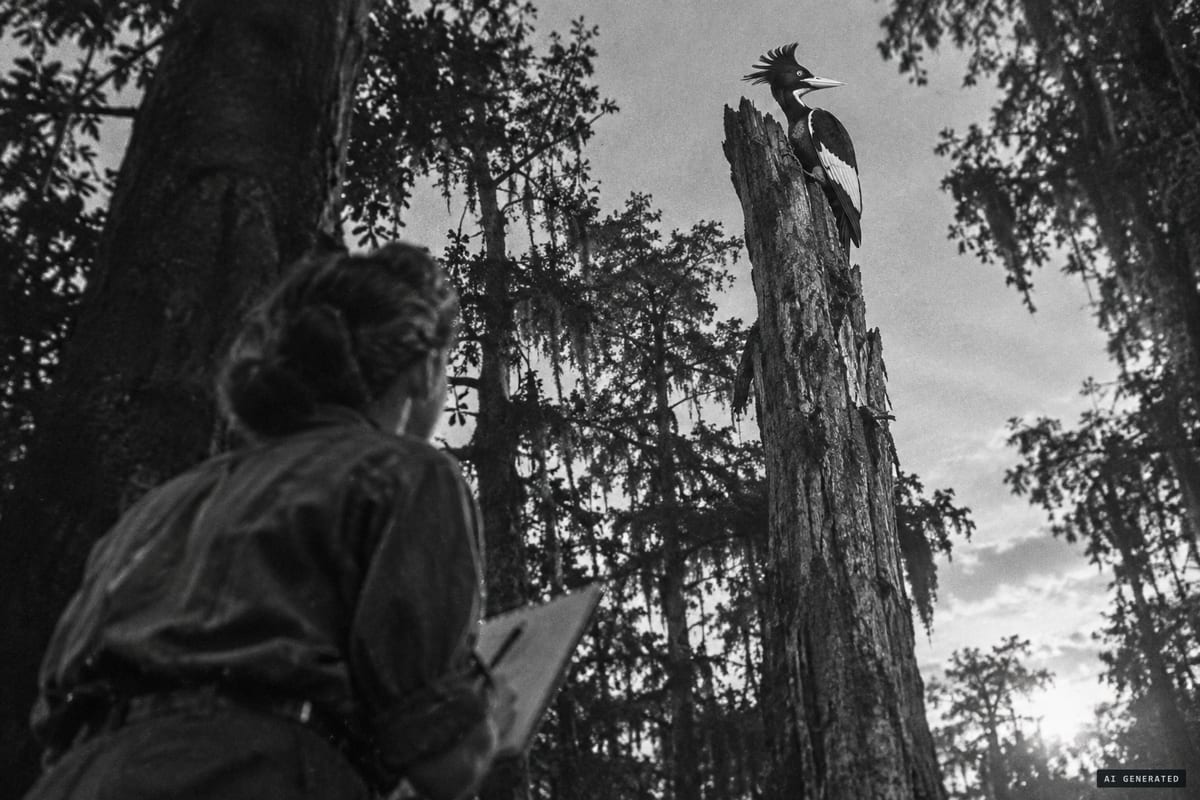 Don Eckelberry's Ivory-billed Woodpecker, Singer Tract, Louisiana (1944)
April 1944. The Singer Tract, in the Tensas River bottomland of northeast Louisiana. The old forest was being cut. Don Eckelberry, a 23-year-old wildlife artist for the National Audubon Society, had come to see one bird. A lone female ivory-billed woodpecker.
-
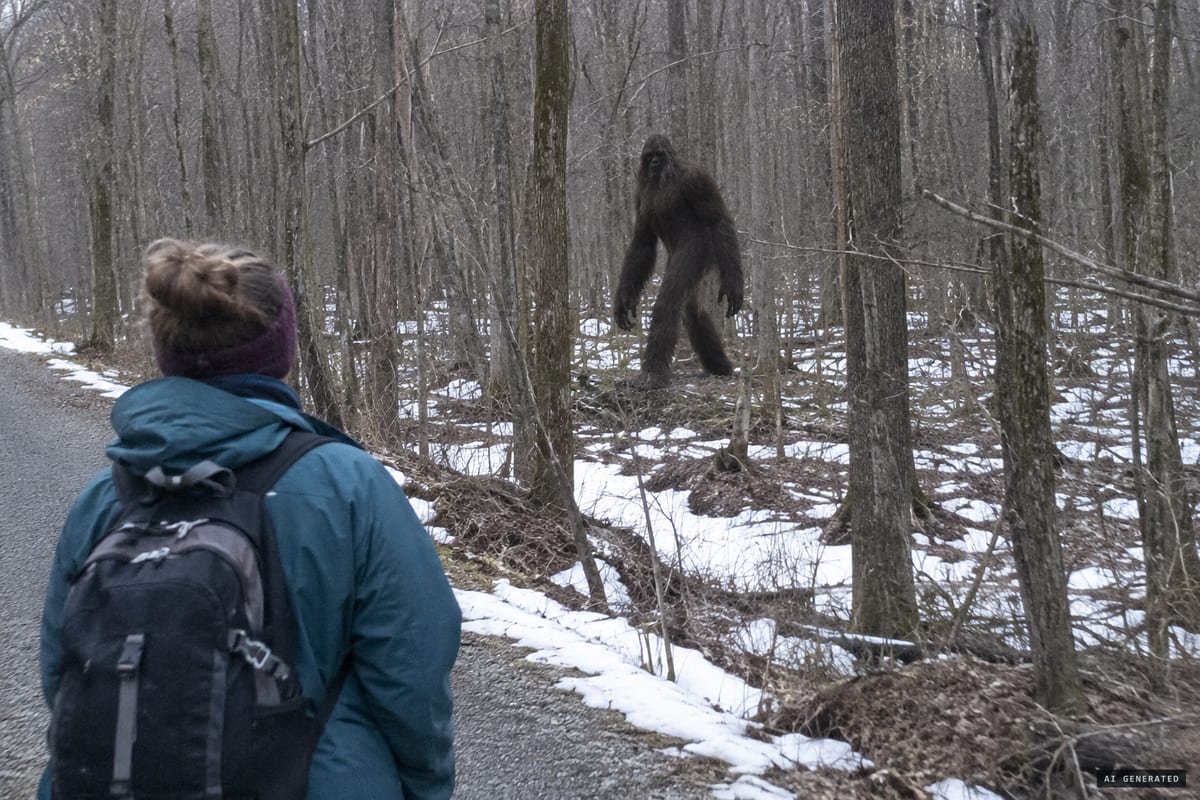 2026 Northeast Ohio (Portage County) Bigfoot flap
March 2026. Northeast Ohio. In the woods near Mantua and Garrettsville, in Portage County, the reports began to arrive. A brown figure about 9 ft tall near State Route 44 at lunchtime. A dark shape with long arms beside the Headwaters Trail at night. A stilt-like gait. A heavy, musky odour.
-
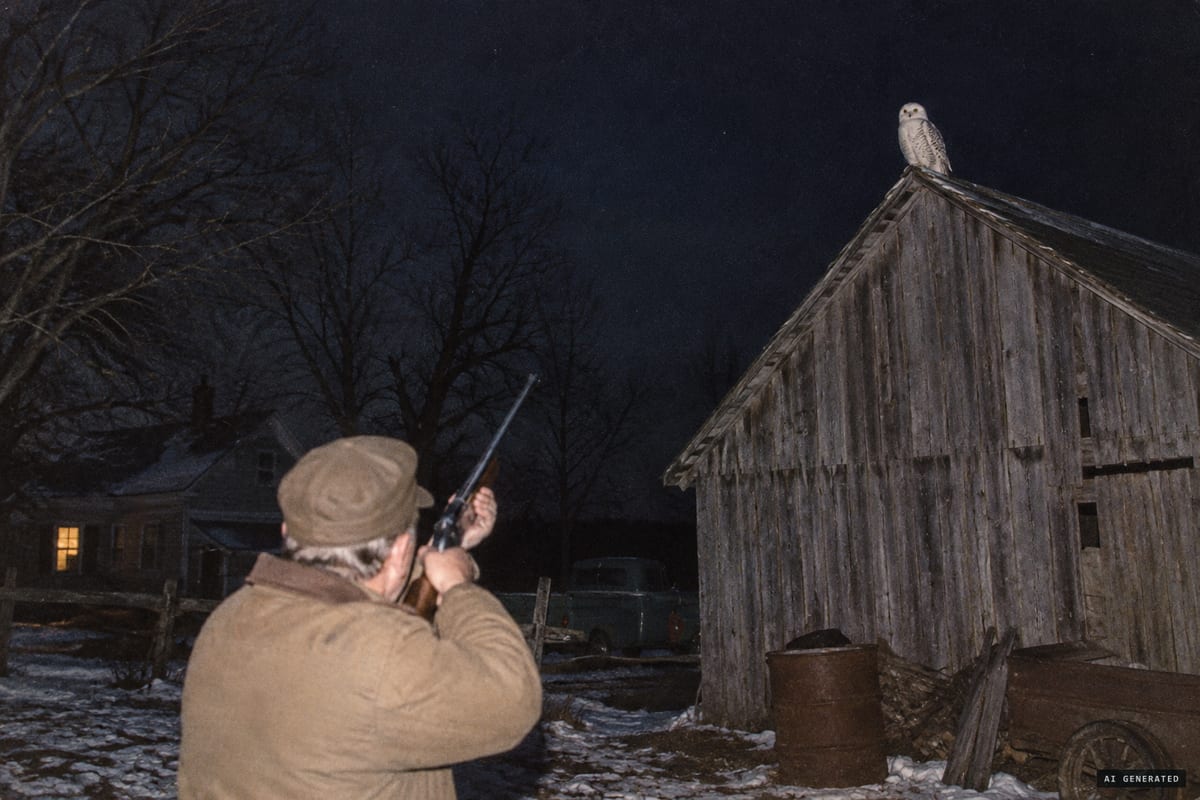 The Point Pleasant "Giant Owl" Shooting
December 1966. Point Pleasant, West Virginia, was five weeks into the Mothman scare. Witnesses had described white wings and red glowing eyes. Then, on a Tuesday night at Gallipolis Ferry, farmer Ace Henry saw a large bird perched on top of his barn. He took it for a hawk. He shot it with a 20-gauge shotgun.
-
 Shep and the Black-Footed Ferret, Meeteetse, Wyoming
September 26, 1981. A ranch near Meeteetse, Wyoming. The Hoggs' dog, Shep, brought home a carcass. John and Lucille Hogg had never seen anything like it. A small, strange-looking animal with a black mask, black feet and a black-tipped tail. Its back was broken.
-
 The Second Coelacanth of Anjouan
December 20, 1952. Night, off Domoni on the southeast coast of Anjouan in the Comoros. A fisherman named Ahmed Hussein hauled a fish up on a long line and battered its head at the canoe. He threw it down at his hut without scaling or gutting it.
-
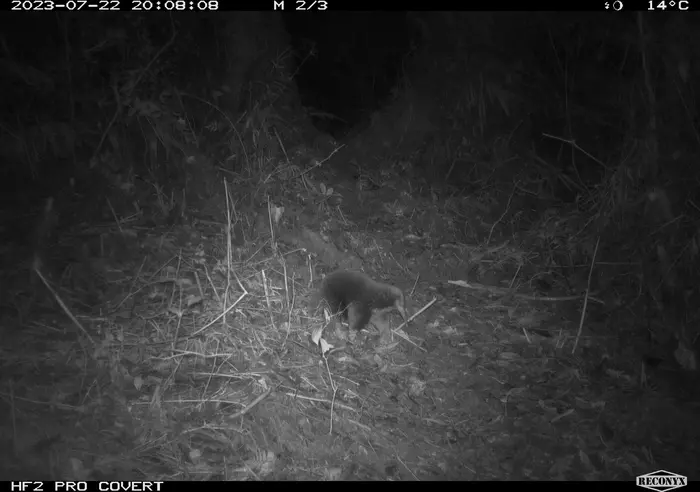 Attenborough's long-beaked echidna caught on camera traps, Cyclops Mountains (2023)
For more than sixty years, science knew this animal from a damaged specimen collected in 1961, high in the Cyclops Mountains of Indonesian New Guinea. Then came the last day of a 2023 expedition. The very last memory card. A camera trap finally gave up its secret.
-
 Hugh Gray's Photograph: The First Claimed Photo of the Loch Ness Monster
Sunday 12 November 1933. Around noon. Hugh Gray, a worker at the British Aluminium Company's works at Foyers, took his usual walk after church to where the river enters Loch Ness. The loch was like a mill pond. The sun was shining brightly. Then an object of considerable dimensions rose out of the water, not very far from where he stood. He raised his box camera and took five exposures. Only one showed anything.
-
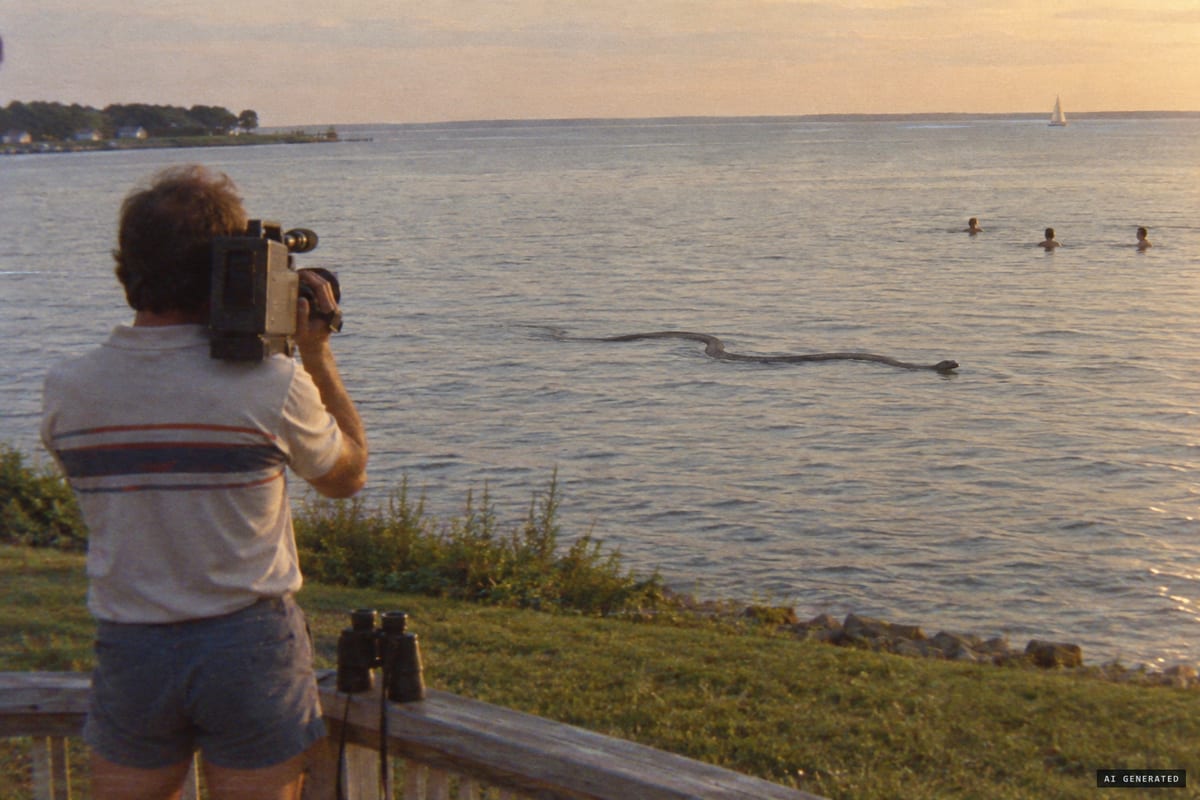 The Frew "Chessie" Videotape, Love Point, Kent Island
Memorial Day, 1982. Love Point, at the northern tip of Kent Island, Maryland. Robert and Karen Frew had guests at their waterfront home on the Chesapeake Bay. Swimmers were in the water.
-
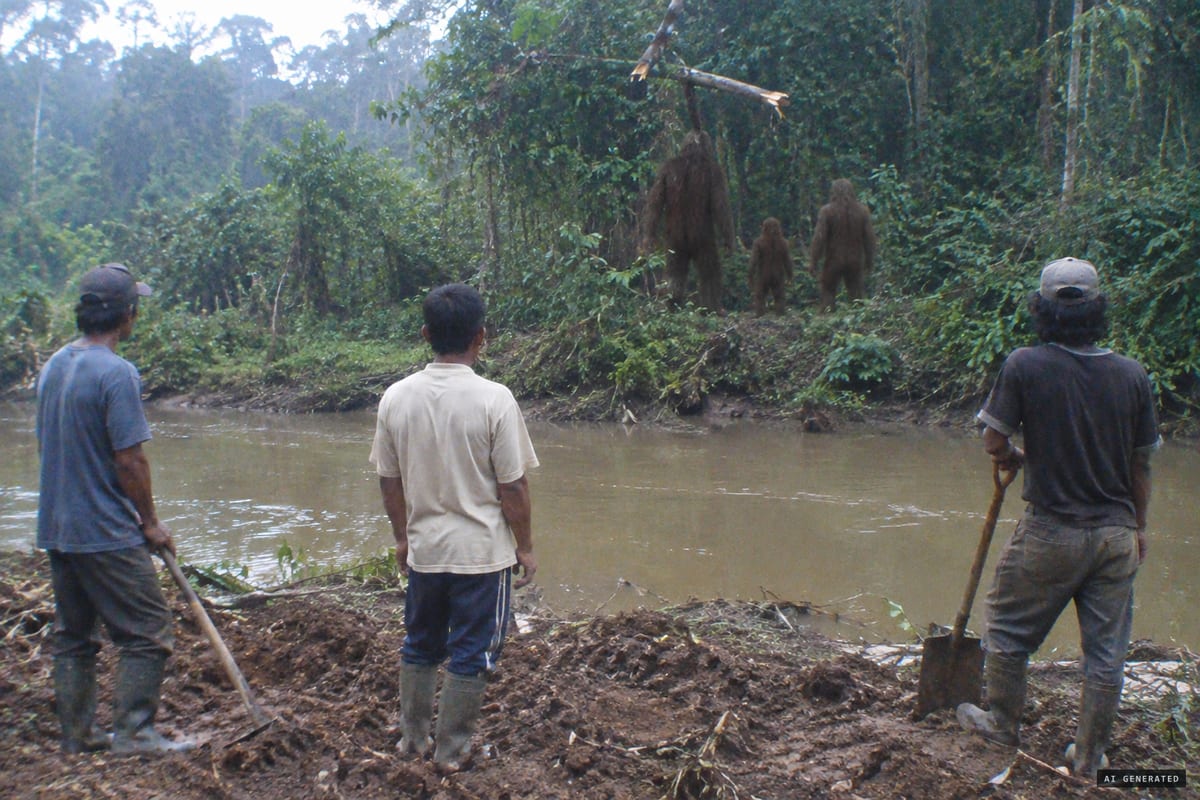 The Kota Tinggi Mawas: fish-farm workers' Bigfoot sighting at Kampung Mawai
November 2005. Kampung Mawai, in the Kota Tinggi district of southern Johor. Three workers were clearing ground for a fish pond on the edge of a forest reserve. Then they saw a family. Two adults and a youngster, on a riverbank. The workers gave chase and lost them.
-
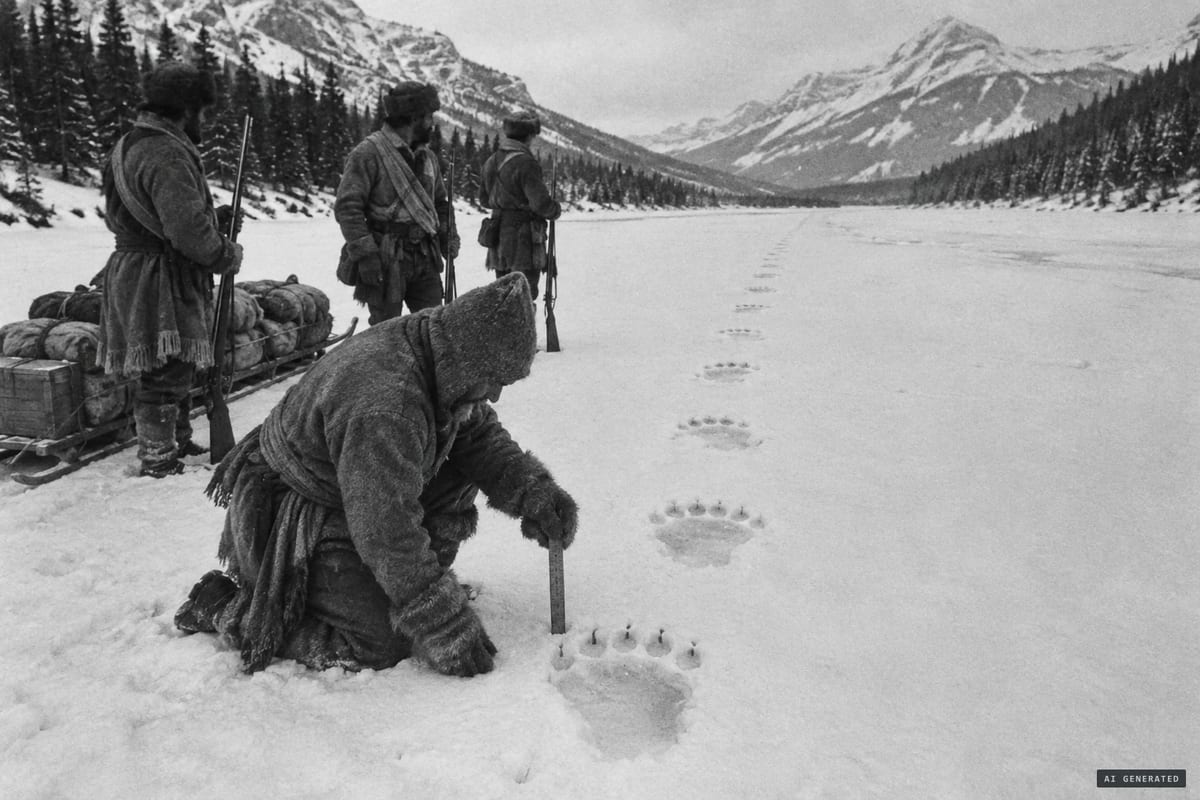 David Thompson's Giant Track in the Snow, Athabasca River
7 January 1811. The frozen Athabasca River. David Thompson, surveyor and mapmaker for the North West Company, was leading his party toward the mountain pass. Then they found it. A track in the snow on the ice.
-
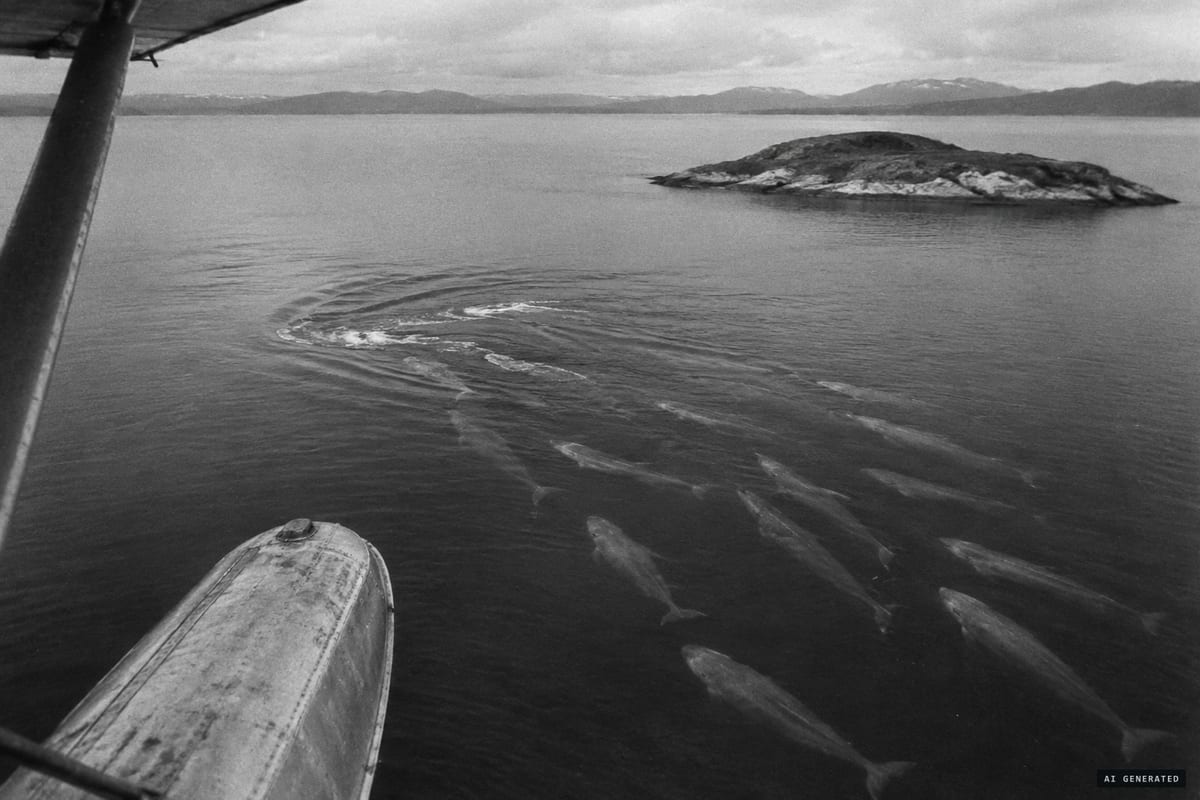 The Alsworth and Hammersley Floatplane Sighting of the Iliamna Lake Monster, 1942
September 1942. A floatplane crosses Iliamna Lake, Alaska's largest lake, bound for the village of Iliamna. At the controls is Babe Alsworth, a bush pilot and fishing guide. With Alsworth is Bill Hammersley. Near an island in the middle of the lake, they spot shapes that almost look like boats. The plane circles down. From 1,000 feet to 300 feet.
-
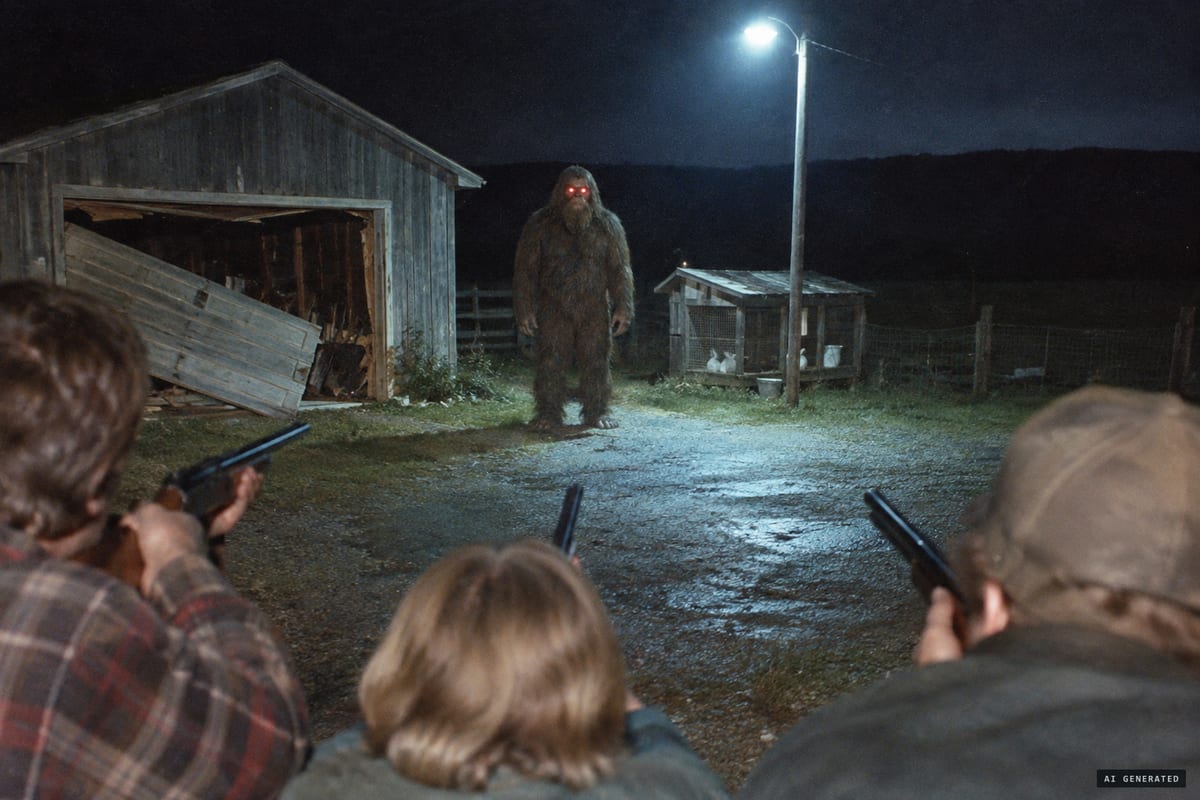 Wantage "Big Red Eye": the Sites family farm attacks and the Kittatinny sighting wave
May 1977. A dairy farm in Wantage Township, Sussex County, New Jersey. Barbara Sites went out to let the herd into the pasture and heard a noise "like a woman screaming when she was being killed." The garage door had been torn from its hinges. The family's rabbits lay dead or mutilated.
-
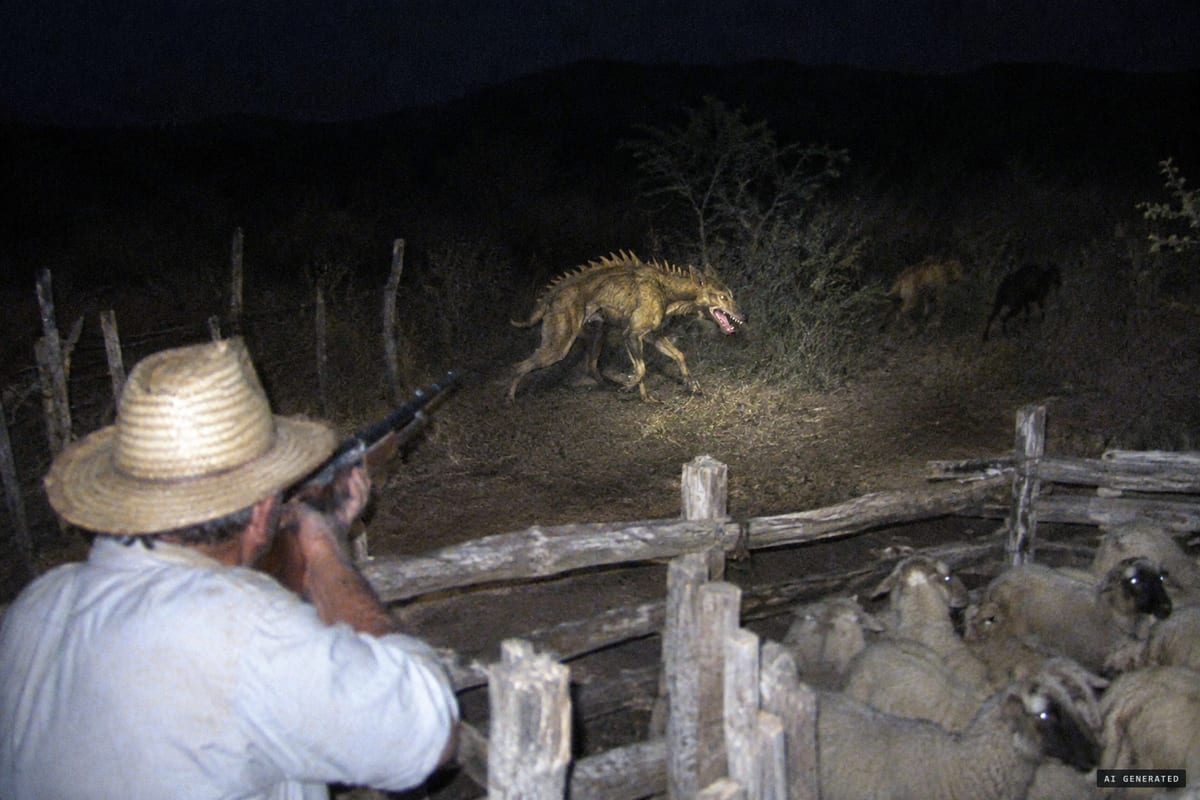 The Malpaisillo Chupacabras, Nicaragua (2000)
August 2000. Malpaisillo, in Nicaragua's León department. For two weeks, something came for the sheep at night. Jorge Luis Talavera lost 25 animals at the San Lorenzo farm. A neighbour lost 35. Dozens of farmers set ambushes. Every trap failed.
-
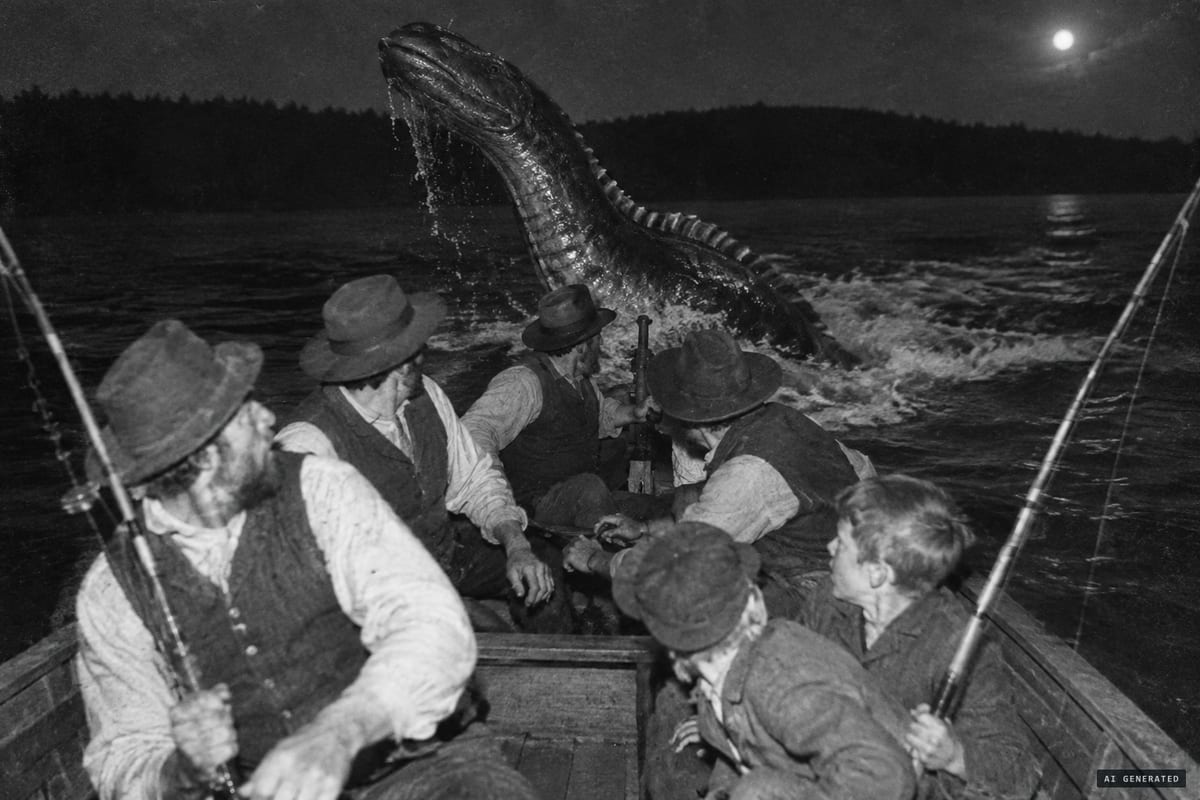 The Silver Lake Serpent
July 13, 1855. Night on Silver Lake, near the village of Perry, New York. Two boys and five men sat fishing in a boat. Something was coming toward them, leaving a wake. Then it darted from the water about four feet from the stern. A head. The forward part of a body. Everyone aboard agreed on what they saw. A most horrid and repulsive looking monster.
-
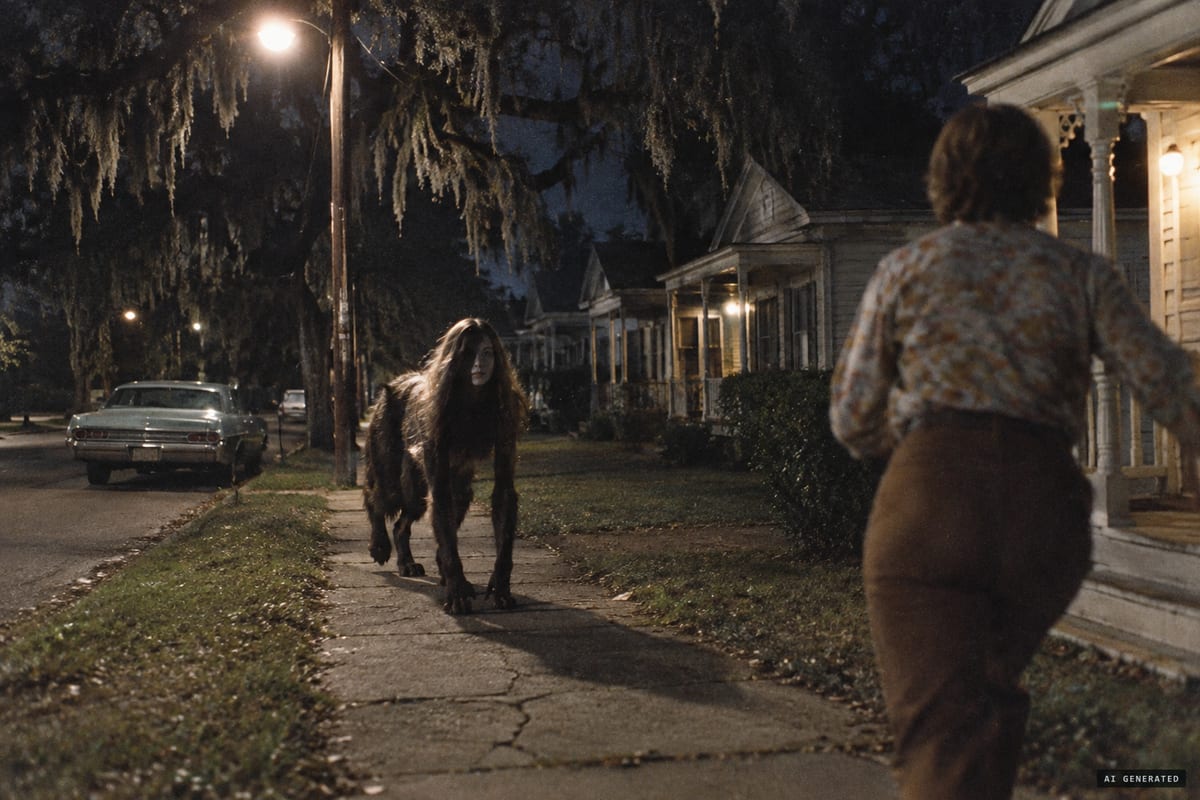 The Mobile "Wolf Woman" Sightings
April 1971. Mobile, Alabama. The calls started coming in. Something was prowling the streets around Davis Avenue and the Plateau neighbourhood, mostly at night. The callers described it the same way. The top half was a woman. The bottom half was a wolf.
-
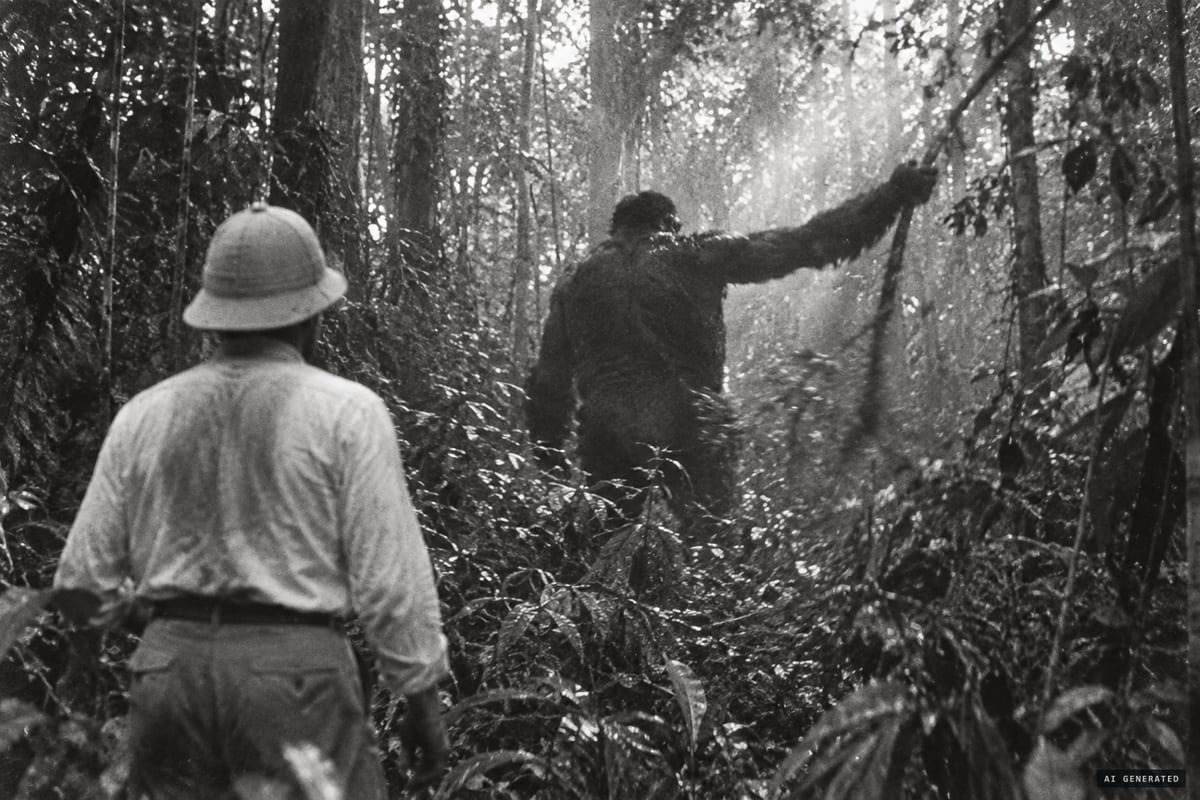 Oostingh's orang pendek encounter at Bukit Kaba, Sumatra, 1917
Late June 1917. The forest at the eastern foot of Bukit Kaba, in the Residency of Benkoelen on Sumatra. A coffee planter named Oostingh had been lost for hours. He was alone. He was unarmed.
-
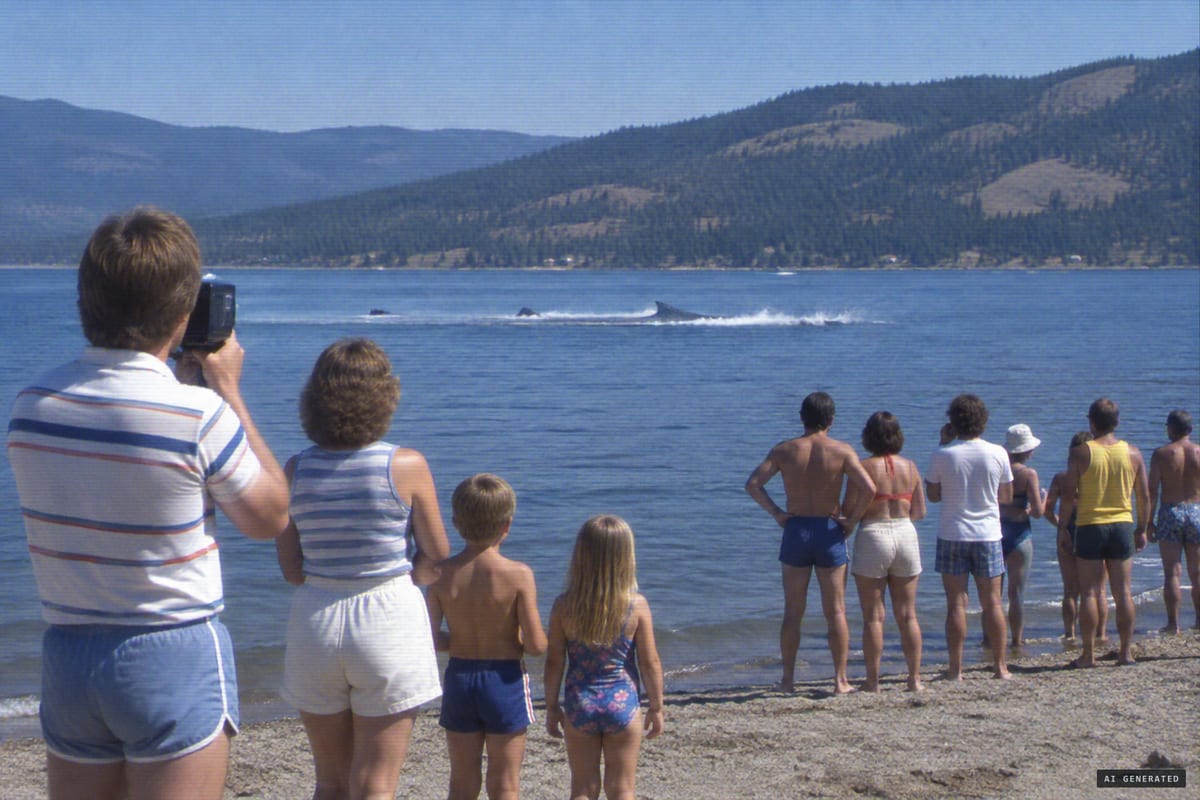 Larry Thal's Ogopogo Film and the Crowd Sighting off Kelowna
1980. A beach at Kelowna, on the shore of Okanagan Lake. Larry Thal, a tourist from Vancouver, was filming his wife and children with a home movie camera. Then something appeared on the water. He turned the camera toward it and caught about 10 seconds of 8 mm film.
-
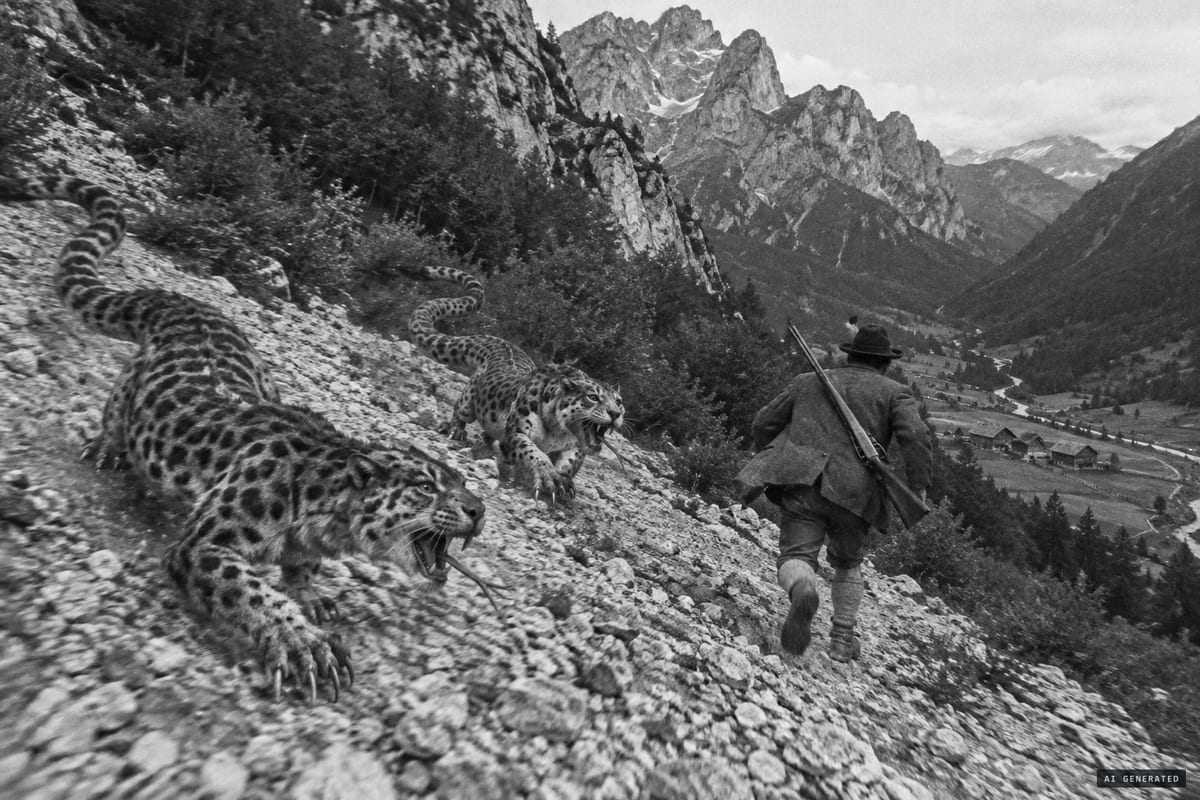 Hans Fuchs and the Two Tatzelwürmer of Unken
Unken, Salzburg. The year is 1779. Hans Fuchs is on his way home through the mountains above the Saalach valley. Two creatures come down off the scree. Serpent bodies. Clawed legs. Heads like a cat's. They chase him.
-
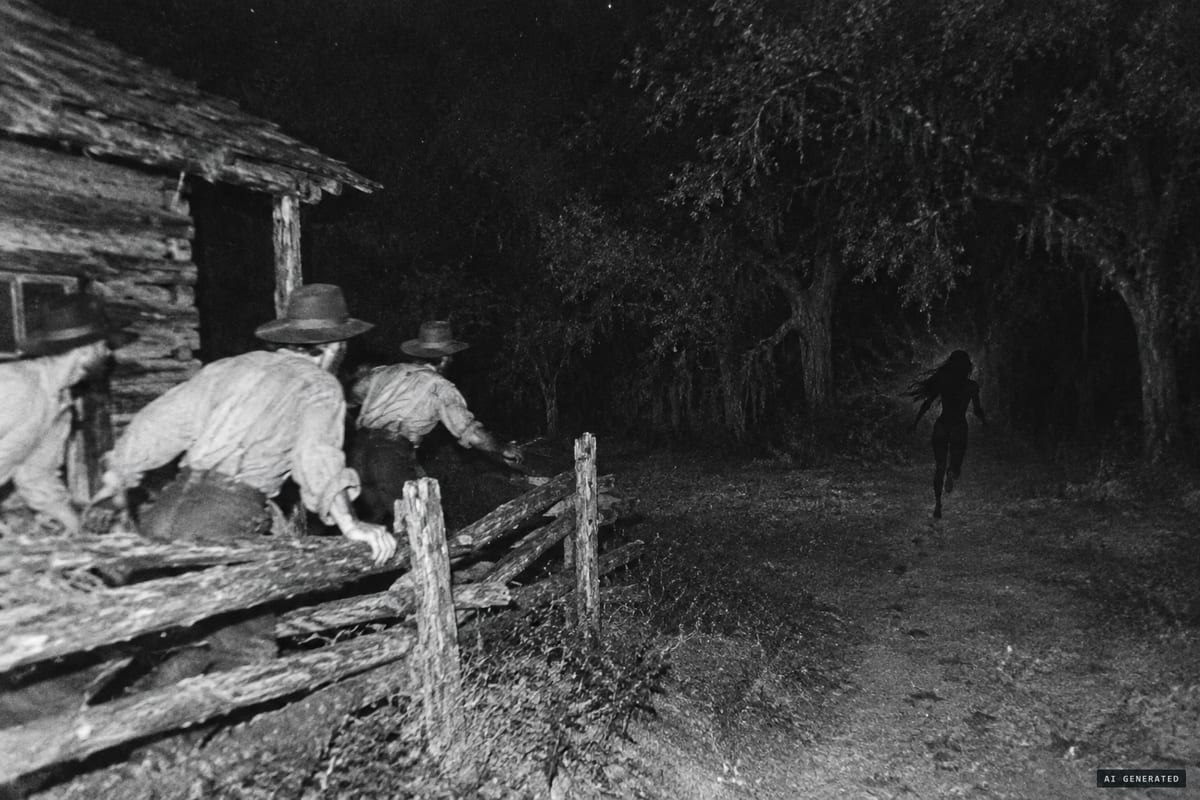 The Wild Woman of the Navidad
The lower Navidad River, Texas. In the 1830s, settlers along the river bottoms began finding barefoot tracks only a span long. Food vanished from kitchens at night. Half was always left behind. Borrowed tools came back brightly polished. The enslaved people on the farms had a name for it. "The thing that comes."
-
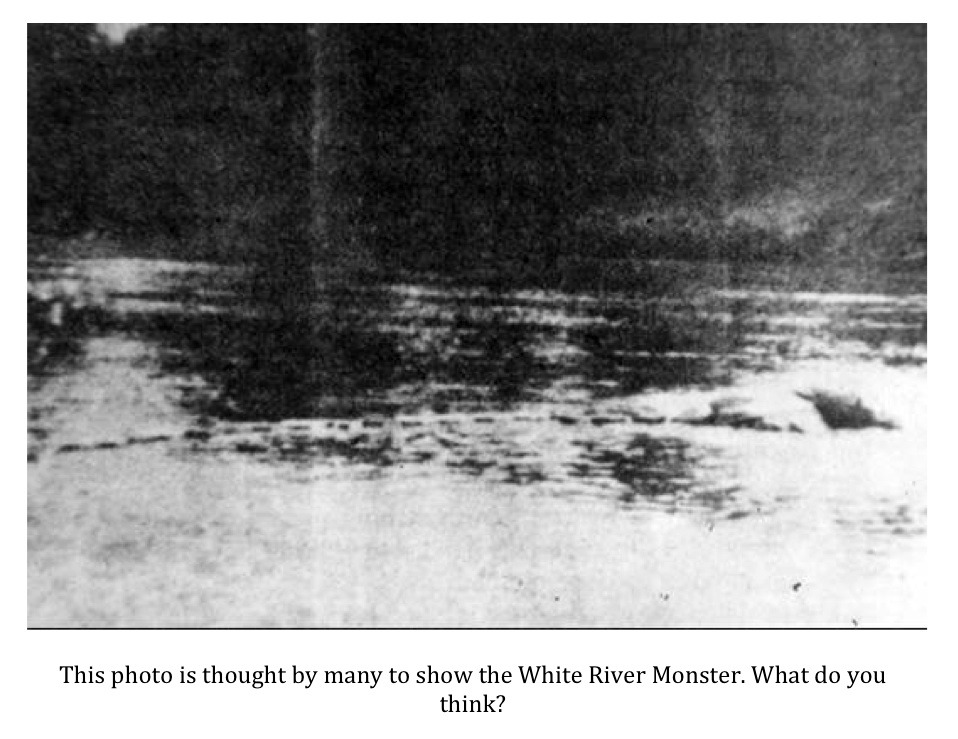 White River Monster ("Whitey"): The Summer 1971 Sightings, Polaroid and Three-Toed Tracks
Summer 1971. The White River, near Newport, Arkansas. People began reporting something enormous in the water. Gray. Very long. Skin that looked as if it were peeling from sunburn.
-
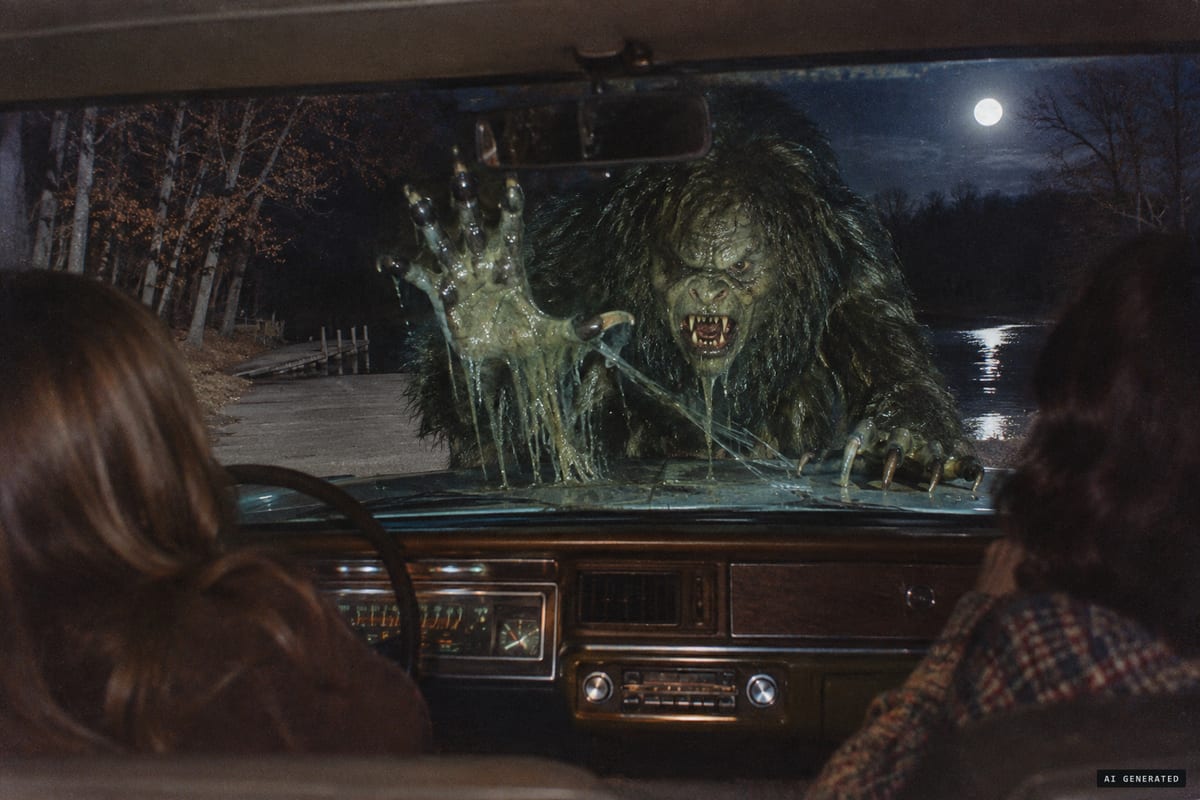 The Mill Race Monster of Columbus, Indiana
November 1, 1974. The day after Halloween. Near the boat ramp in Mill Race Park, on the west side of Columbus, Indiana, witnesses saw something standing upright. Six or seven feet tall. Dark fur. A pale green face.
-
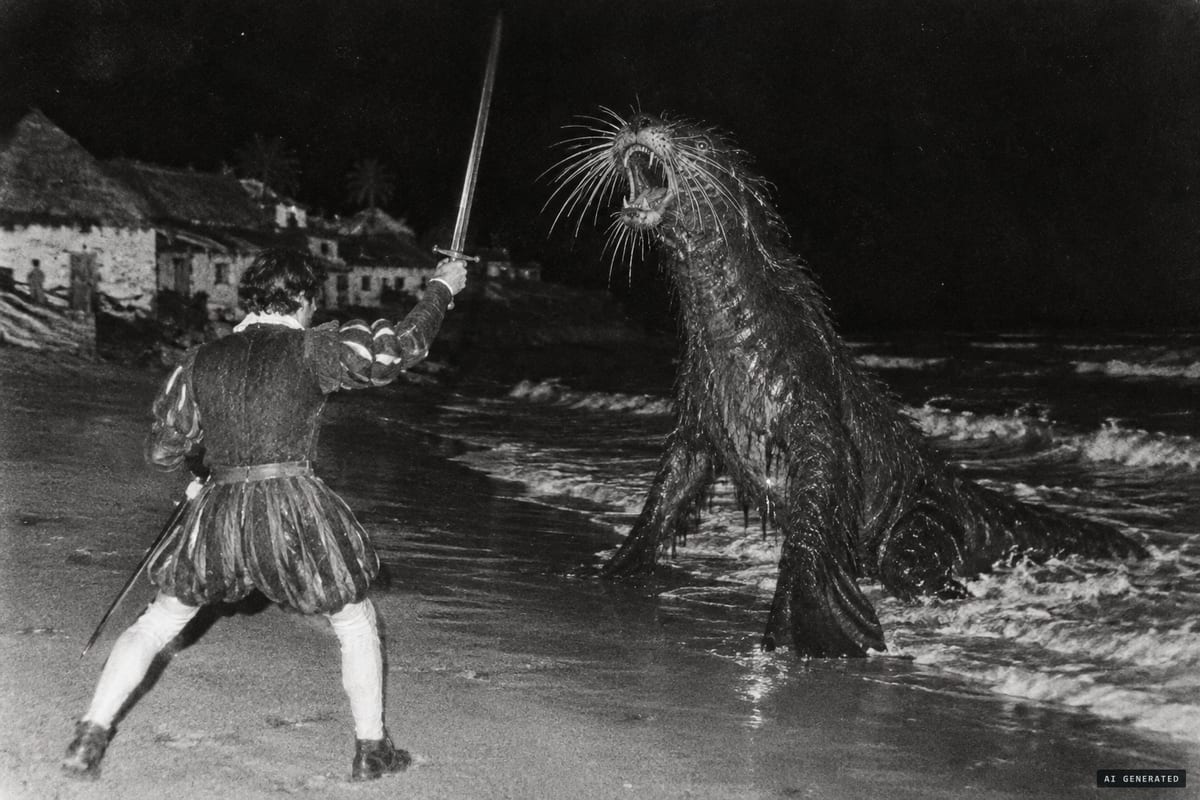 The Ipupiara of São Vicente
1564. Night on the shore at São Vicente, the first Portuguese settlement on the São Paulo coast. An enslaved Indigenous woman of the captain's household sees something moving on the sand. It walks with unusual steps and movements. Every now and then, it howls.
-
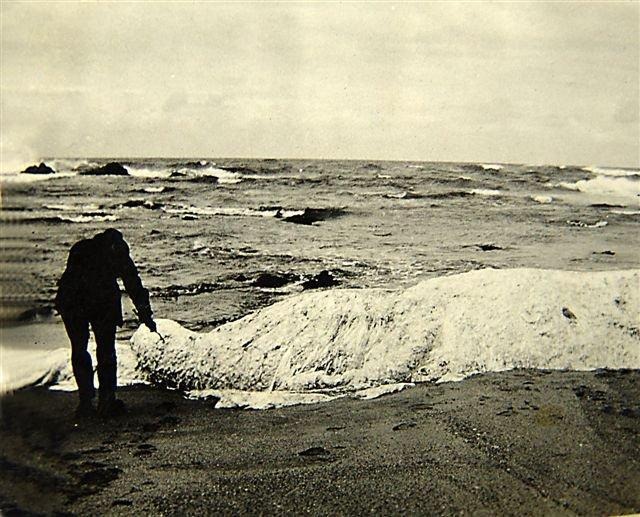 Trunko, the Margate "polar bear" sea monster
Margate, Natal. The morning of November 1. Farmer Hugh Ballance watched through binoculars as two whales fought with something else, about 1,300 yards from shore. It looked to him like a polar bear "of truly mammoth proportions." It reared fully 20 feet out of the water.
-
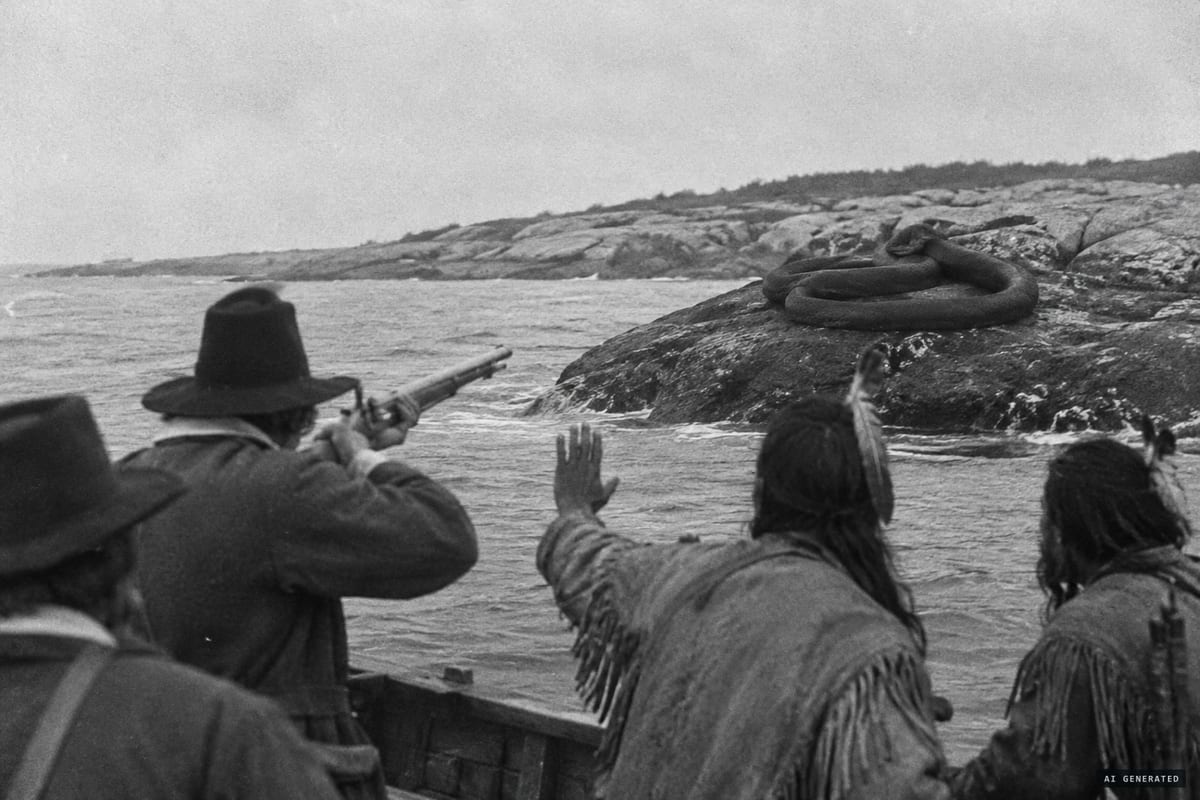 The Cape Ann Sea Serpent, Coiled Like a Cable on a Rock (1639)
June 1639. A stormy day of lightning and thunder on the coast of New England. In the house where he was staying, the traveller John Josselyn listened as some "neighbouring Gentlemen" told him a strange story. A boat had passed a rock at Cape Ann. On it lay a "Sea-Serpent or Snake," coiled up like a ship's cable. The Englishmen aboard wanted to shoot it. The two Native Americans with them talked them out of it. If the creature were not killed outright, they warned, everyone in the boat would be in danger of their lives.
-
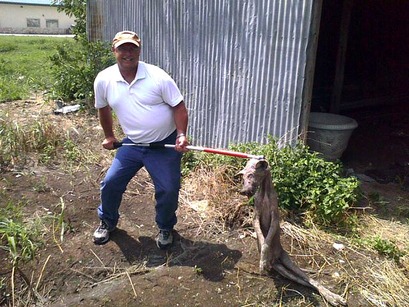 Hood County Chupacabra Shootings
July 2010. Hood County, Texas. A rancher heard a growl come from his barn. Inside was an animal no one could name. It was hairless. It had deer ears, big teeth and pinkish skin. An animal control officer shot it.
-
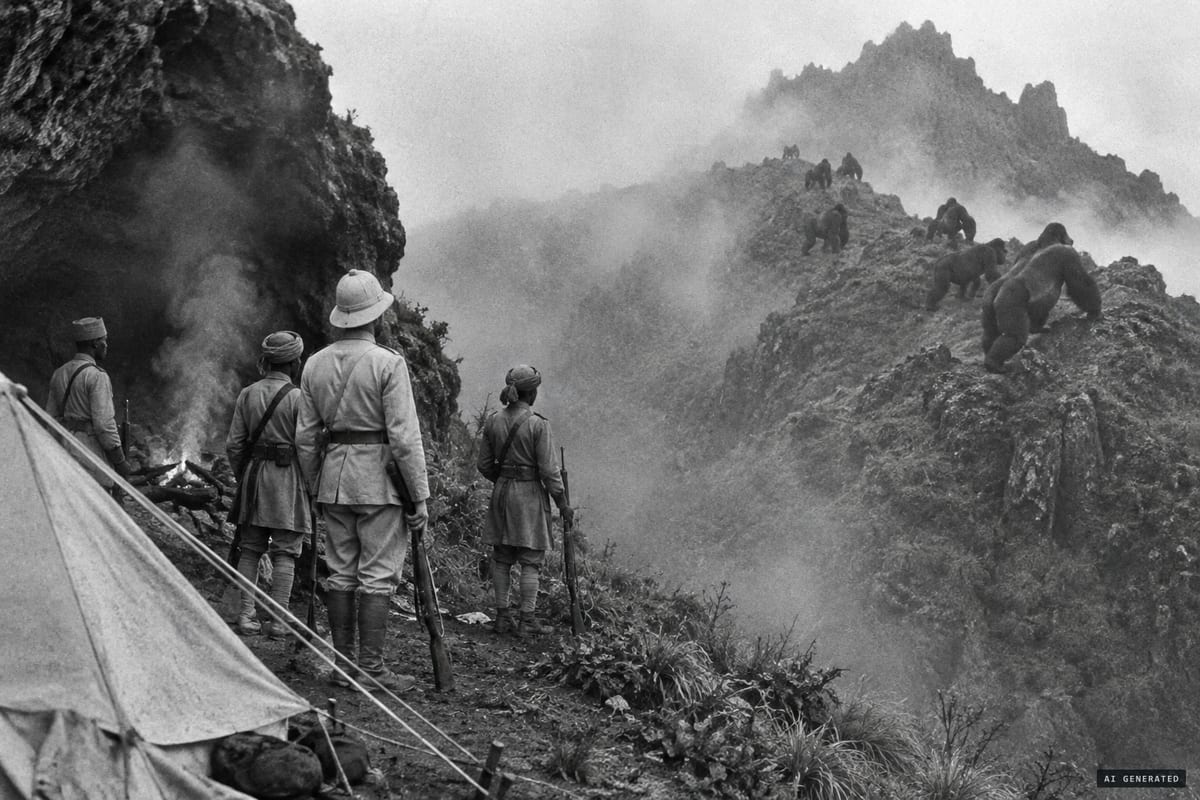 Captain von Beringe and the first mountain gorilla known to science, Mount Sabyinyo
17 October 1902. A narrow ridge high on Mount Sabyinyo, in the Virunga volcanoes. The tent pegs had to be driven into the slope. From this camp, Captain Friedrich Robert von Beringe saw a herd of black, large apes climbing toward the peak.
-
 Rediscovery of Jerdon's courser, Reddipalli, 1986
Jerdon's courser was last accepted on record in 1900, near Anantapur. Then nothing. For 86 years the bird was presumed extinct. January 1986. Near Reddipalli, in the Lankamalai hills of Andhra Pradesh, a local bird trapper named Aitanna caught a live bird at night. He kept it in a wicker basket in his chicken coop.
-
 The Rainy Creek kōkako: Len Turner and Peter Rudolf meet the grey ghost near Reefton
March 2007. Rainy Creek, near Reefton, on New Zealand's West Coast. Len Turner was doing pest control in the red beech and rimu forest. He heard a call he did not know. Haunting. Resonant.
-
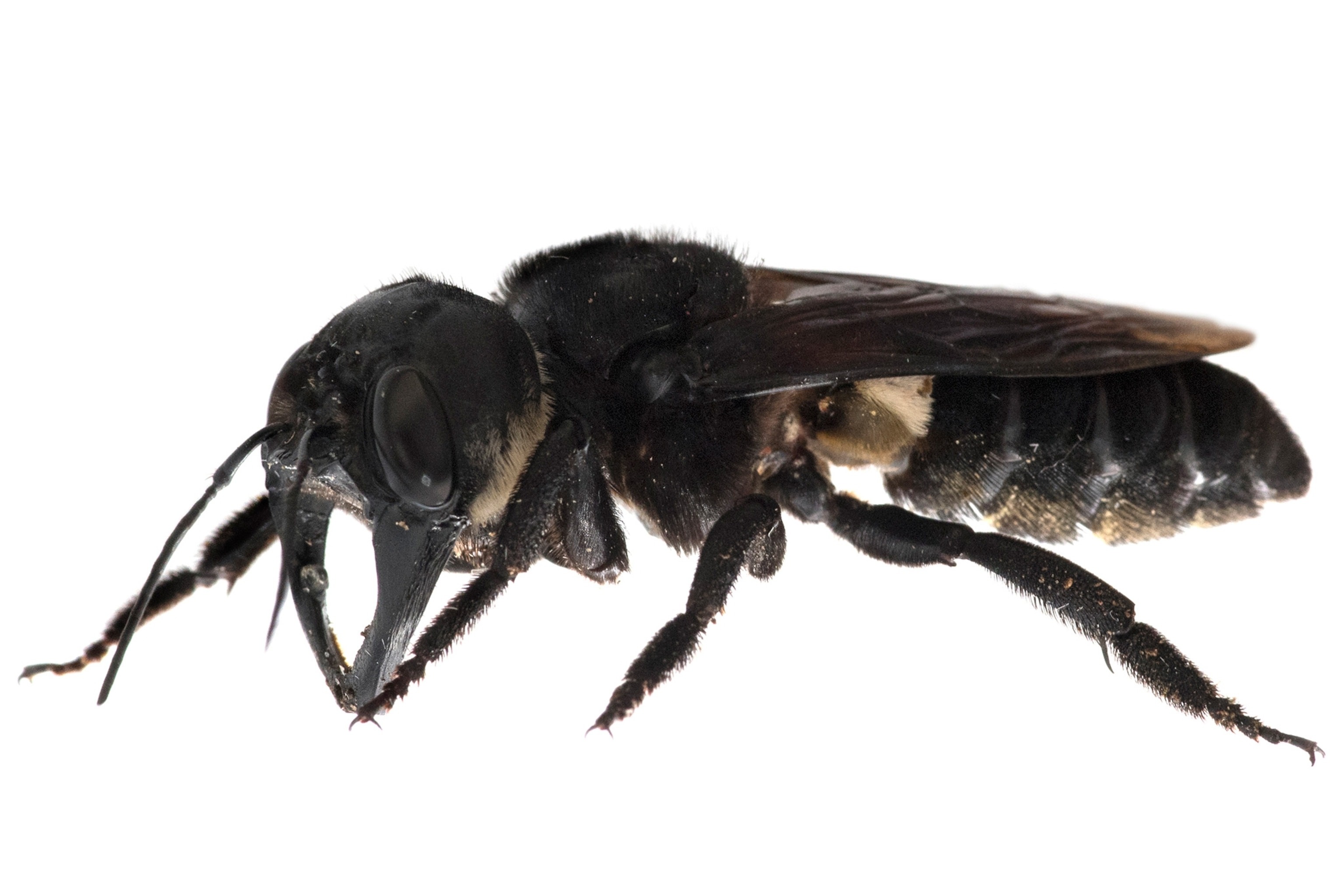 The Rediscovery of Wallace's Giant Bee, Halmahera, 2019
Halmahera, Indonesia. Late January 2019. A five-day search of the North Moluccas was down to its last day. On an old orchard road, local naturalist Iswan Maujud climbed to a termite nest high in a tree and looked into a very round hole. Something moved.
-
 Humphries's 1968 and Hoad's 1976 sightings of the Muskrat Lake monster (Mussie)
Spring 1968. Muskrat Lake, near Cobden, Ontario. Don Humphries, a fisherman and trapper, watched an eye appear and seem to rotate. A large beak followed, then the whole body. The creature ate cattails on the shore. Humphries sneezed. It perked up its ears and slid back into the lake.
-
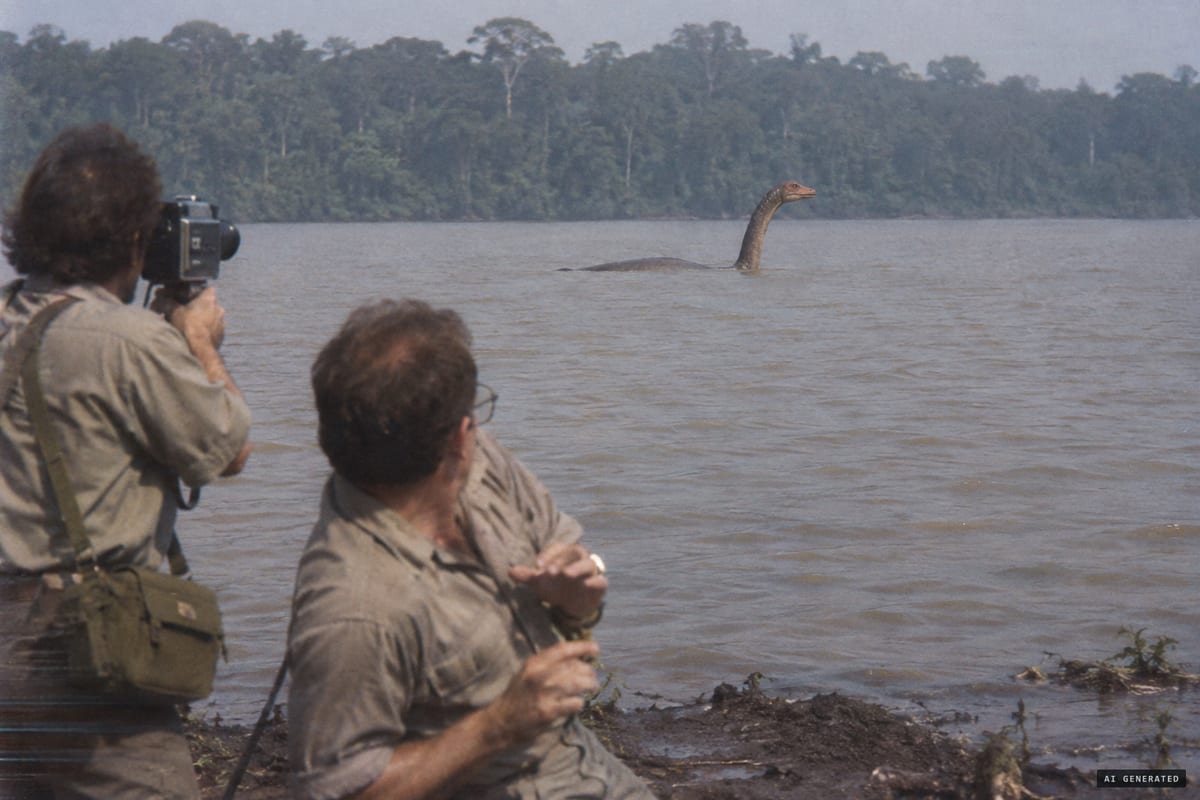 Marcellin Agnagna's Mokele-mbembe sighting at Lake Tele, 1983
1 May 1983. Lake Tele, deep in the swamps of northern Congo. At approximately 2:30 PM, zoologist Marcellin Agnagna and his guides from the village of Boha saw something in the water. A wide back. A long neck. A small head that turned from side to side, almost as if it was watching them.
-
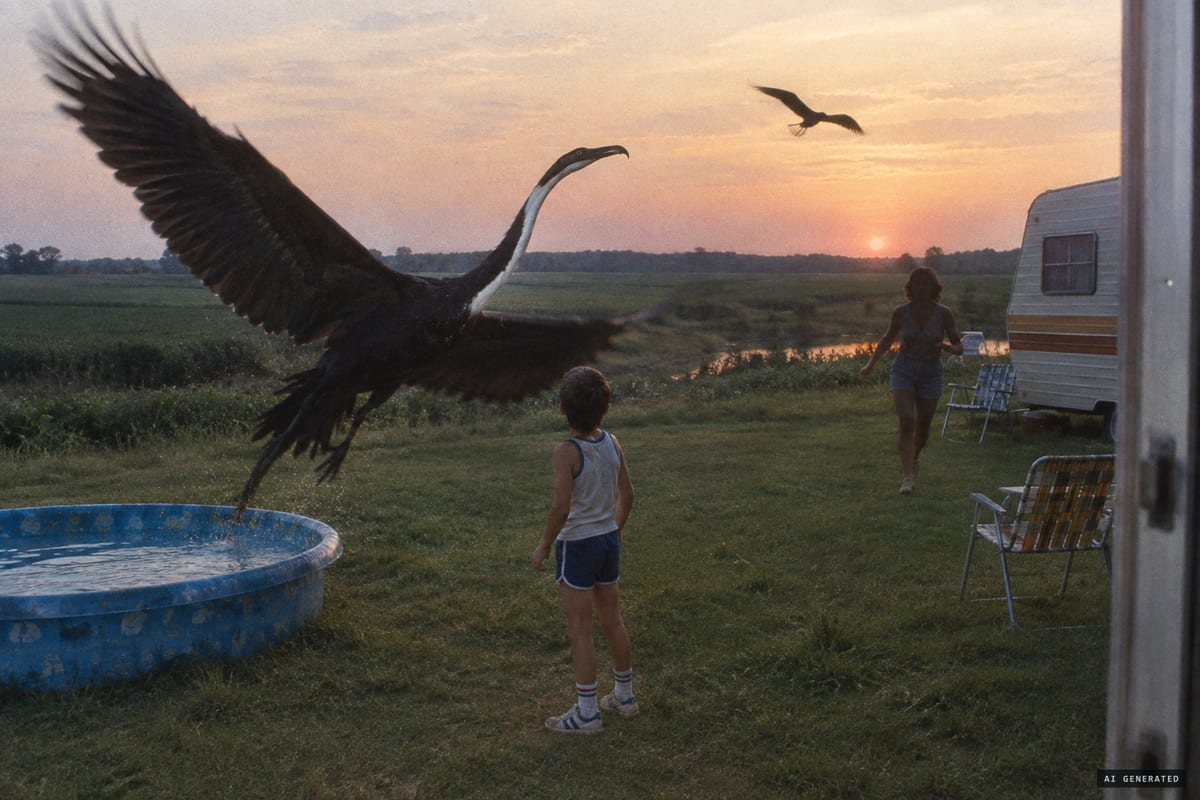 The Lawndale Thunderbird Attack on Marlon Lowe
Lawndale, Illinois. Monday, 25 July 1977. About 8:30 in the evening. Three boys were playing hide-and-seek in a backyard near Kickapoo Creek. Two large black birds came in from the south. They swooped at Travis Goodwin, who ran and jumped into a plastic swimming pool. Then one went for 10-year-old Marlon Lowe.
-
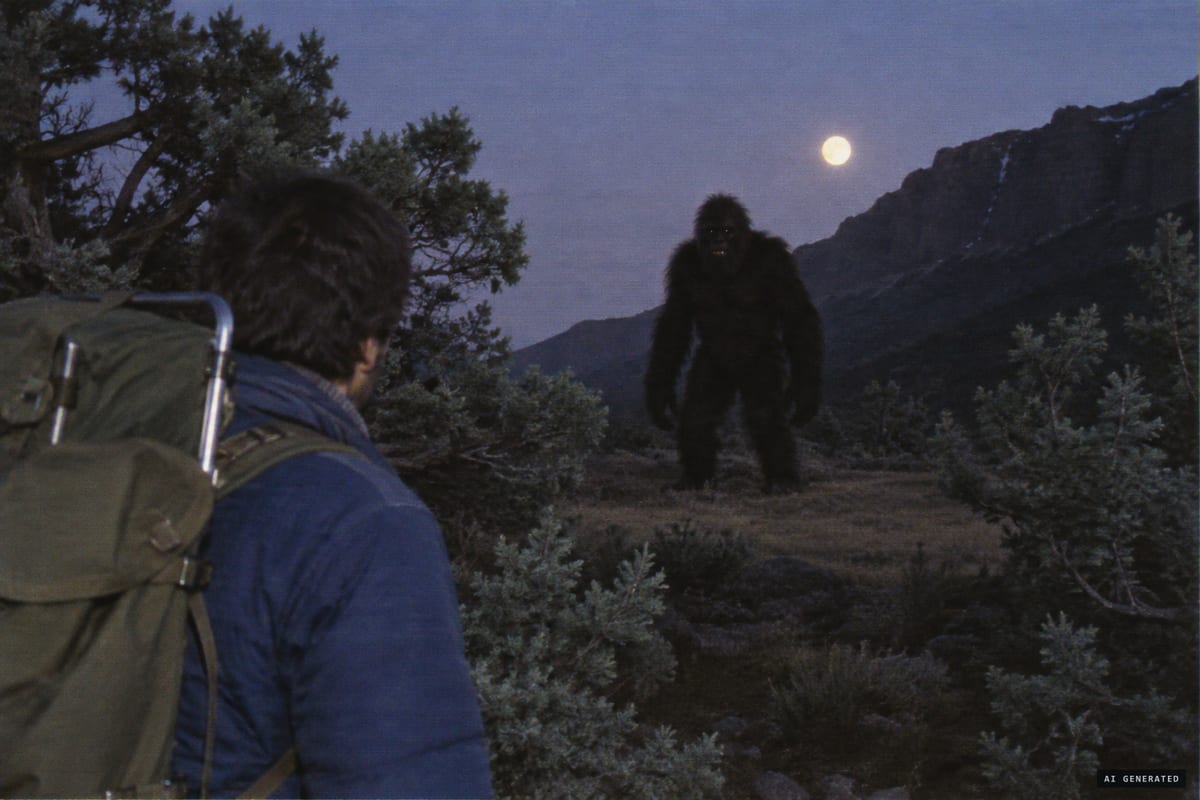 Reinhold Messner's Night Encounter with a Yeti in Eastern Tibet
19 July 1986. Twilight in a remote valley of eastern Tibet, not far from the Mekong. Reinhold Messner was walking alone. Then came a whistle. An upright figure darted between the junipers, stopped, and turned to look at him. Covered in hair. Over seven feet tall. Arms hanging almost to its knees.
-
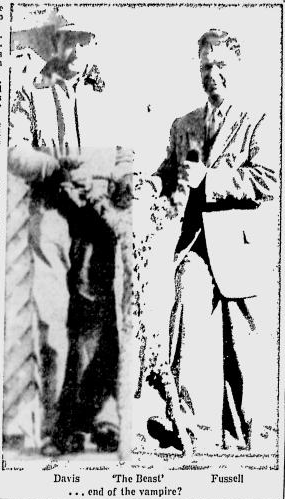 The Beast of Bladenboro: the "vampire" dog killings and mass hunts
December 29, 1953. Clarkton, North Carolina. A creature described as "sleek, black, about 5 ft long" killed a dog. Two days later the killings reached Bladenboro, a farming and lumber town of about 800 people. Johnny Vause found his two dogs "torn into ribbons and crushed." More dogs died, night after night. An autopsy found almost no blood. The papers called it a vampire.
-
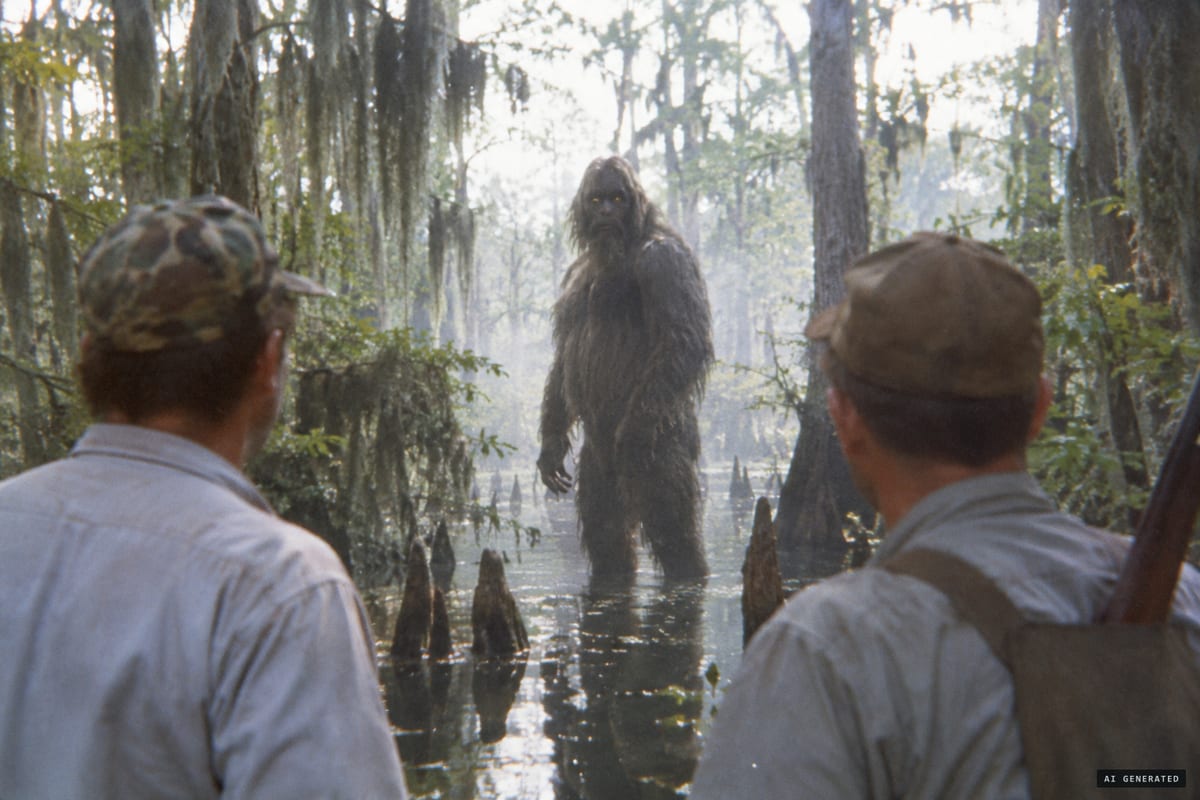 The Honey Island Swamp Monster: Harlan Ford's 1963 sighting and the 1974 tracks found with Billy Mills
1963. The Honey Island Swamp, on the lower Pearl River outside Slidell, Louisiana. Harlan Ford, an FAA air traffic controller who had taken up wildlife photography, was deep in the swamp with his friend Billy Mills. Ford took the figure ahead of them for a bear. Then it turned around.
-
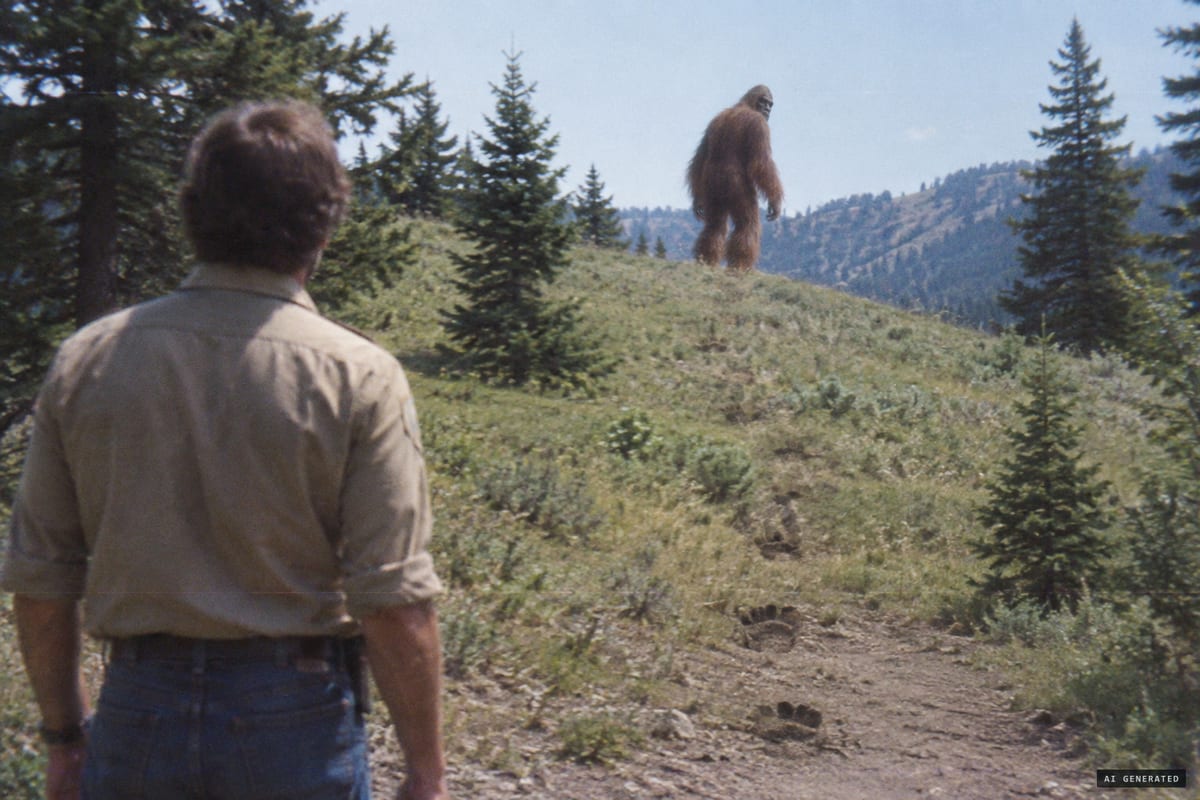 Paul Freeman's Blue Mountains Bigfoot sighting and the dermal-ridge casts
June 10, 1982. The Mill Creek watershed in the Blue Mountains, east of Walla Walla, Washington. Paul Freeman, a U.S. Forest Service watershed patrolman, reported a creature standing upright on two legs. Covered in reddish-brown hair. Nearly 8 feet tall. A strong, foul odor. It walked away from him, stopping to look back, then went up over a hill and disappeared.
-
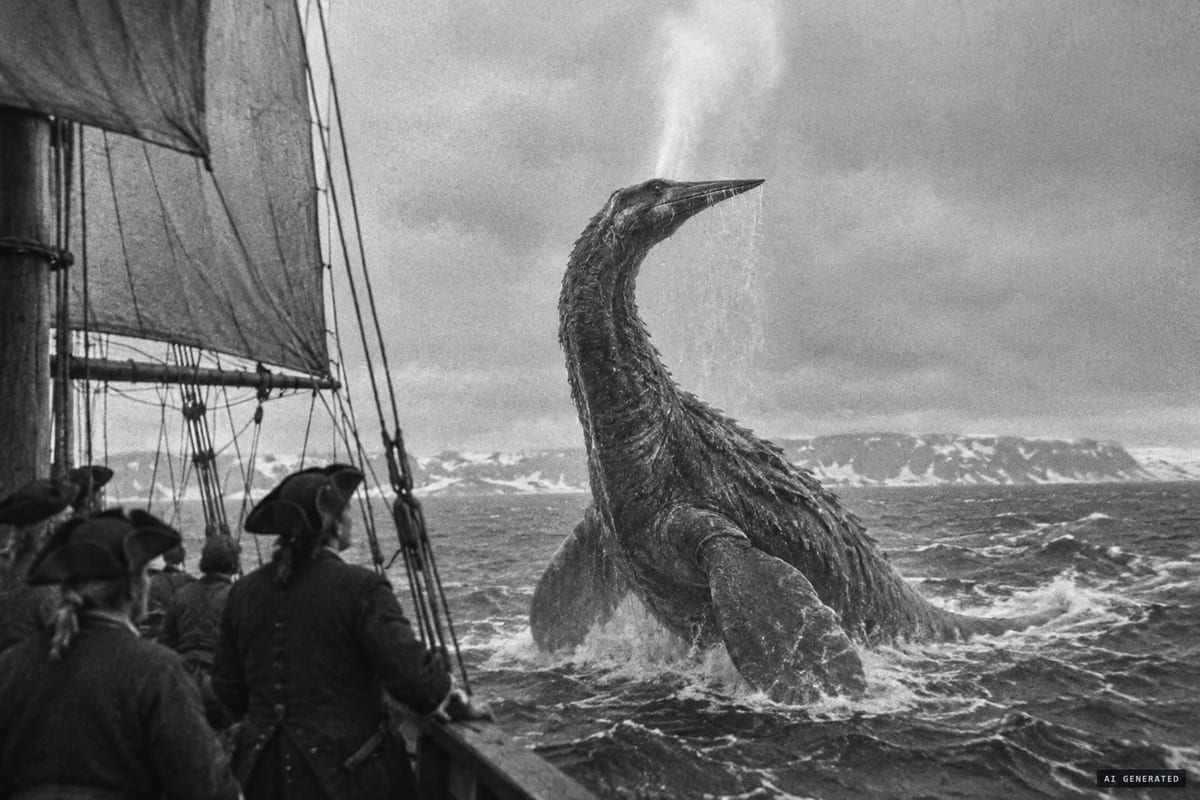 Hans and Poul Egede's "most dreadful monster": the Davis Strait sea serpent of 1734
July 6, 1734. A mission ship works north along the west coast of Greenland, in the Davis Strait. Then something breaks the surface. A creature rises so high that its head reaches above the main-top. It has a long, sharp snout. It spouts water like a whale. Its skin is hard and wrinkled, its lower part formed like a snake. When it dives, it casts itself backwards and lifts its tail a whole ship-length from its body.
-
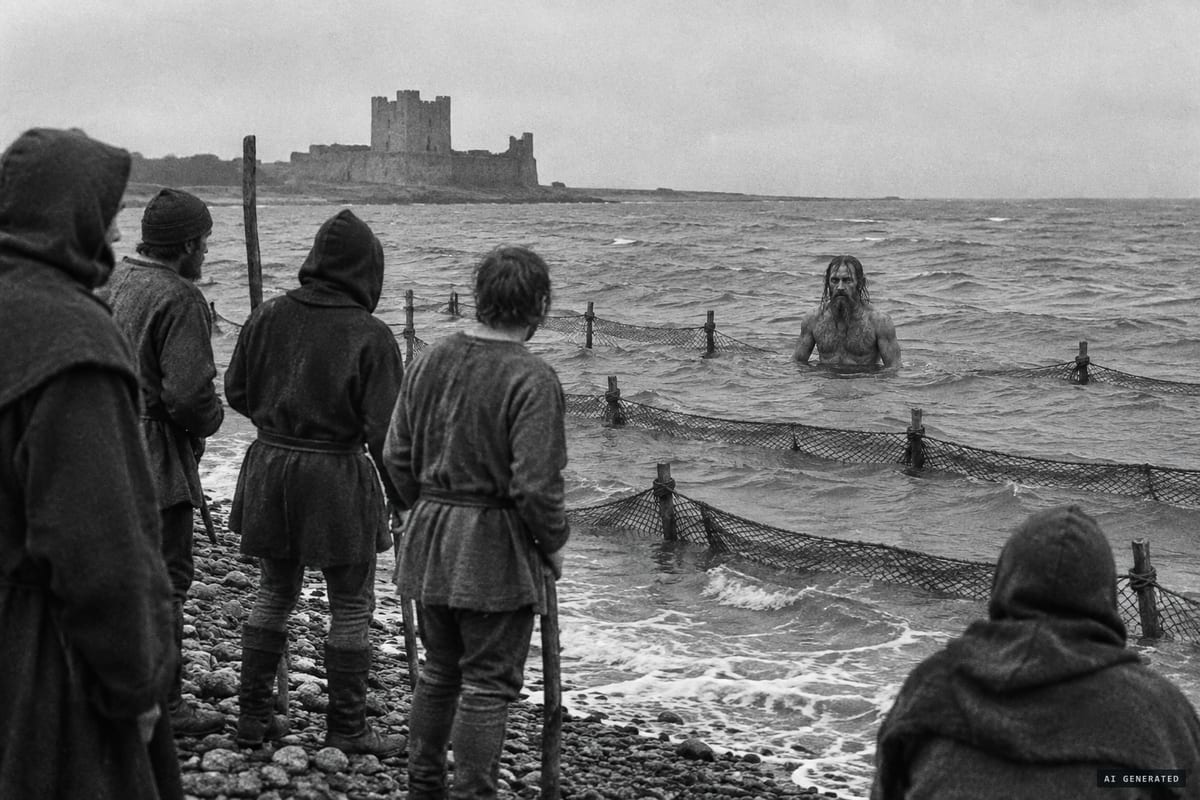 The Wild Man (Merman) of Orford, Suffolk
Orford, Suffolk. Around 1167. Fishermen hauled in their nets and found a man inside. He was naked. He was human in every limb, but very hairy, with a long, pointed beard. They brought him to the new castle at Orford. The keeper, Bartholomew de Glanville, was lost in wonder.
-
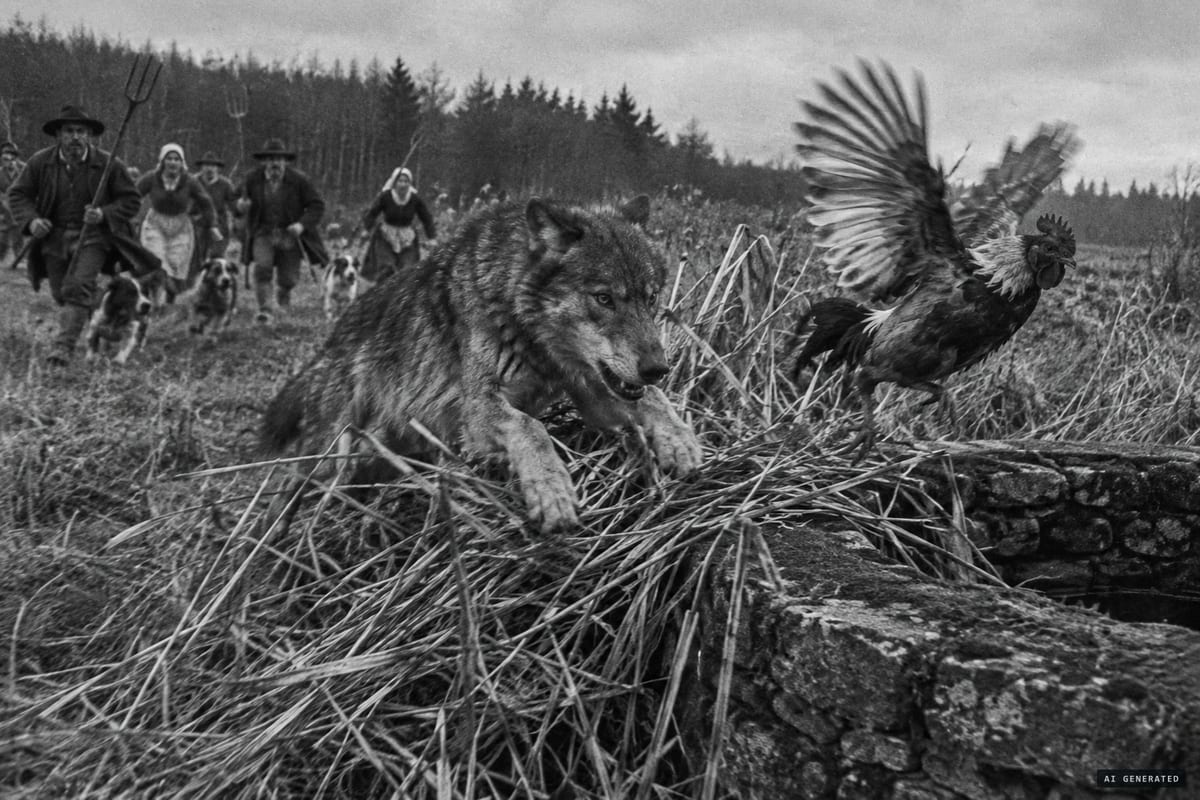 The Wolf of Ansbach, the hanged Werewolf of Neuses (1685)
Franconia. 1685. A wolf was loose in the Principality of Ansbach. First it took livestock. Then it took children.
-
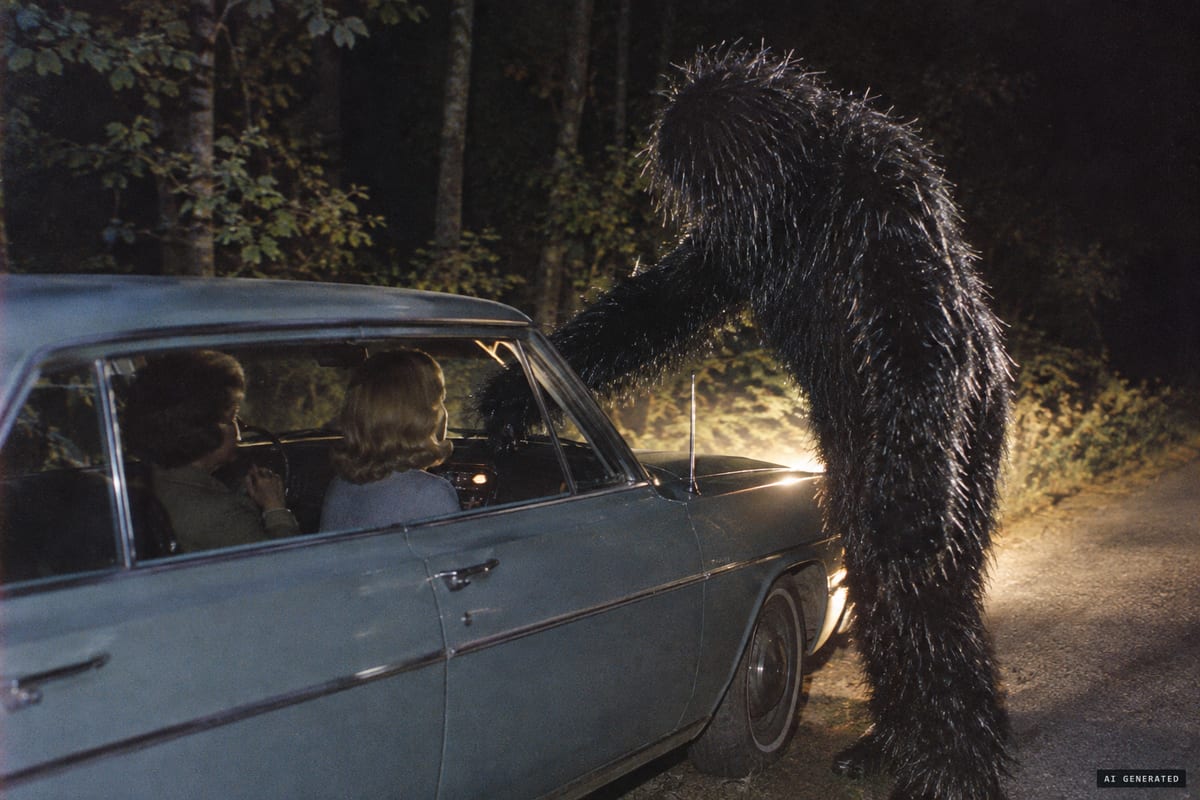 The Monroe Monster attack on Christine Van Acker
August 1965. A wooded road north of Monroe, Michigan. Night. Christine Van Acker, 17, was at the wheel. Her mother sat beside her. Then something came up out of the roadside ditch.
-
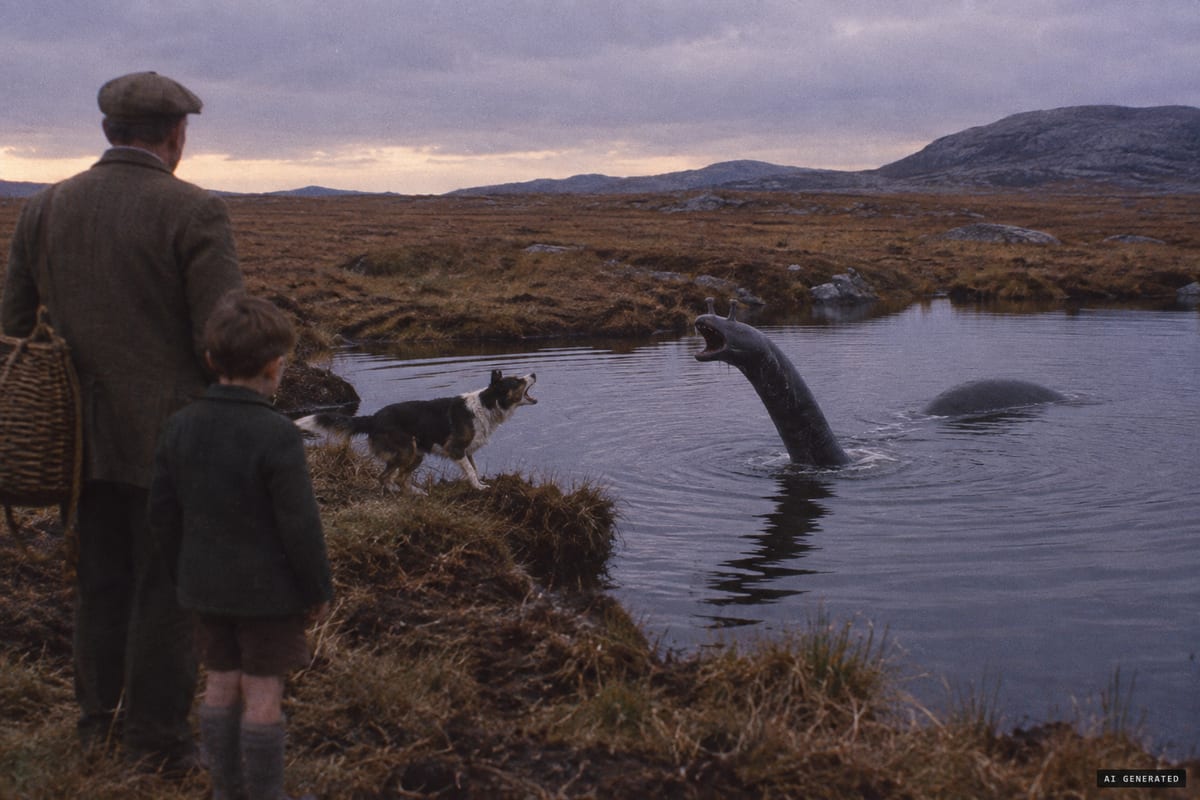 The Coyne family's horse-eel at Lough Nahooin
February 22, 1968. About seven in the evening. Stephen Coyne walked down to the bog beside Lough Nahooin, a small lough in Connemara, to bring up dry peat. There was a black object in the water. Coyne whistled, thinking it was the family dog. Then the dog appeared from the woods, barking angrily at the thing in the lough.
-
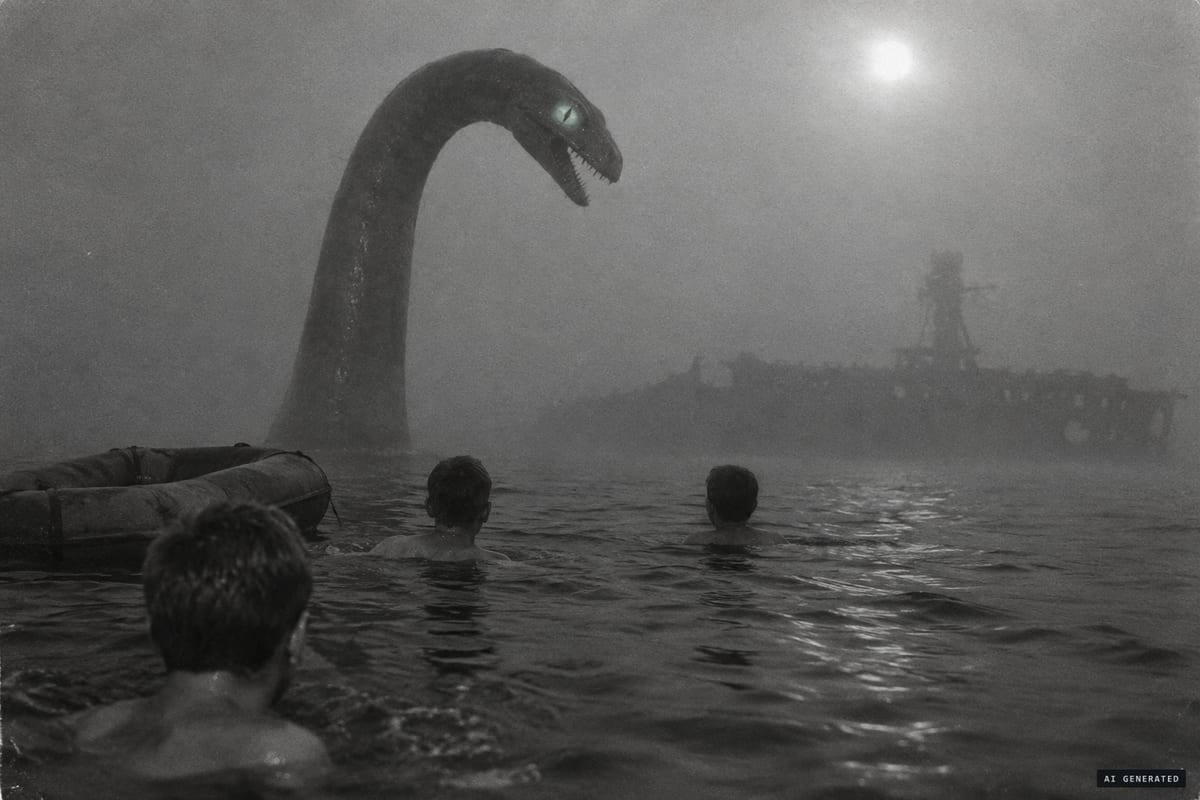 Edward Brian McCleary's Pensacola sea serpent and the USS Massachusetts wreck tragedy
March 24, 1962. Five teenagers from Fort Walton Beach set out on a rubber raft toward the wreck of the old battleship USS Massachusetts, off Pensacola Pass. Fog closed in. Night fell. Only one of them came home.
-
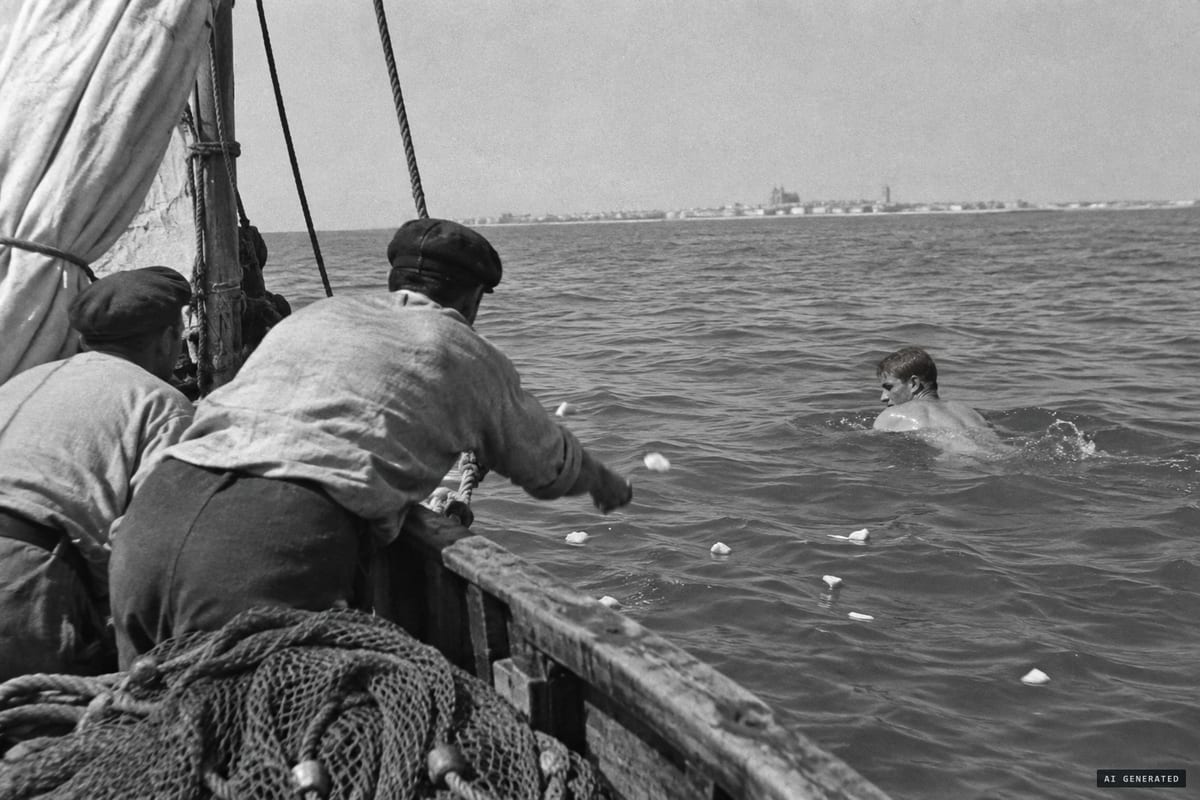 The Fish-man of Liérganes (El Hombre Pez de Liérganes)
Bay of Cádiz. 1679. Fishermen saw the figure of a rational person swimming on the water. It dived under at will. When they tried to get close, it vanished. The next day it came back. They threw bread into the sea. It took the pieces and ate them. Then they caught it in their nets.
-
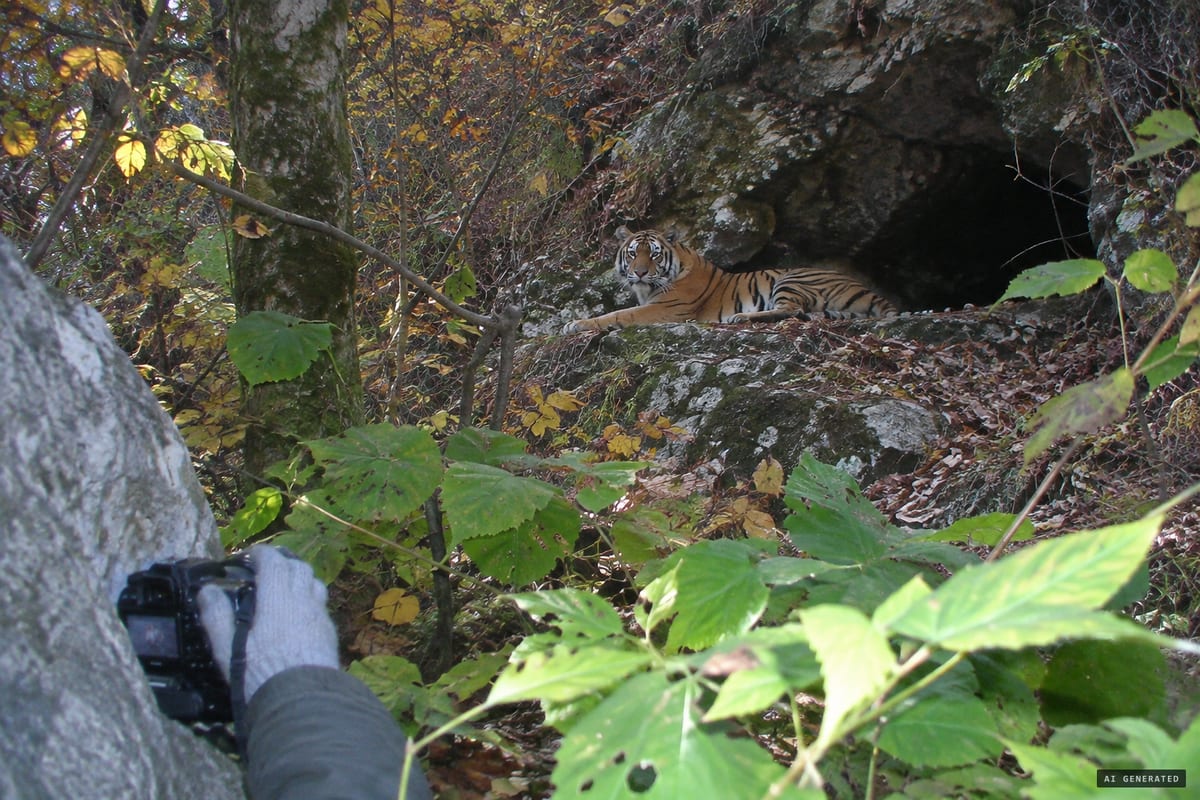 Zhou Zhenglong's South China Tiger Photographs ("Paper Tiger"), Zhenping County, Shaanxi, 2007
October 3, 2007. The mountains above Wencai Village in Zhenping County, Shaanxi. Zhou Zhenglong, a farmer and former hunter, said he crept to within about 20 metres of something yellowish beside a cave in the rocks. A tiger. It let out a loud and long furious roar as his camera flashed.
-
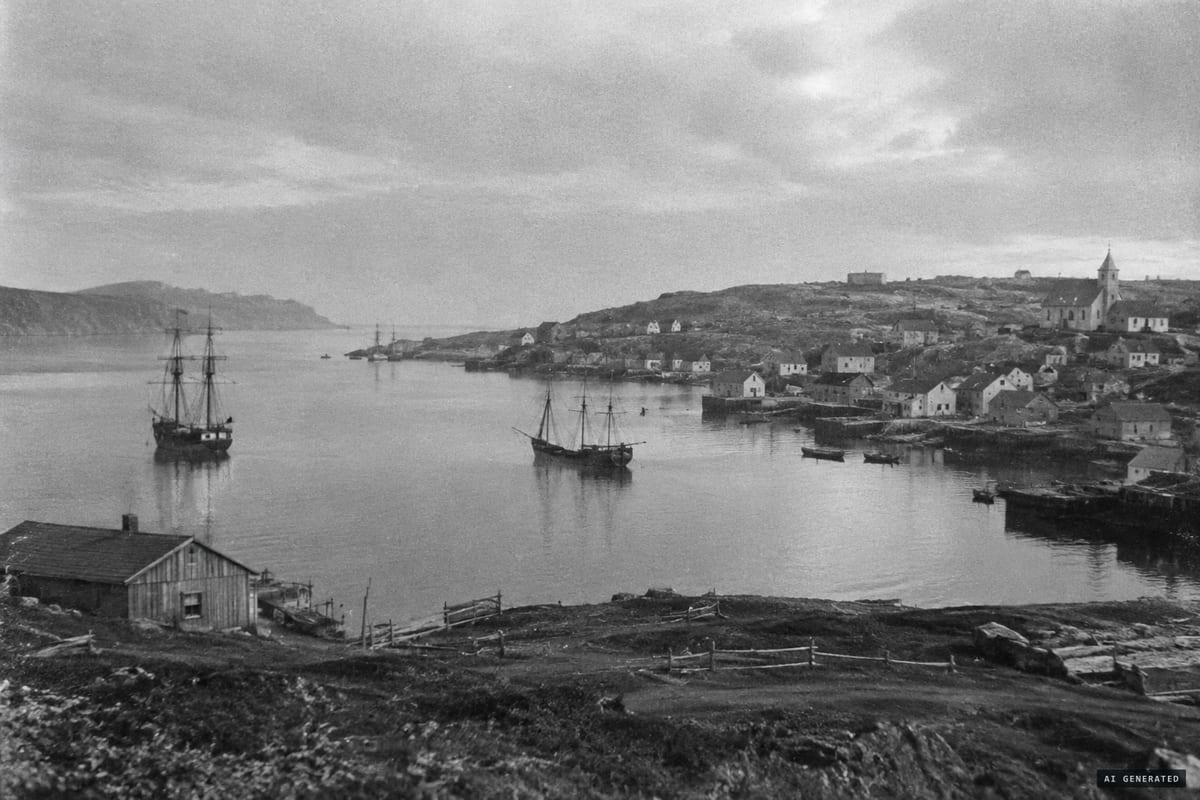 Richard Whitbourne's Mermaid in St. John's Harbour, Newfoundland
1610. St. John's Harbour, Newfoundland. Early in the morning, sea captain Richard Whitbourne stood by the water side. Something came swimming toward him, very swiftly. It had a woman's face, looking cheerfully. Blue streaks ran from its head like hair. It came within a long pike's length. He stepped back.
-
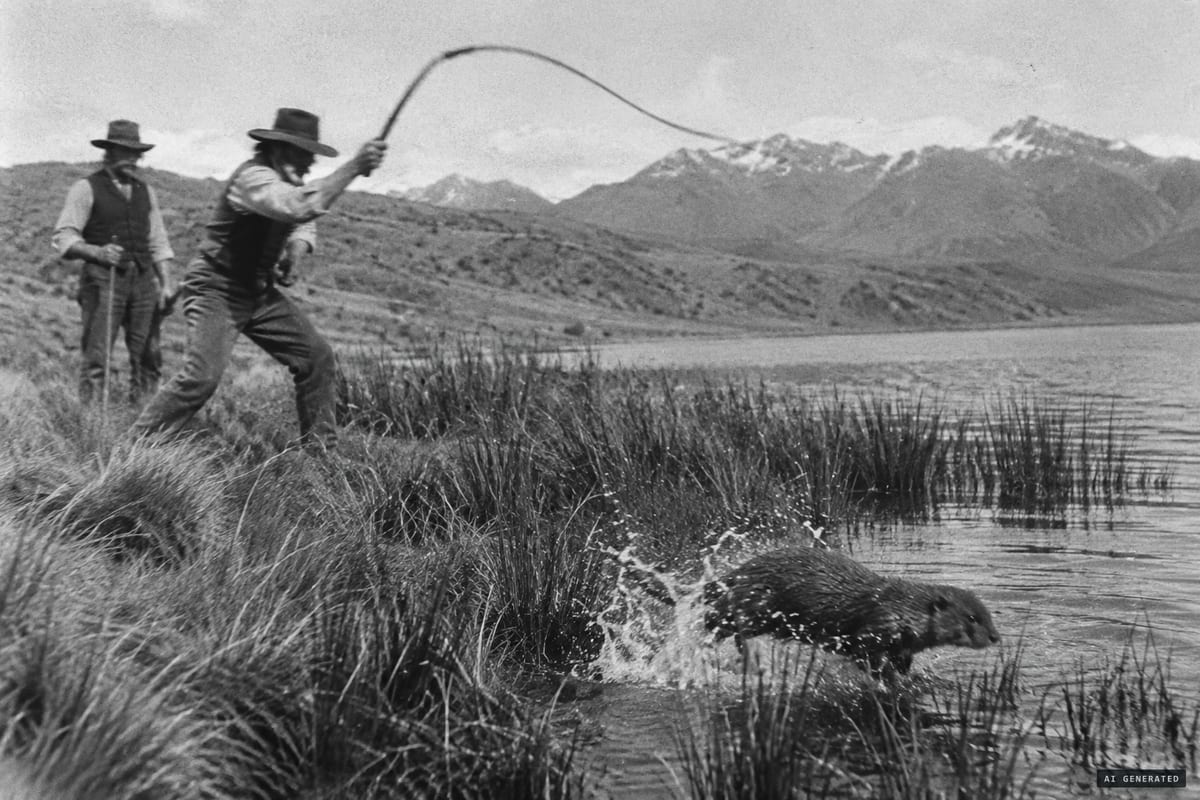 Waitoreke tracks and sighting, upper Ashburton River and Lake Heron, Canterbury (1861)
1861. The high country of Canterbury, New Zealand. On the upper Ashburton River, 3,500 feet above the sea, geologist Julius Haast kept finding tracks. They resembled the tracks of a European otter. Only a little smaller.
-
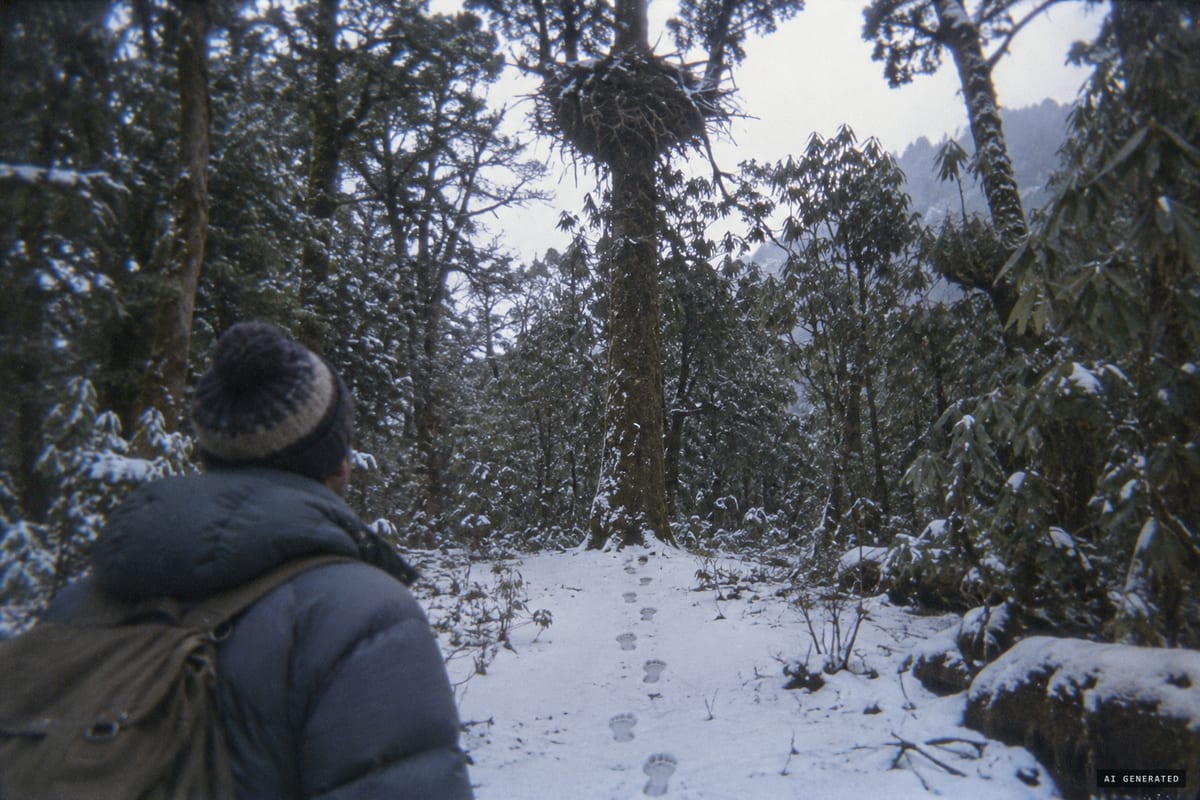 The Barun Valley Yeti Tracks and the Tree Bear
Winter, 1983. The Barun Valley in eastern Nepal, east of Everest. Daniel C. Taylor had been told by the King of Nepal to look in the densest jungle in the kingdom. In the snow, he found a line of fresh footprints. They looked hominoid. A big-toe-like digit. What seemed a bipedal gait. "I had no doubt I had found the Yeti," he later said.
-
 William Rhein's Film of the Imperial Woodpecker, Durango, 1956
1956. The pine forests of the Sierra Madre Occidental, in Durango, Mexico. A Pennsylvania dentist named William L. Rhein sat on the back of a mule, a 16 mm camera in his hands. In front of him, a huge black bird with half-white wings worked her way up a pine. She pecked. She climbed. Then she launched and flew out of sight.
-
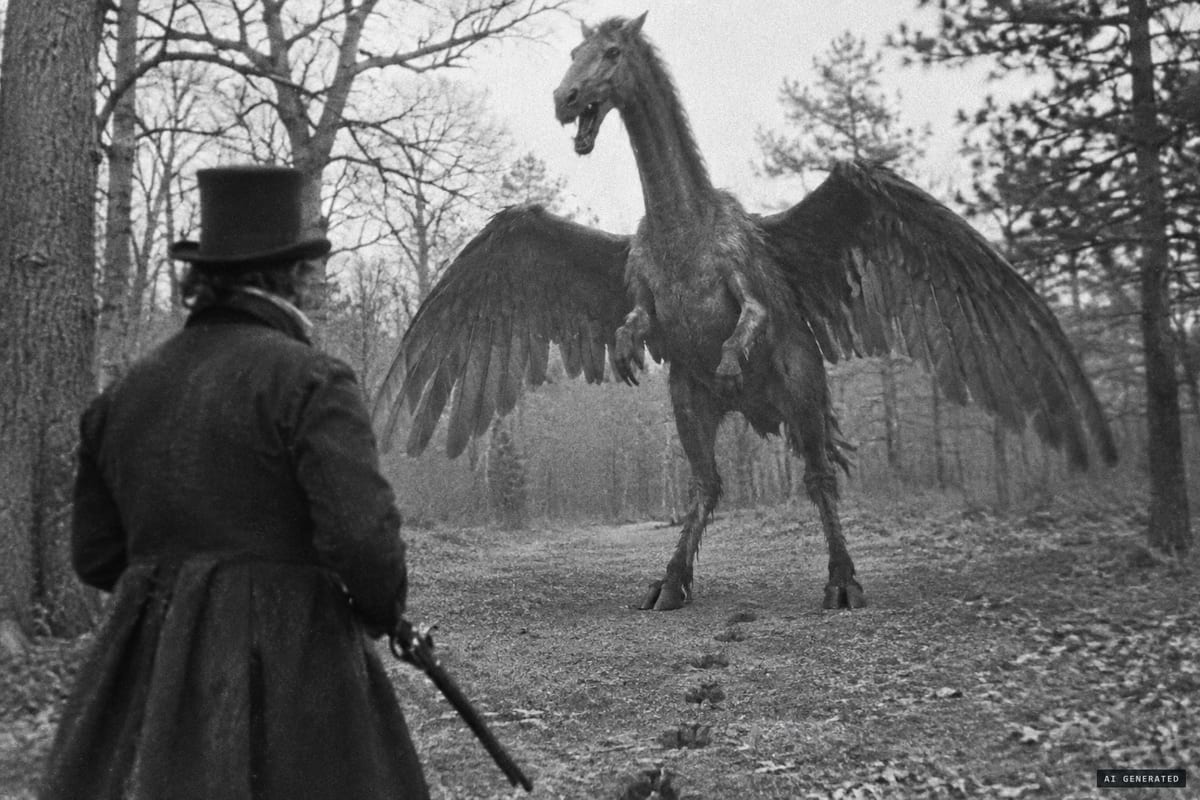 Joseph Bonaparte's Jersey Devil Encounter at Point Breeze
New Jersey. Around 1820. Joseph Bonaparte, Napoleon's elder brother and the former King of Spain, was hunting alone in the woods near Point Breeze, his estate at Bordentown. He came upon strange tracks. He followed them. They stopped. Then he heard a hiss, and turned.
-
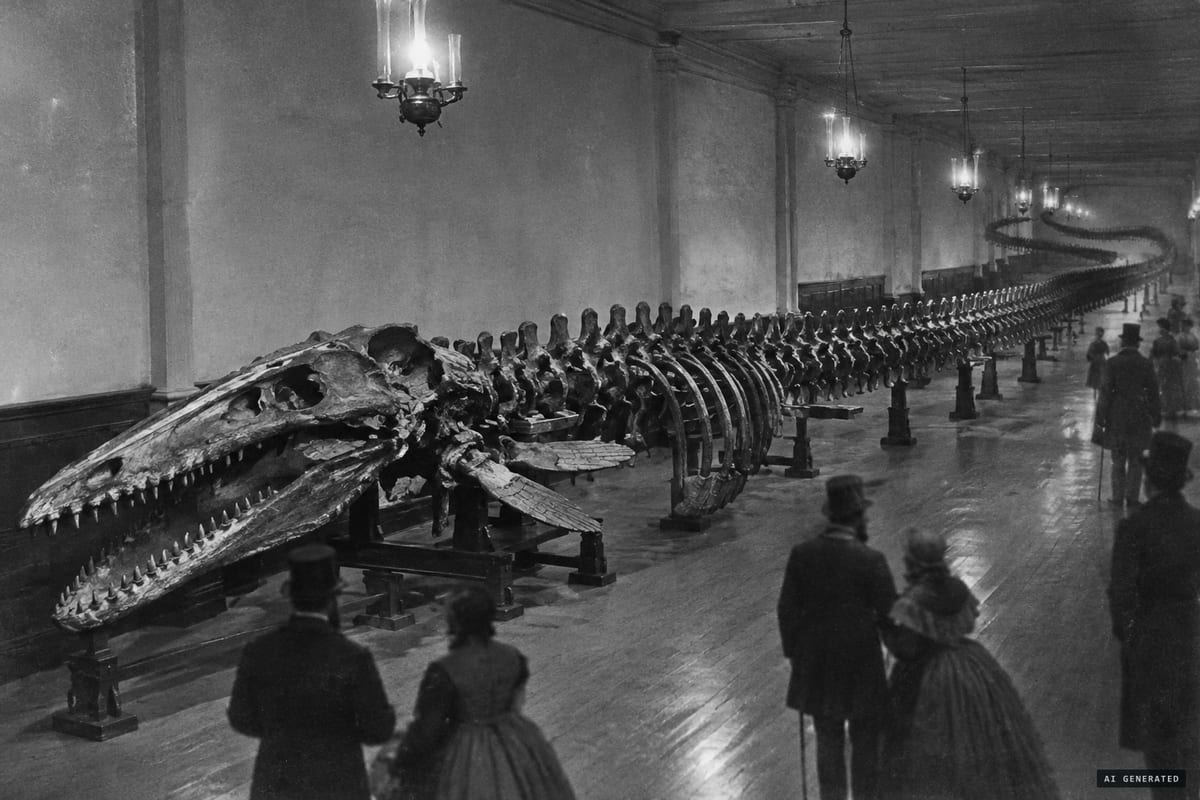 Koch's Hydrarchos sea-serpent skeleton, New York
July 1845. A German-born fossil collector named Albert C. Koch brought a monster to New York. At the Apollo Saloon on Broadway, for 25 cents, the public could stand before a skeleton the posters said exceeded 114 feet. A large, serpent-like skull. A vast column of vertebrae. Parts of supposed paddles. Koch called it Hydrarchos, ruler of the waters, the Leviathan of the Book of Job.
-
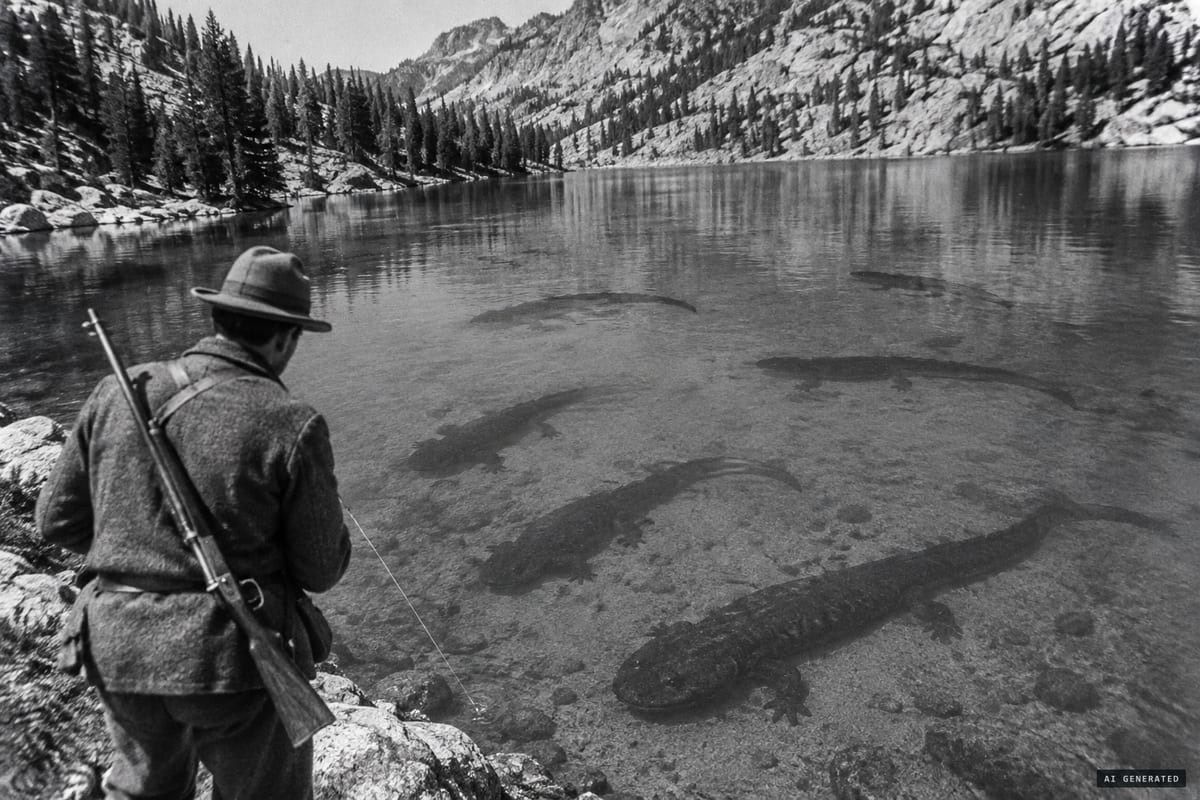 Frank Griffith's Giant Salamanders: Five Creatures on a Lake Bottom at the Head of the New River
The 1920s. High in California's Trinity Alps, an attorney named Frank L. Griffith was hunting deer near the head of the New River. He looked down into a lake. On the bottom lay five salamanders. They were five to nine feet long. He hooked one. He could not pull it out.
-
 Mrs. Glover's kangaroo in the New Richmond tornado, Wisconsin, 1899
June 12, 1899. New Richmond, Wisconsin. The Gollmar Brothers Circus was in town and the streets were crowded. Around 6 pm, a tornado reached the town. It killed 117 people. No tornado on record in Wisconsin has been deadlier.
-
 The Jacobs Creature: Trail-Camera Photos in the Allegheny National Forest
September 16, 2007. Evening in the Allegheny National Forest. A Bushnell trail camera strapped to a tree over deer bait fired its invisible flash. Bears came first. An adult bear and cubs at the salt lick. Then, at 20:32, something else. A thin, dark, furry animal on all fours, its face pressed to the ground.
-
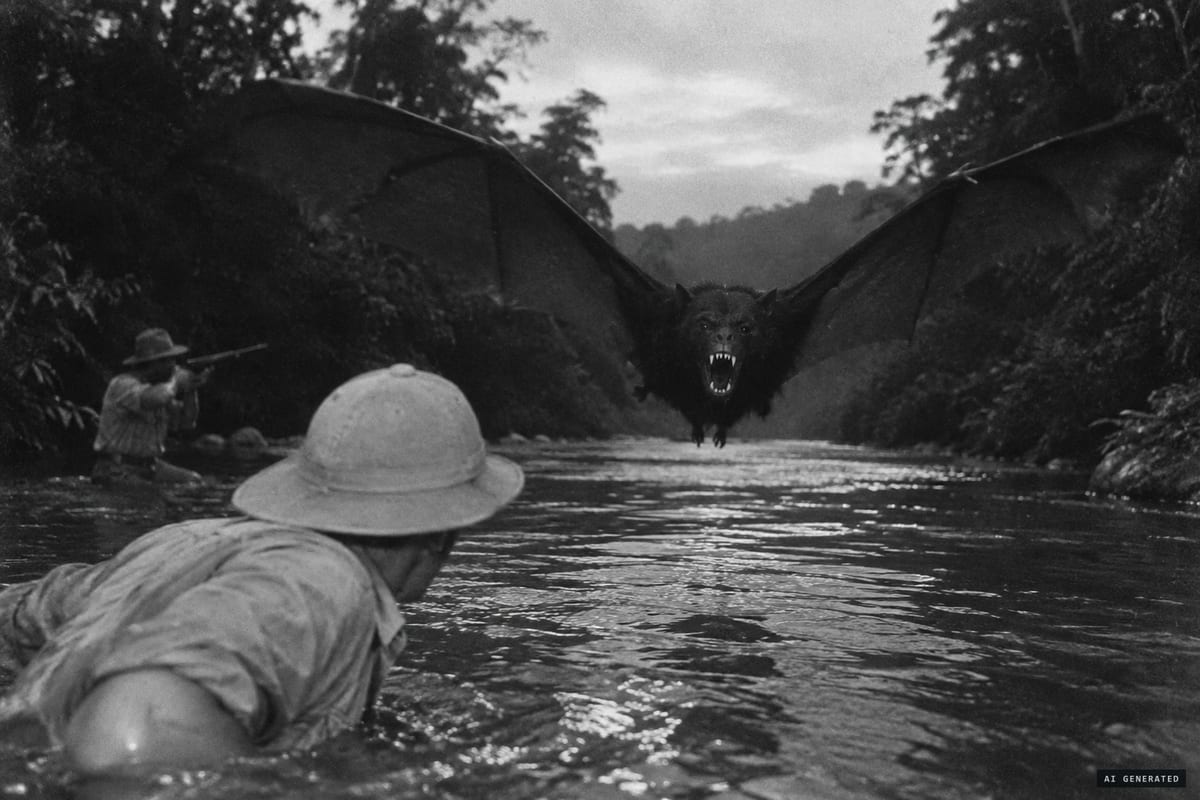 The Olitiau Giant Bat Encounter, Assumbo Mountains (1932)
1932. The British Cameroons. Two young zoologists, Ivan T. Sanderson and Gerald Russell, were wading down a river in the Assumbo Mountains one evening, collecting animals for the Percy Sladen Expedition. Then something came down the stream. It was black. It was the size of an eagle. It flew only a few feet above the water, straight at Sanderson, its jaw hanging open over a semicircle of white teeth. He ducked under the water. Both men fired. It escaped.
-
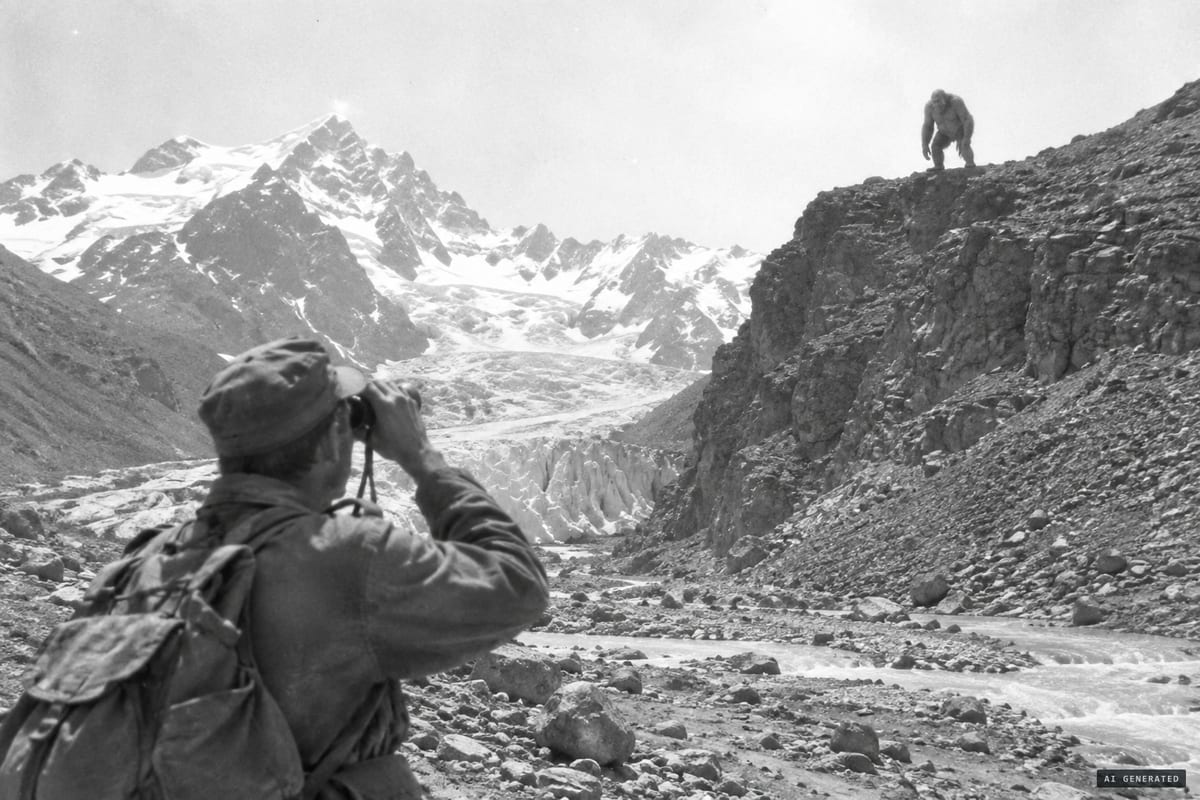 A. G. Pronin's Snowman on the Fedchenko Glacier, Pamirs (1957)
August 1957. The Pamir Mountains of Soviet Tajikistan. Alexander Georgievich Pronin, a hydrologist from Leningrad University, was mapping glaciers near the Fedchenko Glacier. In the valley of the Balyandkiik River he looked up at a rocky cliff about 500 yards away. A figure stood there. It resembled a man. It was very stooped, stocky, and covered with reddish-grey hair. Three days later he saw it again, this time walking upright.
-
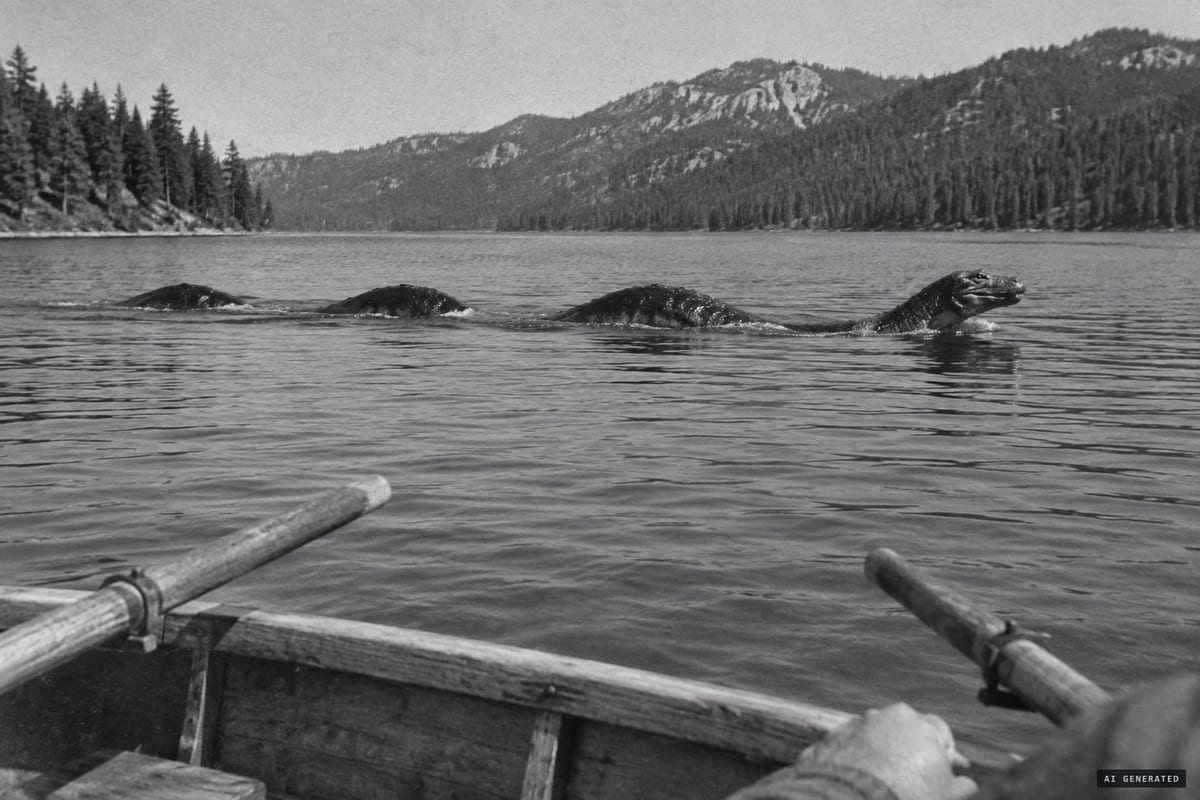 Thomas L. Rogers's rowboat sighting and the "Slimy Slim" wave, Payette Lake
Payette Lake, Idaho. Summer 1944. Since July 2, about 30 people had reported seeing something in the water off McCall. Then Thomas L. Rogers, an auditor from Boise, went on record. A serpent had passed his rowboat. It was about 50 feet away. It moved at about five miles an hour, with a sort of undulating motion. Its head resembled that of a snub-nosed crocodile and rode 18 inches above the water. He put its length at 35 feet.
-
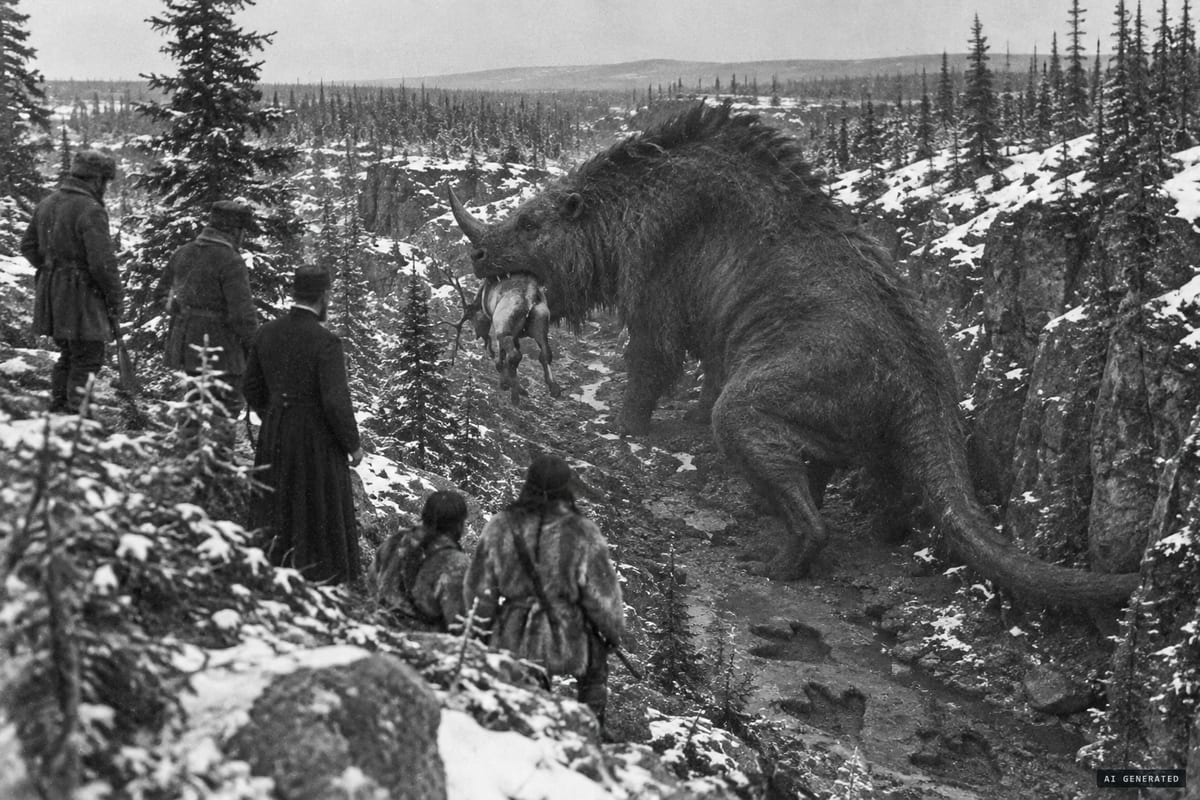 The Partridge Creek Monster: a living dinosaur in the Yukon
A moose-lick near Partridge Creek, in the Yukon. Two hunters find tracks they cannot explain. Footprints five feet long. A belly impression thirty feet long, pressed deep into the mud. They follow the trail into a rocky gorge.
-
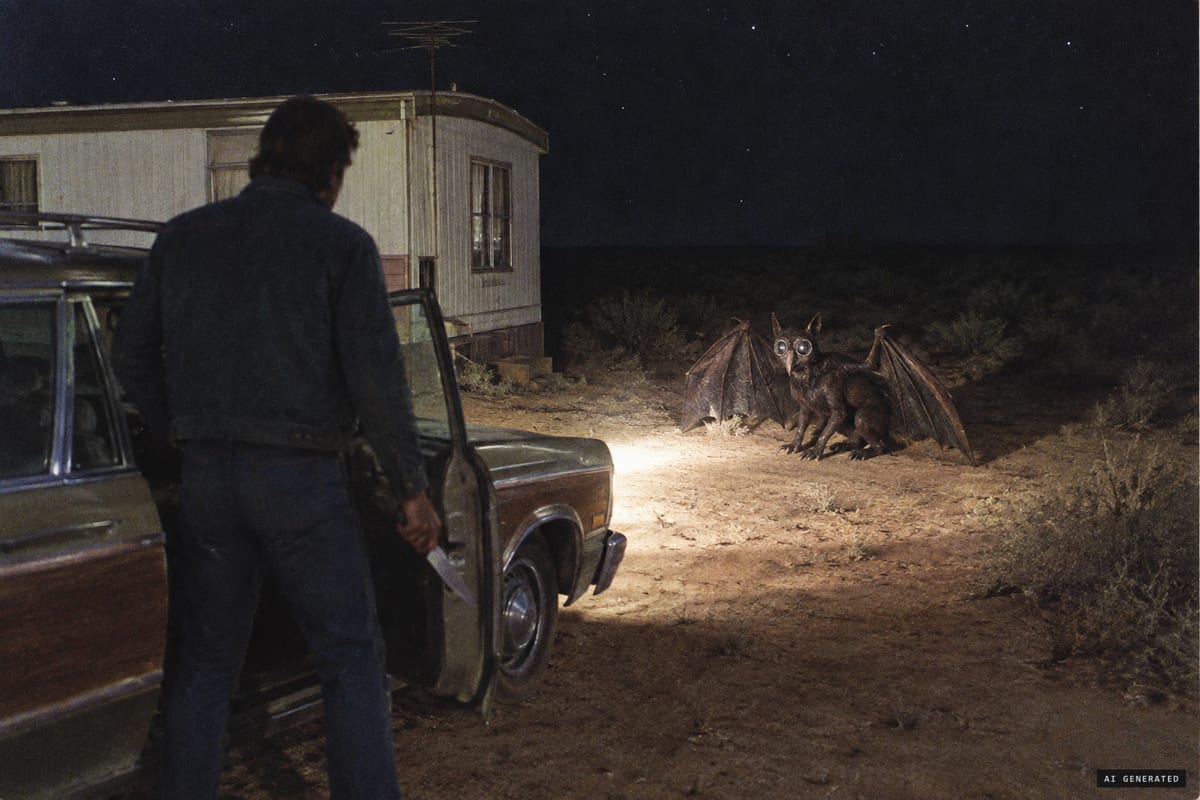 The Rio Grande Valley "Big Bird" Wave
January 1976. The Lower Rio Grande Valley of Texas. In Harlingen, two children saw something standing near a resaca by their yard. Five feet tall. Dark. A bald head and a face like a gorilla's.
-
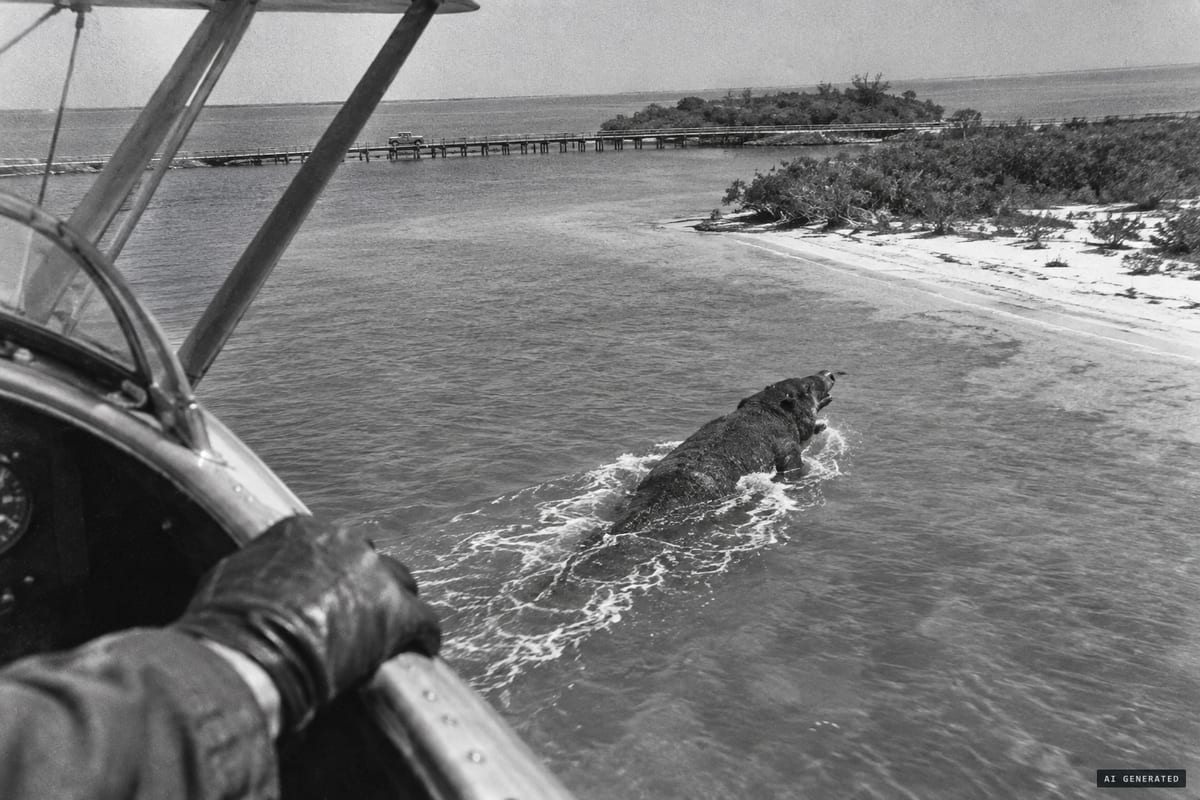 The Clearwater Monster: Florida's Giant Penguin (Old Three-Toes)
February 1948. Clearwater Beach, Florida. Giant three-toed tracks came up out of the Gulf, followed the shore for nearly two miles, and went back into the sea. Over the months that followed, more tracks appeared along the coast. Flyers and beachgoers described something in the water. A furry log with a head like a hog. A beast that waddled. Then 240 prints turned up on the Suwannee River, almost 40 miles inland.
-
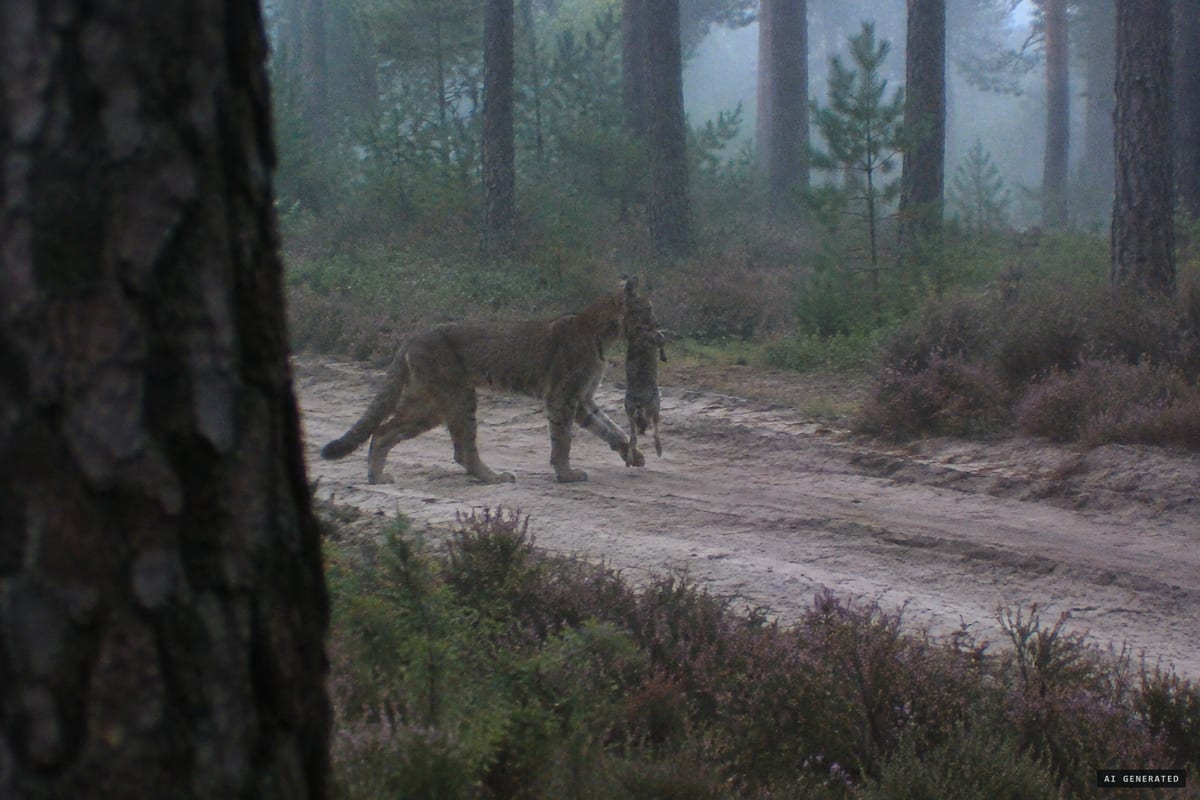 Winnie, the Veluwe Puma
June 2005. The Veluwe, in Gelderland. Callers around Ede, Harskamp and Wekerom told police they had seen a puma. Then came the tracks. Then a mauled roe deer. Witnesses described a greyish-brown cat, just over a metre long, that moved by night and covered great distances.
-
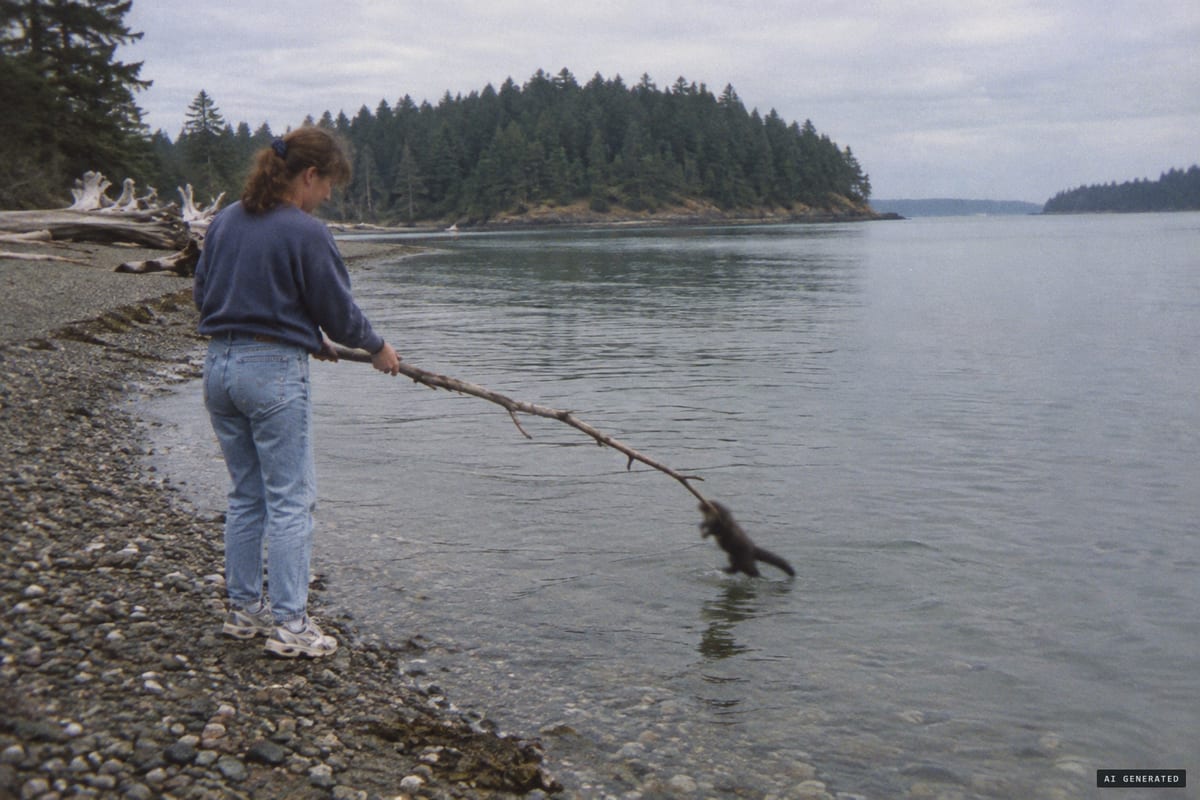 Phyllis Harsh returns a stranded "baby Caddy" to the sea, Johns Island, 1991
July 1991. Johns Island, a speck of land in Washington's San Juan Islands. Phyllis Harsh came upon a small animal at the water's edge. About two feet long. She called it a "baby dinosaur."
-
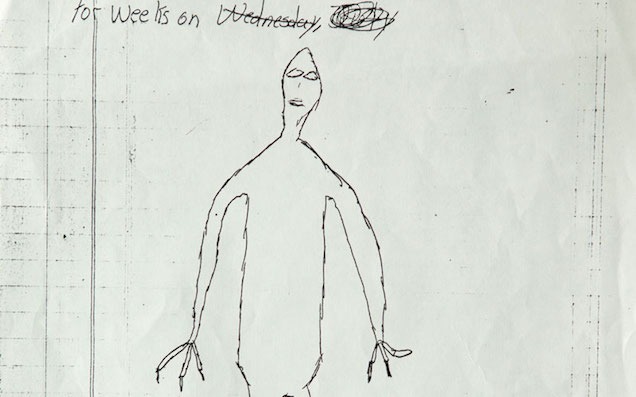 Lizard Man "attack" on the Rawsons' minivan, Bishopville
Bishopville, South Carolina. The early morning of February 28, 2008. Bob and Dixie Rawson woke to find their 2002 Dodge Grand Caravan mauled. Bite marks ran through the front grille. The wheels were bitten. Metal was bent "like a piece of paper." Blood was smeared across the front and sides. Several of their cats were gone.
-
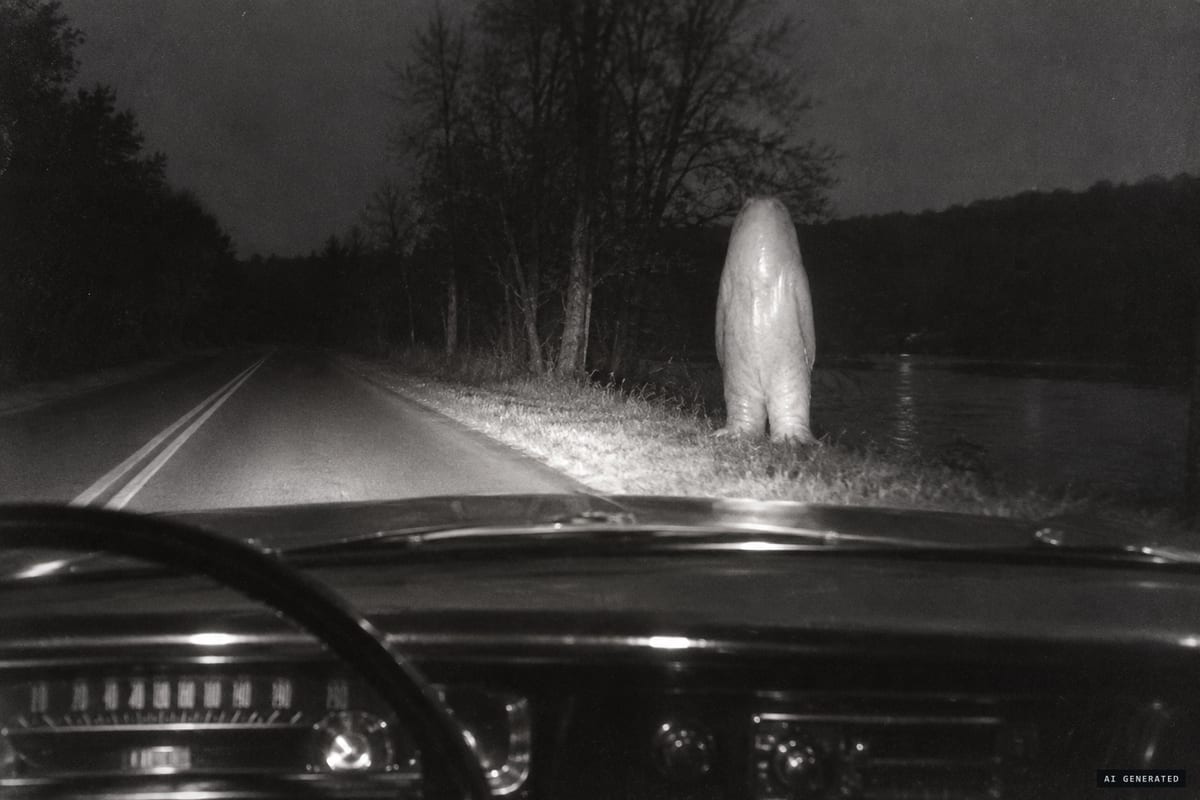 The Grafton Monster: a headless white figure on Riverside Drive (1964)
June 16, 1964. A little after 11 p.m. Robert Cockrell, a young reporter for the Grafton Sentinel, was driving home along Riverside Drive beside the Tygart Valley River. His headlights caught something on the river side of the road. A "huge white obstruction." Between seven and nine feet tall. Four feet wide. A "seal like skin or covering." No discernable head.
-
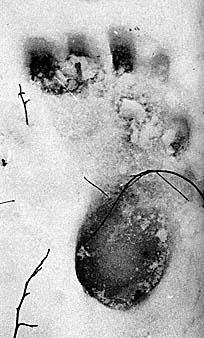 The Bossburg Cripplefoot trackway
November 24, 1969. Bossburg, Washington. Joe Rhodes of Colville was disposing of trash near the community dump when he found the footprints. Big ones. And the right foot was badly deformed.
-
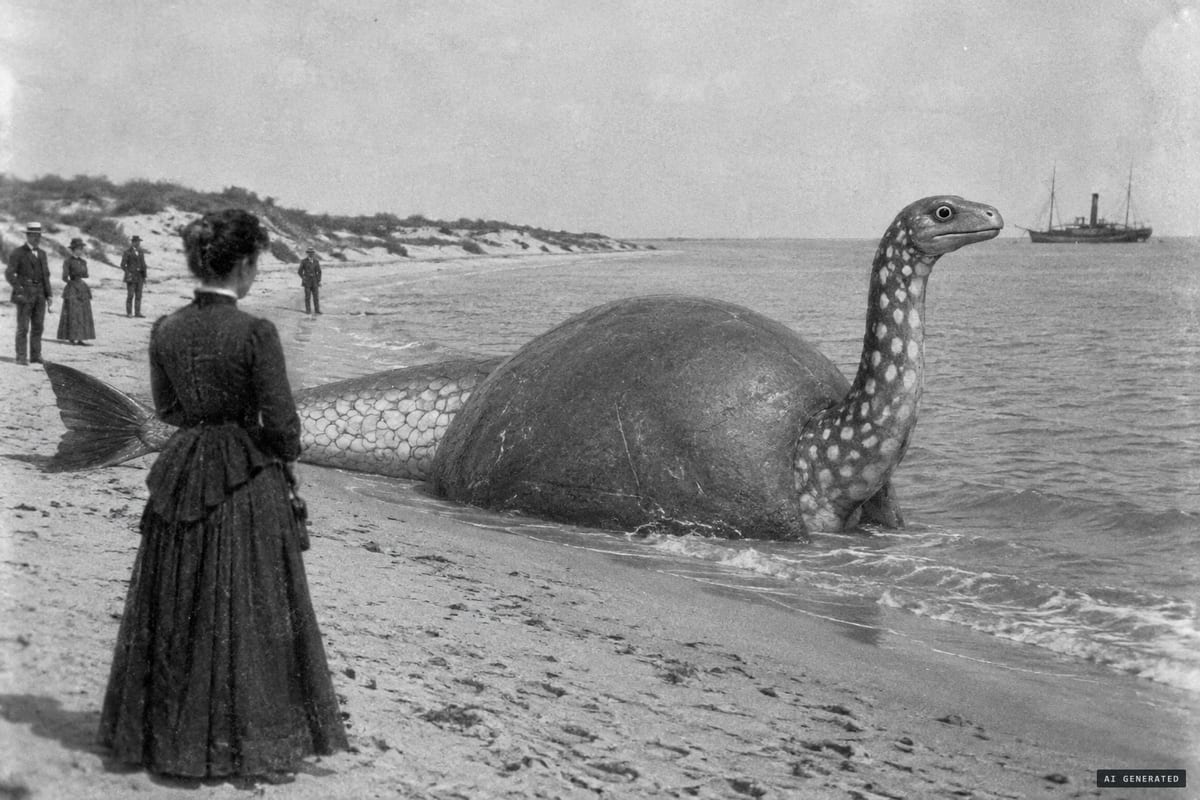 The Moha-moha of Sandy Cape
8 June 1890. A beach at Sandy Cape, at the northern tip of Great Sandy Island in Queensland. Schoolteacher Miss S. Lovell stood within five feet of what she would call "a monster turtle fish". For half an hour it let her watch. A smooth, slate-grey dome of a body. A long turtle-like neck spotted with white. A lizard-like face with one very black eye ringed in white. Behind it, a fish-like tail about 12 feet long.
-
 The Glawackus of Glastonbury, Connecticut
January 1939. Glastonbury, Connecticut. Something was moving through the woods. Witnesses said it looked like a dog, yet resembled a cat somewhat. It gave blood curdling yells at night. Dogs that chased it into the woods came back clawed. Some did not come back at all.
-
 The Claudia Ackley Bigfoot Encounter, Blue Jay
March 2017. Dusk on a trail in Blue Jay, high in the San Bernardino Mountains. Claudia Ackley's two daughters, aged 11 and 14, were walking several yards ahead. Then they stopped. Frozen.
-
 The Emerald Triangle Bigfoot Killings
Fall 1993. Late at night. A cabin on a cannabis farm in Mendocino County, in California's Emerald Triangle. One or two shaken men came in with a story. Three bodies on a nearby pot farm. Mutilated, mangled, torn to pieces. The crop was trampled but intact, so it was no robbery. Something else had done it. A Sasquatch.
-
 Argentina Cattle Mutilations Wave
April 2002. In Argentina, cattle began turning up dead in the fields. An eye gone. An ear. The tongue, the udder, the genitals. No blood. No tracks. Edges that looked sealed by heat.
-
 Marcus Atkinson's Loch Ness Sonar Image
August 24, 2011. Urquhart Bay, Loch Ness. Tour-boat skipper Marcus Atkinson had just dropped passengers at Urquhart Castle and moved his boat out of the way of the other tour companies. Then he looked at his sonar. A long solid echo had appeared, about 23 m down and roughly 1.5 m wide. It got bigger and bigger. He took a picture with his mobile phone.
-
 The Bulwagga Bay Drone Footage (Tabor-Rossi Footage)
Lake Champlain. Bulwagga Bay, just off the hamlet of Port Henry. A film crew's rowboat sits on the water while a drone films from above. Nobody on board notices a thing.
-
 Ramón Lista's hairy pangolin and Neomylodon listai
Santa Cruz Territory. Argentine Patagonia. Night. Ramón Lista, explorer and former governor, came face to face with an animal he could not name. It was like an Indian pangolin in size and form. But where a pangolin carries scales, this one wore greyish red hair. Lista fired. He believed he hit it. It vanished into the bushes.
-
 The First Live Kha-nyou on Film, Doy, Laos (2006)
May 17, 2006. Limestone hills near the village of Doy, in central Laos, close to the Thai border. After four failed attempts, local hunters brought in a live kha-nyou. A docile, squirrel-sized animal with dark, dense fur, long whiskers and beady eyes. David Redfield, a retired Florida State University professor, filmed it.
-
 The Brosno "dragon" (Brosnya), Lake Brosno, Tver Oblast, 1996
Autumn 1996. A weekly newspaper in Tver printed a story that would travel as far as Reuters. Something, it said, lived in Lake Brosno. Witnesses on the shore described the head of a large animal rising above the water, like a dragon's or a dinosaur's. Behind it, a long, thin tail. Scaly. About five metres long. It came up in the evening and sank fast when people drew near. Some said they could hear it breathe under water.
-
 The Bauernschreck of the Styrian-Carinthian Alps
Summer 1913. The Alps on the border of Styria and Carinthia. Cattle and sheep were dying, with wounds at the neck and thigh. Shepherds saw two large tawny animals. A marksman saw a tail ending in a tuft. Three hunters reported a lion.
-
 Bennie at Baia delle Sirene, Lake Garda
17 August 1965. Baia delle Sirene, Mermaid Bay, on the eastern shore of Lake Garda. A group of holidaymakers saw something long and serpent-like rise from the water. It swam at the surface. Then it went under.
-
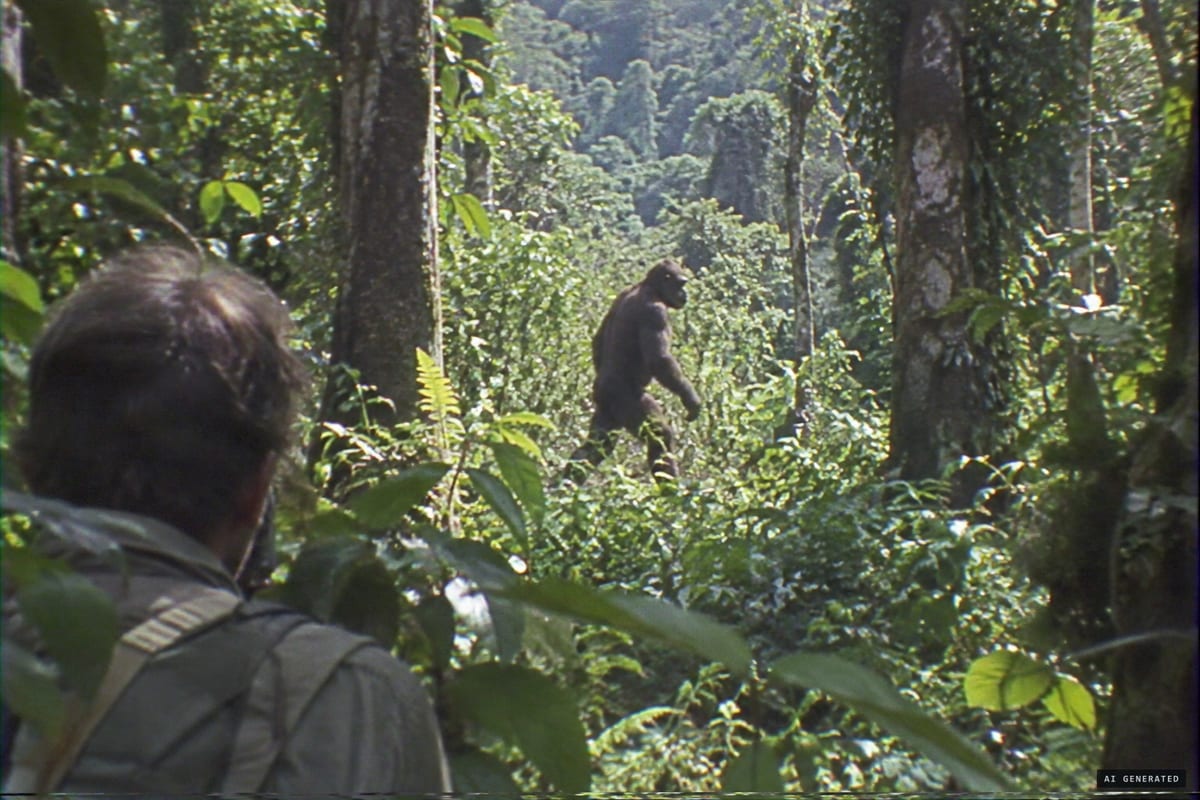 Debbie Martyr's orang pendek sighting, Kerinci Seblat National Park, Sumatra (1994)
Sumatra. September 1994. British journalist Debbie Martyr had been out in the forests of Kerinci Seblat National Park for four months, on the trail of a creature known as the orang pendek. Then she saw it herself.
-
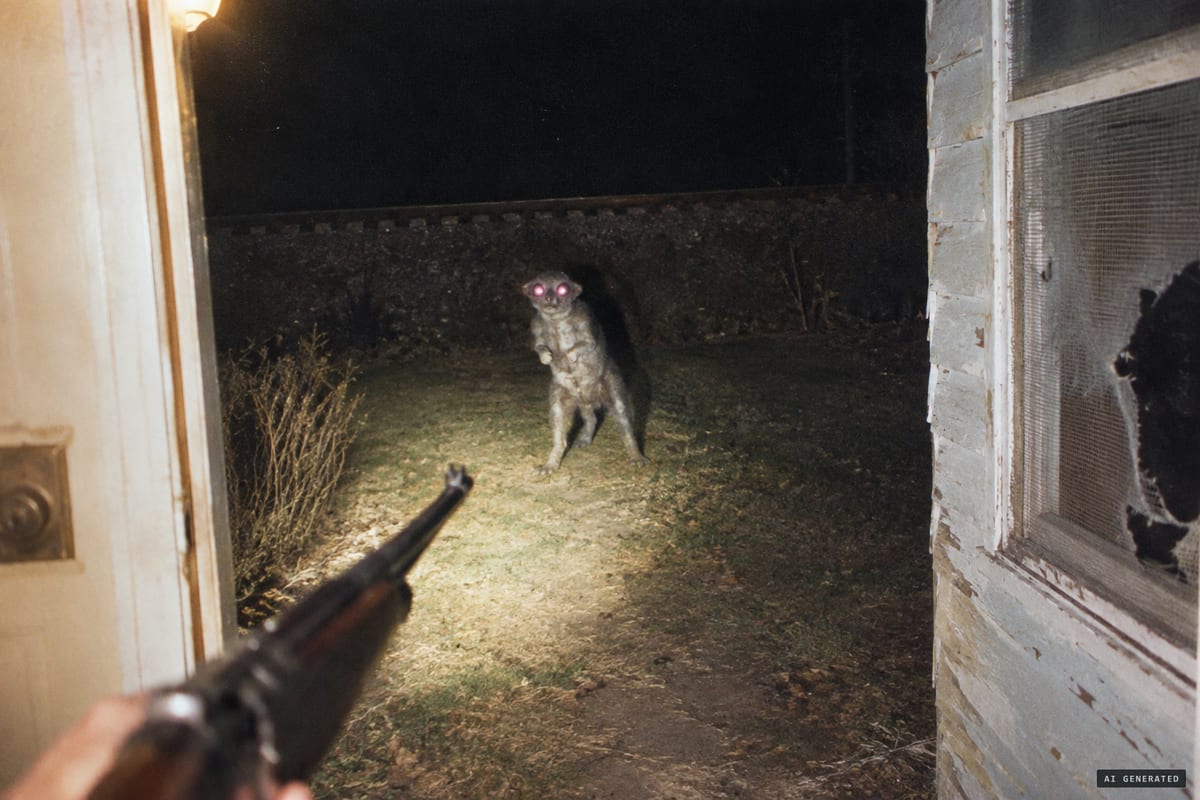 The Enfield Monster, Illinois 1973
April 25, 1973. About 10 p.m. in Enfield, a village of some 750 people in southern Illinois. Henry McDaniel heard scratching at his door. He picked up a gun and a flashlight, thinking it might be a bear. What he saw instead had three legs, a short body, two little short arms and two pink eyes as big as flashlights. It stood four and a half feet tall. It was grayish.
-
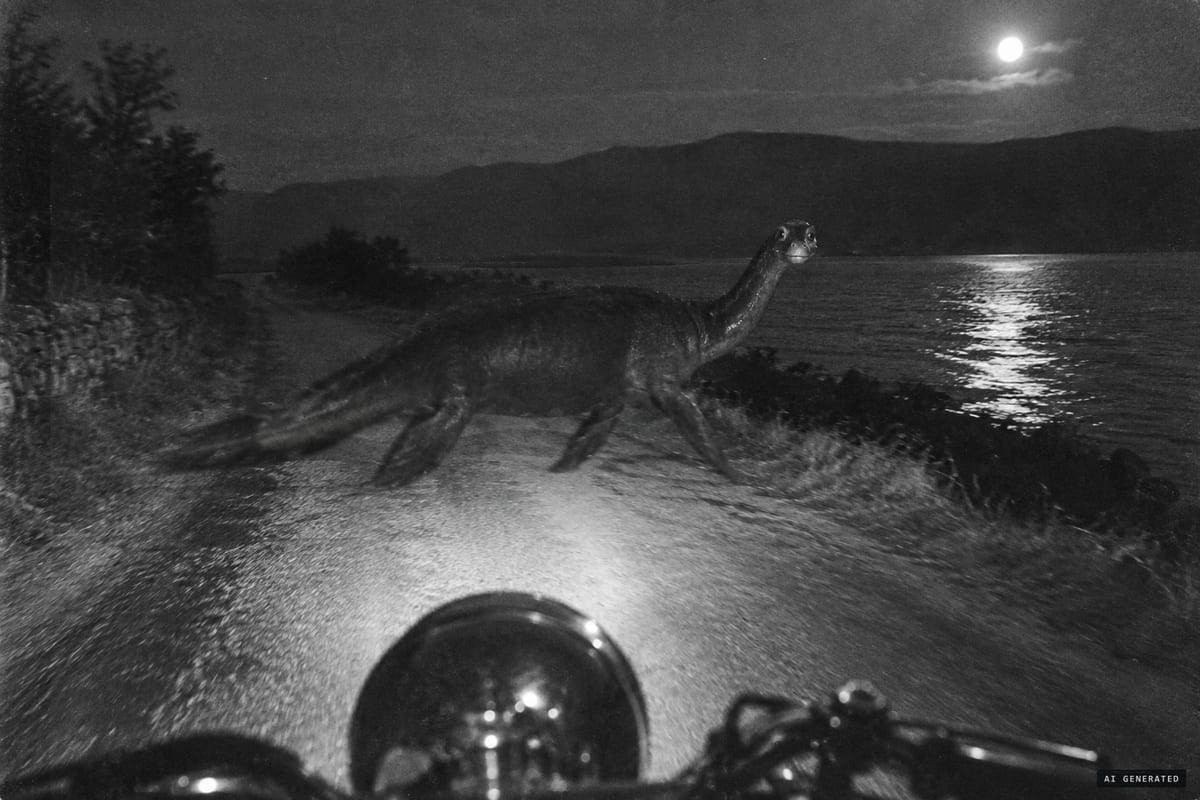 Arthur Grant's land sighting of the Loch Ness Monster on the Abriachan road, 1934
5 January 1934. About 1 a.m. A moonlit night on the road beside Loch Ness. Arthur Grant, a 21-year-old veterinary student, was riding his motorcycle toward Abriachan. Then he was almost on it. A small head on a long neck turned in his direction. The animal, taking fright, made two great bounds across the road and plunged into the loch. Grant jumped from his machine and followed it to the water. He found only ripples.
-
 The Surrey Puma: Ernest Jellett's Sighting and the Big Cat Wave
July 1962. A country lane on the North Downs, not far from Farnham. Ernest Jellett, a waterworks man and keen naturalist, was walking towards the Heathy Park Reservoir. A rabbit came running down the lane towards him. Behind it ran a huge, cat-like animal. It had a sort of round, flat face, a long thin tail and big paws. Jellett shouted. The cat bounded off into the undergrowth.
-
 Balkin's Tatzelwurm Photograph, Aare Gorge
The Aare Gorge, near Meiringen. A photographer named Balkin framed what looked like a picturesque tree stump. The shutter was pressed. The stump began to move.
-
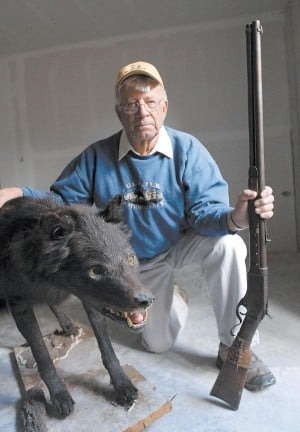 The Hutchins Ringdocus, Montana's Shunka Warak'in (Madison Valley, 1886)
Montana's Madison Valley. 1886. Something was killing livestock across the valley. At night, it screamed.
-
 The Vampire of Moca: Puerto Rico's Livestock Killer of 1975
Moca, Puerto Rico. February 1975. Farmers in the hills of the northwest began finding their animals dead. Cows, goats, geese, chickens. Each bore small paired puncture wounds. Each seemed drained of blood.
-
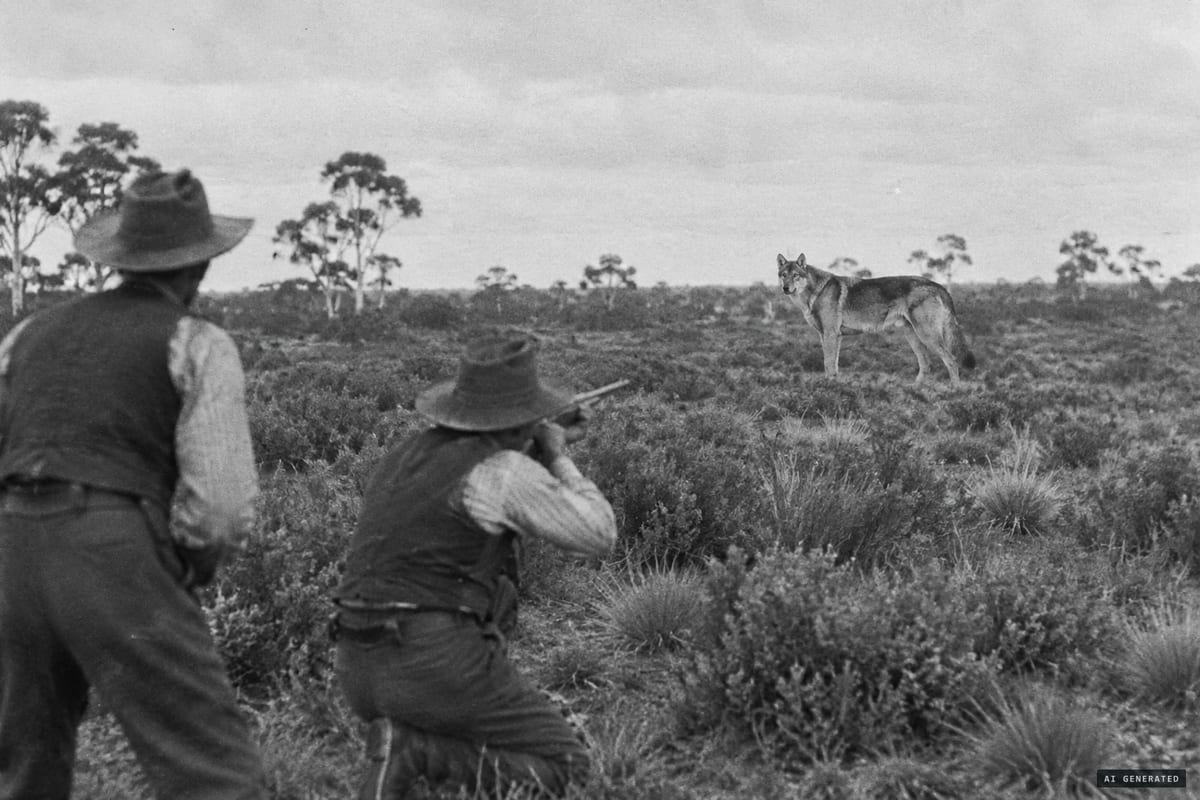 The Tantanoola Tiger: the wolf shot at Tantanoola, South Australia (1895)
Tantanoola, South Australia. In the early 1890s the sheep began to vanish. People blamed a Bengal tiger said to have escaped from a travelling circus. From 1893 came the sightings. A strange animal in the scrub. Stripes on its back. A full grown sheep carried in its mouth.
-
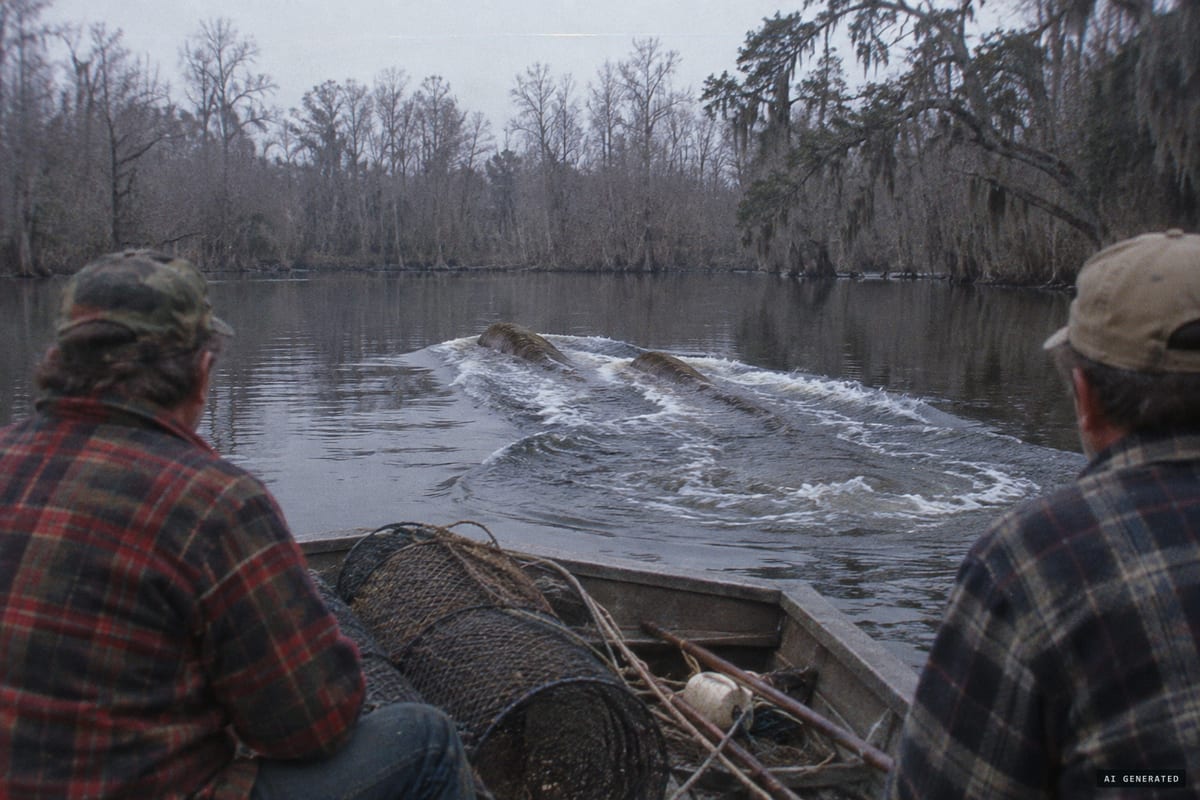 Larry Gwin and Steve Wilson's Altamaha-ha sighting at Smith Lake
December 1980. An oxbow off the Altamaha River called Smith Lake. Larry Gwin and Steve Wilson were out eel fishing. Then two humps broke the surface, about five feet apart. Brown. Snake-like. Perhaps fifteen to twenty feet long. The thing left a wake like a speedboat. Then it slipped under and never came back up.
-
 The Green Clawed Beast of the Ohio River, Dogtown, Indiana
August 1955. The Ohio River off Dogtown, just west of Evansville, Indiana. Two friends were swimming about 15 or 16 feet from shore, in the waves of a towboat and barges. Then something came up behind Mrs. Darwin Johnson and grabbed her left leg. She felt large claws and a furry palm gripping her knee. It pulled her under. Then it pulled her under again.
-
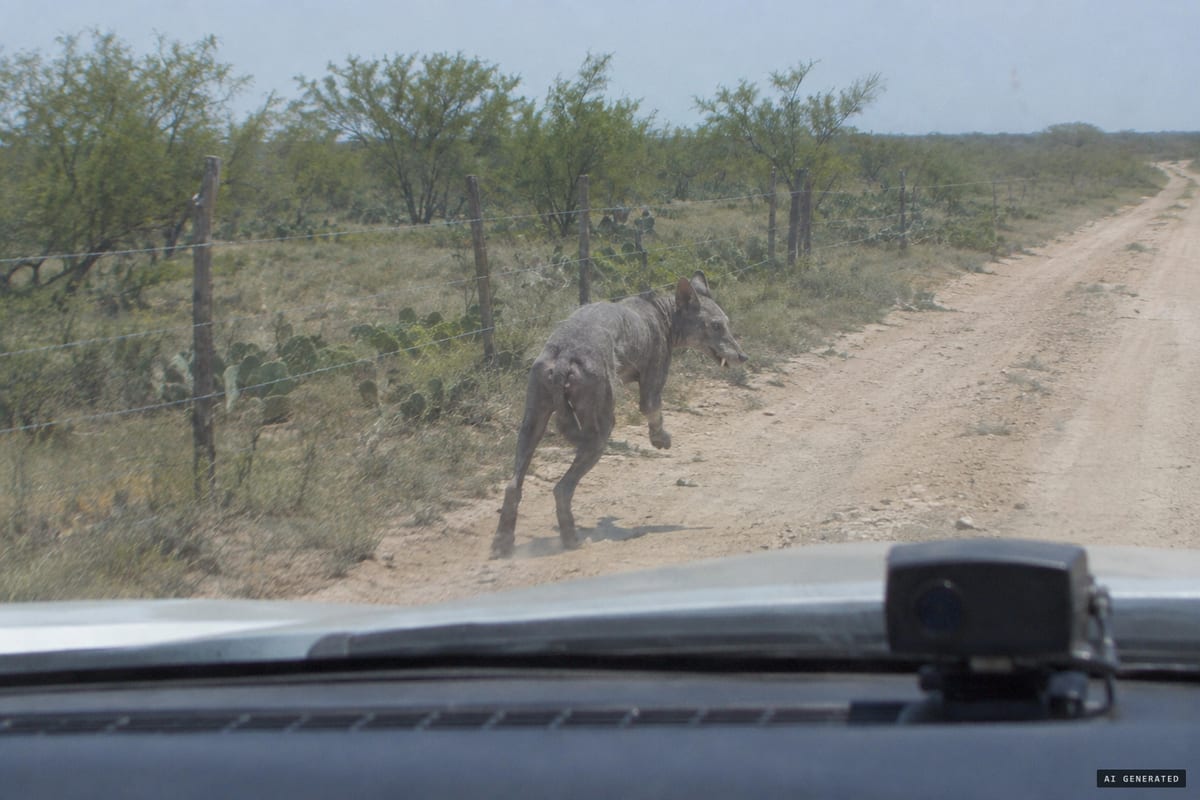 The DeWitt County Dashcam Chupacabra
August 8, 2008. Rural back roads near Cuero, Texas. Cpl. Brandon Riedel of the DeWitt County Sheriff's Office was training a new deputy, checking fence lines from the patrol car. Then they saw an animal they did not recognise, running ahead of the car. It was the size of a coyote. Grey skin. Little or no hair. Long back legs, short front legs, a long snout. Riedel switched on the dashboard camera.
-
 Captain Crum's Bulwagga Bay sighting, the earliest printed Champ report
Lake Champlain. A Thursday morning in July 1819. Captain Crum was putting out from the shore of Bulwagga Bay in a scow. About 200 yards away, something rose from the water. A head. It reared more than fifteen feet above the lake. Black, with a star on its forehead and a belt of red around its neck. Crum put its length at 187 feet.
-
 Captain Lorenz von Ferry's sea serpent off Molde, 1746
Late August, 1746. A very calm and hot day on the water near Molde, Norway. Lorenz von Ferry, a naval officer, sat reading in his yacht as eight men rowed him home from Trondheim. Then he heard a murmuring among the oarsmen. The helmsman was steering away from the land.
-
 The Lobo Girl of Devil's River
1845. San Felipe Springs, Texas. A boy watched a pack of lobo wolves attack a herd of goats. Running with them was a creature that looked like a naked girl, long hair half covering its features. The story was ridiculed. Not more than a year later, a Mexican woman saw two big lobos and a naked girl devouring a freshly killed goat. The girl ran on all fours. Then she rose and ran on two feet beside the wolves.
-
 The Nahant sea serpent: Marshal James Prince and Samuel Cabot at Long Beach, 1819
August 1819. Nahant, Massachusetts. A summer morning on Long Beach, and something long and dark was moving through the bay. James Prince watched it through his telescope. He counted thirteen bunches on its back. His family thought there were fifteen. His coachman called out, "Oh, see his glistening eye."
-
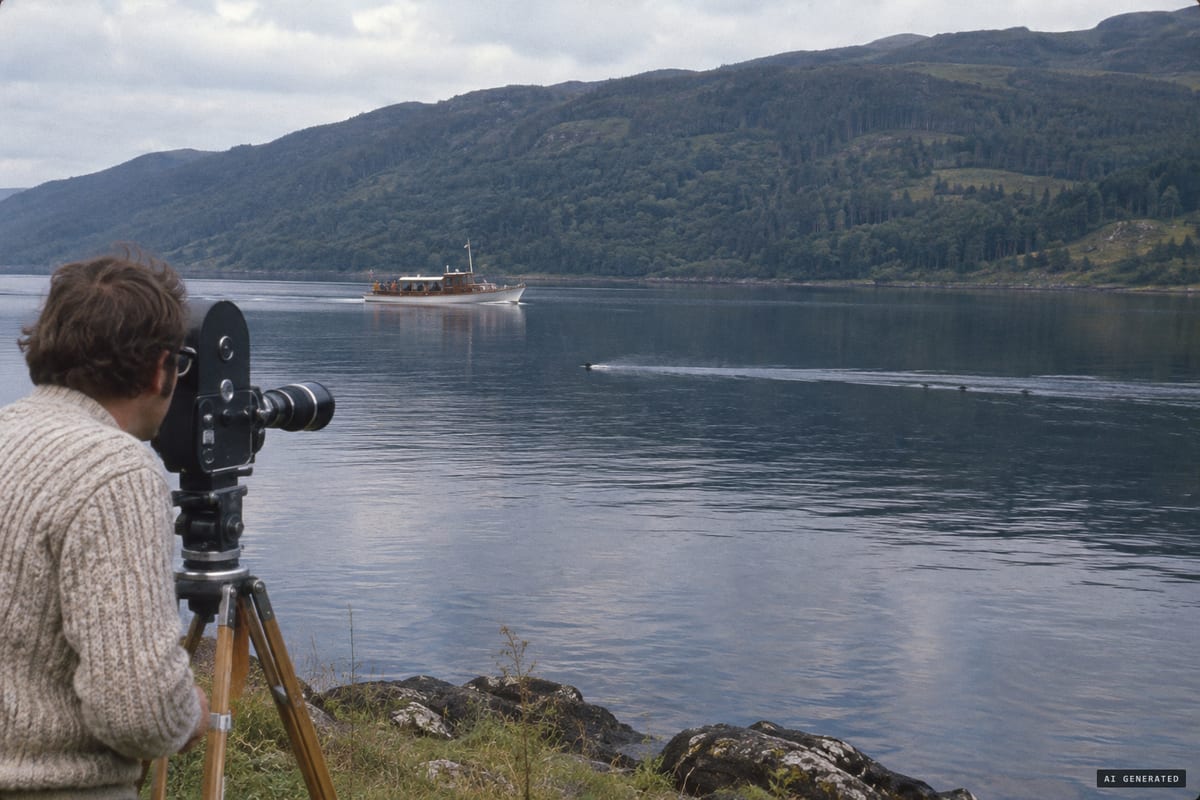 Dick Raynor's Dores Bay Film, Loch Ness
13 June 1967. Dores Bay, at the northern end of Loch Ness. Dick Raynor, a volunteer camera operator with the Loch Ness Investigation Bureau, watched the calm water. Then a clear wash appeared. A wake, moving across the bay about a mile from his lens. He kept filming. The tour boat Scot II passed through the frame. By Raynor's account, its passengers sat too low to the water to see it.
-
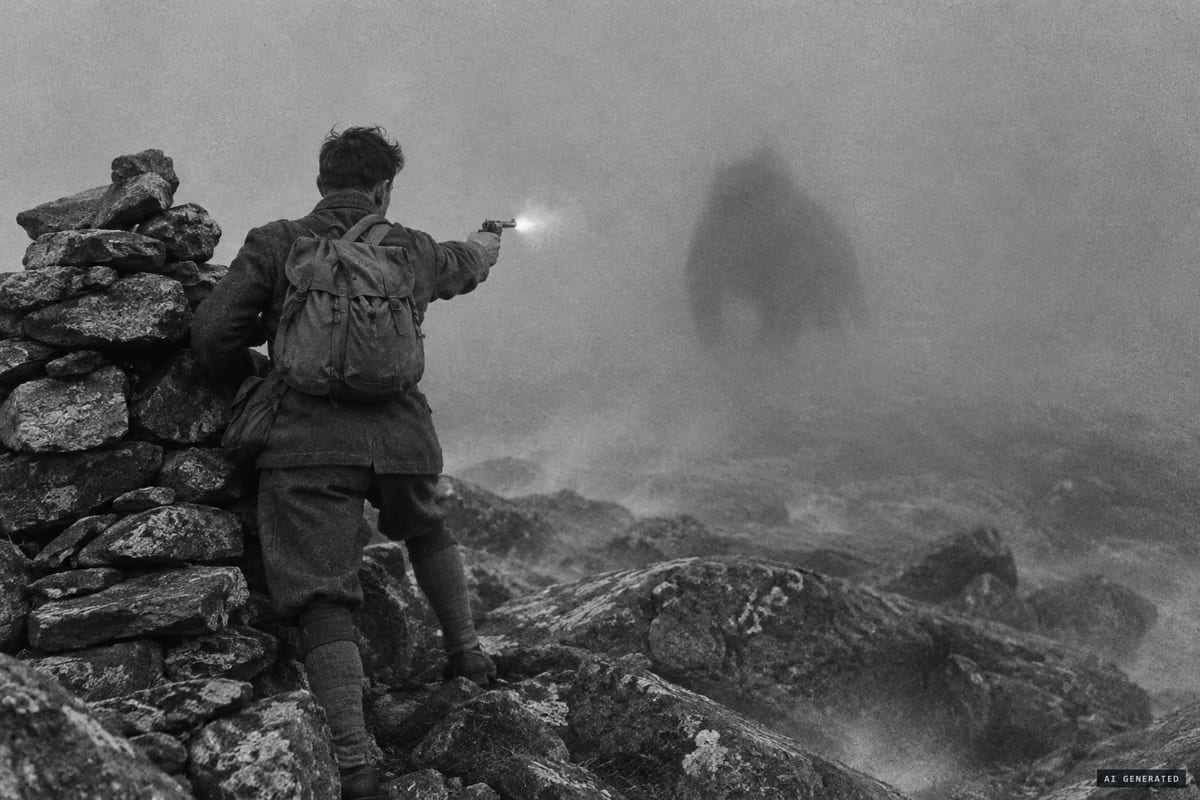 Alexander Tewnion Fires Three Shots at the Big Grey Man of Ben Macdui
October 1943. Alexander Tewnion, a naturalist and mountaineer, was climbing alone in the Cairngorms on a ten day leave. He carried a revolver to shoot hares or ptarmigan. At the summit cairn of Ben Macdui, mist swirled in from the Lairig Ghru. The air turned dark and oppressive. A bitter wind moved among the boulders.
-
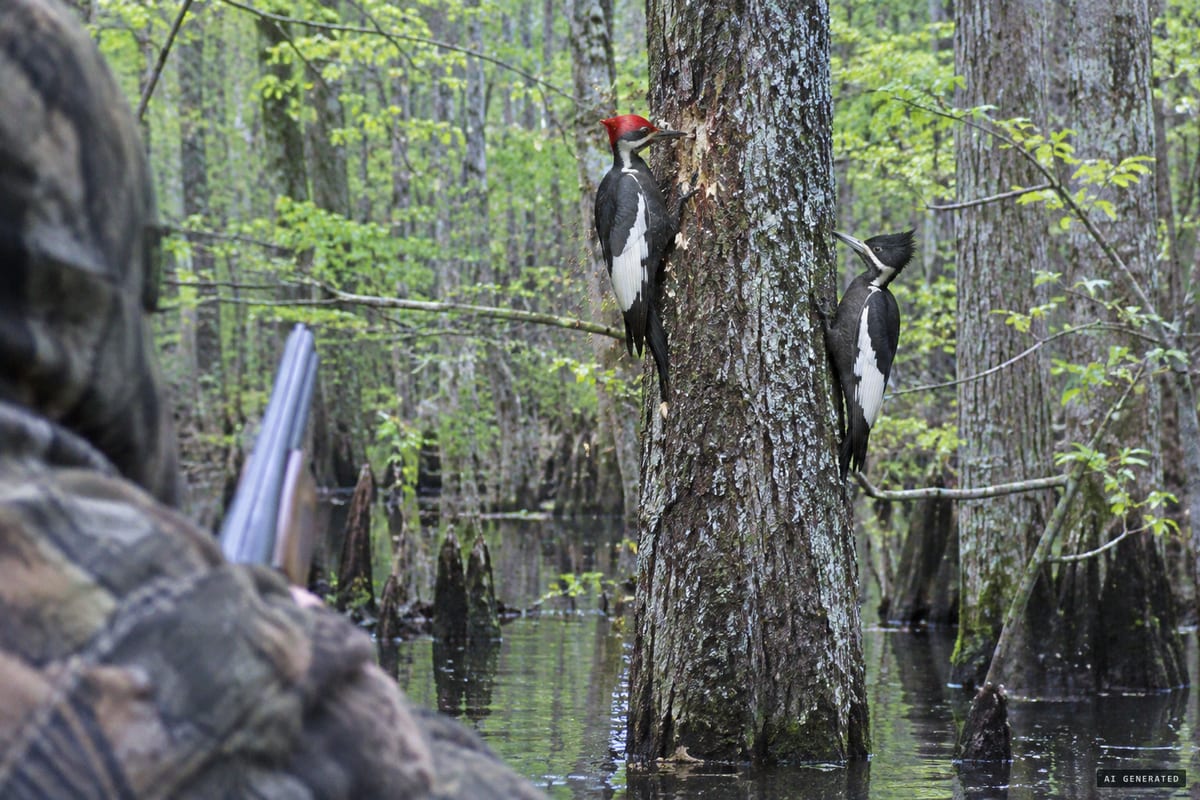 David Kulivan's Ivory-billed Woodpecker Sighting, Pearl River WMA, Louisiana (1999)
April 1, 1999. Pearl River Wildlife Management Area, Louisiana. David Kulivan, an LSU student, sat in camouflage at the base of a tree, waiting for a gobbler. Two large woodpeckers landed on a water oak about 25 yards away. A pair. One with a red crest, one with a black crest. White on the wings. White bills.
-
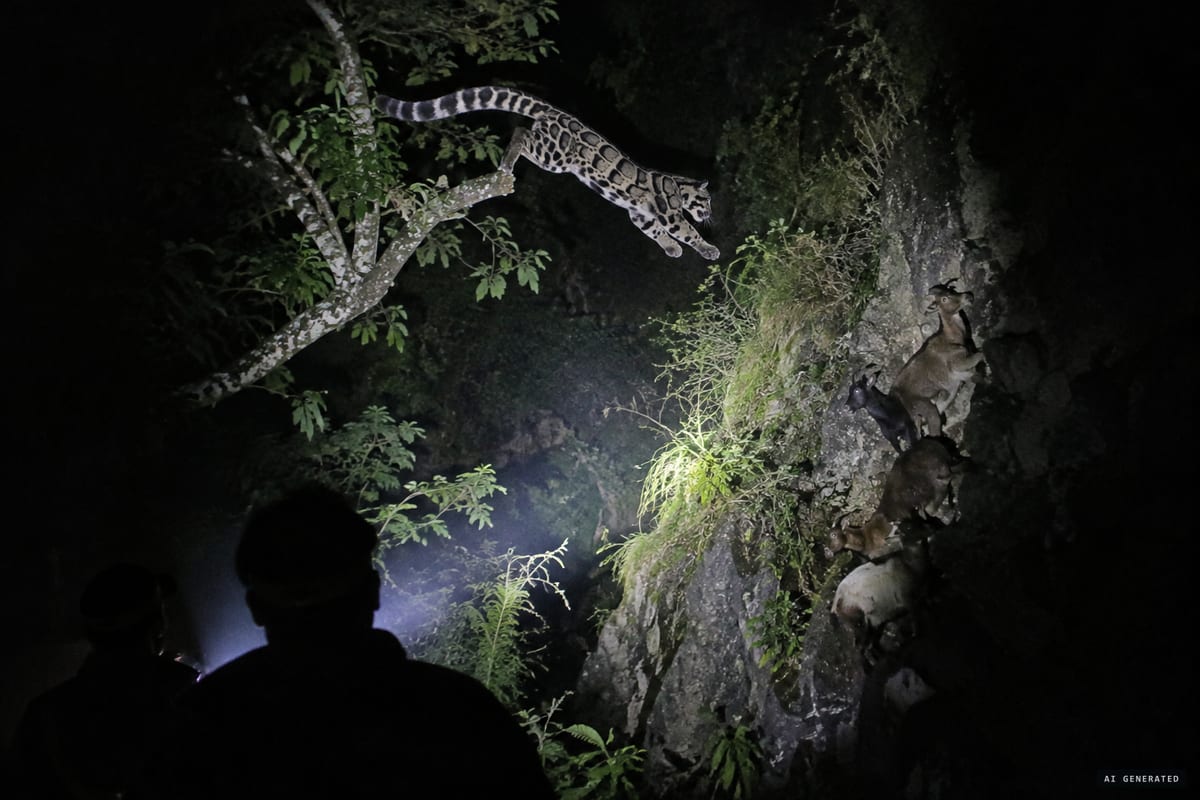 Formosan clouded leopard sightings by the Alangyi village rangers
Taitung County, south-eastern Taiwan. Rangers from Alangyi village patrol the forested mountains above the old coastal trail, watching for loggers. Then they see something that is not supposed to exist.
-
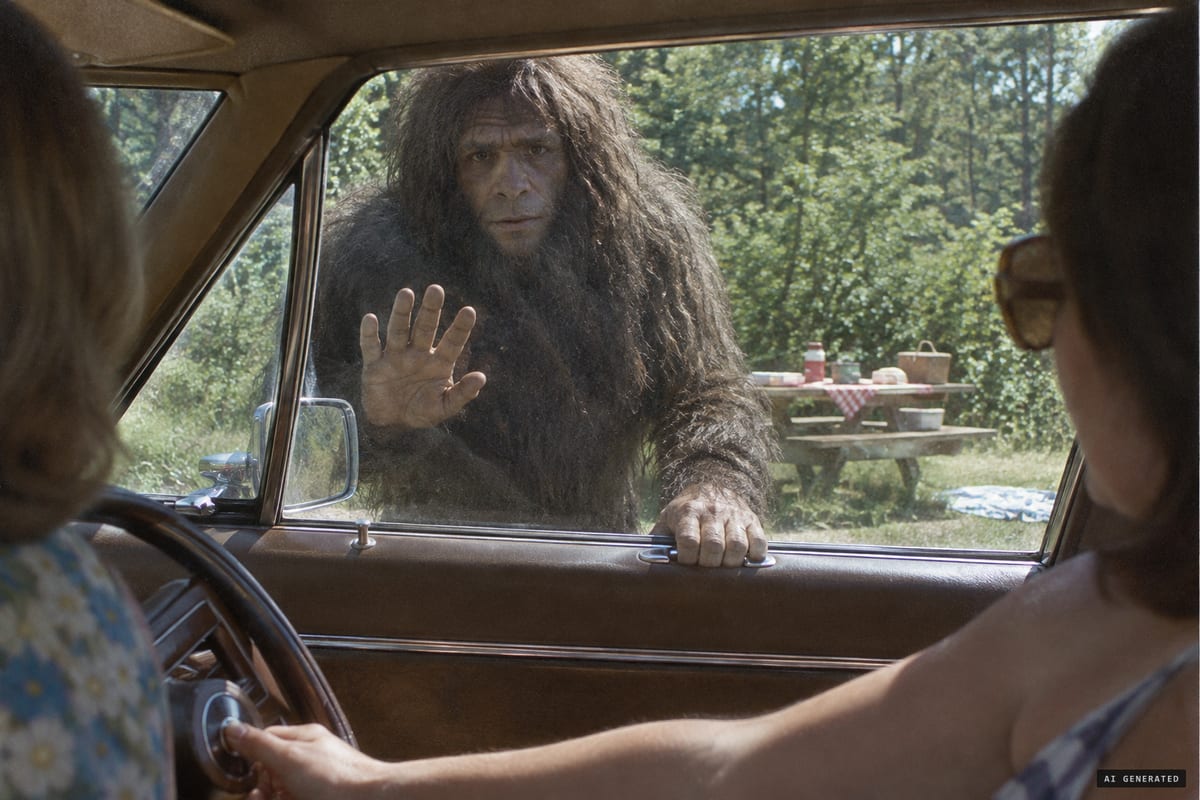 The first Momo report: Joan Mills and Mary Ryan's roadside picnic encounter, Pike County, Missouri (1971)
July 1971. Two women from St. Louis, Joan Mills and Mary Ryan, stopped off Highway 79 near Louisiana, Missouri, for a picnic lunch. First came the smell. The most horrible odor anyone could imagine. Then a figure in the thicket. Half-ape and half-man, hair over its body, hairless hands, and a face Mary Ryan called definitely human. It made a gurgling sound. It shambled toward them.
-
 The Loveland Frogman Returns: the Pokémon Go Sighting at Lake Isabella
August 2016. A Wednesday night at Lake Isabella, near Loveland, Ohio. Sam Jacobs and his girlfriend were playing Pokémon Go near the water. Then they saw something that was not in the game. A huge frog. Jacobs took a couple of pictures and a short video. Then the thing stood up and walked on its hind legs.
-
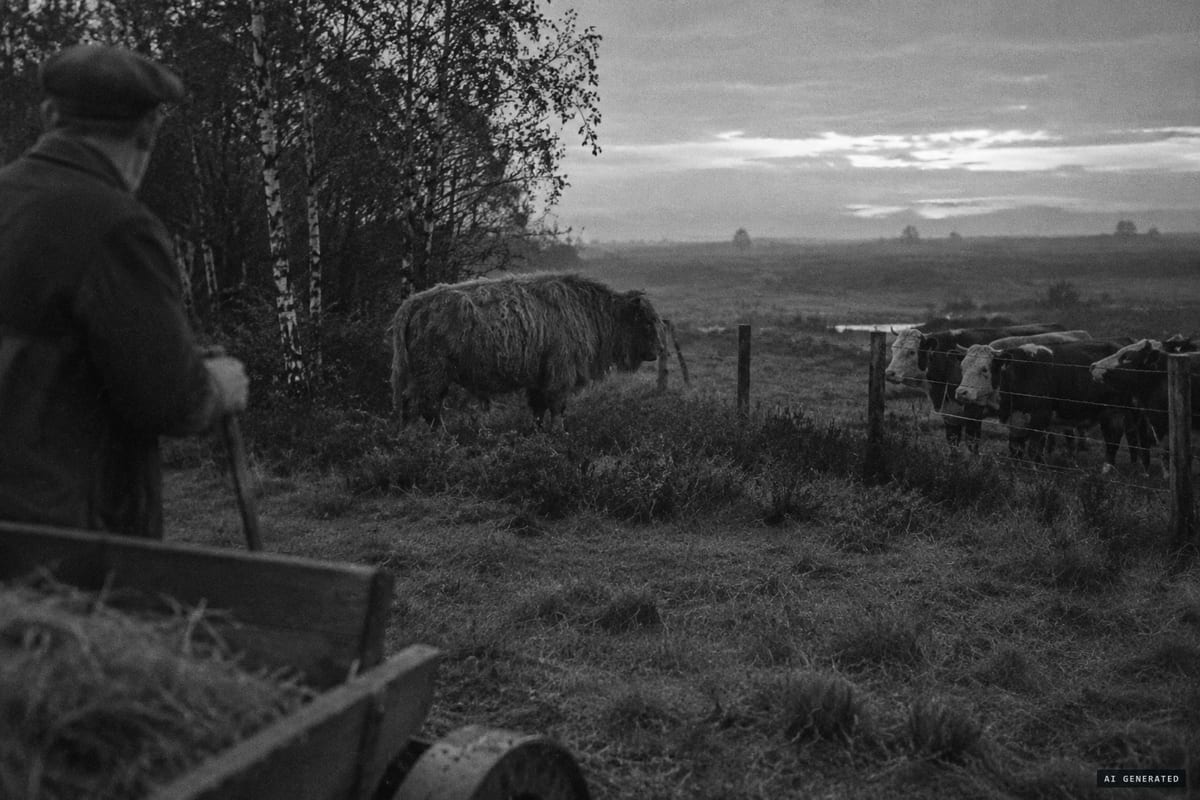 The Lichtenmoor Strangler (Würger vom Lichtenmoor)
Winter 1947/48. Lower Saxony, in the British zone of occupation. Around the Lichtenmoor, something was killing. Wild animals first. Then, from May 1948, cattle and sheep, almost every night. Villagers spoke of a grey, large, shaggy animal. Some said a dog. Some said a tiger. Herders would not go to the pastures alone, even by day.
-
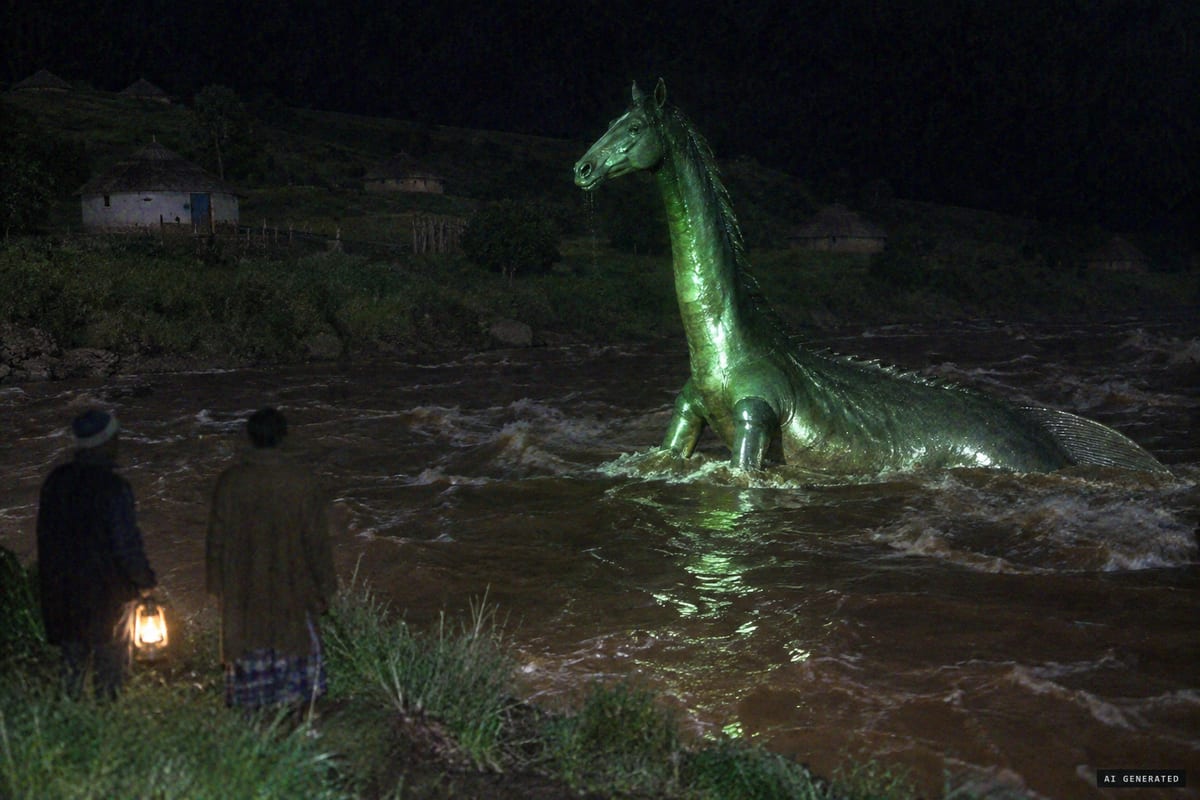 The Mamlambo deaths and giant reptile sightings, Mzintlava River, Mount Ayliff, 1997
Early 1997. The Mzintlava River near Mount Ayliff, in the Eastern Cape, was running high with summer rain. People were dying in it. Villagers said they knew why. Something lived in the water.
-
 The Payette Lake monster ("Slimy Slim", later "Sharlie"): Dr. G. A. Taylor and about twenty witnesses, 1946
September 1946. Payette Lake, McCall, Idaho. A group of about twenty people looked out across the water and saw something long moving through it. Dr. G. A. Taylor of Nampa gave the description. The creature appeared to be between 30 and 40 feet long. It seemed to keep diving into the water. And it left a wake "about like a small motor boat would make."
-
 Saint Olaf and the Sea Serpent of Syltefjellet
Norddalsfjorden. The winter of 1028/1029. King Olav Haraldsson is in flight from Norway, his ships sailing up the Storfjord. Then, the tradition says, a monstrous creature rose from the depths. A sea serpent. It attacked his ships.
-
 The Devil of Leeds, Burlington County, 1887
October 1887. A short column ran in The Sun of New York. Somewhere in Burlington County, New Jersey, a man had encountered something he could not name. Whenever he went near it, it gave a most unearthly yell that frightened the dogs. It whipped at every dog on the place.
-
 The Durango & Silverton Railroad Bigfoot Video
October 8, 2023. A Sunday afternoon in the San Juan Mountains. Shannon and Stetson Parker, a Wyoming couple celebrating their 10th wedding anniversary, were riding the Durango & Silverton Narrow Gauge Railroad out of Silverton. They were looking for elk. Stetson saw something moving on the mountainside instead.
-
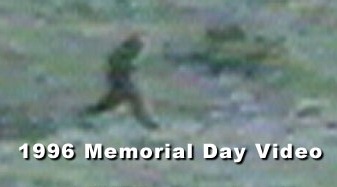 The Memorial Day Bigfoot Footage, Chopaka Lake (1996)
Sunday, 26 May 1996. Memorial Day weekend at Chopaka Lake, in north-central Washington. A woman in a camping party was pointing out a spot on the hillside. Then a dark, hair-covered figure stood up behind a bush, about 75 yards away. It stared at the group. It ran for the woods.
-
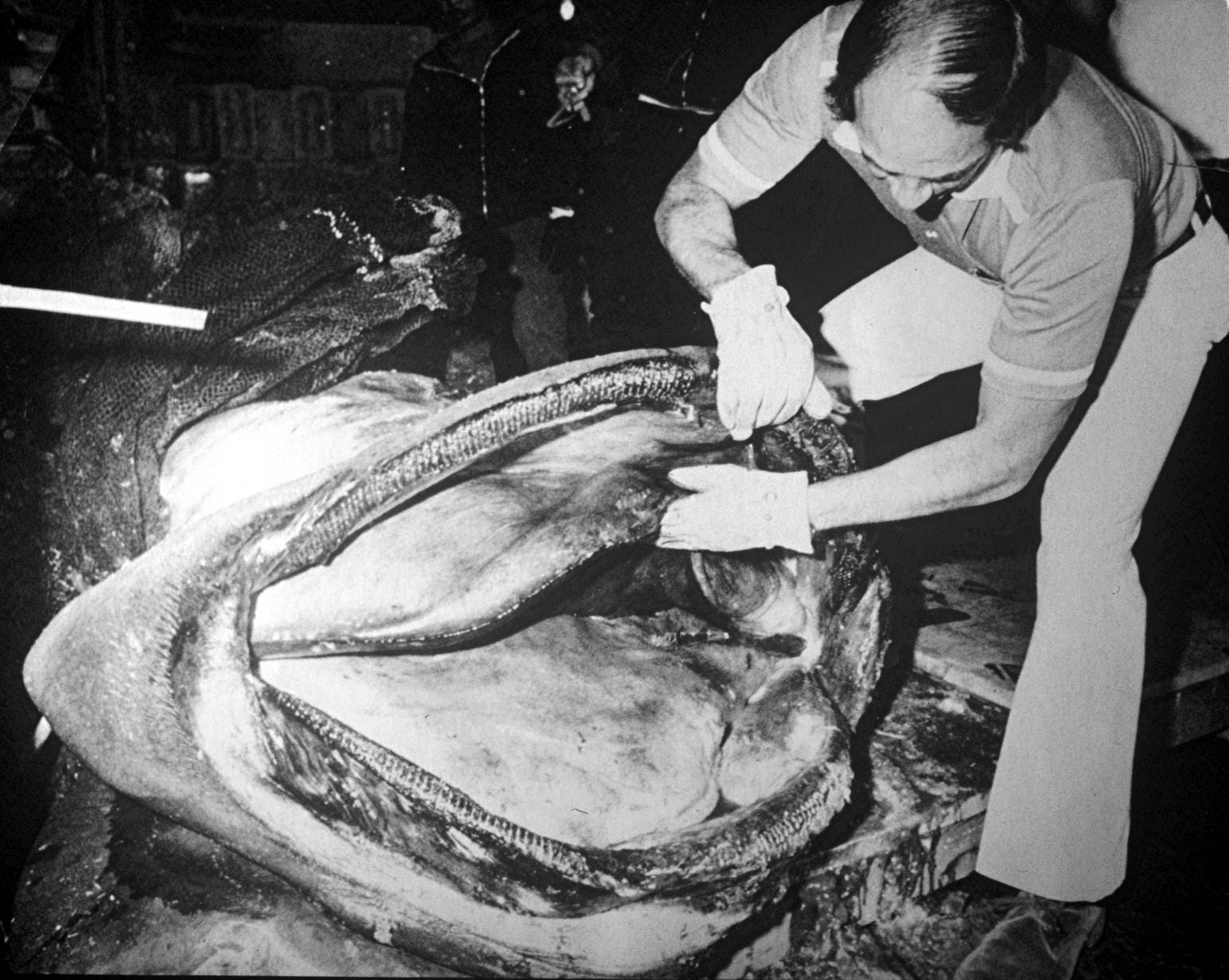 The First Megamouth Shark, Caught by US Navy Vessel AFB-14 off Kahuku Point, Oʻahu
November 15, 1976. Northeast of Kahuku Point, Oʻahu. A US Navy vessel called AFB-14 began winching up its sea anchors. Two large parachutes had held the ship in place above water approximately 4600 m deep. One of them was not empty.
-
 The Black Dog of West Peak, Hanging Hills
A spring day in the Hanging Hills of Meriden, Connecticut. A young geologist drives out to West Peak to collect lava samples. A black dog joins him. It follows his wagon all day. It never barks aloud. It raises no dust. At dusk it looks back once and quietly vanishes into the woods.
-
 The Redwoods Video: A TV Crew's RV Headlights Catch a Bigfoot in Jedediah Smith Redwoods State Park
August 28, 1995. The last day of filming. A TV crew in an RV pulled onto a small side road in Jedediah Smith Redwoods State Park, California, to take in the scenery. Dusk. Misty rain. Then a shadowy movement at the edge of the headlights.
-
 The Rome Panther (pantera di Roma)
Rome. The small hours of December 27, 1989. Tiziano Virivè, 18, was driving on the city's north-eastern edge, where Via Nomentana meets the Grande Raccordo Anulare. His sister sat beside him. In front of the car, a large black animal crossed the road and slipped into the scrub. A panther, he whispered.
-
 The Red Ghost of Arizona
Spring 1883. Eagle Creek, Arizona Territory. The men have ridden out, and two women and the children are alone at an adobe sheep-ranch house. One woman walks to the spring for water. The dog barks. The other woman looks out and sees something red, enormous, and ridden by a devil.
-
 The Lepage and Gapelle Brontosaurus of the Belgian Congo
October 1919. Somewhere in the Belgian Congo. A railway man named Lepage was out hunting when he came upon an extraordinary monster. It charged. Lepage fired, then ran, with the creature behind him. When it gave up the chase, Lepage studied it through binoculars. A scaly hump. A pointed snout. A short horn on the nose. Within weeks, a Belgian hunter named Gapelle was reported to have followed a strange spoor for twelve miles and fired at a similar beast in a swamp.
-
 Private Ogi's devil-pigs and the cloven tracks of Mount Albert Edward
May 10, 1906. Papua. A day earlier, an expedition bound for Mount Albert Edward had found a track. Now two men went ahead to investigate it. They became separated. Searching for his companion, Private Ogi came upon two animals grazing nearby. Dark. Patterned. Vaguely pig-like, with long snouts, cloven feet and tails like a horse. He took them for demons in porcine guise. He raised his rifle.
-
 Zhuo Yongsheng films six Lake Tianchi Monsters
Dawn, 6 September 2007. Zhuo Yongsheng stood on the south slope of Changbai Mountain, filming the sunrise over Tianchi, the crater lake on the border between China and North Korea. Beside him, a tour guide noticed something odd. There was an extra rock in the lake.
-
 Gambo, the Beaked Beast of Bungalow Beach
Kotu, The Gambia. 12 June 1983. At about 8:30 in the morning, 15-year-old Owen Burnham walked onto Bungalow Beach with a brother, a sister and their father. Two local men were trying to cut the head off something enormous that had washed up in the night.
-
 Hjörtur Kjerúlf's Lagarfljót Worm video
February 2, 2012. A winter morning in East Iceland. At the farm of Hrafnkelsstaðir, Hjörtur Eiríksson Kjerúlf was drinking his coffee when he noticed something moving in the river. Something long and very slender. It was still there when he finished his cup. So he picked up his camera.
-
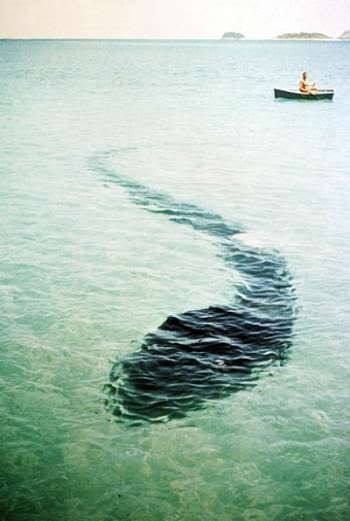 The Hook Island Sea Monster Photographs
December 12, 1964. Stonehaven Bay, Hook Island, in Queensland's Whitsunday Islands. Robert Le Serrec's wife looked down from the boat and saw a strange object on the floor of the lagoon. The shape of a giant tadpole. Smooth. Finless. Perfectly still.
-
 The Myakka Skunk Ape Photographs
December 2000. A plain package arrived at the Sarasota County Sheriff's Office. Inside were two colour flash photographs and a typewritten letter. The writer described herself as a grandmother. Something had been coming to her back porch at night, near the Myakka River, to take her apples. She raised a camera. "It froze as soon as the flash went off."
-
 Brian Canfield's Batsquatch Encounter near Lake Kapowsin
Mid-April 1994. Night in the foothills of Mount Rainier. Eighteen-year-old Brian Canfield was driving his pickup home to Camp One, above Lake Kapowsin. Then the engine died. The dashboard went dark.
-
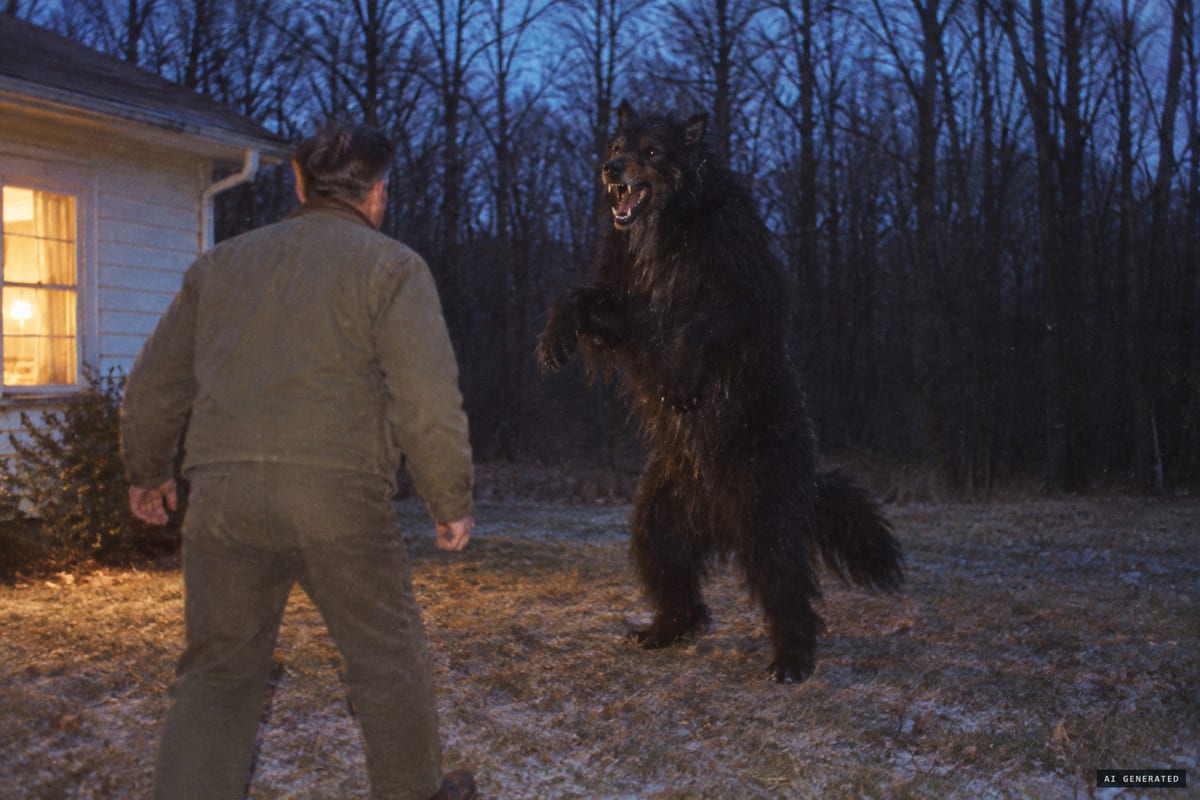 The Dwayyo Attack on "John Becker" near Gambrill State Park
November 1965. A Saturday evening near the woods of Gambrill State Park, outside Frederick, Maryland. A man heard a strange noise in his yard and went to look. Something was moving toward him. It was as big as a bear, with long black hair and a bushy tail, and it growled like a wolf or a dog in anger. Then it rose onto its hind legs and attacked. He fought it until it ran into the woods.
-
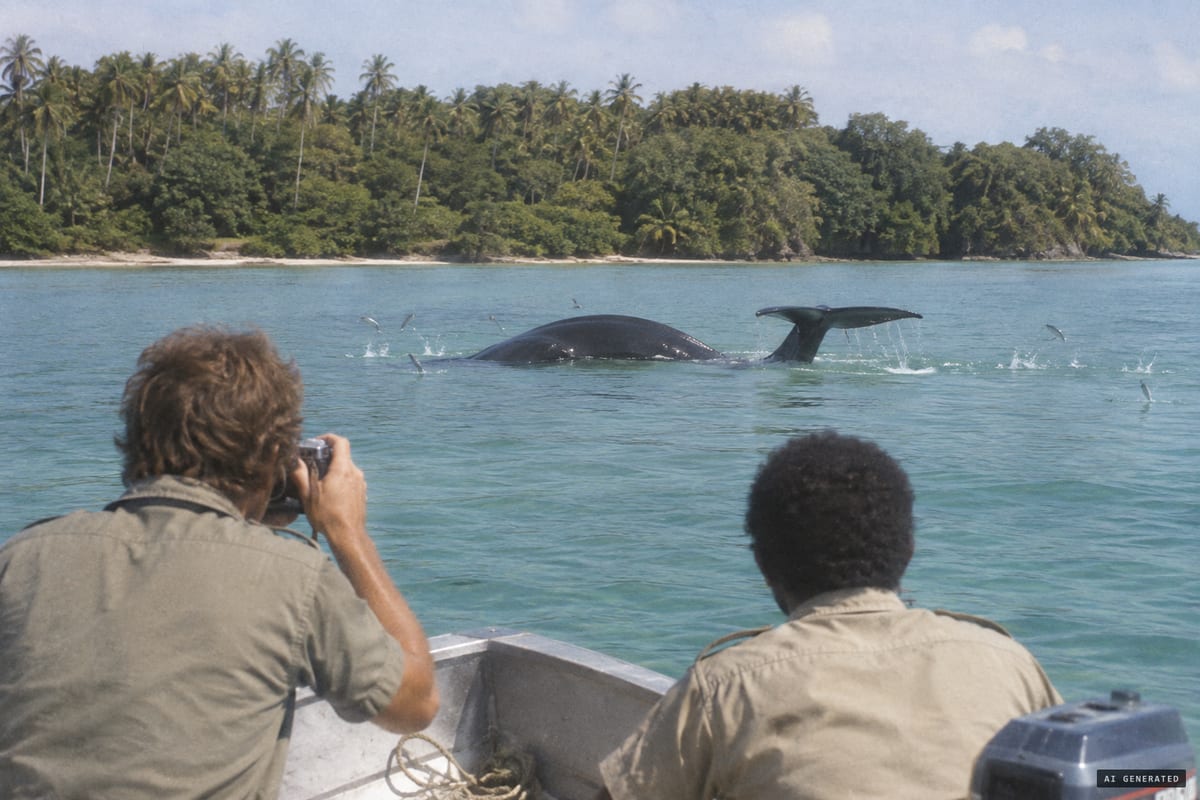 The Ri of Elizabeth Bay: Roy Wagner and Richard Greenwell's Mermaid Sighting, New Ireland, 1983
July 5, 1983. Elizabeth Bay, on the south-eastern coast of New Ireland, Papua New Guinea. The villagers called the place Nokon. They said they spotted the ri almost every day.
-
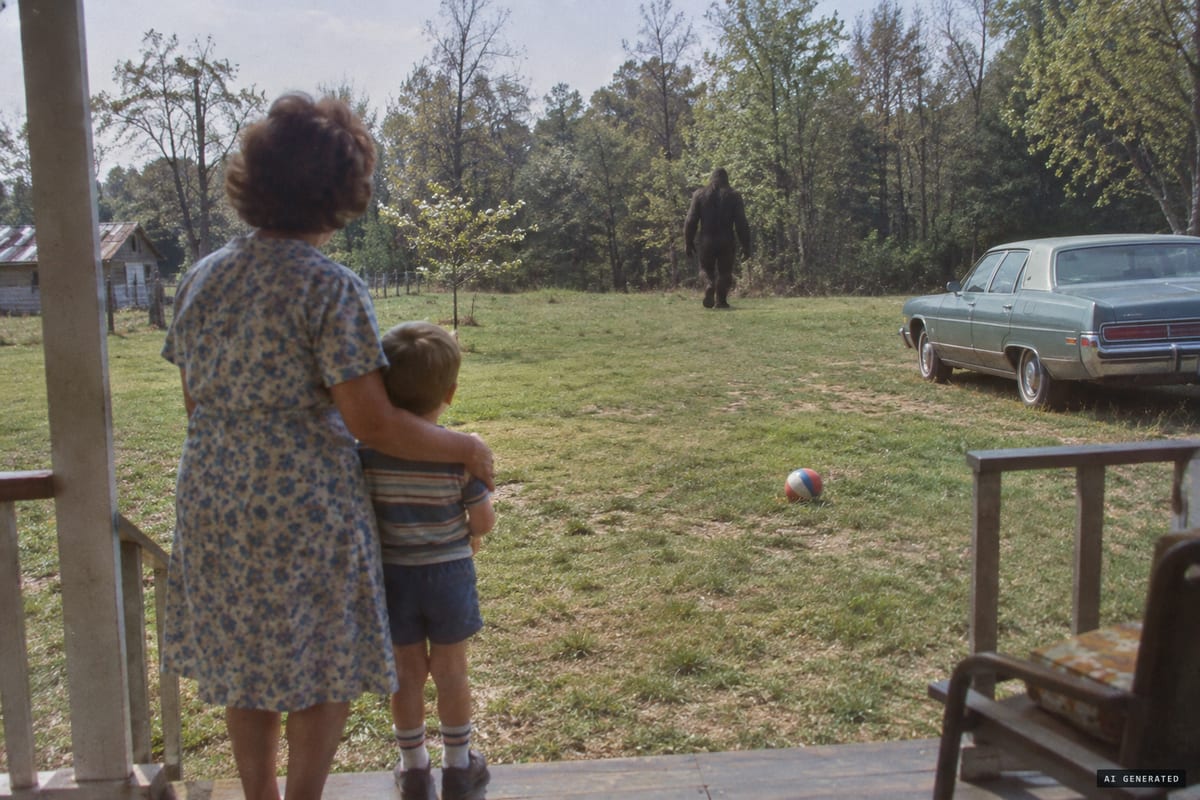 The Flintville Monster
April 26, 1976. Flintville, Tennessee. Four-year-old Gary Robertson screamed in his own yard. His mother Jennie ran outside into a smell like dead rats. Then she saw it. A huge, apelike figure bounding across the yard toward the house. It was 7 or 8 feet tall and covered in hair. Its long arms reached for her son and came within a few inches of him.
-
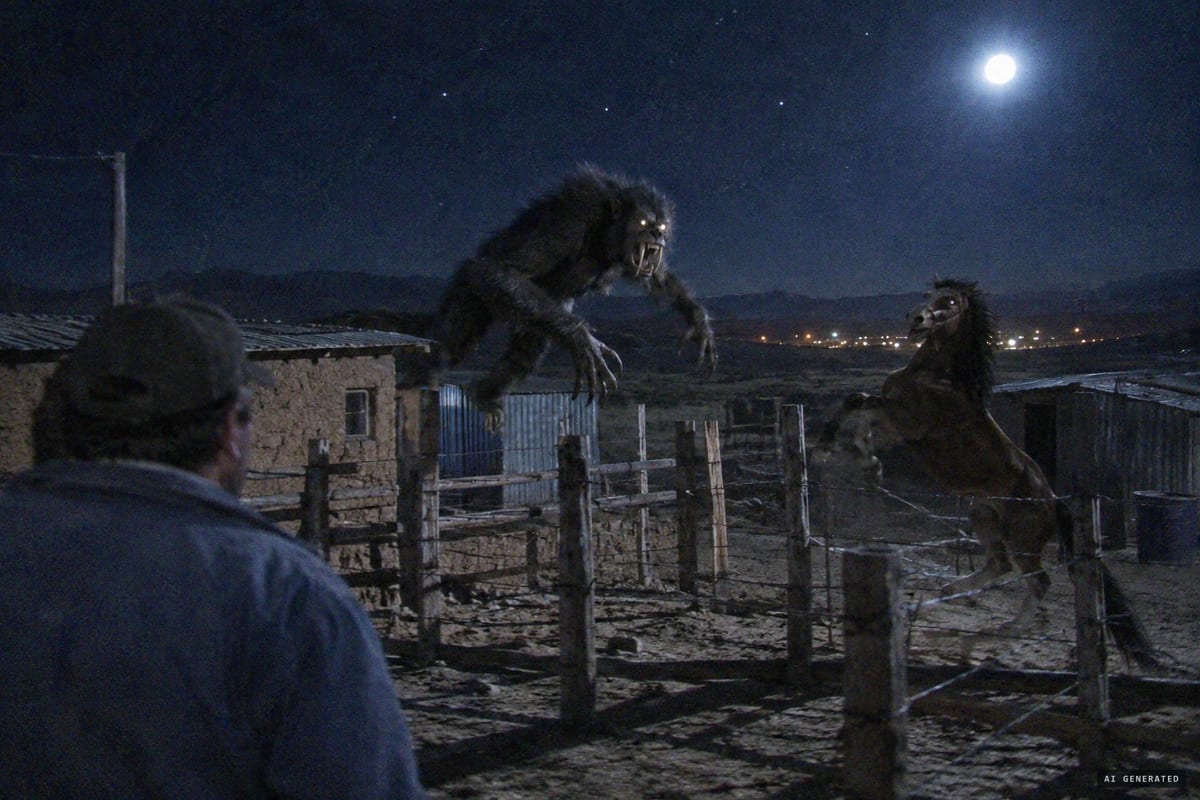 The Calama chupacabras wave, Chile 2000
Early April 2000. On the edges of Calama, in northern Chile, 78-year-old Pedro Villegas walks into his corral. There are dead animals everywhere. Within weeks the count runs past a hundred. Sheep, goats, chickens, rabbits. Two punctures at the neck. Owners say the carcasses are bloodless.
-
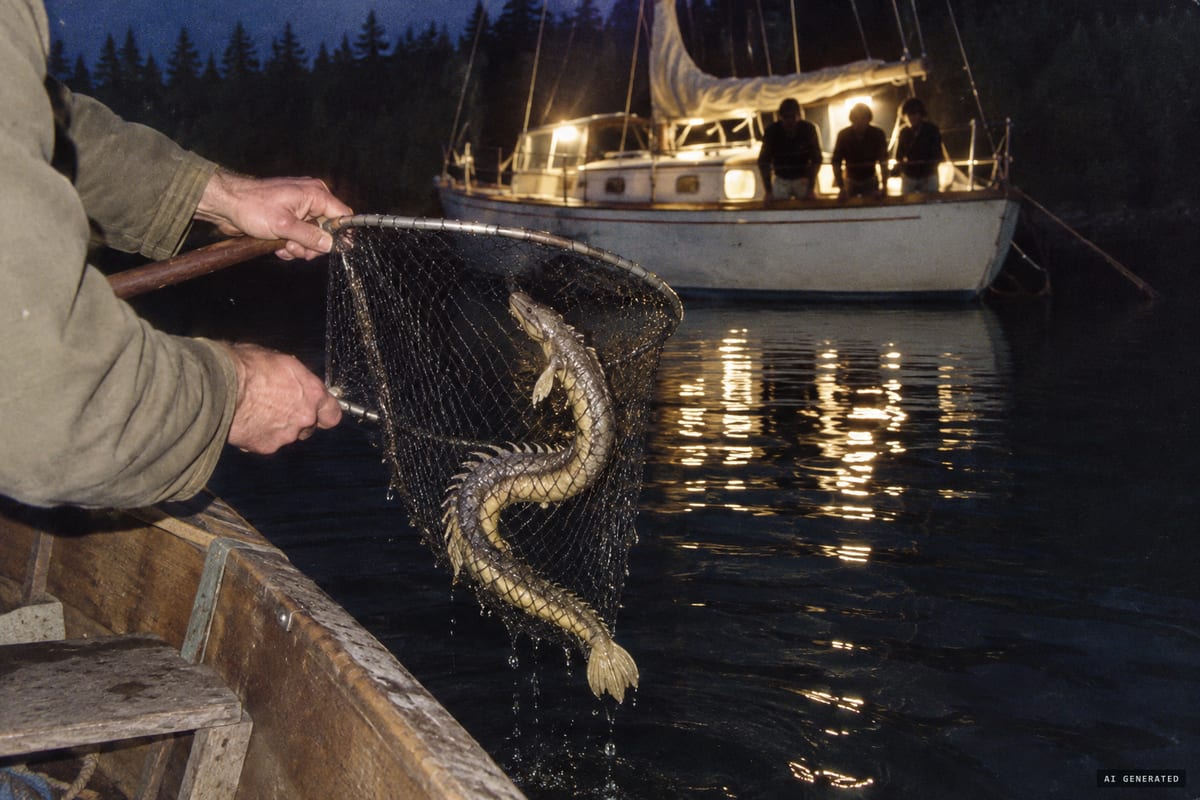 Capt. William Hagelund's baby Cadborosaurus, Pirates Cove
August 1968. Night in Pirates Cove, on De Courcy Island in British Columbia. A family sloop lay at anchor. Aboard were Capt. William Hagelund, his two sons and their grandfather. Something small was swimming at the surface.
-
 Ken Chaplin's Ogopogo Video at Bear Creek, Okanagan Lake
July 18, 1989. Okanagan Lake, British Columbia. Clem Chaplin, 78, led his son Ken to a spot near Bear Creek where he thought he had seen something in the water. Ken brought a video camera. What he taped over the following days became one of the most debated pieces of footage in the long story of Ogopogo.
-
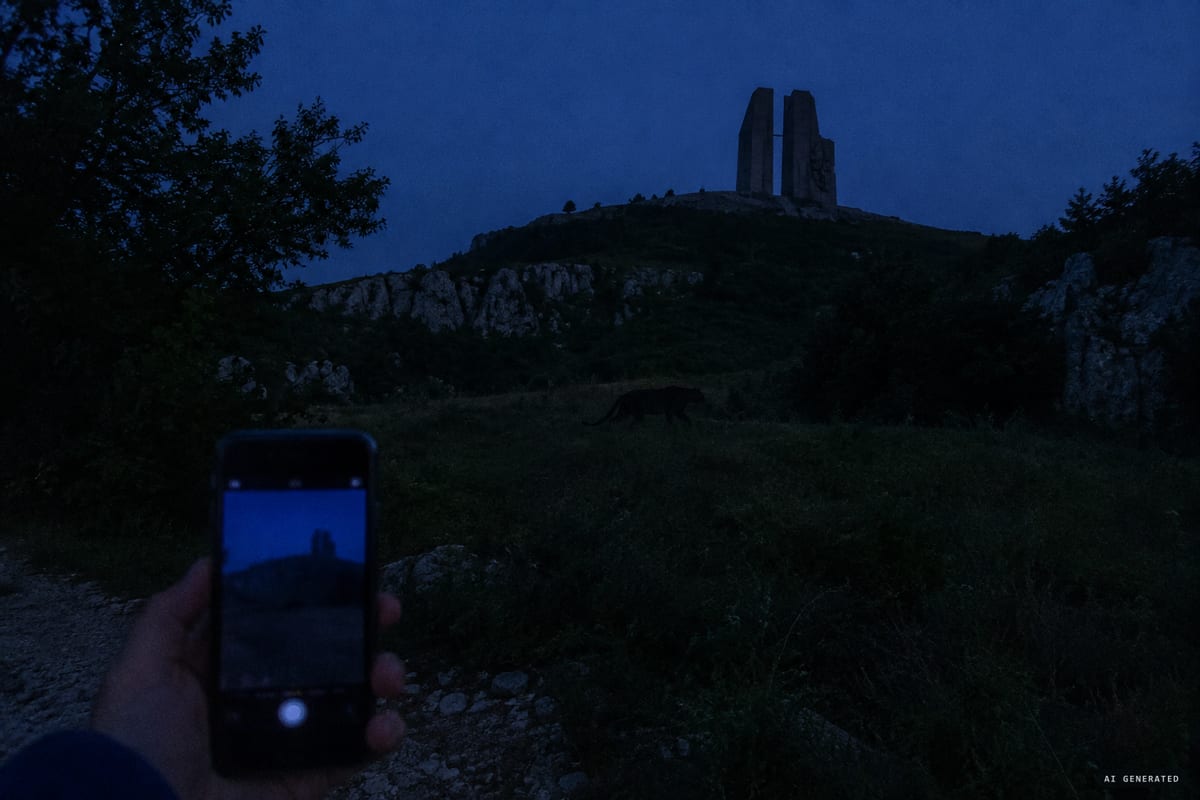 The Shumen black panther: a black leopard hunt on the Shumen Plateau
Thursday, 19 June 2025. Shortly after 10 pm. A man walking in the Shumen Plateau Nature Park, high above the city of Shumen in north-eastern Bulgaria, filmed something moving in the distance. A black silhouette. A long tail. He reported it.
-
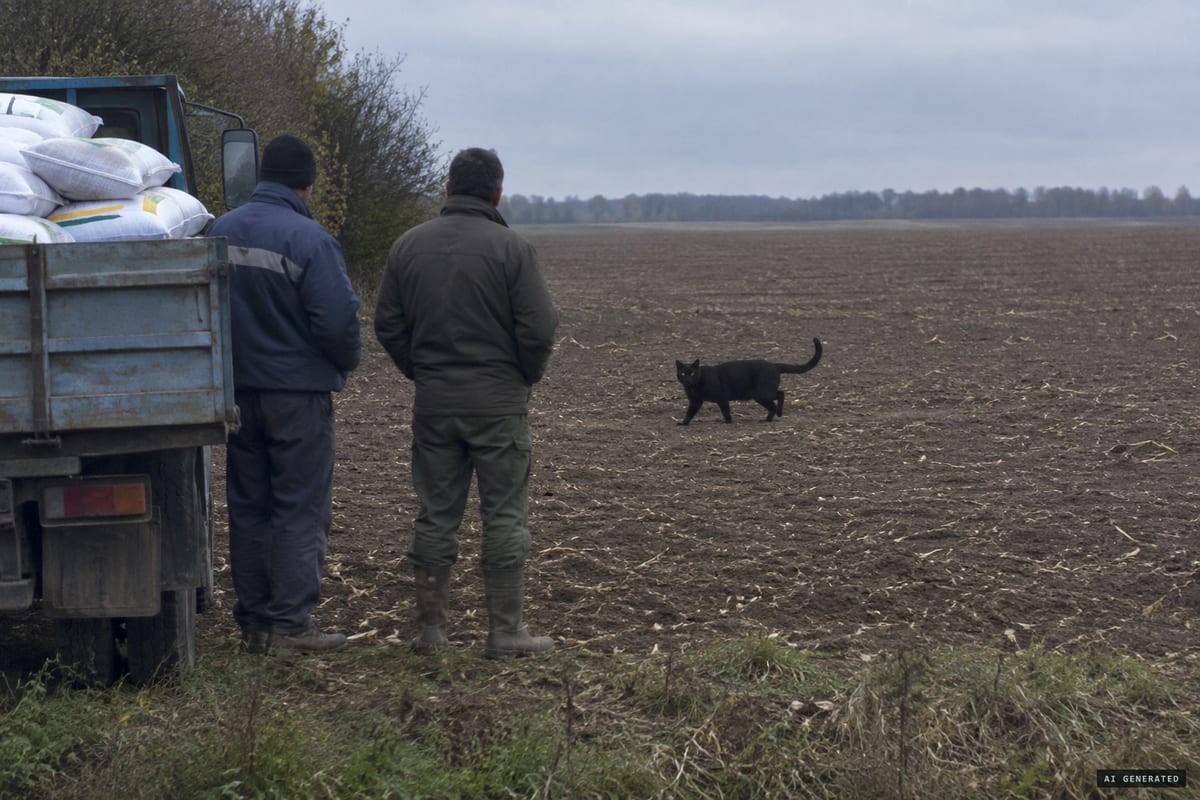 Apatin black panther: a large black cat in the fields of Vojvodina
October 30, 2022. A Sunday. Petar Sladić was sowing barley with a friend in the fields between Apatin, Sonta and Svilojevo, in western Bačka. Then something came out of the thicket. A large black cat with a long tail. It walked slowly to the middle of the field. It looked at them. Then it left.
-
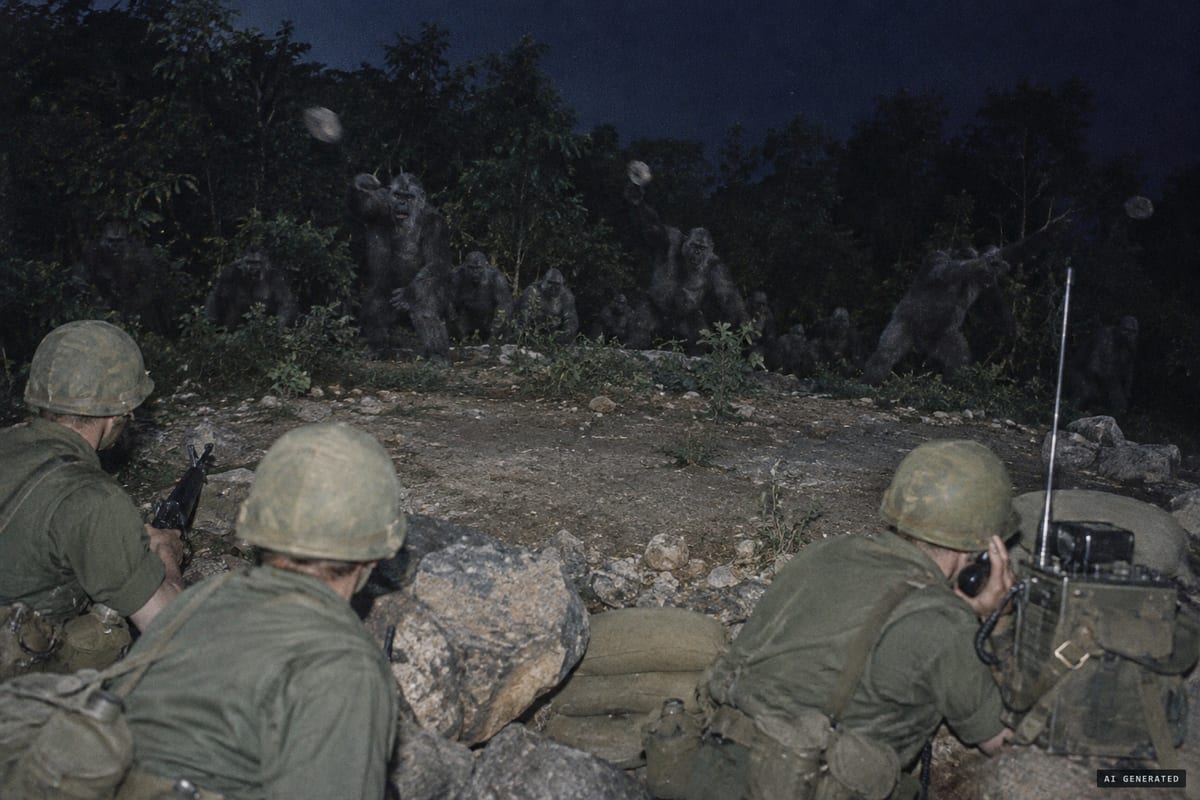 The Rock Apes of Hill 868: The Battle of Dong Den
Early 1966. Hill 868. Marines on the summit of Dong Den Mountain, west of Da Nang, heard movement in the foliage around them. They expected enemy soldiers. Then the radio crackled with something else. "We have a large number of apes all around us."
-
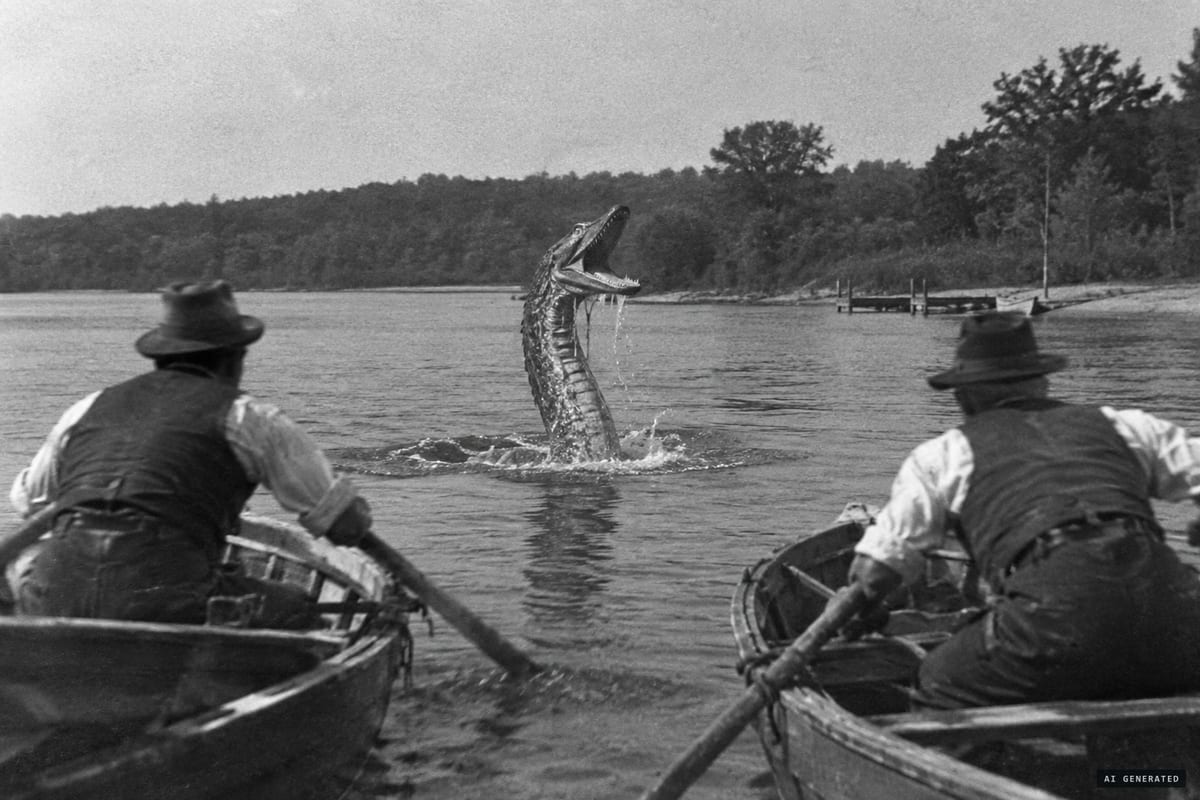 The Rock Lake Serpent, the "Rock Lake Terror" of Lake Mills, Wisconsin
Rock Lake, Lake Mills, Wisconsin. 1882. Ed McKenzie and D.W. Seybert were rowing two boats, racing each other to a sandbar. Ahead of them floated what looked like a log.
-
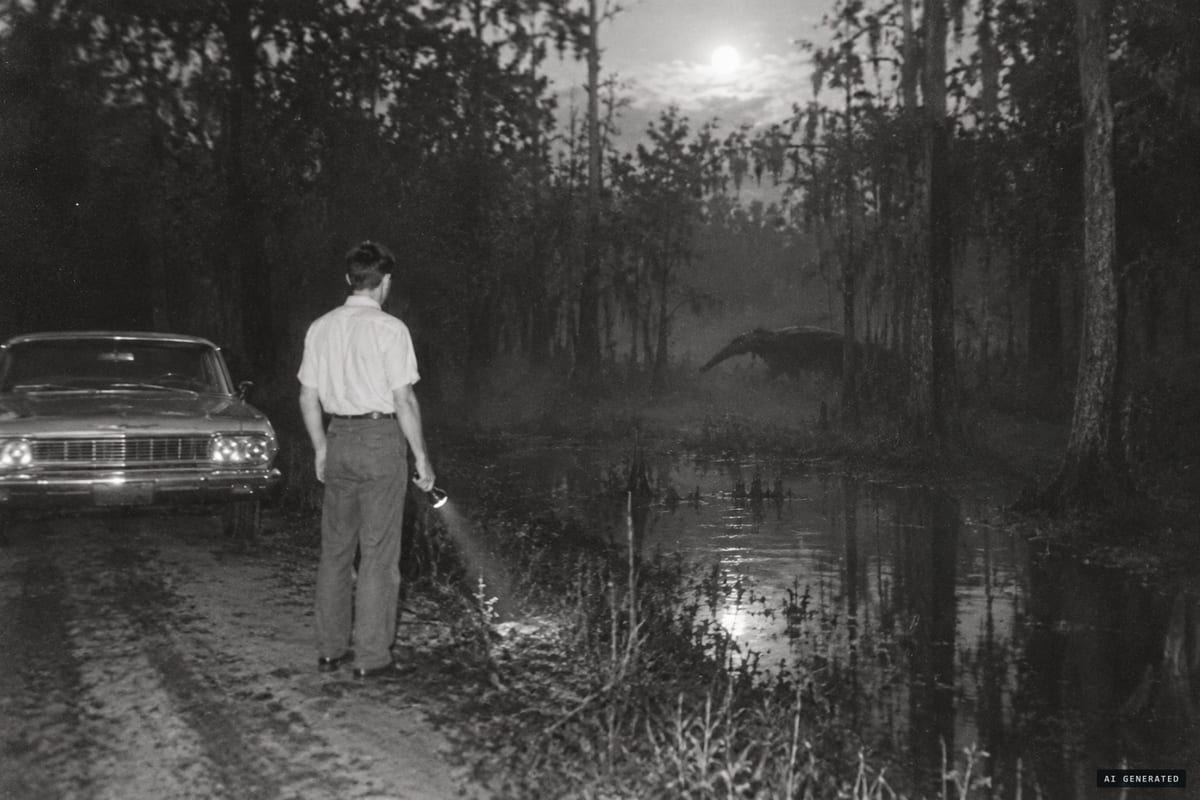 The First Tuttle Bottoms Monster Report
August 1963. Night in Tuttle Bottoms, a swampy stretch of wooded bottomland outside Harrisburg, Illinois. At about 11 p.m., Saline County Sheriff James L. Thompson came across a young man with a rifle. The youth had a warning. There was a monster loose in the bottoms.
-
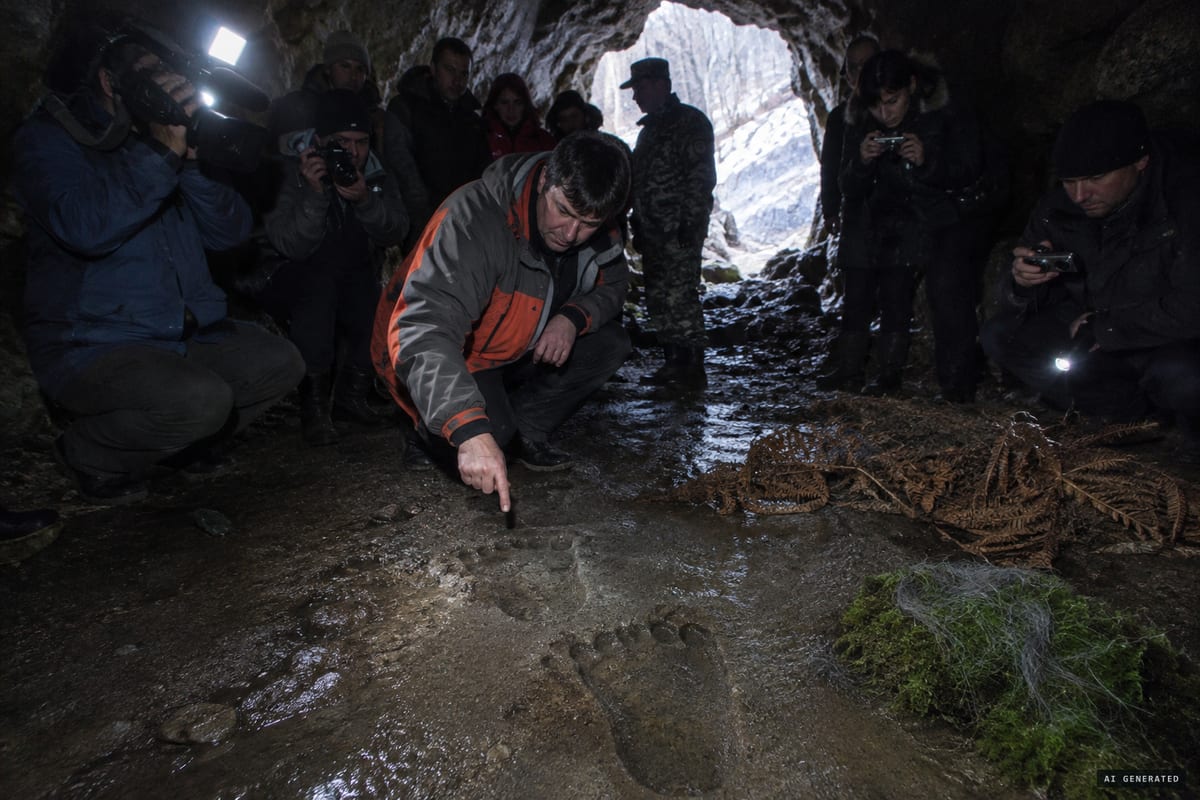 Azasskaya Cave Yeti Evidence, Kemerovo (2011)
October 2011. A party of researchers made their way into Azasskaya Cave in the Shoria Mountains of Siberia. The press came with them. On the floor, they said, were footprints. A bed of dried ferns. Grey hairs caught in a clump of moss.
-
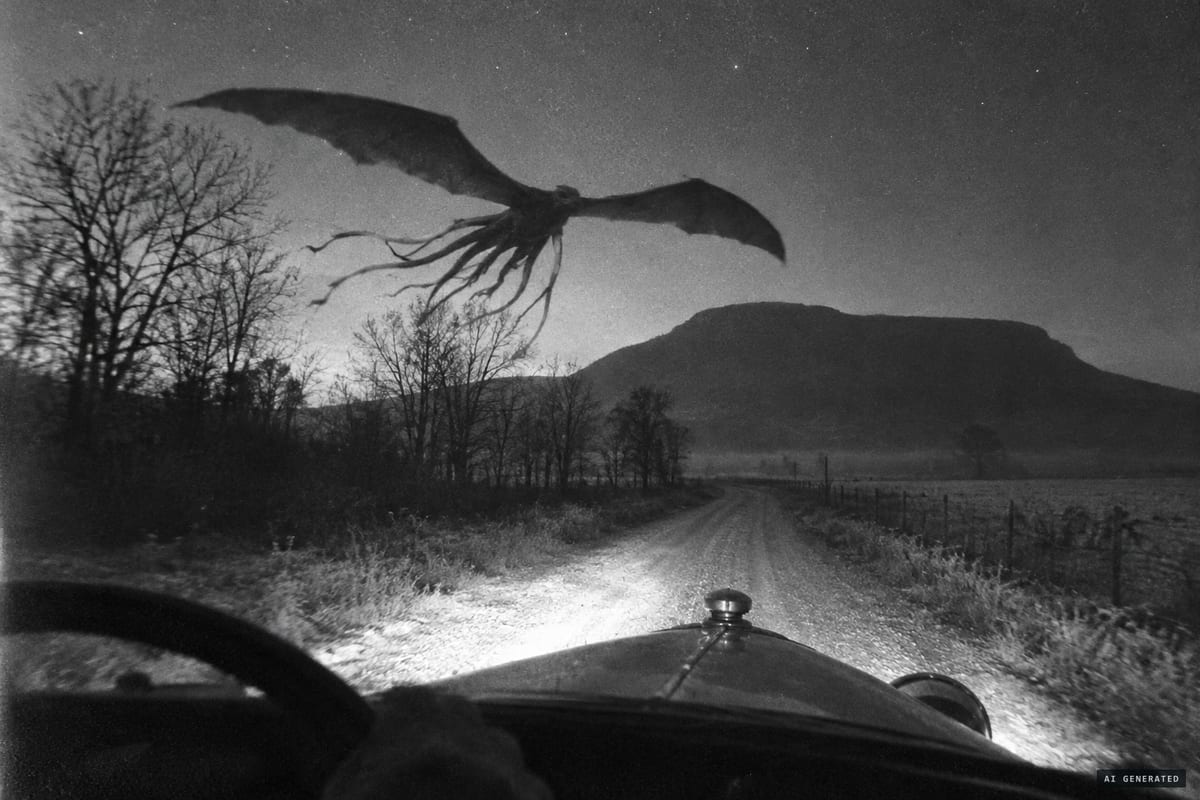 The 1932 Snallygaster Revival and the Frog Hollow Moonshine Still
Late 1932. Western Maryland. For two weeks, the Montgomery County Sentinel reported, some "two score" residents of Washington, Frederick and upper Montgomery counties had seen it. A winged monster with a spread of at least 30 feet. Tentacles reaching out "like some prehistoric inhabitant of the Miocene age." Then it was found asleep at Sugar Loaf. Snoring.
-
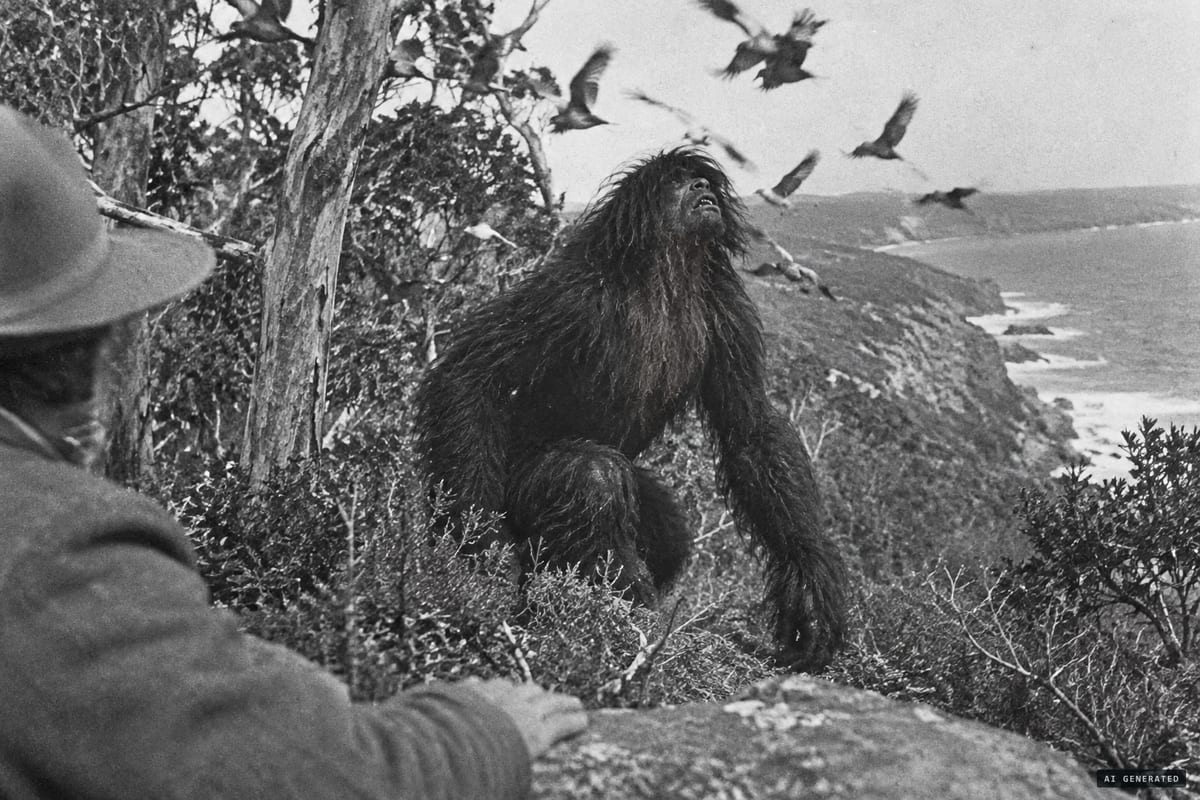 Henry James McCooey's "Australian Ape" between Batemans Bay and Ulladulla
December 1882. A letter reaches the Australian Town and Country Journal in Sydney. Its author, the naturalist Henry James McCooey, says that a few days earlier, on the coast between Bateman's Bay and Ulladulla, he looked down from above and saw something he called an Australian ape.
-
 The Blanco, Texas chupacabra carcass
Summer 2009. Something was loose in a barn in southeast Texas. The family heard it tearing things up and thought it was a rodent. They put out poison. The next morning they found the body.
-
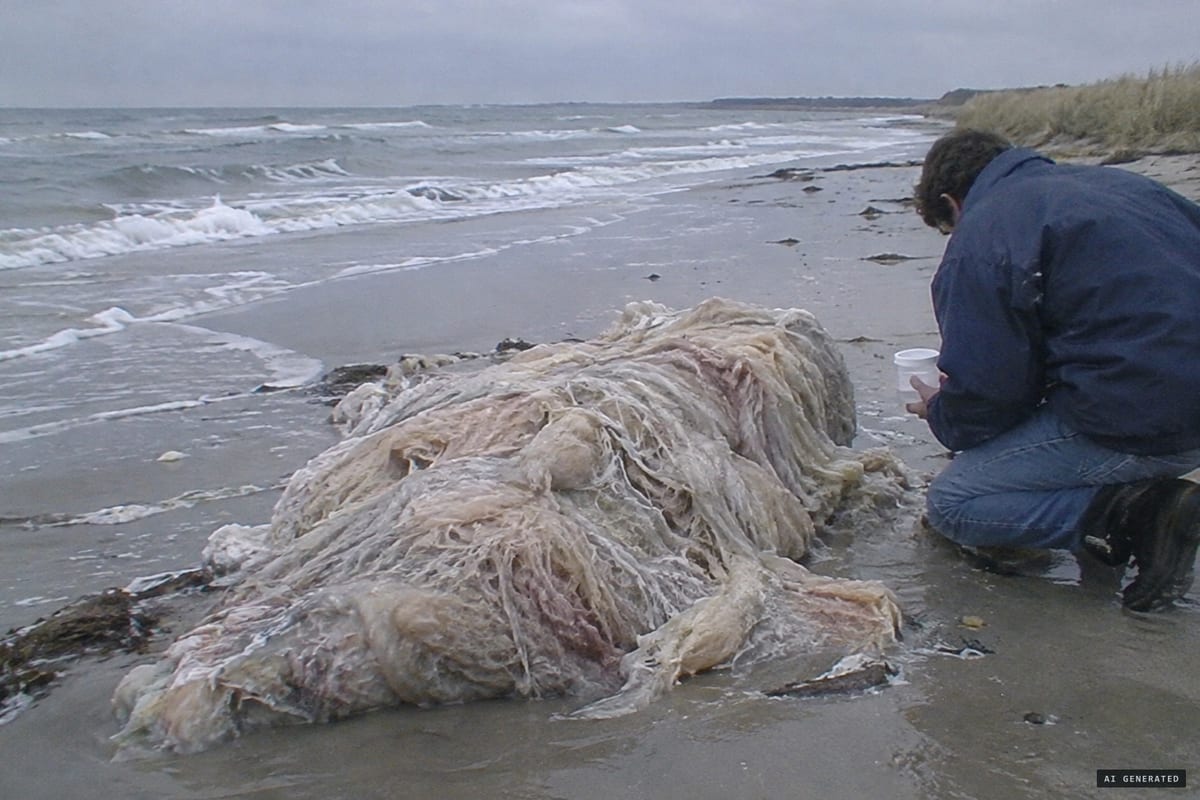 The Nantucket Blob
November 1996. Something washed onto Nantucket Island, Massachusetts. No surviving source records the day, the beach or what it looked like. What survives is a sample. Staff from the Nantucket Shellfish Warden's office collected it, froze it and sent it to Sidney K. Pierce's laboratory in Tampa.
-
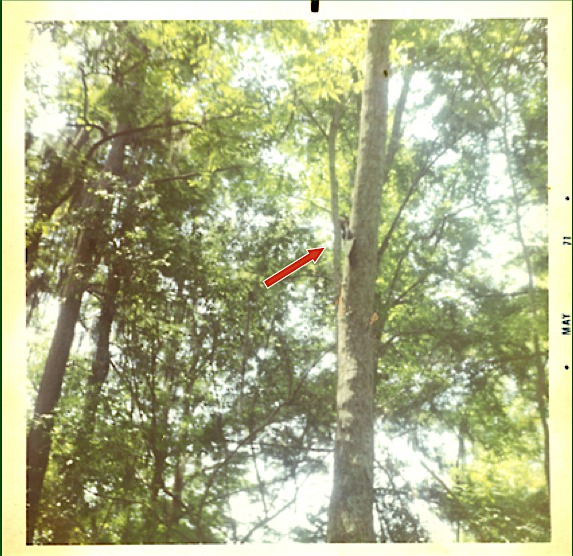 The Fielding Lewis ivory-billed woodpecker photographs
1971. The Atchafalaya Swamp of southern Louisiana. A duck hunter with a cheap Kodak Instamatic camera took two pictures. A woodpecker on a tree trunk. Then another tree. The same stiff posture. It looked like a male ivory-billed woodpecker, a bird with no uncontested sighting since 1944.
-
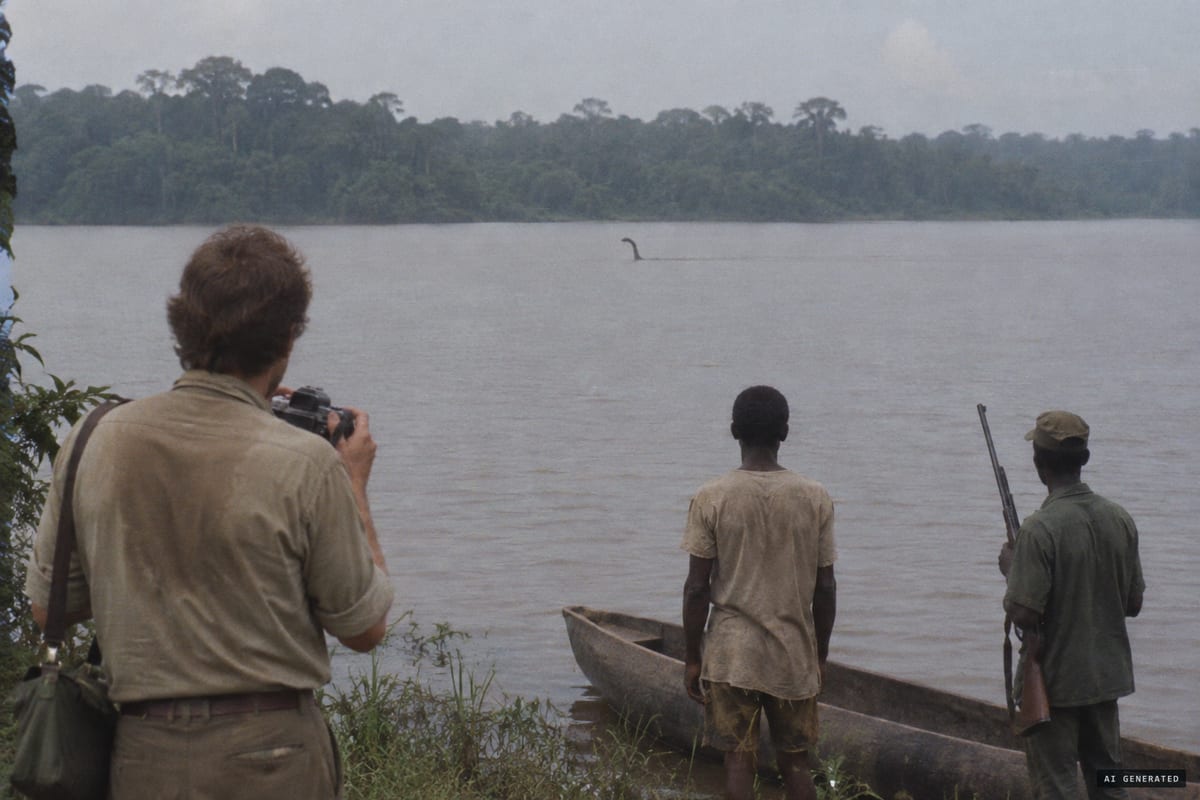 Rory Nugent's Mokele-mbembe sighting and photographs at Lake Tele
Lake Tele, deep in the swamp forest of northern Congo. An American writer stands on the shore after weeks of searching. Out in the middle of the lake, about a kilometre away, something is moving. An elongated black form that curves in on itself. A shape like a periscope, moving through the water.
-
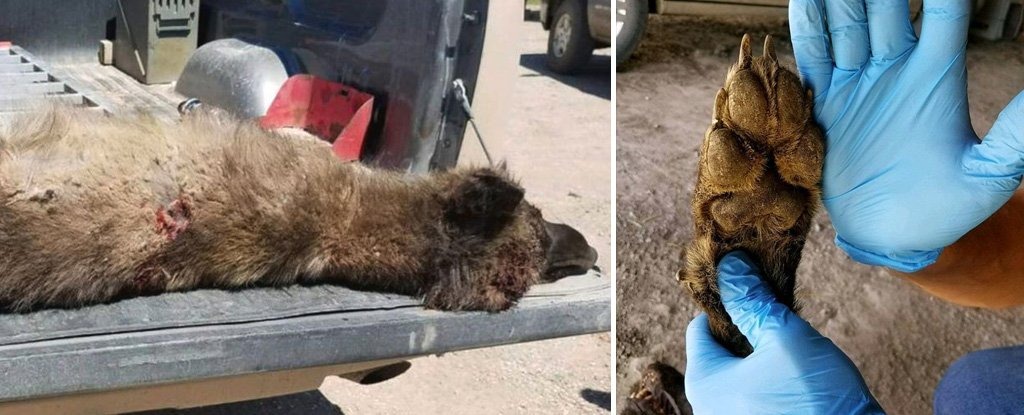 The Denton Mystery Canid: the Wolf-Like Creature Shot in Montana
May 16, 2018. A private pasture near Denton, Montana. An animal came within several hundred yards of a rancher's livestock. He shot it, and reported a wolf.
-
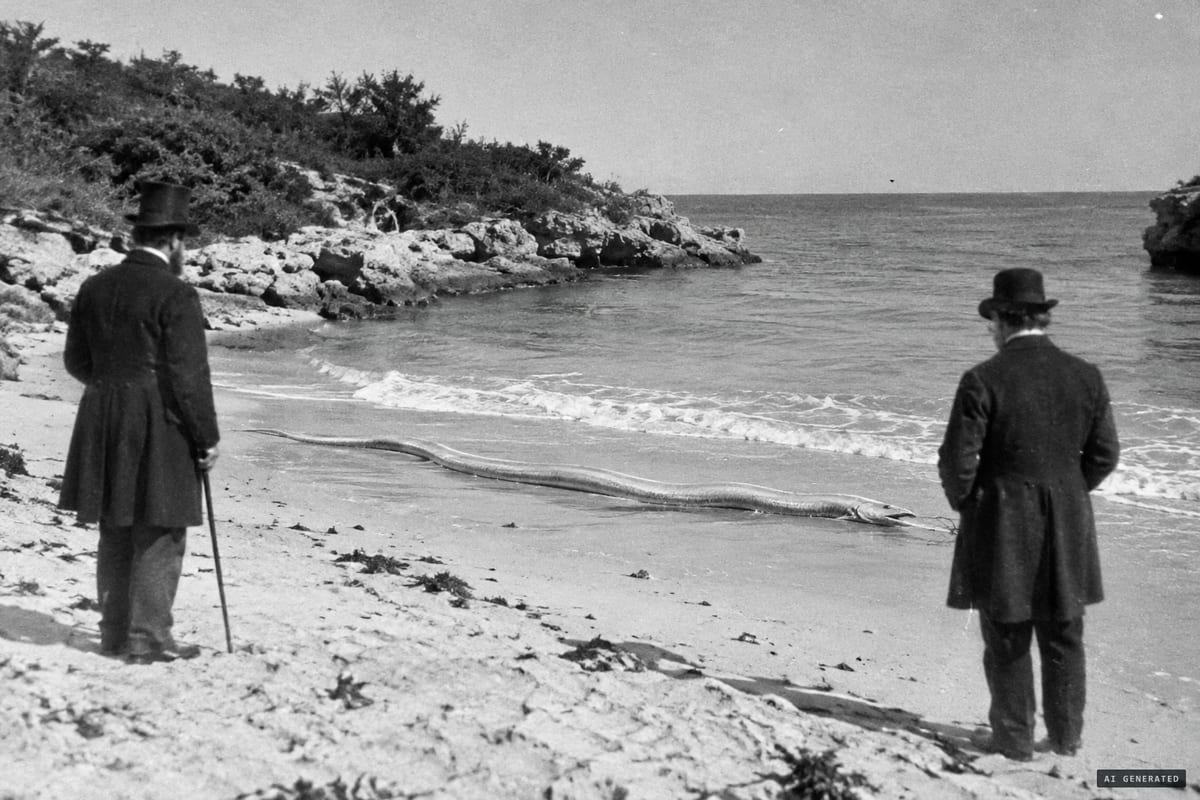 The Bermuda Sea Serpent of Hungry Bay
January 22, 1860. Hungry Bay, on Bermuda's South Shore. George Trimingham and a relative were strolling along the beach. They came upon something long and narrow, lying on the sand. It was dying. It measured 16 ft 7 in. It was less than a foot wide. To the people who saw it, there was only one name for it. A sea serpent.
-
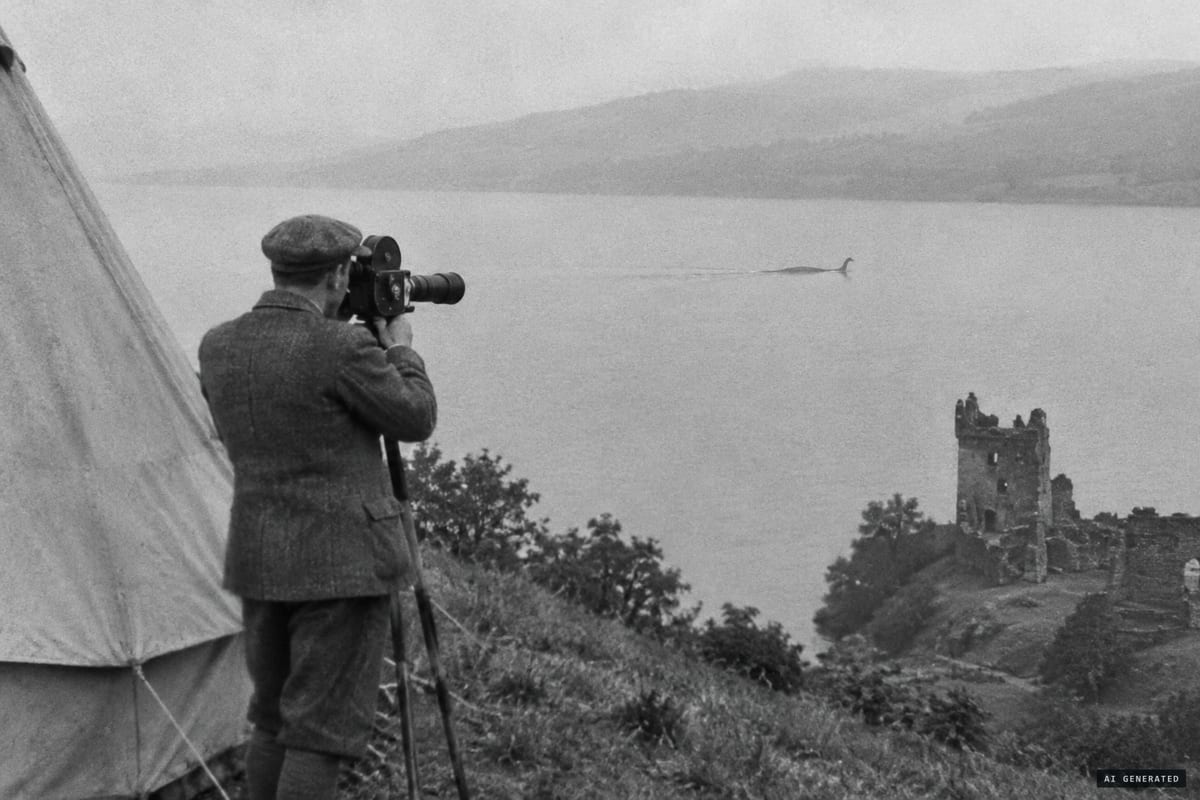 The James Fraser Film, Loch Ness
Saturday, 15 September 1934. A quarter past seven in the morning, on a hill above Urquhart Castle. Captain James Fraser, the man in charge of Sir Edward Mountain's watch on Loch Ness, saw something on the water. Fifteen to twenty feet long. Two to three feet out of the water. He raised his cine camera and filmed it as it lifted what may have been a head and neck, then sank from sight.
-
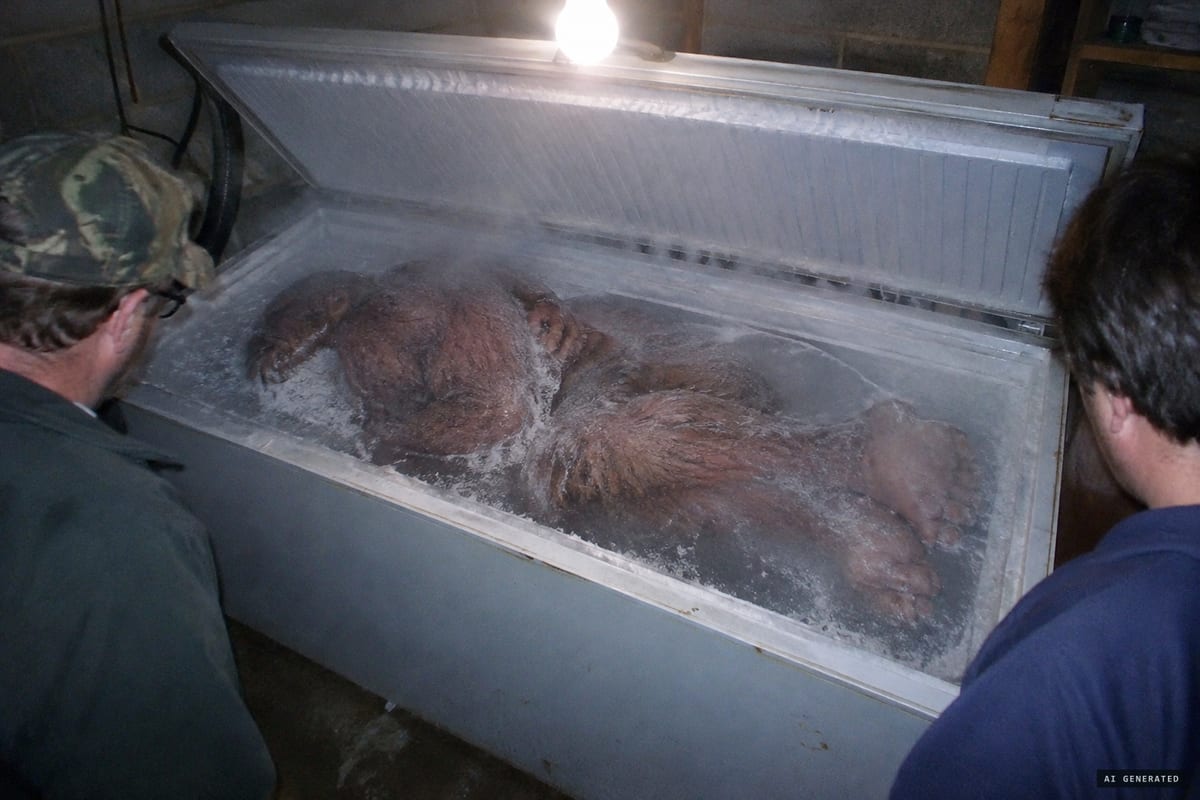 The Georgia Bigfoot Body Hoax
Summer 2008. Two men from Georgia made an extraordinary claim. A dead Bigfoot, found in the north Georgia mountains. Matthew Whitton, a police officer, and Rick Dyer, a former corrections officer, said the body was a male, 7-foot-7 tall, with reddish hair and 16-inch human-like feet. They kept it in a freezer.
-
 The Sandwood Bay mermaid
5 January 1900. Sandwood Bay, on the north-west coast of Sutherland. Alexander Gunn, a local crofter, was out on the beach searching for one of his sheep. Then his collie let out a howl and cringed in terror at his feet.
-
 The St Leonard's Forest Serpent
August 1614. A short pamphlet appeared in London with alarming news from Sussex. A "strange and monstrous Serpent (or Dragon)" was alive in St Leonard's Forest, two miles from Horsham. It was "nine foot or rather more in length." Its back was blackish. Its belly was red. A white ring of scales circled its neck. It could cast its venom about four rods, and it left a foul, slimy trail in its track.
-
 Eskimo curlews photographed on Galveston Island, Texas, 1962
Galveston Island, Texas. Spring, 1962. A small brown curlew feeds among the shorebirds. It is a bird the field guides call possibly extinct.
-
 Martin Sheffield's letter and Clemente Onelli's plesiosaur expedition, the origin of Nahuelito
January 1922. From Esquel, in the Andes of Chubut, an American prospector wrote to the director of the Buenos Aires Zoo. Martin Sheffield had followed tracks so deep that only something of ponderous weight could have made them. They led to a lagoon. In the middle of the water, he saw the head of an animal, with a huge neck like that of a swan. The swirls made him think its body must resemble a crocodile's.
-
 Don Whillans' Yeti Sighting and Footprint Photographs, Annapurna Sanctuary (1970)
March 1970. The Annapurna Sanctuary, Nepal. Don Whillans, deputy leader of Chris Bonington's British Annapurna South Face expedition, had gone ahead to find a site for base camp. He was camped near what is now Machapuchare Base Camp. Then came the odd cries. His Sherpa looked past him and said it plainly. "Yeti coming." Whillans saw only a shadow disappearing behind a ridge.
-
 Herman and Kia Regusters' Mokele-mbembe sighting at Lake Tele
Lake Tele, northern Congo. Autumn 1981. Aerospace engineer Herman Regusters and his wife Kia had come to the swamp forest in search of the Mokele-mbembe. Then, Kia said, something surfaced. "I saw a large serpent-like head and neck rising out of the water. The head moved side to side."
-
 The St. Augustine Monster (Octopus giganteus), Anastasia Island, 1896
30 November 1896. Two boys bicycling on Anastasia Island, across the bay from St. Augustine, Florida, came upon something enormous half buried in the sand. Pale pink, almost white. Rubbery, and so hard it could barely be cut. The visible part measured 18 feet. It weighed nearly 5 tons.
-
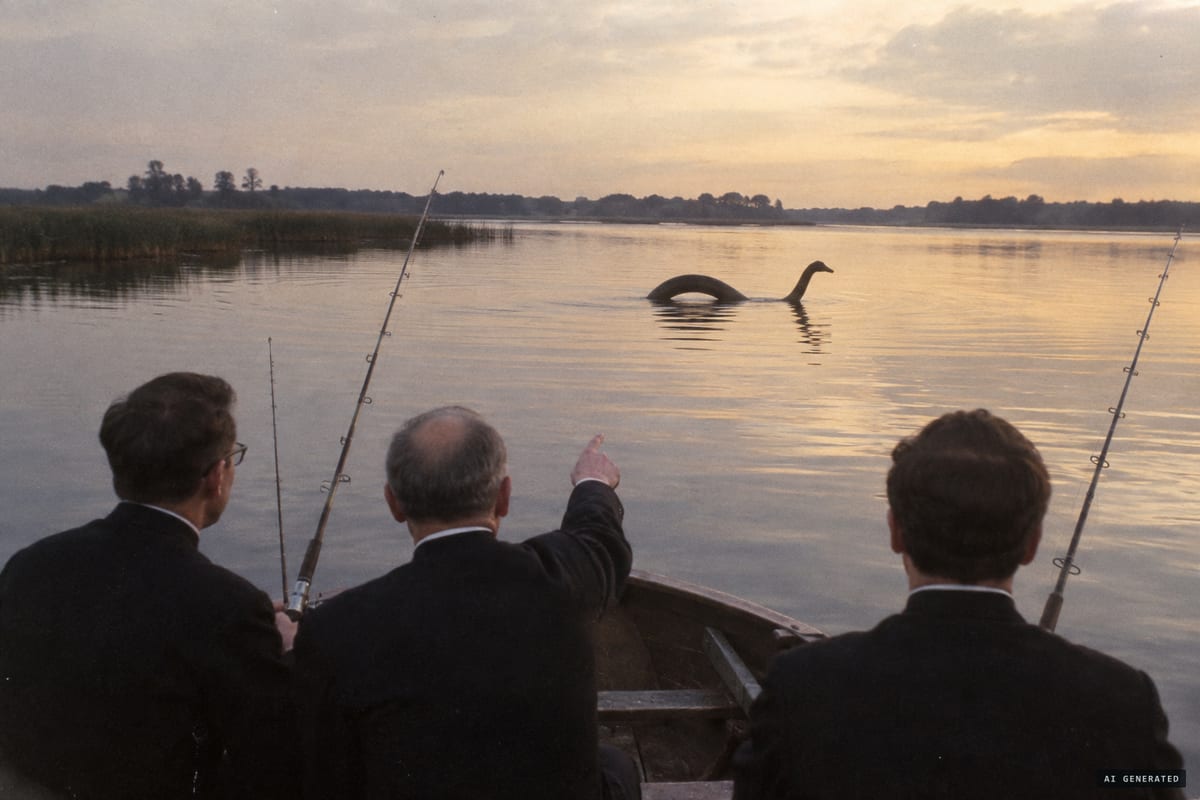 Three priests' sighting of the Lough Ree Monster
May 18, 1960. A warm, calm evening on Lough Ree, a broad lake on the River Shannon. Three Catholic priests were out fishing. One of them noticed something moving slowly on the flat surface, about eighty yards away. He pointed it out to the others.
-
 Xinjiang University "giant red fish" sighting at Kanas Lake
July 1985. Kanas Lake, in Altay Prefecture, Xinjiang. A team of teachers and students from Xinjiang University's Department of Biology watched the water through a high-powered telescope. At first, nothing. Then the waves came.
-
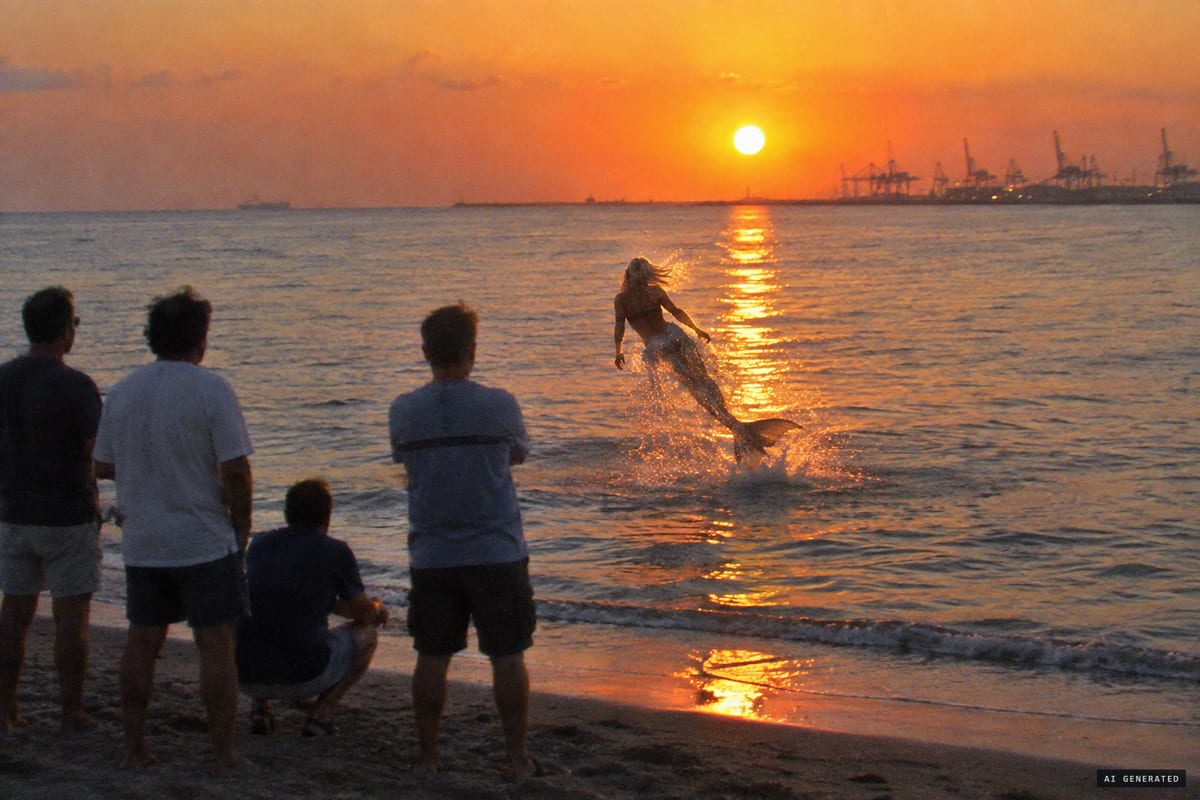 The Kiryat Yam mermaid sightings and the $1 million town reward
Kiryat Yam, Israel. 2009. A beach town on Haifa Bay, just north of Haifa. Shlomo Cohen was on the shore with friends when they saw a woman lying on the sand in a weird way. He took her for another sunbather. Then they approached. She jumped into the water and disappeared. "We were all in shock because we saw she had a tail."
-
 The English Rose III Sea Serpent: John Ridgway's Night Encounter in the North Atlantic
Summer 1966. Two British Army paratroopers are rowing the North Atlantic in a 20 ft open dory called English Rose III. One balmy night, Captain John Ridgway is at the oars, lulled by the unending monotony. Then a swishing noise to starboard.
-
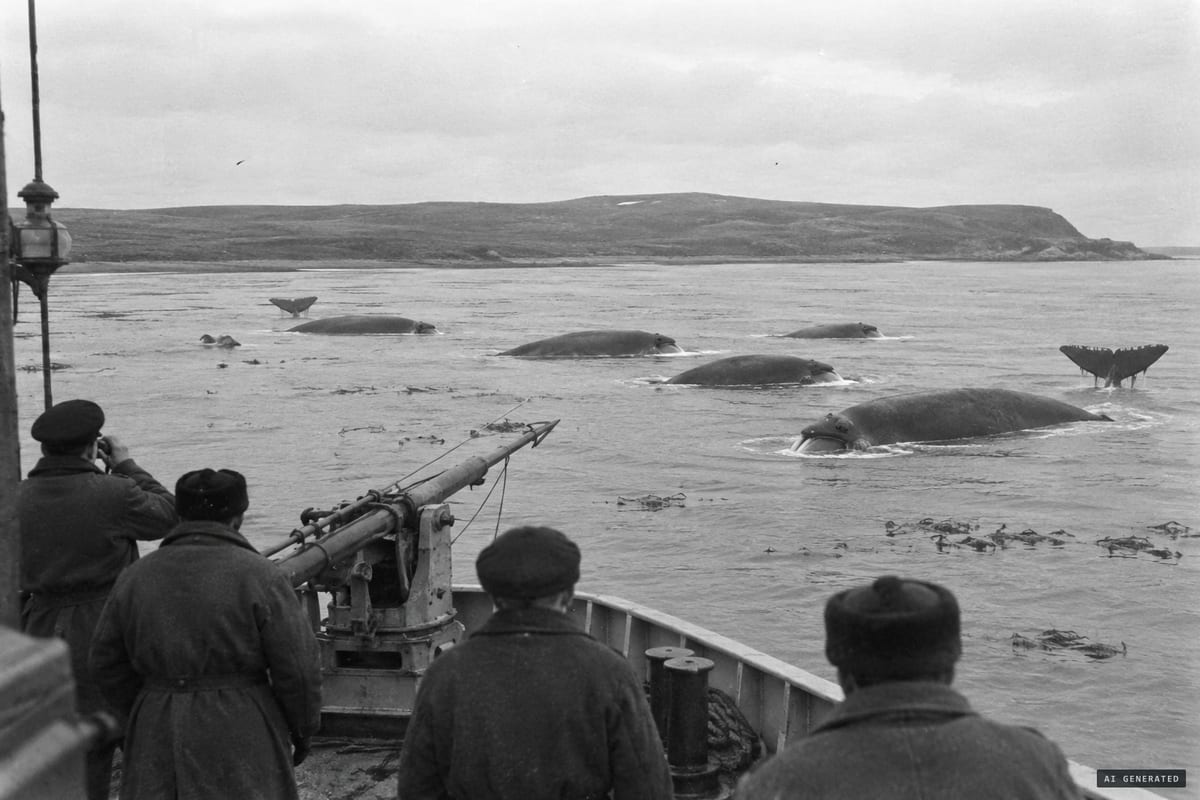 The Buran Whaler Sighting of Six Sea Cow-Like Animals off Cape Navarin
July 1962. The Bering Sea, off Cape Navarin in Chukotka. The crew of the Soviet whaler Buran spotted six large, unusual animals grazing in shallow water. Dark skin. Small heads set clearly apart from heavy bodies. An upper lip split in two. A two-lobed tail with a sort of fringe along the edge.
-
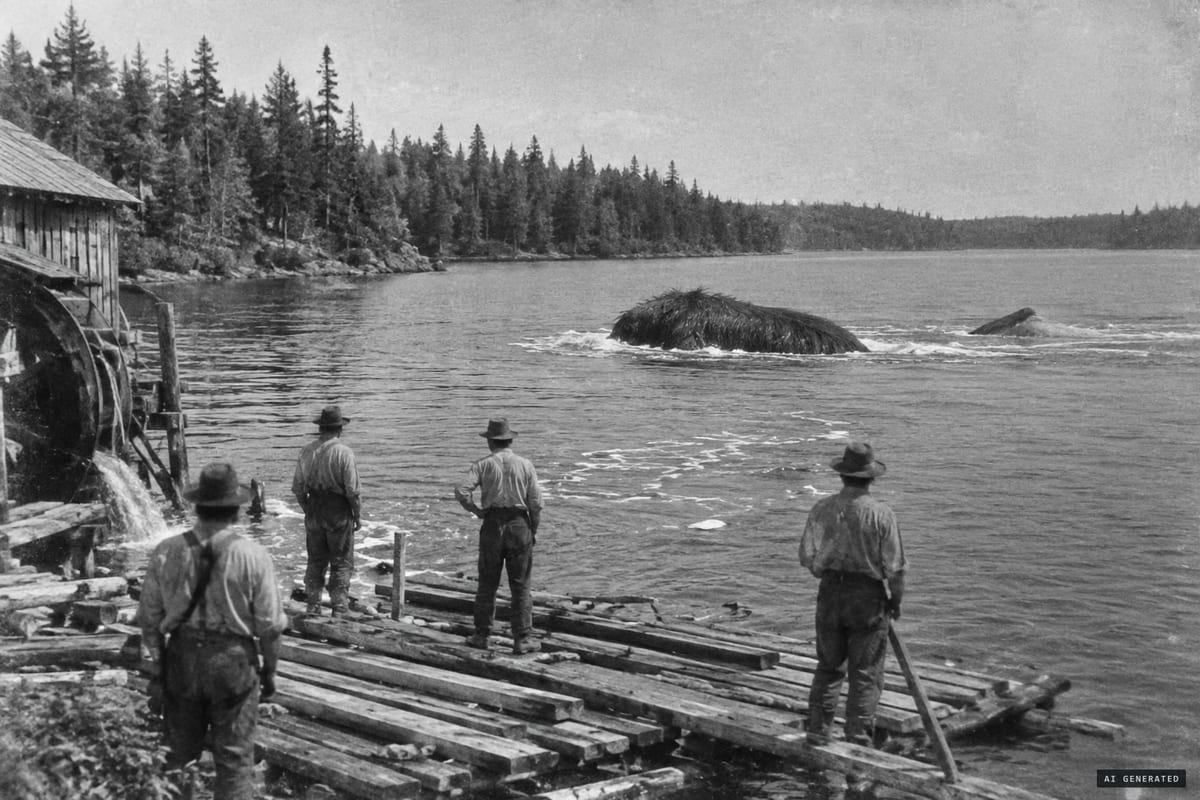 The Lake Utopia Monster at the Ludgates' Sawmill
July 24, 1867. Morning on Lake Utopia, New Brunswick. Men rafting sawn deals from the Ludgates' sawmill saw the water begin to churn, about 100 yards out. Then something rose. A huge bulky object, 20 to 40 feet long, its skin shaggy and reddish brown like a buffalo robe. No head ever showed. Behind it, something moved like a tail.
-
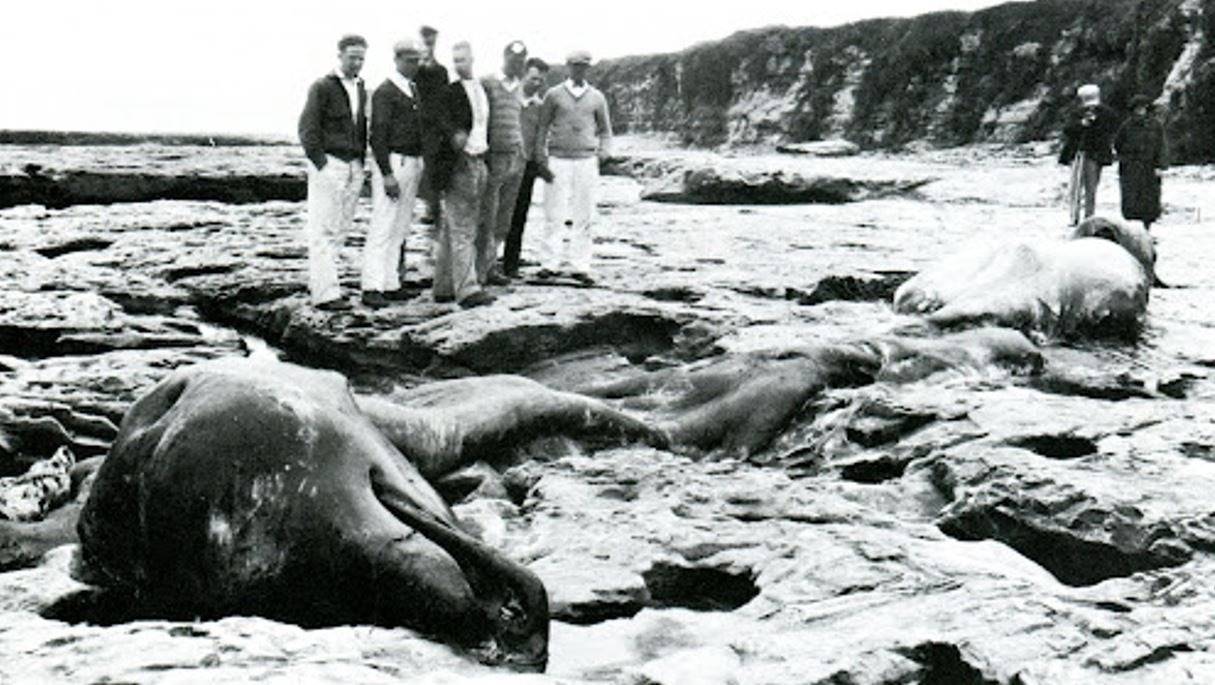 The Moore's Beach Sea Monster Carcass, Santa Cruz (1925)
Santa Cruz, California. Late May 1925. Something came ashore at Moore's Beach. It had a duck-like beak, small eyes and a bulbous forehead. A long neck stretched across the sand. Some said it had elephantine legs and ivory toenails. On June 4, 1925, the newspapers of Santa Cruz and San Francisco apprised the public of a sea serpent.
-
 The Ochopee Skunk Ape and Vince Doerr's Photograph
Monday, July 21, 1997. Burns Road, a lime-rock track through Big Cypress National Preserve near Ochopee, Florida. Just before 7:45 am, realtor Jan Brock watched a creature about 7 feet tall cross the road ahead of her car. Thick dark brown hair. Upright the whole time. Then it was gone into the brush.
-
 The Lindi mngwa killings, Tanganyika Territory, 1922
Lindi, Tanganyika Territory. 1922. Native constables guarded the market square through the night. One of them came to relieve the midnight watch and found the post empty. After a search, the missing constable turned up underneath a stall, terribly mutilated. Clenched in the victim's hand was a matted mass of greyish hair.
-
 Destination Truth "Yeti" footprints on the Manju River bank, Khumbu, Nepal
November 2007. The Khumbu region of Nepal, in the shadow of Mount Everest. A nine-person crew from the Sci Fi Channel series Destination Truth was searching for the Yeti. On the bank of the Manju River, at about 2,850 metres, they found three footprints in the sandy soil.
-
 The Sea Monk of the Øresund
The Øresund, off Malmö. Around 1546. In one telling, a herring net came up heavy with something that was not fish. It was about 4 ells long. It had a human head and face, like the men with shorn heads whom people called monks. The face was black. The body was marked with red and black spots.
-
 CFZ expedition orang pendek sighting near Lake Gunung Tujuh
September 2009. A small expedition from the Centre for Fortean Zoology was searching the forest around Lake Gunung Tujuh, high in Sumatra's Kerinci Seblat National Park. They were hunting the orang pendek, the island's legendary "short man". Then something large came towards the group.
-
 The Cannock Chase Werewolf at the German War Cemetery
April 2007. Cannock Chase, Staffordshire. Near the German War Cemetery, just off Camp Road, a postman on a motorbike saw what he took for a large dog. He got closer. The creature got on its hind legs and ran away.
-
 The Owens and Russell Sea Serpent: Sea Lions in the Strait of Georgia
British Columbia, 1943. Two officers of the British Columbia Provincial Police look out over the Strait of Georgia. Inspector Robert Owens and Staff Sergeant Jack Russell see something huge in the water. A sea serpent with a horse-like head. Behind it, a long body rolls through the waves, sections rising and sinking in turn.
-
 Jorda: the 25-foot 'infant' Cadborosaurus of Jordan River
Spring 1934. Jordan River, on the Strait of Juan de Fuca west of Victoria. Two local couples, Mr. and Mrs. Charles Linder and Mr. and Mrs. A. Cox, reported a sea serpent about 25 feet long. They believed it was young. The offspring of Caddy and Amy, the Cadborosaurus pair already famous along the coast. They named it Jorda.
-
 The Flying Serpent of Henham
May 1668. A gentleman rides past a wood near Henham on the Mount, four miles from Saffron Walden. On a sudden, a serpent assails his horse. Horse and rider flee.
-
 The Kerry and Watson Families' Ogopogo Sighting, Okanagan Lake
July 1949. An evening on Okanagan Lake, off the Kelowna shore. Leslie Kerry and visitors from Montreal were about to take his new outboard boat out. Something lay low in the water. At first it looked like a log.
-
 Wilf Batty shoots the last confirmed wild thylacine at Mawbanna, Tasmania
Mawbanna, north-west Tasmania. May 1930. For weeks, something had been raiding the fowl pens. It frightened children. It stole food from men camped in the area. Locals called it a "hyena."
-
 The Herrington Lake "Eel-Pig" and Professor Lawrence S. Thompson's sightings
Herrington Lake, Kentucky. August 1972. In the early morning hours, a professor of classics watched something move through the water between the Chenault Bridge and Well's Landing. Most of it stayed below the surface. A snout, or perhaps a hump. Then a tail, trailing about 12 to 15 feet behind.
-
 The rediscovery of the "extinct" New Zealand storm petrel, Hauraki Gulf, 2003
November 17, 2003. A charter boat named Assassin waits about 2 km north of Little Barrier Island, in New Zealand's Hauraki Gulf. Around 9 am, small seabirds begin to arrive at the chum slick. Low over the water. Dipping at the surface. Brown-black above, a white rump, long legs trailing past the tail.
-
 Three youths meet a tusked creature at Lough Major
Lough Major, Co. Monaghan. 1963. Three youths were coming back from a fishing trip. G. Reilly was 18. Talbot Duffy was 17. Paul Pentland was 12. Something was splashing up and down in the lake, like a sea lion. A stone was thrown. The animal "made towards them at great speed". They ran. Their terrier shot past them with its tail between its legs.
-
 Hans Schomburgk's hunt for the nigbwe, the pygmy hippopotamus of Liberia
Liberia, 1911. Hans Schomburgk went into the forest after an animal many people doubted was alive at all. Science had a name for it, built on skulls. No European zoo had ever shown one. Europeans in Monrovia told him it was very doubtful the animal really existed.
-
 The General Güemes "duende": the creepy gnome filmed beside a Salta cemetery
One in the morning. Early March 2008. A group of teenagers stood chatting on a corner in General Güemes, in Argentina's Salta Province, beside the Cementerio Cristo Rey. They heard a strange noise. Then the weeds began to move.
-
 The Morag attack on Duncan McDonell and William Simpson's boat, Loch Morar 1969
August 1969. Loch Morar, the deepest freshwater body in the British Isles. Two local men, Duncan McDonell and William Simpson, were motoring along the loch. It was about 9 pm, and still light. Then something surfaced behind them.
-
 The Beast of 'Busco: Oscar, the Giant Turtle of Fulk Lake
July 1948. Ora Blue and Charley Wilson were fishing a small lake near Churubusco, Indiana. They came back with a story. A massive snapping turtle, its spiked shell the size of a dining table. Its head was as big as a child's. Its body was as big as the boat.
-
 Captain James C. Kerr and the steamer U.S. Grant: the first Flathead Lake Monster sighting
1889. Montana became a state that year. Captain James C. Kerr was taking the steamboat U.S. Grant up Flathead Lake, with cargo and about 100 passengers aboard. Something lay in the water ahead. Kerr took it for a large log.
-
 Beast of Bodmin Moor: the leopard skull from the River Fowey
19 July 1995. A government report found no verifiable evidence of a big cat on Bodmin Moor. Five days later, a boy walking by the River Fowey looked down at the bank. A skull. Fanged. Lacking its lower jaw. The skull of a big cat.
-
 The Portugal Cove Devil-Fish: A Giant Squid Attacks a Fishing Boat
October 1873. Two fishermen rowed a small punt off Portugal Cove, in Newfoundland's Conception Bay. Something lay floating on the water. They took it for a large sail, or the wreckage of a ship. One of them struck it with a gaff.
-
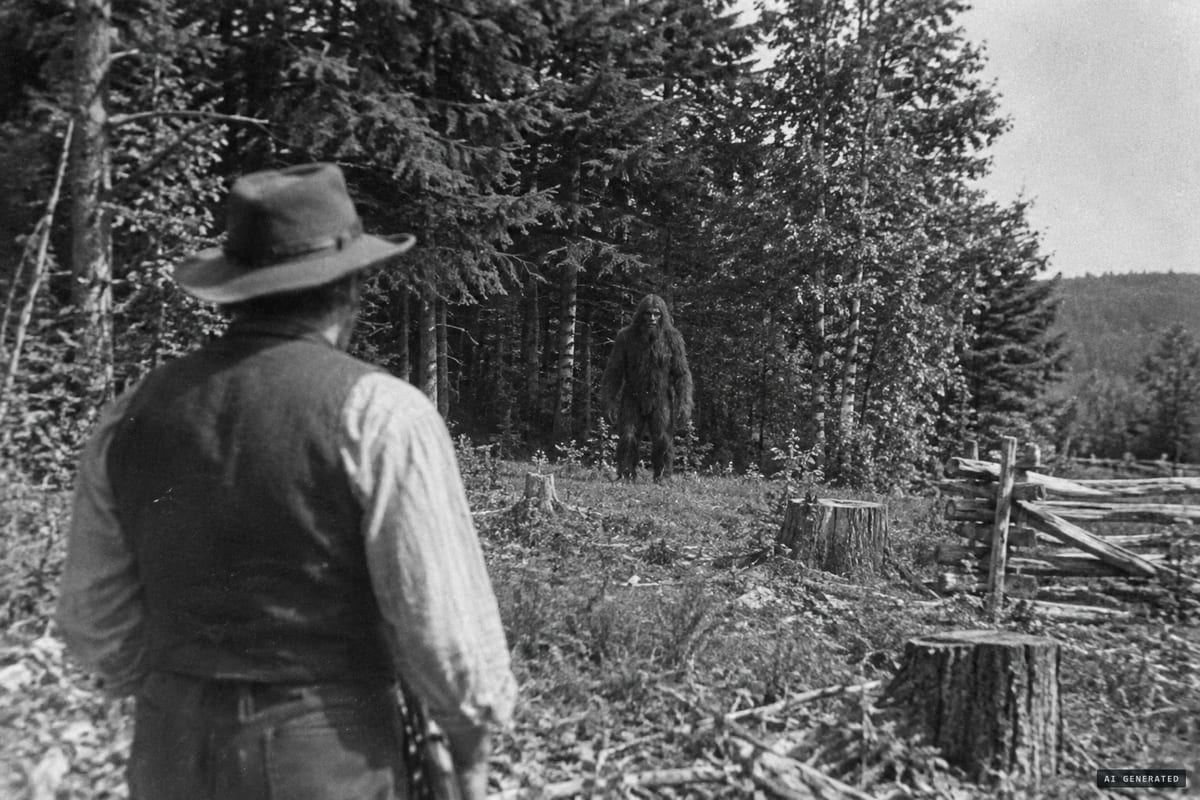 The Ellisburg Wild Man of the Woods
August 30, 1818. Ellisburg, a frontier town on the eastern shore of Lake Ontario. A man described only as "a gentleman of unquestionable veracity" watched something come out of the woods. It came within a few rods of him. It stood. It looked at him. Then it ran, hairy, bending forward, in full view for some time.
-
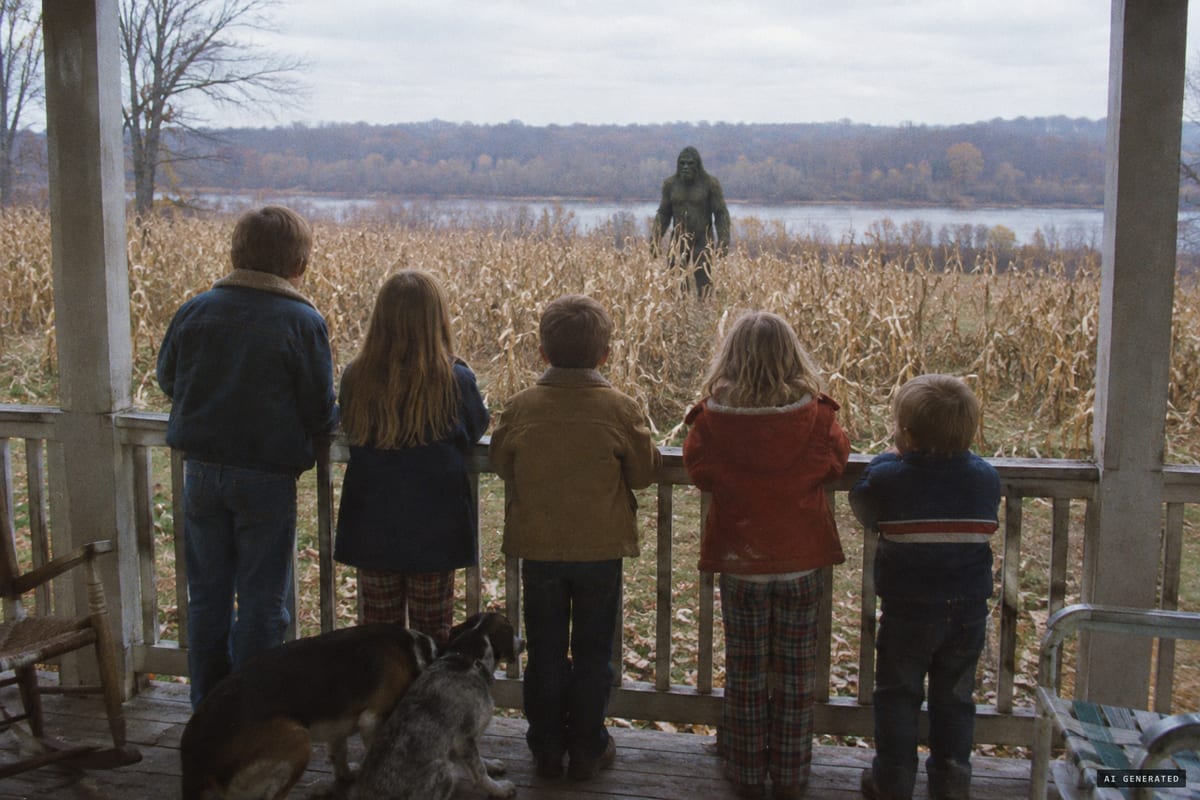 The Spottsville Monster, Henderson County, Kentucky (1975)
Spottsville, Kentucky. October 20, 1975. Five Nunnelly children saw something in the fields around their rented farmhouse near the Green River. It was about 7 feet tall. It walked on its hind feet. They said it was dark green.
-
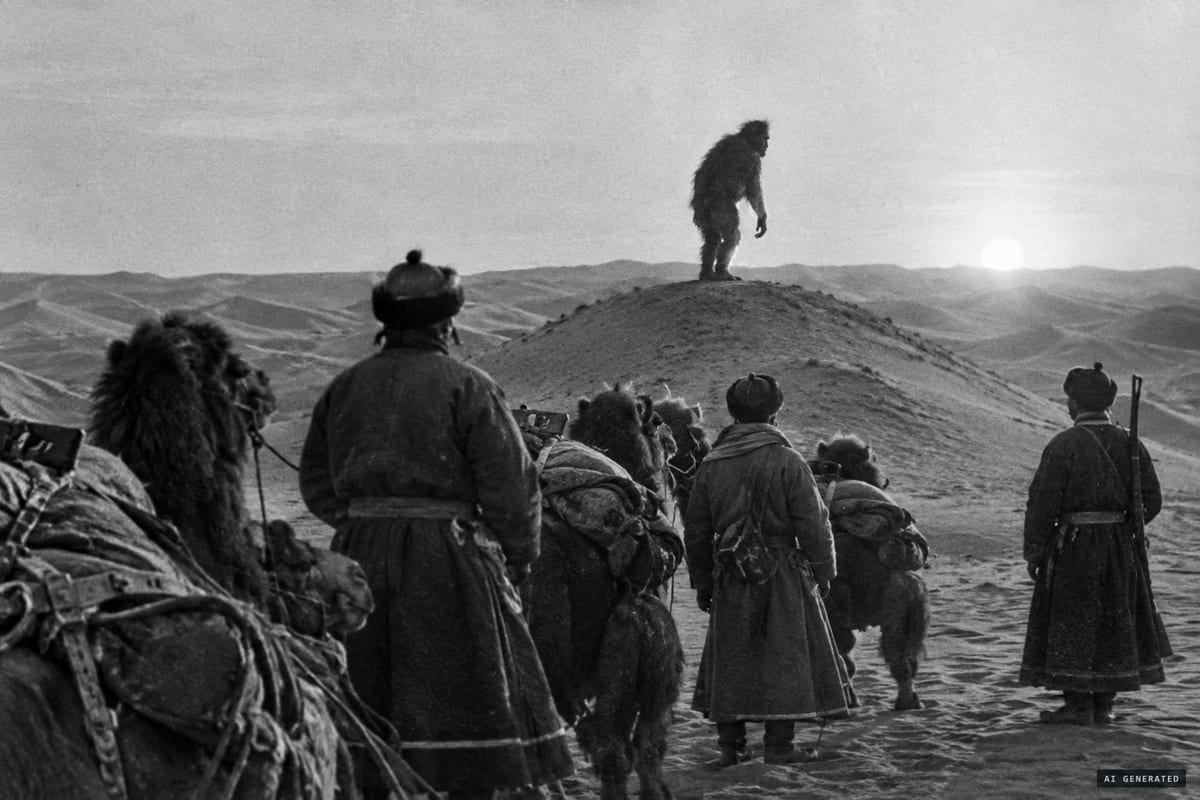 Badzar Baradiin's Almas Sighting in the Alashan Desert
April 1906. A caravan out of Urga crosses the Alashan desert. The light is going. Not long before sunset, the caravan leader gives a startled cry. On a sandy mound stands the figure of a hairy man, like an ape. Stooping. Long arms dangling. Lit by the rays of the setting sun.
-
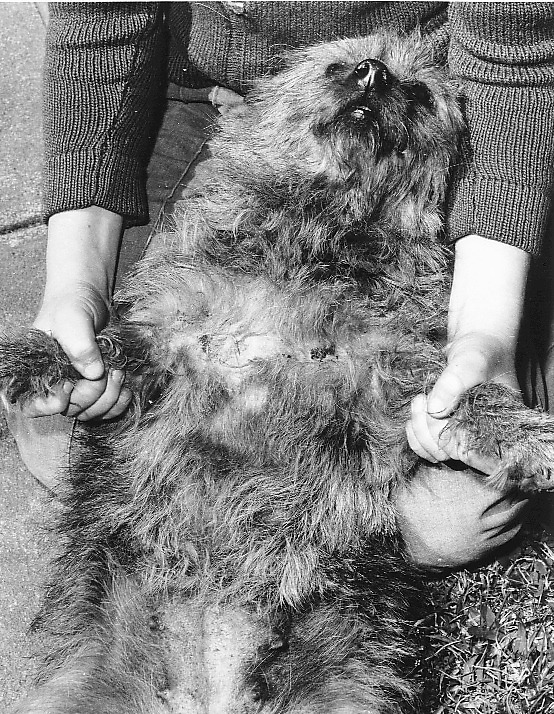 Woodenbong Yowie Sightings: Thelma Crewe and Jean Maloney (1976-1977)
Woodenbong, New South Wales. A small town at the foot of the ranges on the Queensland border. Late 1976. At about 1 a.m., Thelma Crewe looked out of her kitchen window and saw two hairy creatures about five feet tall in her yard.
-
 The First Chessie Sighting: "Nessie Jr." in the Lower Potomac
Summer, 1978. The Virginia side of the lower Potomac River. Donald Kyker, a retired CIA agent, his wife, and their neighbours, Mr. and Mrs. Howard Smoot, reported something in the water.
-
 The Fiery Dragon of Elizabeth Lake: Peter R. Simpson's Midnight Encounter (1886)
July 1886. Elizabeth Lake, in the hills above the Antelope Valley. Around midnight, an emigrant named Peter R. Simpson woke beneath his wagon to roaring and hissing from the water. Then the wagon itself was lifted off the ground, carried about twenty yards and dropped. His cattle stampeded.
-
 Ian Cameron and William Fraser's long Loch Ness sighting
June 15, 1965. Ian Cameron was fishing for brown trout on the south shore of Loch Ness. He was a senior Highland police officer. He did not believe in the monster.
-
 Trevor Silcox and the hairy man of Moehau on the Coromandel Range, 1972
Winter, 1972. Trevor Silcox and another man were hunting wild pig high in the Coromandel Range on New Zealand's North Island. They were working along the top of the range. Across a gully, on a parallel ridge 150 yards away, a tall figure stood among the bushes.
-
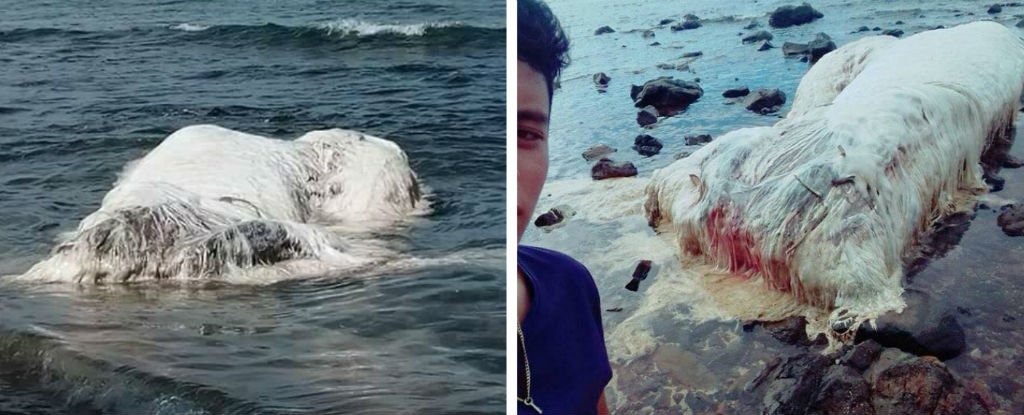 The Dinagat Globster: A Hairy Carcass on the Beach at Cagdianao (2017)
Wednesday afternoon, 22 February 2017. The sea left something on the beach at Cagdianao, in the Philippines' Dinagat Islands. It was white. It was enormous. It had no visible head and no eyes. And it seemed to be covered in long, shaggy hair.
-
 "Lotti", the suspected alligator snapping turtle of the Oggenrieder Weiher
Monday, 5 August 2013. An eight-year-old boy on holiday from Bonn was swimming in the shallows of the Oggenrieder Weiher, a natural bathing lake on the edge of Irsee in Bavaria. Something cut his Achilles tendon. Twice.
-
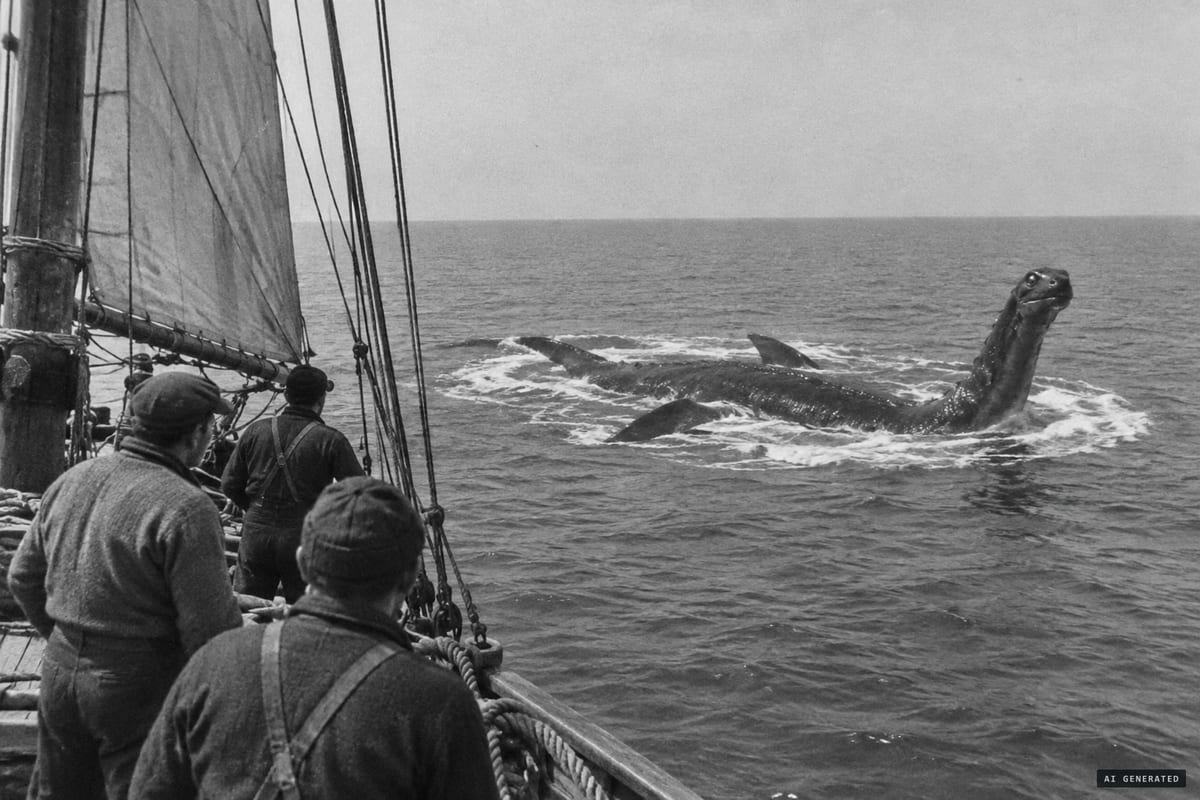 The schooner Madaline and the Lake Erie sea serpent
Lake Erie. 1892. The schooner Madaline was sailing from Buffalo toward Toledo. Half a mile ahead, a patch of calm water began to churn and foam. As the ship drew closer, the captain and crew saw something wrestling in the waves, as if fighting with an unseen foe.
-
 Paul Freeman's Blue Mountains Bigfoot video at Deduct Spring, Oregon
August 20, 1992. Deep in the Blue Mountains of Oregon, Paul Freeman followed a line of fresh footprints toward a creek. He was alone, as he often was, with a video camera in his hand. Then came noises in the brush. Something enormous and dark loped through the trees about fifty yards ahead. "There he goes!" he breathed. Then a second figure. "There's two of 'em!"
-
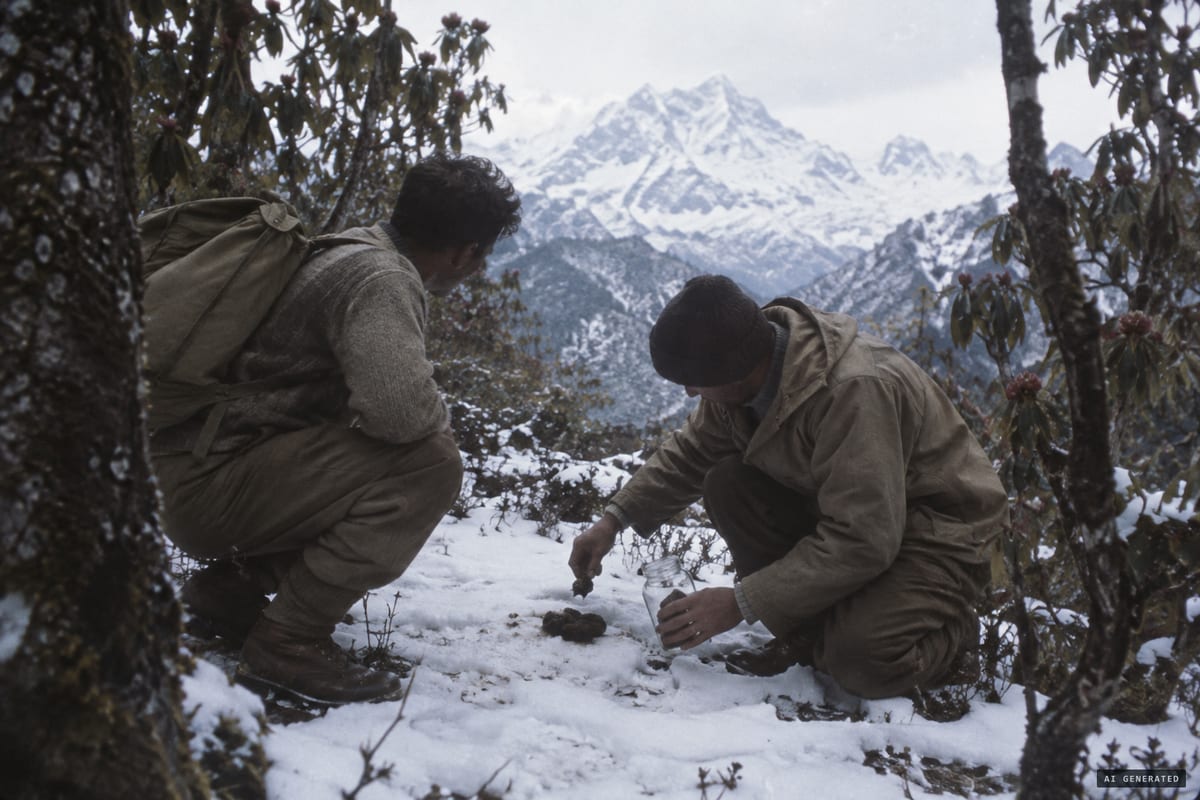 Slick Expedition "Yeti Feces", Nepal (1959)
1959. In the mountains of Nepal, Tom Slick's expedition was hunting the abominable snowman. Nobody on record saw the animal. But the team came home with something it had left behind. A sample of droppings, later labelled "Fecal matter from a small Yeti."
-
 The Ohio Howl: the Columbiana County Bigfoot recording
Late autumn, 1994. Columbiana County, Ohio, near the Ohio River. Matt Moneymaker made a recording. What he captured was a sound. Nobody reported seeing anything.
-
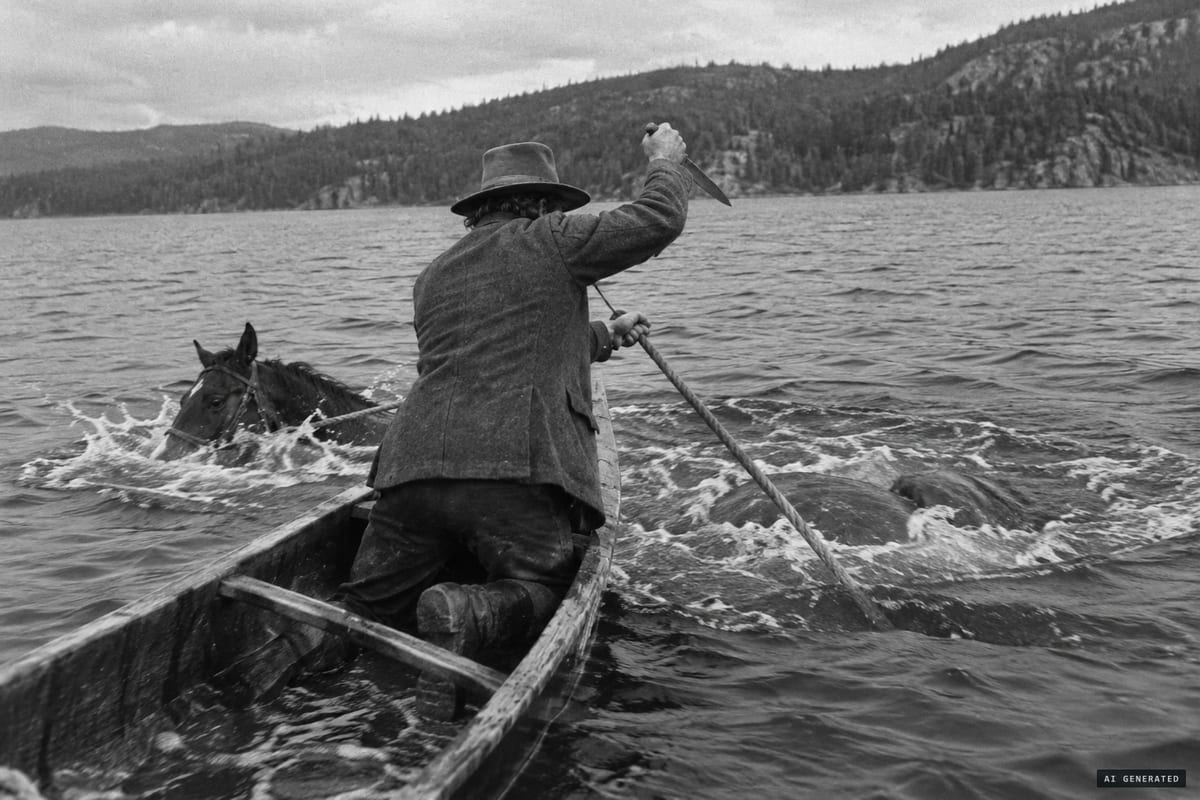 John MacDougal's Horses Dragged Under at Okanagan Lake
Okanagan Lake, British Columbia. The year usually given is 1855. A settler named John MacDougal is crossing by canoe, his horses swimming behind him on a line.
-
 Mount St. Helens Bite-Marked Bone Stacks
Near Ryan Lake, northeast of Mount St. Helens. A pile of deer bones, neatly stacked. Mitchel N. Townsend of Winlock, Washington, taught Bigfoot courses at Centralia College. On the bones, he said, were tooth impressions. "Very large but very human-like teeth."
-
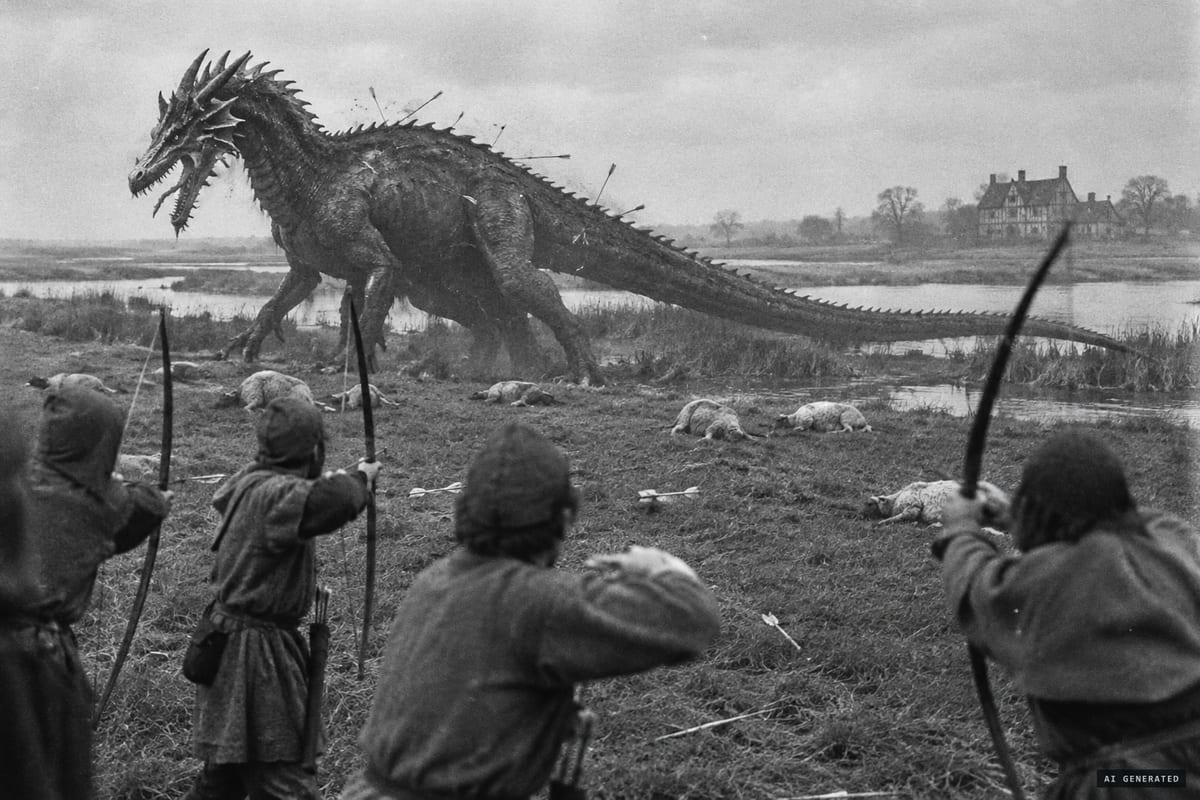 The Bures Dragon
England, 1405. Near the village of Bures, on the River Stour, a great beast killed a shepherd. Then it slew very many of his sheep.
-
 Midshipman Edward Preble and the Sea Serpent of the Frigate Protector
Maine. The spring of 1780, by the best reckoning. The frigate Protector lies at anchor in a quiet bay. Through their spyglasses, the officers see a huge serpent lying motionless on the water.
-
 The Crystal Beach Sea Serpent
May 1896. A calm evening on the Ontario shore of Lake Erie, across the water from Buffalo. Dusk was settling over Crystal Beach. Capt. Lina Beecher, a Civil War veteran, was there with his wife and a neighbour. Not more than 100 yards from shore, they saw something in the water. A serpent. Forty feet long, with a head like a dog. It churned the water and waved a pointed tail. For about 45 minutes they watched it. Then, at twilight, it was gone.
-
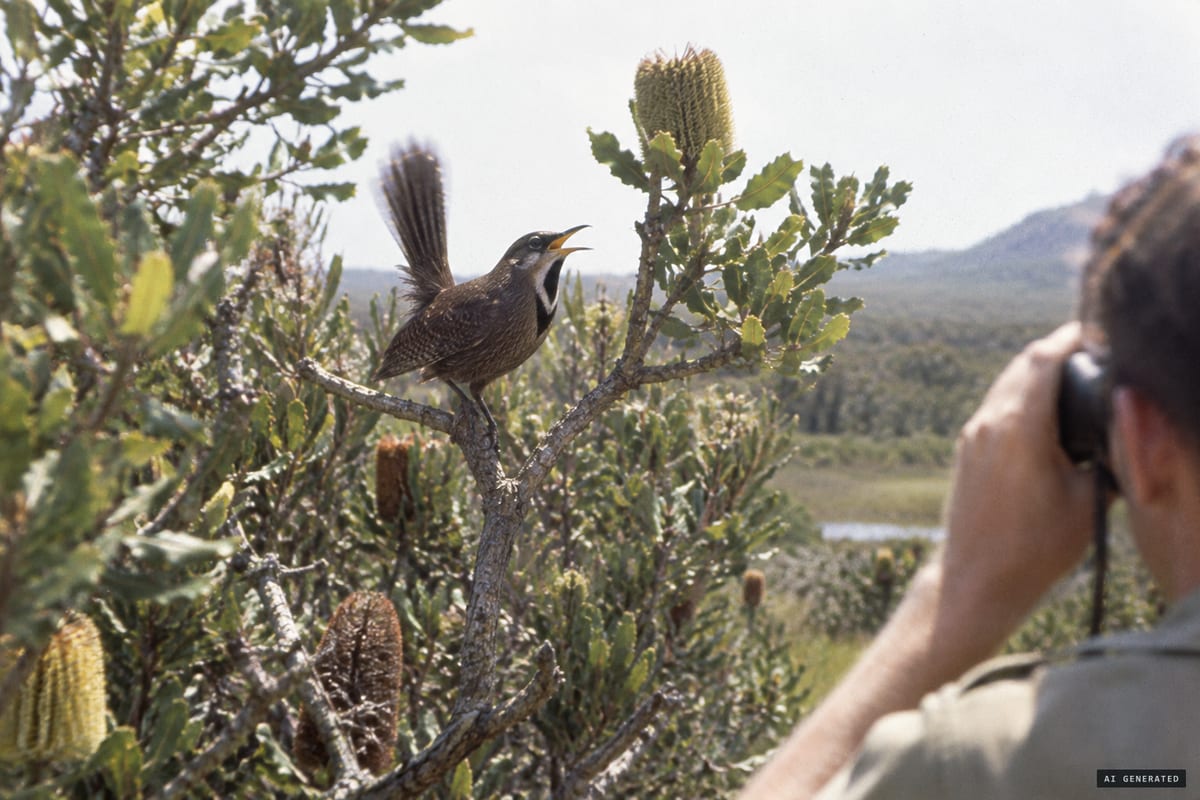 The noisy scrub-bird found again at Two Peoples Bay
December 1961. Two Peoples Bay, east of Albany. Schoolteacher Harley Webster was on holiday. A loud, rich call rang out of the scrub around a small swamp. He pushed in after it. He could not see the singer.
-
 Capt. J. M. Ozier and the Mud Mermaids of Vevay, Indiana (1894)
The Ohio River. A sand bar near Vevay, Indiana, strewn with huge logs and stumps. Among them, people said, lived two creatures, "horrible in appearance and strange in habits". They looked like huge lizards with human features. About five feet long. About 150 pounds. Yellowish and hairless, with webbed extremities like hands and sharp claws. When they went under, they did not dive. They sank like a stone.
-
 The Winged Woman of Da Nang
Summer 1969. A bunker near Da Nang, South Vietnam. Pfc. Earl Morrison, a US Marine, sat on top of it with two companions on a warm evening. Then the three saw a glowing figure in the sky, coming slowly toward them.
-
 Sammy the Spectacled Caiman, the "Monster of Loch Neuss"
Sunday, 10 July 1994. A quarry lake in Dormagen, in the middle of a hot German summer. A young spectacled caiman named Sammy tore free from its owner's leash and slipped into the water. Then it was gone.
-
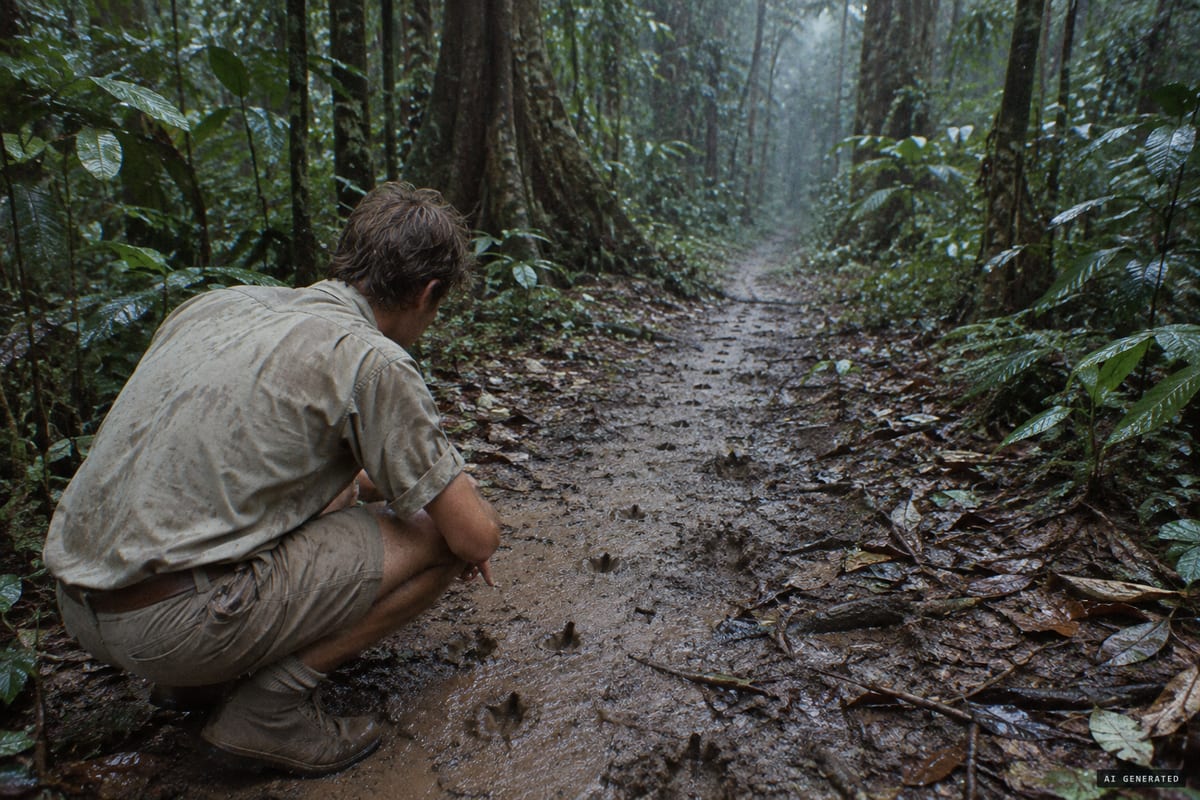 Zoologist John MacKinnon finds batutut footprints in the Sabah forest (1970)
Borneo, 1970. Deep in the Ulu Segama forest of Sabah, zoologist John MacKinnon had spent more than a year tracking wild orangutans on foot. He knew the tracks of this forest. Then, on a stretch of path, he found prints he could not place. Short. Broad. Human-like, but not human.
-
 Kubodera's team hauls a live giant squid to the surface and films it
December 4, 2006. Off Chichijima, in the Ogasawara Islands, a bait line hung about 650 metres down. Something took it. A giant squid. Alive.
-
 Anthony Wooldridge's Yeti Photographs near Hemkund
March 1986. Anthony Wooldridge was running alone through the Garhwal Himalaya, making for Hemkund. No one should have been on those slopes since the previous summer. Then he found tracks. Ten inches long, weaving through the snow from bush to bush.
-
 The Chicago Phantom Kangaroo: Patrolmen Byrne and Ciagi's Alley Encounter
Chicago. Friday, 18 October 1974. The early morning hours. A resident of the Northwest Side called police with an unlikely complaint. A kangaroo was standing on his porch. Patrolmen Michael Byrne and Leonard Ciagi found the animal in a dark alley. It was about five feet tall. When they tried to restrain it, it fought back with powerful kicks to the shins, cleared a fence and vanished.
-
 The Seljord serpent overturns Gunleik Andersson Verpe's boat on Seljordsvatnet
1750. Lake Seljordsvatnet, in the heart of Telemark. Gunleik Andersson Verpe of Bø was moving house. He had loaded his belongings onto two boats and set out across the water, from Ulvenes to Nes.
-
 John Alfred Jordan and the Dingonek of the Maggori River
The Maggori River, British East Africa. Around 1907. The hunter and trader John Alfred Jordan and three companions watched something enormous in the water. Fourteen or fifteen feet long. Spotted like a leopard. Scaled like an armadillo. Two long white fangs pointing down from its upper jaw.
-
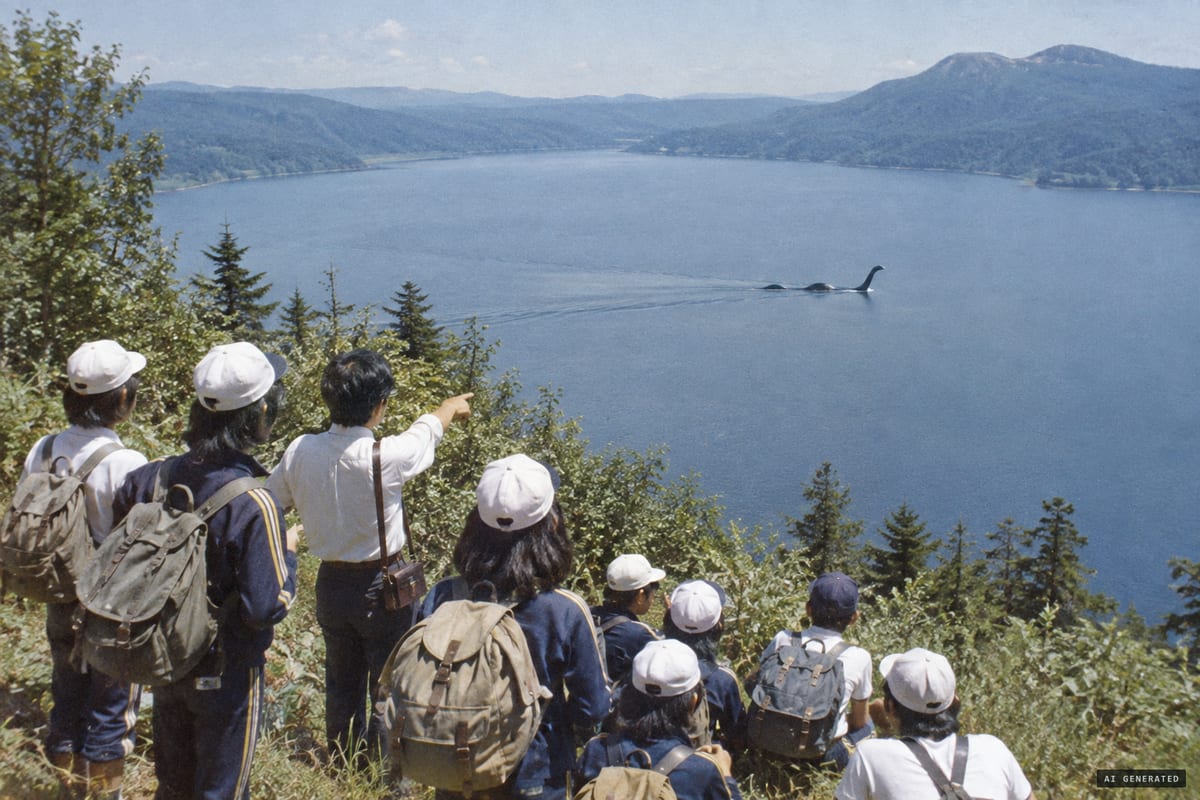 The Kussie mass sighting at Lake Kussharo
Summer 1973. About 40 junior-high students from Kitami were on a school climbing outing to Mount Mokoto, high above Lake Kussharo in Hokkaido. Below them, something large was moving across the water. Two humps, moving on the surface of Japan's largest caldera lake.
-
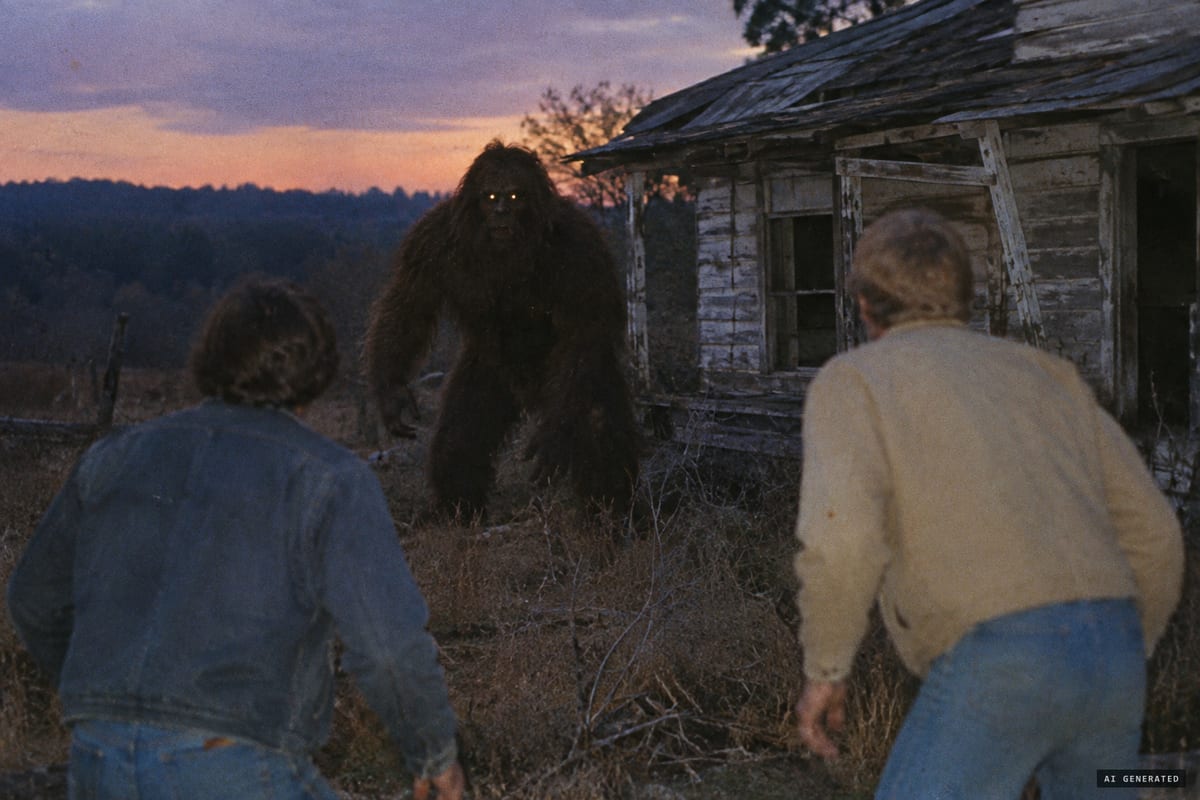 The Noxie Monster, Nowata County, Oklahoma (1975)
September 1, 1975. Labor Day, about 8 p.m. Near Noxie, in the timbered hills of northeast Oklahoma, farmer Kenneth Tosh and a friend heard an odd scratching sound inside an abandoned house. In the waning light they walked up to within 10 feet of something. A dark brown, hairy creature, 7-8 feet tall. It growled. They ran.
-
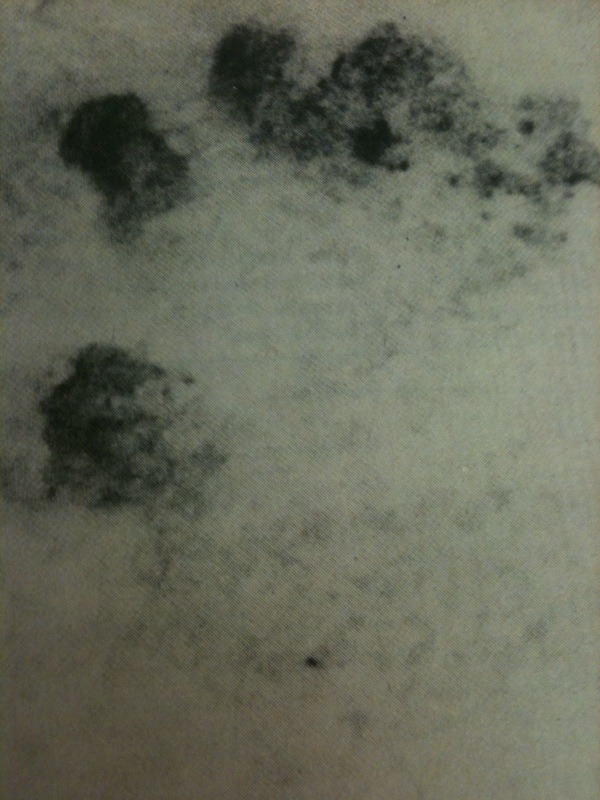 Yeti Tracks at the Kongmaa La Camp, Arun Valley Wildlife Expedition (1972)
December 1972. A snow camp on a ridge off the Kongmaa La, high in the Arun country of eastern Nepal. Two expedition scientists and two Sherpas slept in two tents. Shortly before dawn, Dr Howard Emery climbed out and called excitedly. Beside the trail they had trodden to their tents ran a new set of footprints.
-
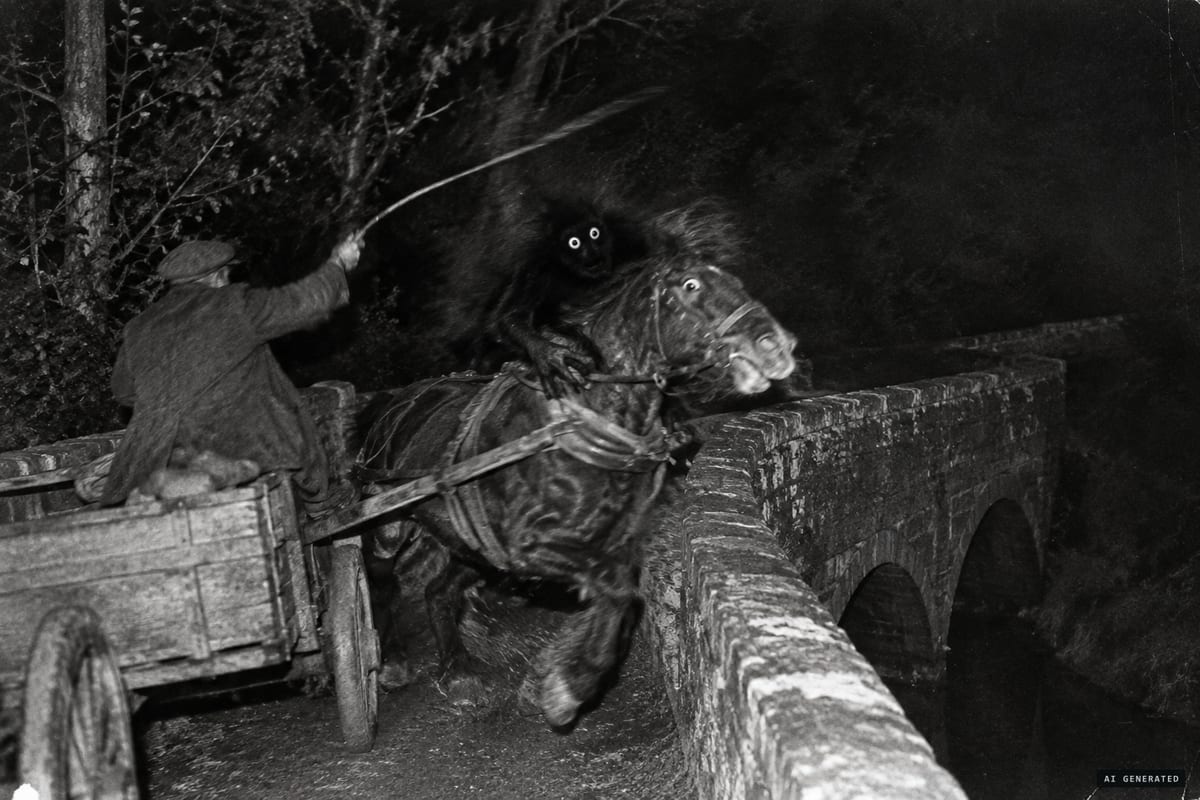 The Man-Monkey of Bridge 39
January 21, 1879. About ten at night. A labouring man was on the road home toward Ranton with his horse and cart. Ahead lay a canal bridge near Norbury, in Staffordshire.
-
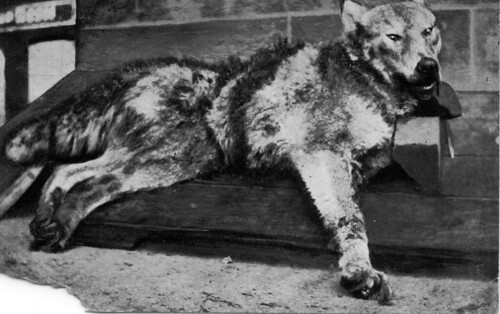 The Hexham Wolf of Allendale, Northumberland, 1904
Northumberland. The winter of 1904. Something was killing sheep in the hills around Hexham and Allendale. Farmers found them bitten at the neck and legs, bowels exposed. Accounts put the losses at over 40. The Hexham Courant gave it a name. "Wolf at Large in Allendale."
-
 The Brig Daphne Sea Serpent Hoax
20 September 1848. Off the coast of West Africa, the American brig Daphne of Boston met something in the water. A huge serpent with a dragon's head. Nearly a hundred feet long. The crew fired a deck gun charged with spike-nails from about 40 yards. The creature reared, plunged, and made off at fifteen or sixteen knots as night came on.
-
 Kevin Cameron's Thylacine Photographs, Yoongarillup, Western Australia (1984)
November 1984. A farm called Hillside, near Busselton in Western Australia. Kevin Cameron, an Aboriginal tracker contracted to search for thylacines, crept up on a striped animal digging at the foot of a tree. A couple of metres away. It stopped digging to look at Cameron squarely. Then it went back to digging. Five colour photographs followed, taken over 20 to 30 seconds.
-
 MacFarlane's Bear: the ancient unexpected bear of Rendezvous Lake (1864)
June 24, 1864. Two Inuit hunters in the Barren Grounds of northern Canada killed a bear. It was very large. Its fur was pale and yellowish. They carried the skin and skull to Fort Anderson, a Hudson's Bay Company post, and gave them to its manager, Roderick MacFarlane. He shipped them to the Smithsonian in Washington. There they sat in storage for decades.
-
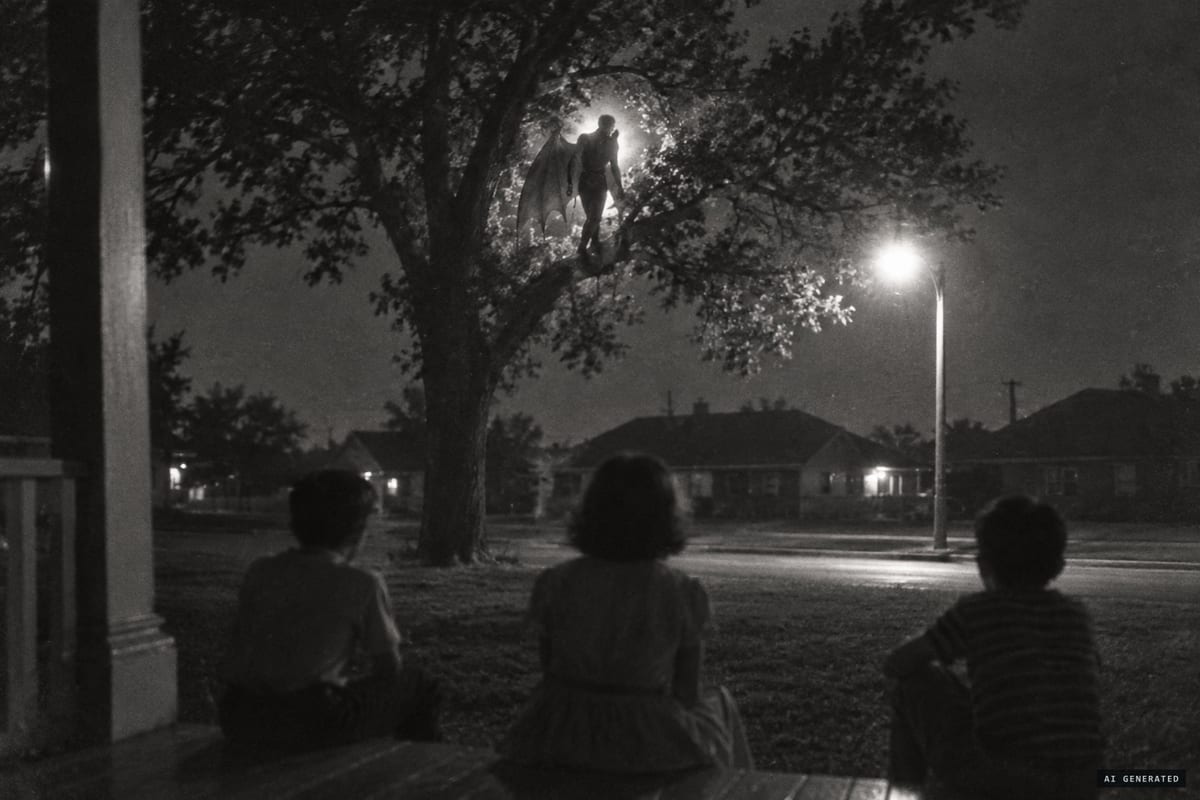 The Houston Batman
Houston Heights. June 18, 1953. About 2:30 in the morning. Three neighbours sat on a porch on East Third Street, escaping the humid summer heat. Then a huge shadow crossed the lawn. It seemed to bounce upward into an old pecan tree.
-
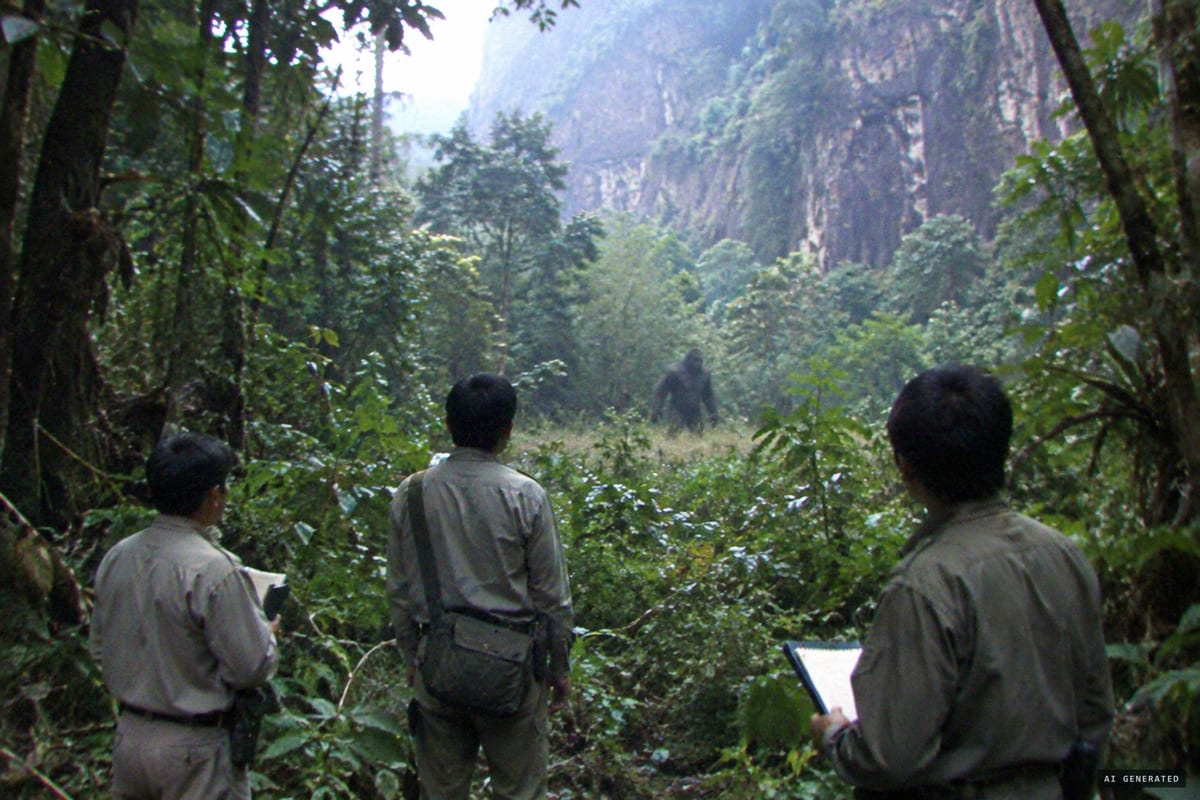 Balpakram tiger-census yeti sighting (Mande Barung)
April 2002. Deep in Balpakram National Park, in the South Garo Hills of Meghalaya, India, a team of 14 officials was counting tigers. Among them was a forestry officer named James Marak. Somewhere in that jungle canyon, the team saw what they thought was a yeti.
-
 Robert Fortney's "Dogman" encounter on the Muskegon River near Paris, Michigan
The Muskegon River, near Paris, Michigan. 1937, or perhaps the summer of 1938. A 17-year-old named Robert Fortney was fishing, a loaded rifle with him. A pack of wild dogs came out of the woods. He fired into the air. The pack slunk away. All except one.
-
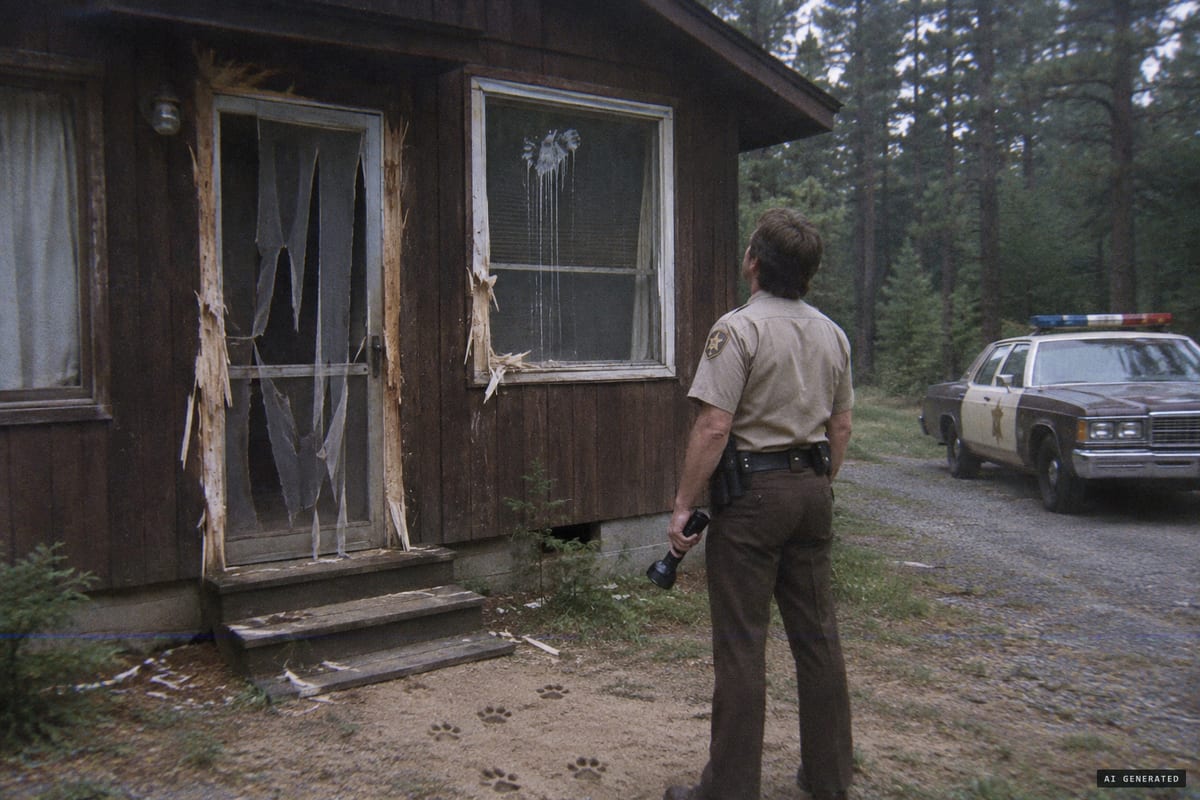 The Luther "Dogman" cabin attack
July 1987. Luther, Michigan. Something tried to get into a cabin near this small Lake County village. It ripped the front door screen apart. It tore the molding off the door and a window. It chewed the door frame. A sheriff's deputy remembered drool smeared across a window, six and a half to seven feet above the ground, with little bits of hair in it.
-
 La Bête de Noth: the phantom big cat of the Creuse
4 November 1982. A farmer near Noth, in the Creuse, approached a misty field and saw a large animal lying in it. It sniffed the air. It got up. Then it loped off into the woods like a cat.
-
 The Steamer Otetiani and the Seneca Lake Sea Serpent
Seneca Lake, New York. July 14, 1900. Shortly before 7 p.m. The steamer Otetiani was running north from Watkins Glen toward Geneva with several dozen passengers aboard. Pilot Frederick Rose spotted what looked like an overturned boat, about 400 yards ahead. Captain Carleton C. Herendeen raised his telescope. The shape moved.
-
 Francisco de Amaral Varella's Minhocão on the Rio das Caveiras
Southern Brazil. Around 1870. Francisco de Amaral Varella was about ten kilometres from the town of Lages. On the bank of the Rio das Caveiras, something lay still. A strange animal of gigantic size. Nearly one metre in thickness. Not very long. It had a snout like a pig. Whether it had legs, he could not tell.
-
 The Wolves of Turku, 1880 to 1882
18 January 1880. Vellua village, about 50 km northwest of Turku. From a neighbouring house, two wolves were spotted crossing a potato field. They were carrying something. It was a boy, Karl Johan Hörnberg.
-
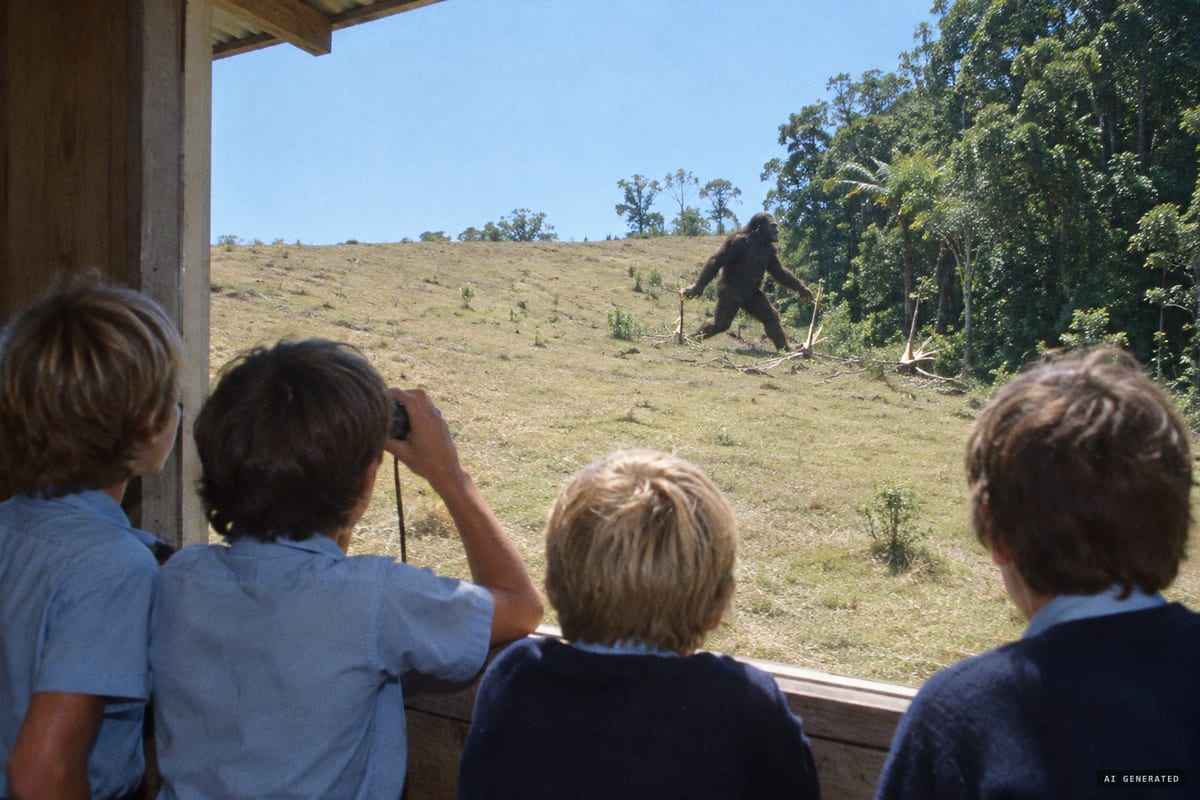 The Springbrook Yowie and the Southport School Boys
October 1977. A party of boys from The Southport School was camping at Koonjewarre, a newly opened campground near Springbrook in the Gold Coast hinterland. It was a bright, sunny day. Uphill from the cabins, something was lying on open ground. Then it stood up.
-
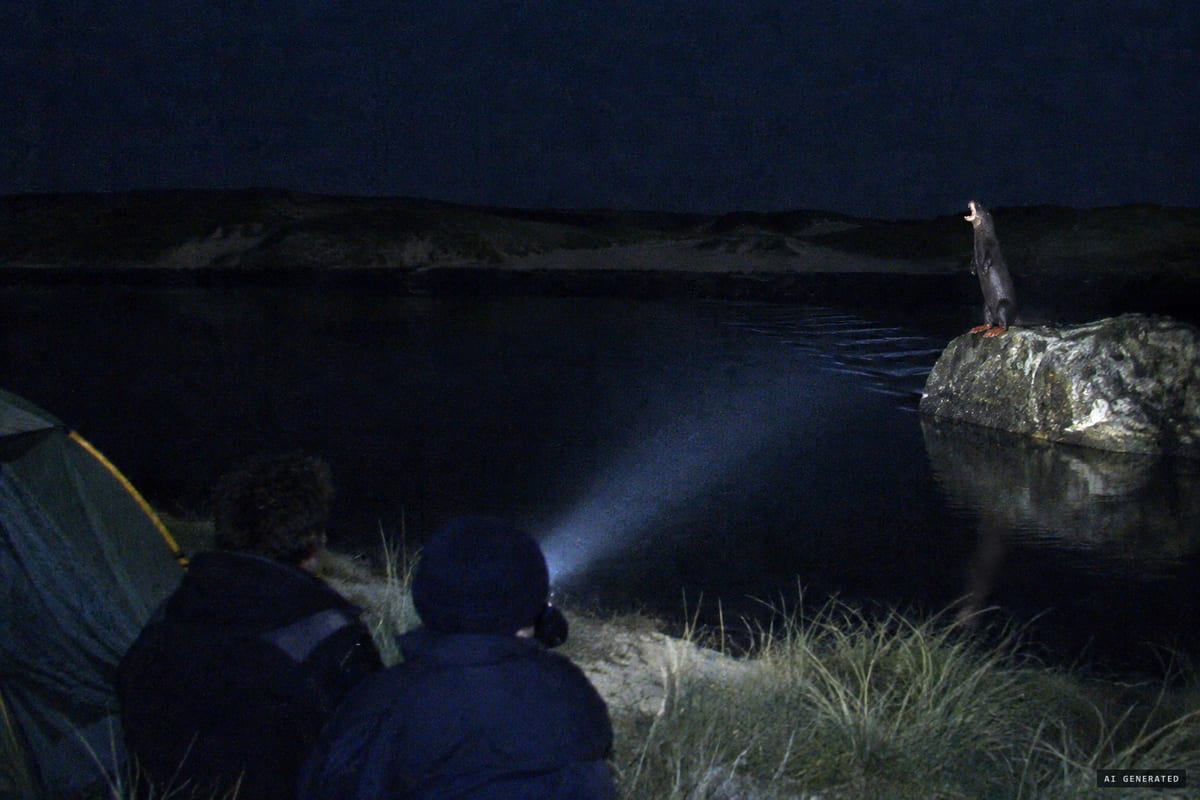 The Omey Island dobhar-chú: Sean Corcoran and his wife at Fahy Lough (2003)
Omey Island, Connemara. Spring 2003. About 3 a.m. Sean Corcoran and his wife were camping beside Fahy Lough when a strange yelping cry came from the dunes. They went to look with a torch. Two to three yards away stood an animal larger than a Labrador. Dark all over. Orange-red, flipper-like feet.
-
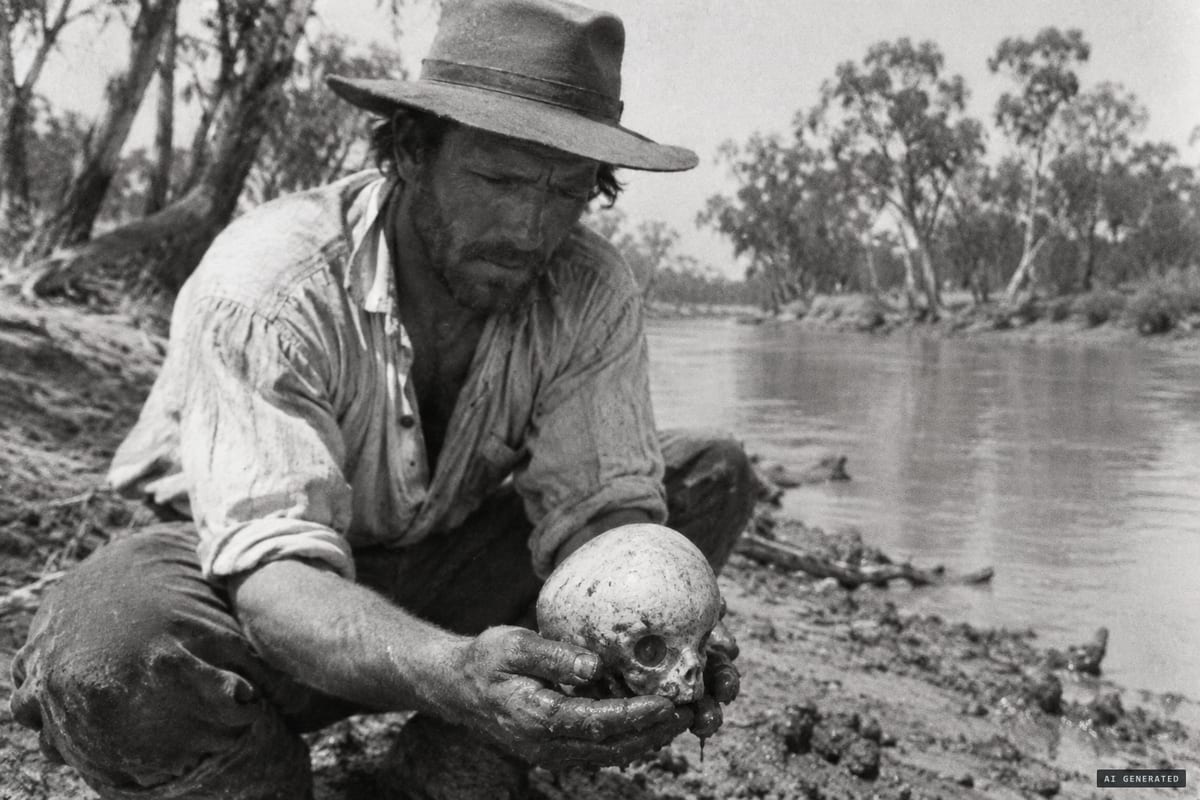 The Murrumbidgee bunyip skull (Balranald, 1846)
January 1846. On the banks of the Murrumbidgee River near Balranald, a squatter came upon a skull. Nobody could place it. Early reports called it the skull of something unknown to science. He showed it to the Aboriginal people of the district. All of them, he said, called it a bunyip.
-
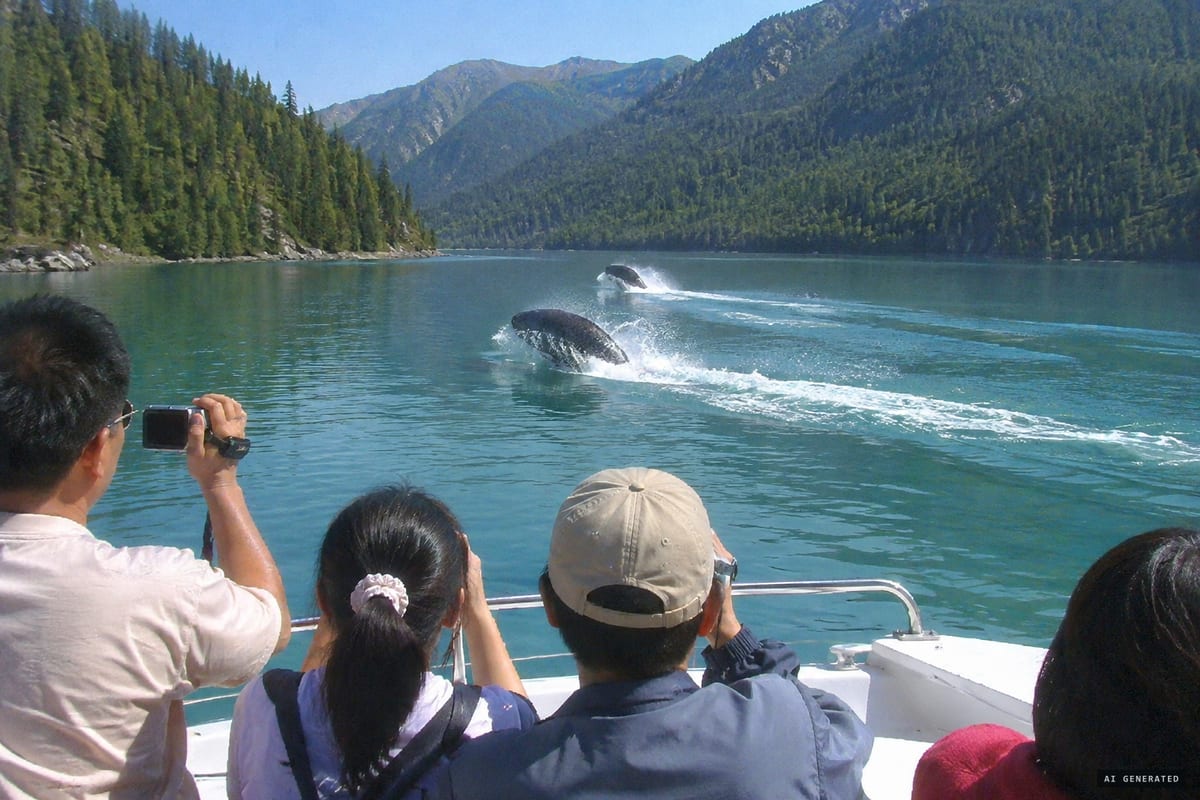 Kanas Lake "Lake Monsters" Filmed by Beijing Tourists near Sandaowan (2005)
June 7, 2005. A tour boat stops near Sandaowan on Kanas Lake, in Xinjiang's Altay Prefecture. Seven tourists from Beijing are aboard. Theirs is the only boat on the water.
-
 The Freeman, Sumerlin and Laughery Bigfoot Sighting, Mill Creek Watershed, 1995
August 1995. The Blue Mountains, about 25 miles east of Walla Walla, Washington. Three men push into the Mill Creek watershed. Paul Freeman, a former Forest Service employee and long-time Bigfoot hunter. Wes Sumerlin. Bill Laughery, once of the state Game Department.
-
 The Payette Lake Monster: Six Witnesses See "Slimy Slim" at Lakeview Camp, McCall, Idaho
July 2, 1944. Six people at Lakeview Camp on Payette Lake, Idaho, watched something moving through the water in an undulating fashion. Its head was raised like the periscope of a submarine. Behind it, a tail fin like the rudder of an airplane.
-
 Jersey Devil livestock attacks in South Jersey, 1840 to 1841
South Jersey. 1840. Sheep and chickens lay dead on the farms. Something had killed them, and it left strange tracks behind. Then there were the screams. Piercing ones.
-
 Alexander Macdonald and the Abriachan Salamander
Loch Ness, about 1888. Alexander Macdonald, a stonemason of Abriachan, stood on the shore. A large stubby-legged animal surfaced from the loch. It propelled itself toward him. It came to within 50 yards. He was taken aback. He compared it to a salamander.
-
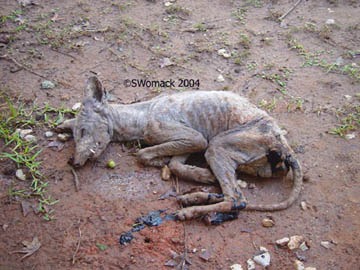 The Pollok Chupacabra Carcass
Friday, October 8, 2004. Pollok, Texas, at the edge of Davy Crockett National Forest. Something was dying under the house of Stacey Womack's mother. Shortly before noon, Womack's brother shot it in the right eye with a .22 rifle and pulled it out with a lariat.
-
 The Beast of Bont: A Black Cat Stalks the Sheep of Pontrhydfendigaid
June 1981. Twelve sheep lay dead in the hills around Pontrhydfendigaid, a Welsh village its people simply call Bont. Then the sightings began. A large black cat, locals said. Something resembling a puma or panther.
-
 The TBS Lake Tele film: Mokele-mbembe from the air, 1992
1992. A light aircraft crosses Lake Tele in the Republic of the Congo. On board is a Japanese television crew working for TBS. Right after arriving, they spot something large moving on the lake surface. Cameraman Seiya Nakajima films it.
-
 The Stove-Pipe Snake of the Hockomock Swamp
1939. Southeastern Massachusetts. A crew from the Civilian Conservation Corps is completing a project on King Philip's Street, at the edge of the Hockomock Swamp. Then they stumble across something huge.
-
 The Bridgewater Hairy Monster and the 1970 Police Bear Hunt
Bridgewater, Massachusetts. 1970. Residents at the edge of the Hockomock Swamp began reporting something in their yards. It was hairy. It stood seven feet tall. Some said it ran upright. Others said it dropped to four legs.
-
 The North Shore Monster of the Great Salt Lake
July 1877. Night on the north shore of the Great Salt Lake. At the Barnes & Co. salt works near Monument Point, the crew heard strange noises from the water. Then a frightful bellow. J. H. McNeil of Kelton saw "a huge mass of hide and fin rapidly approaching." He judged it about 75 feet long. A crocodile-like body. The head of a horse.
-
 The Puget Sound sea serpents caught by Tacoma fishermen
June 1896. An arm of Puget Sound, forty miles northwest of Tacoma. Two fishermen were credited with a catch that newspapers across the country would call a real sea serpent. In fact there were two. A female, 9 feet 11 inches long. A male, 8 feet 2 inches, and the bulkier of the pair.
-
 Hideko Takashima's tsuchinoko carcass in Yoshii, Okayama
May 21, 2000. Kurosawa, a district of the town of Yoshii in Okayama Prefecture. A farmer cutting grass in a rice field met something snake-like, hiding in the grass. It had a large head and round eyes. Its face, the farmer said, resembled Doraemon. The brush cutter swung. The creature escaped into a waterway.
-
 The Loch na Bèiste beast and Mr Bankes's attempt to drain and lime the loch
A Sunday on the Greenstone Point, in Wester Ross. Sandy M'Leod, a Free Church elder, was walking back from Aultbea Church with two companions. What they saw "resembled in appearance a good-sized boat with the keel turned up." Another elder, Kenneth Cameron, saw it on another day.
-
 The Hairy Man of the Rocky Bridge Gorge, 1876
November 1876. A gorge known as the "rocky bridge" on the upper Lachlan River, New South Wales. The men have gone to set their fishing lines. A young woman stays at the fire, preparing supper. A figure approaches. She takes it for one of her own party. Then she sees that it is not. A big red face. Dark hair. Hair down the legs.
-
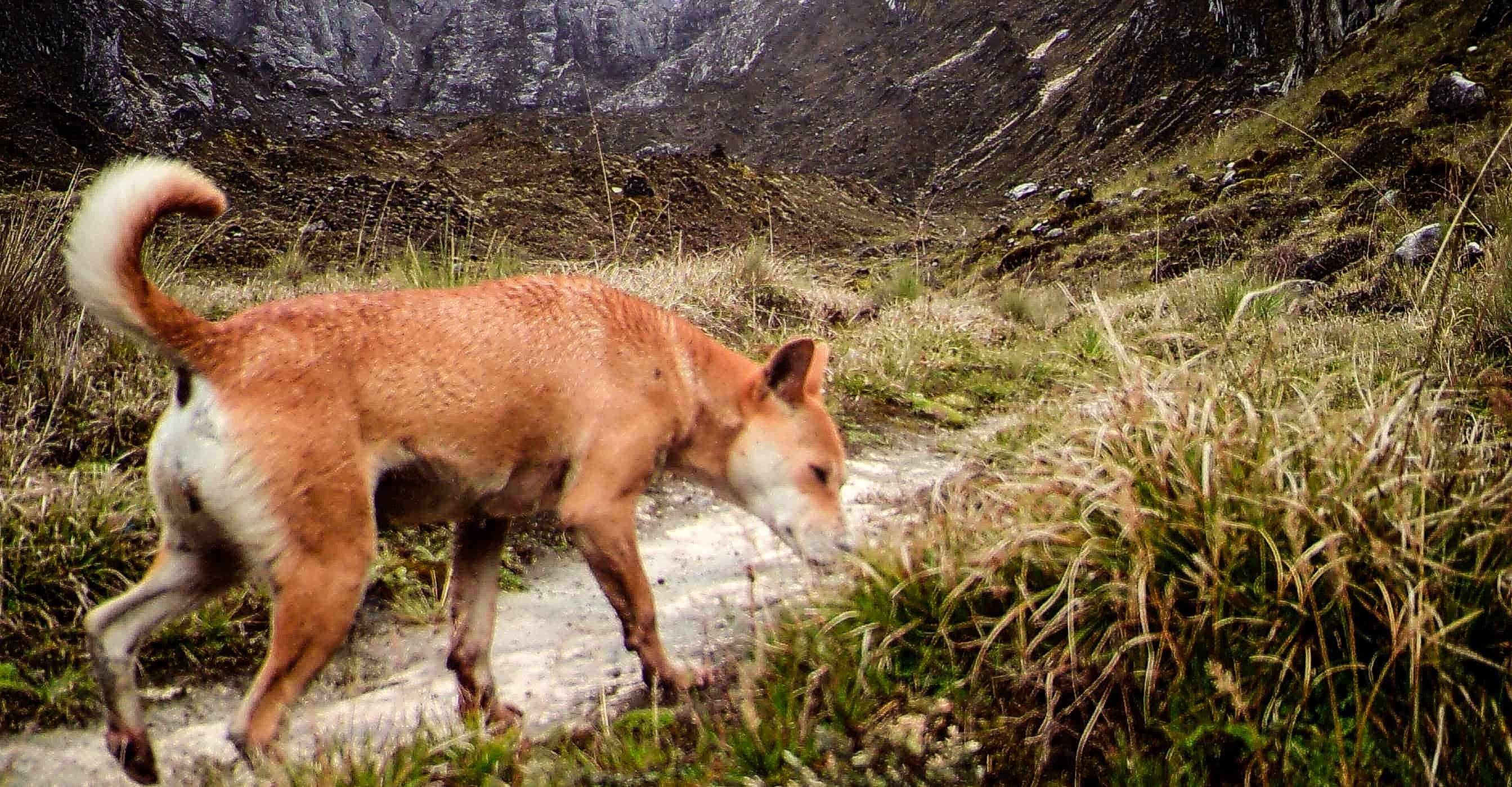 The "extinct" New Guinea highland wild dog is rediscovered on trail cameras near Puncak Jaya
September 2016. High on the slopes of Puncak Jaya, in Indonesian Papua, a field team found a single muddy pawprint. The New Guinea highland wild dog had not been confirmed in the wild for about 50 years.
-
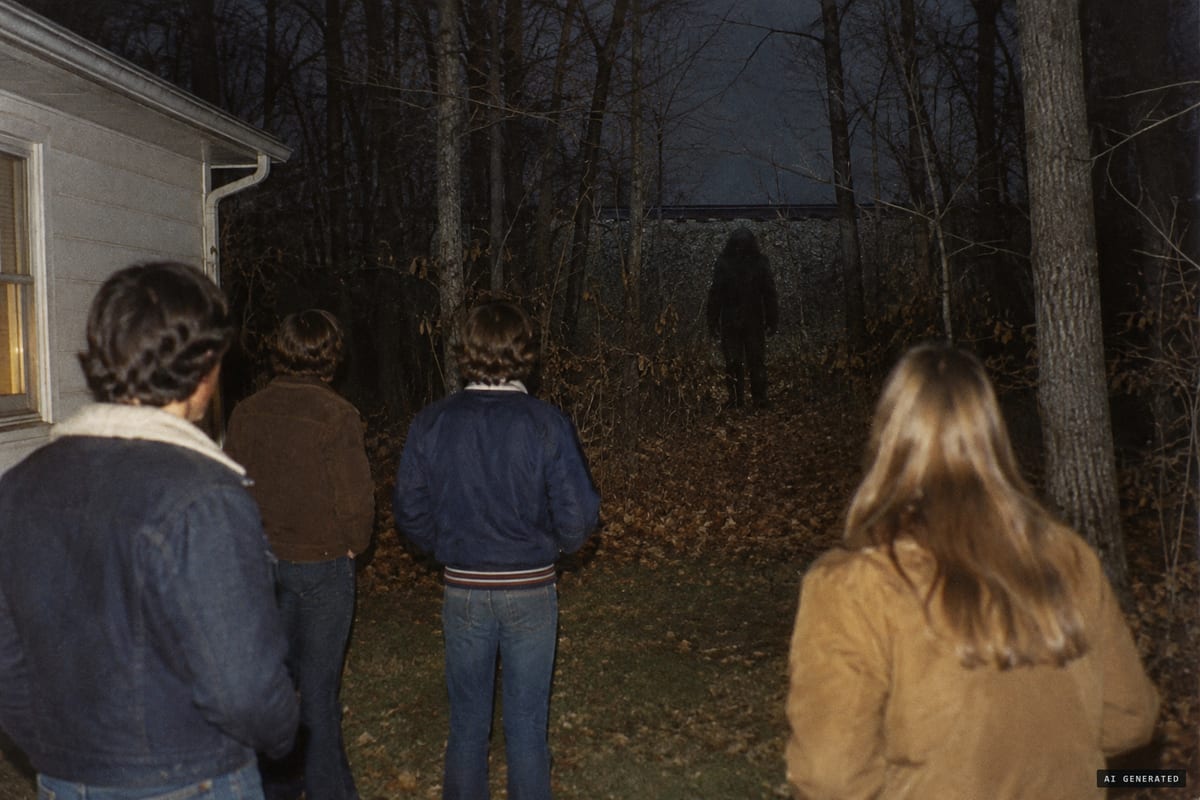 April Edwards, the Maryland Goatman and the headless puppy Ginger
Old Bowie, Maryland. November 1971. Behind the Edwards house, at night, a group of teenagers heard strange noises. John Hayden later described what was out there. About six feet tall. Hairy. Walking on two feet. It made a high-pitched sound, like a squeal.
-
 Craigieburn Range moa sighting and photograph (Freaney, Rafferty and Waby), 1993
January 1993. The Craigieburn Range, in the Arthur's Pass country of Canterbury. Three people hiked into the upper Harper valley. Publican and former SAS sergeant Paddy Freaney. His employee Rochelle Rafferty. Christchurch schoolteacher Sam Waby, rifle in hand.
-
 The 'lioness' of Kleinmachnow
Midnight. Richard-Strauss-Weg, Kleinmachnow, just past Berlin's southwestern city limit. Two passers-by filmed a pale animal at the edge of the woods. They said it was a big cat. It was chasing a wild boar.
-
 Georgina Carberry's Lough Fadda Horse-Eel Sighting
June 1954. Connemara, Co. Galway. Georgina Carberry, a librarian from Clifden and a keen angler, cycled out to Lough Fadda with three friends to fish for trout. They stopped for tea on a finger of land that almost splits the lake in half.
-
 The Little Eagle Bigfoot sightings
Late summer, 1977. Little Eagle, South Dakota. A village of about 300 people on the Standing Rock Sioux Reservation. Something tall and hairy was moving through the brush along the Grand River.
-
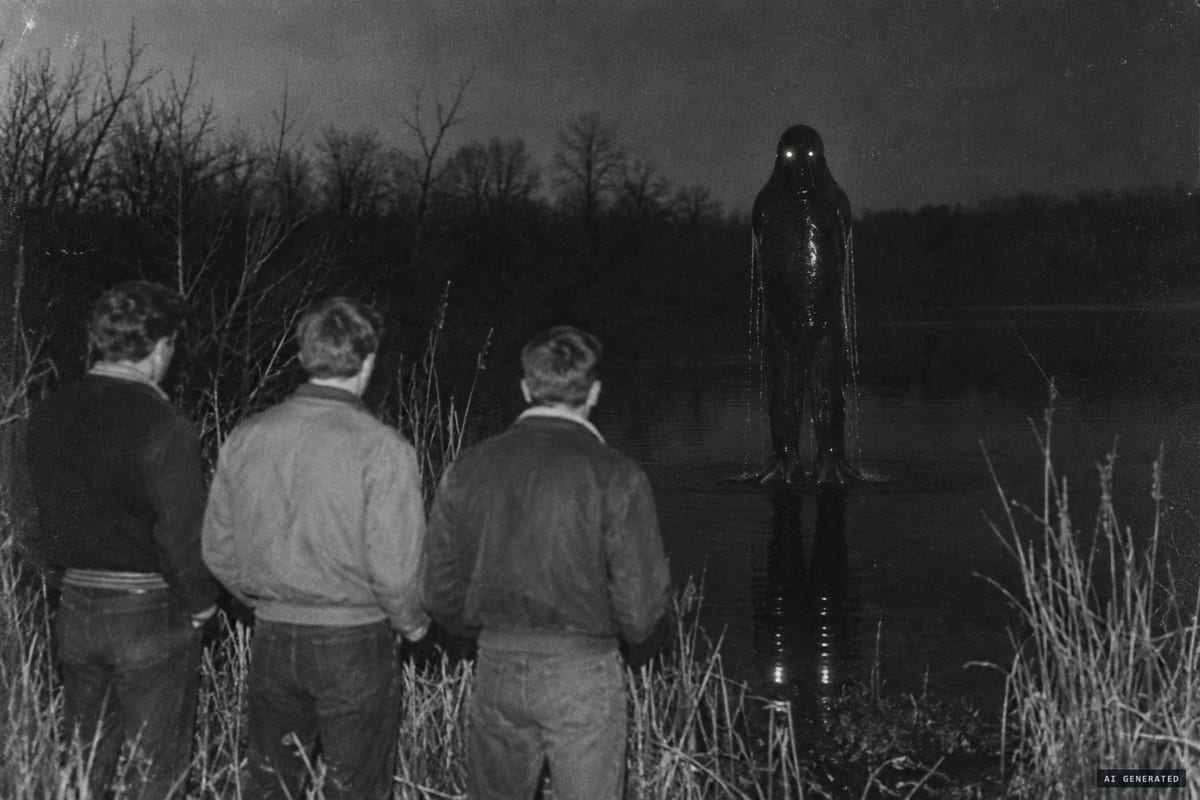 The Charles Mill Lake Monster
March 28, 1959. A Saturday night on the swampy edge of Charles Mill Lake, Ohio, near Ruggles Road. Three teenage friends, Denny Patterson, Wayne Armstrong and Michael Lane, were on the shore. Then something rose up from the black water in front of them.
-
 The Panama Creature of Cerro Azul
Saturday, 12 September 2009. Cerro Azul, Panama. Four teenage boys were playing at a waterfall in the hills east of Panama City. Then something came out of the cave behind the water. It began to climb over the stones towards one of them. Frightened, the boys threw rocks and sticks. They did not stop until it was dead.
-
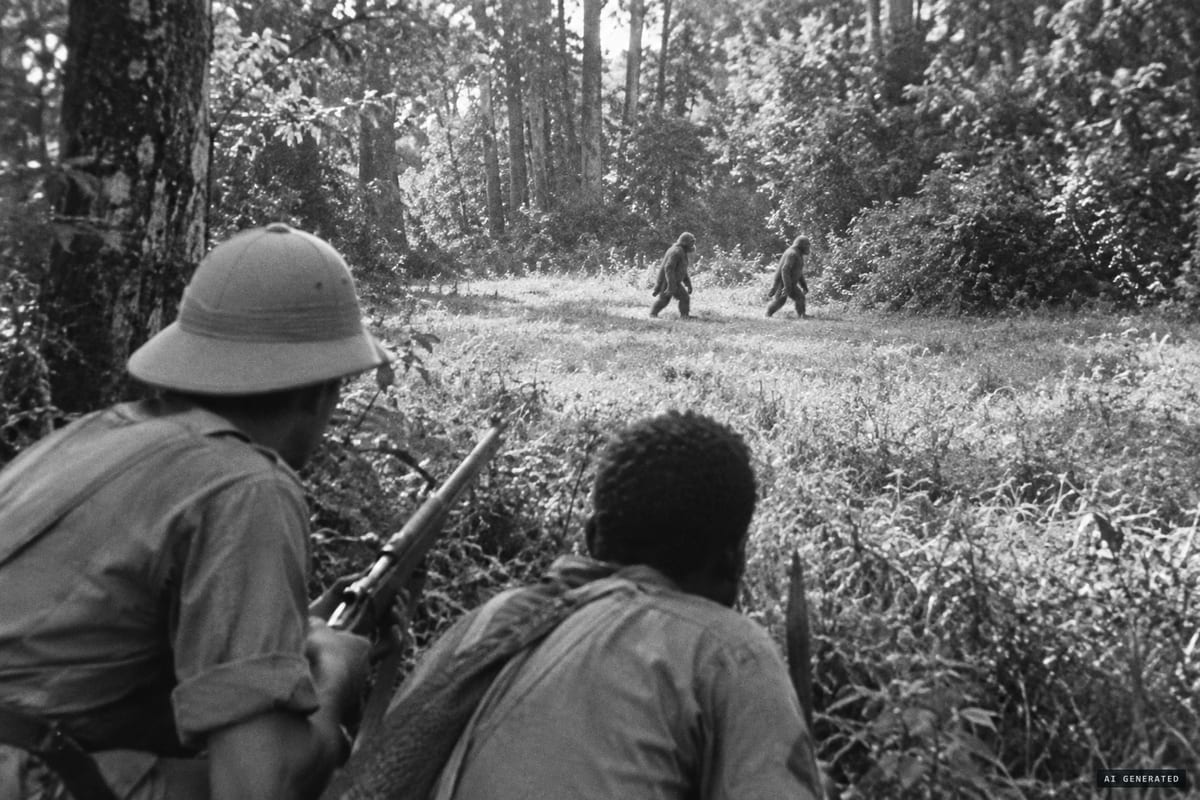 Capt. William Hichens and the two agogwe, Ussure and Simibit forests, Tanganyika
A forest glade in Tanganyika. Capt. William Hichens is waiting for a man-eating lion. A local hunter waits too.
-
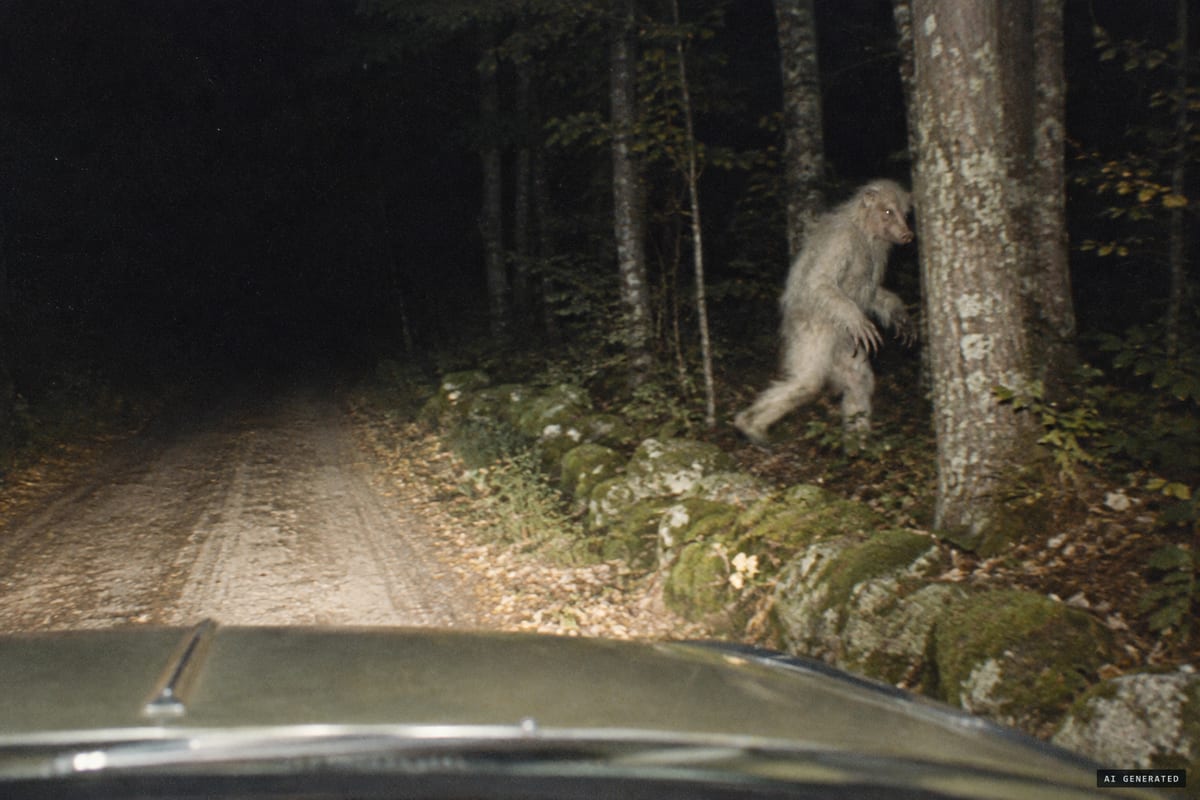 The Northfield Pigman
Northfield, Vermont. 1971. A man heard something in his trash cans. Then the thing stood up. It was all white and covered in hair. Boys at a high school dance saw it bound over a hill by a sandpit and came back scared and literally crying. Drivers on Devil's Washbowl Road caught it ghostly white in their headlights, darting from tree to tree. The body of a person. The face of a pig.
-
 The Deerness Mermaid, Newark Bay, Orkney
Newark Bay, Orkney. Summer, 1890. Off the southeast coast of Deerness, something was swimming in the bay. It had a little black head and a snow white body. It had two arms. And in the water, the locals said, it swam like a human being.
-
 The Ruokolahti Lion ("Elvi")
Ruokolahti, Finland. 23 June 1992. Martti Auvinen, a forestry supervisor, was working near the Russian border when he saw a large, lion-like animal. A massive front. Smooth brown fur. A long tail. For about 40 seconds it looked him straight in the eyes. Then it loped off into denser forest.
-
 Sgt. Thomas Downey's giant winged creature, Bird Hill, Easton, Massachusetts (1971)
Late summer, 1971. Two in the morning. Thomas Downey, a sergeant with the Norton Police Department, was driving home along Winter Street in Mansfield toward Easton. Off duty. Alone. Ahead lay Bird Hill, at the edge of the Hockomock Swamp.
-
 The SS Britannia Raft Giant Squid Attack
March 1941. The Anchor Line ship SS Britannia went down in the Atlantic, sunk by the German raider Thor about 750 miles west of Freetown. Twelve men clung to a raft no larger than a hearthrug. It sat eighteen inches under water. They took turns in the sea.
-
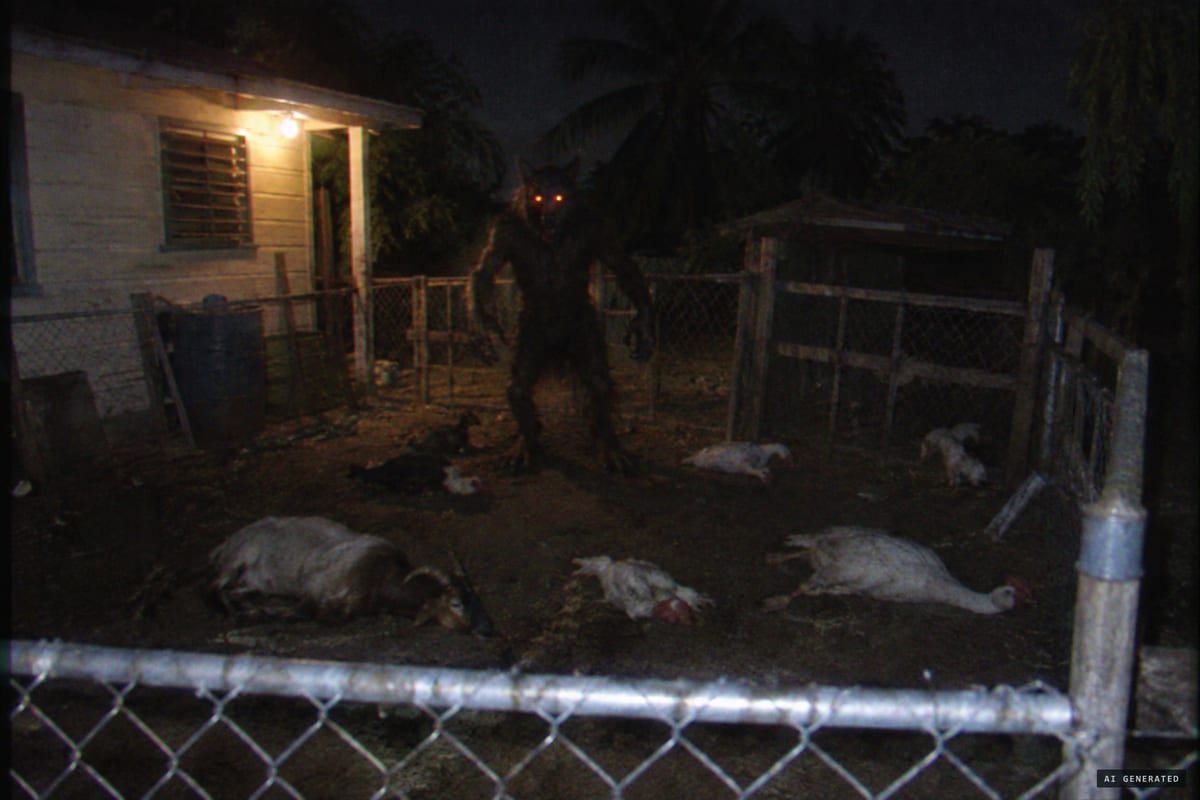 The Sweetwater Chupacabra Killings
March 1996. Sweetwater, a heavily Hispanic city just west of downtown Miami. In two families' yards, the animals lay dead. Goats, chickens, geese and ducks. 69 in all, by one newspaper's count. Most necks were snapped. Many bore large puncture wounds.
-
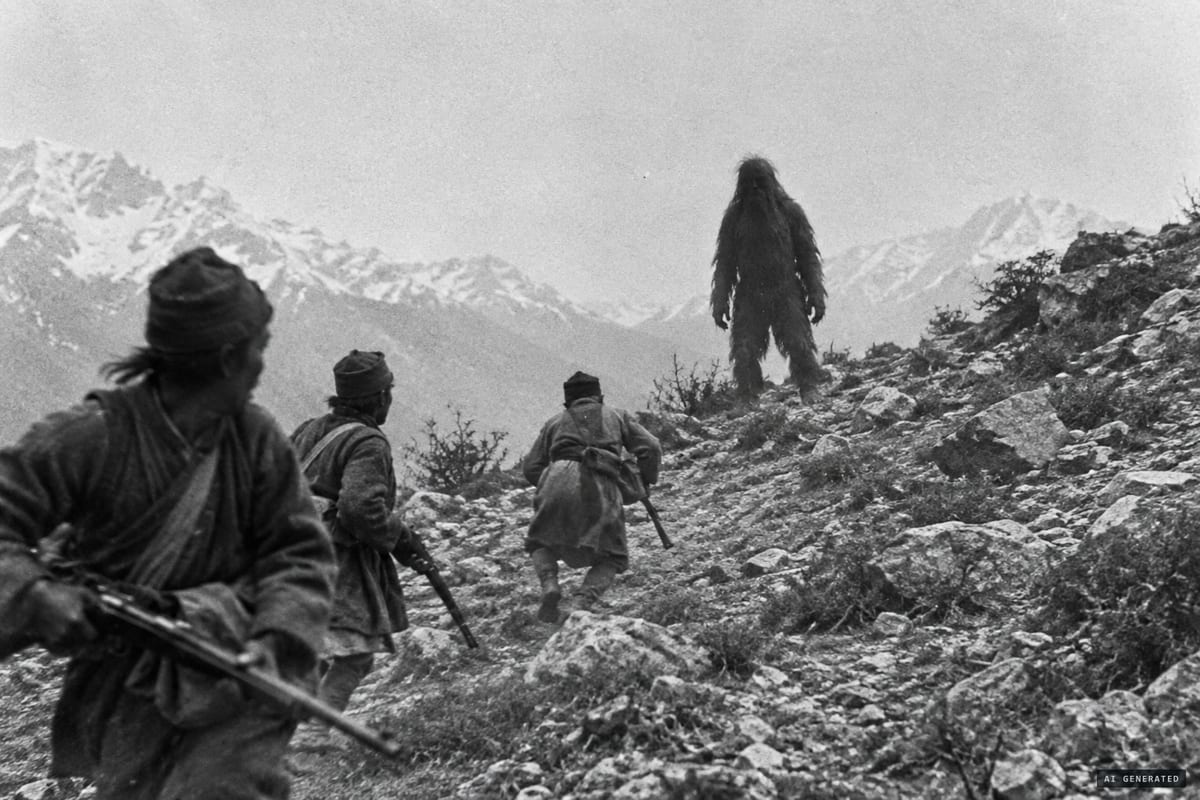 B. H. Hodgson's shooters and the "wild man" of the Kachár
Nepal. Sometime before 1832. A party of hunters is working the Kachár, on the Tibetan frontier, collecting specimens for a British naturalist. Then they see it. It moves upright. It is covered with long dark hair. It has no tail. The hunters take it for a demon, a rakshas. They run instead of shooting.
-
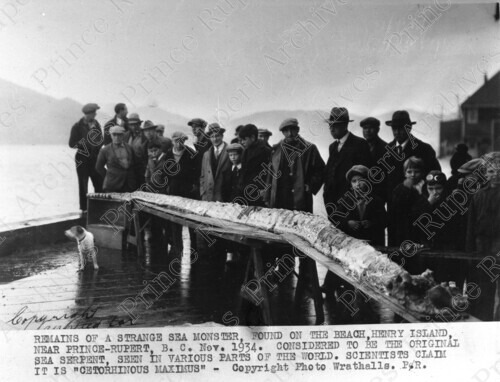 The Henry Island Sea Monster Carcass, Prince Rupert (1934)
November 1934. A fisherman found something on the beach of Henry Island, southwest of Prince Rupert. It was about 30 feet long. It had a head resembling that of a horse. A skin like sandpaper. A hide partly covered by hair and partly by spines or quills. Four flippers. Sea gulls had been feeding upon the flesh.
-
 Howick Falls Inkanyamba: Bob Teeney's sighting and the photo reward (1995)
September 1995. Howick, KwaZulu-Natal. Bob Teeney stood on the viewing platform beside Howick Falls and looked down into the plunge pool. A snake-like head and a long neck. A giant serpent-like creature, he said, about 25 feet long.
-
 Igopogo: The Georgina Island Group Sighting, Lake Simcoe (1952)
1952. Lake Simcoe, Ontario. Four people near Georgina Island saw something in the water. It was large. It was black. It had a face like a dog and ears like a cat.
-
 The Champ mass sighting from the Spirit of Ethan Allen
July 28, 1984. A Saturday evening on Lake Champlain. The excursion boat Spirit of Ethan Allen was hosting a 50th wedding anniversary party off Appletree Point, north of Burlington, Vermont. Then the band stopped playing. Everyone moved to one side of the boat. Something dark was moving through the water alongside them. Three to five humps. About 30 feet long. It paced the boat for more than 1,000 yards, turned, dove and was gone. About 15 minutes later it came back.
-
 The Lake Pepin "marine monster": where the Pepie legend began (1871)
April 1871. Two men set out across Lake Pepin, the widest stretch of the Mississippi River. Somewhere on the water, they saw something moving. Fast.
-
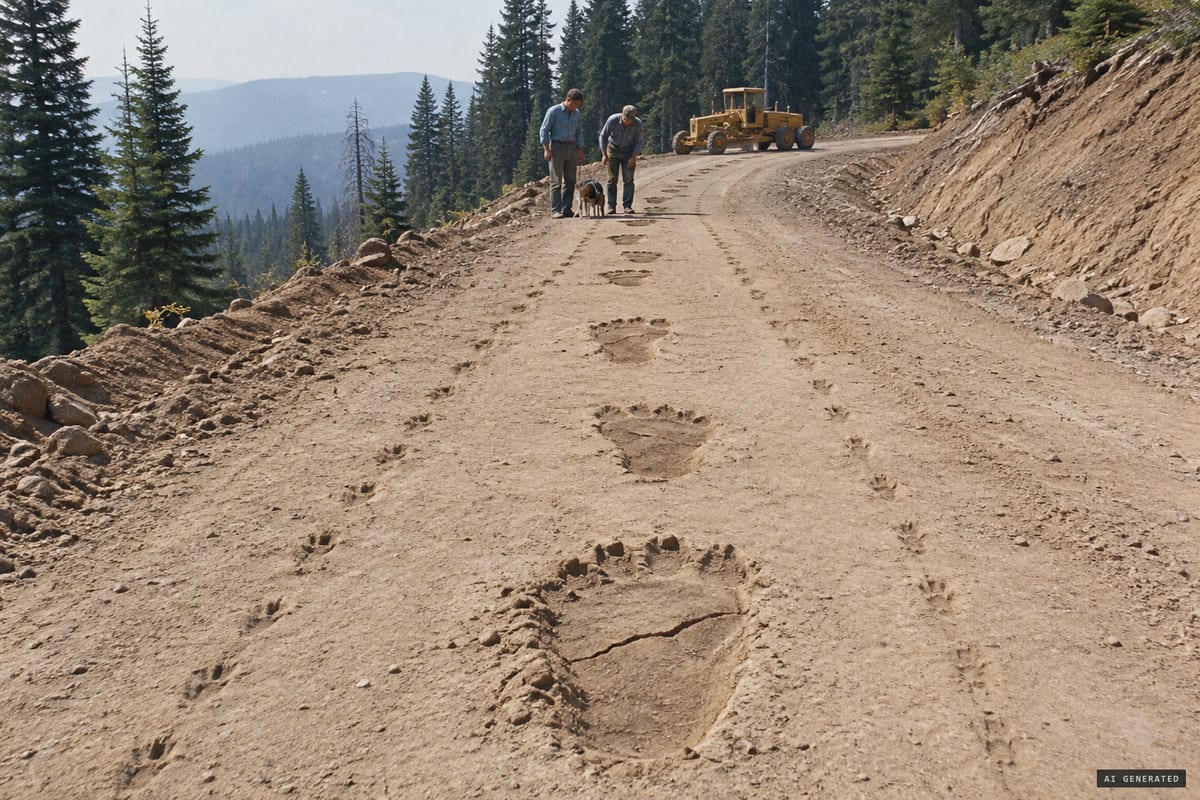 Blue Creek Mountain Bigfoot tracks: the trackway that led to the Patterson-Gimlin film (1967)
August 28, 1967. A road contractor named Bud Ryerson reached John Green on a radio phone. On the new Blue Creek Mountain road in northern California, there were footprints. Three individuals, he said, had walked down the road.
-
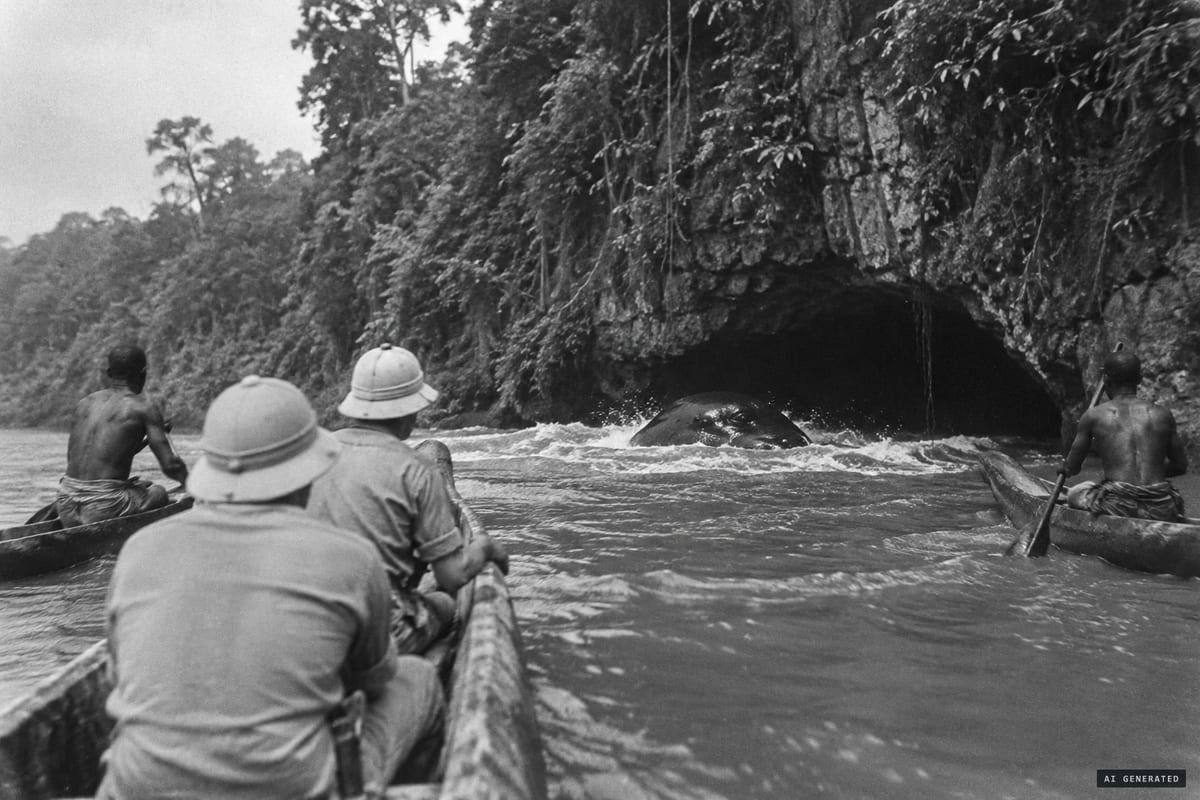 Ivan Sanderson's "m'koo m'bemboo" on the Mainyu River, British Cameroons
1932. The British Cameroons. Ivan T. Sanderson and Gerald Russell were paddling separate canoes across the Mamfe Pool of the Mainyu River. Cliff-like banks slid past, pocked with deep caves. Some were partly flooded.
-
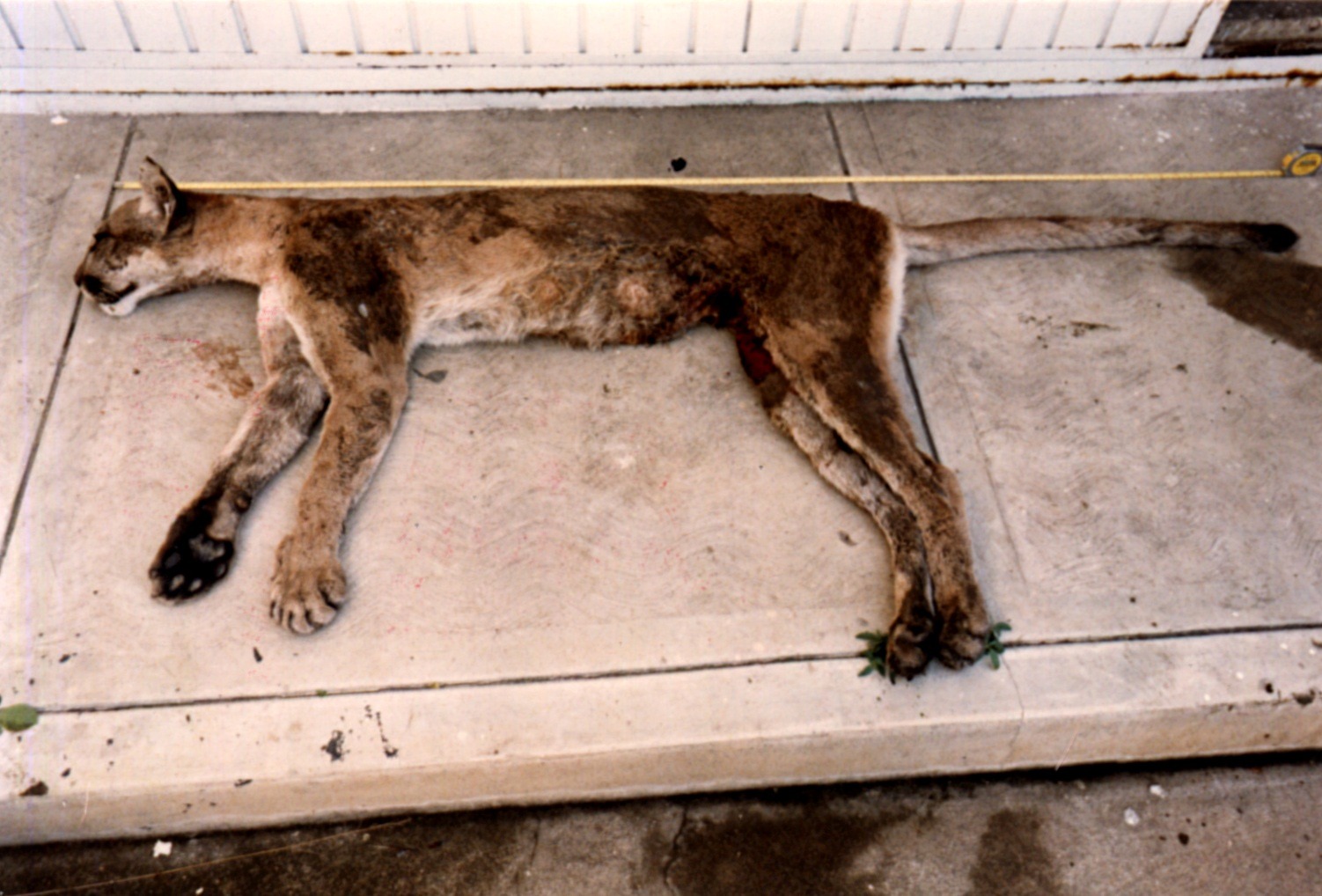 The Rodríguez onza: a legendary cat shot in the Sinaloa sierra
1 January 1986. Night in the sierra of Sinaloa, Mexico. Andrés Rodríguez Murillo and his companion saw eyes shining in the dark and took them for a deer. Then the shape became a large cat, and it seemed ready to attack. He fired.
-
 The Piper Film: Steve Piper's yowie footage in the Brindabella Mountains
August 2000. The Brindabella Mountains, near Canberra. Steve Piper, a bushwalker with a video camera, was filming what he thought was a large kangaroo in a gully. Then he realised it was not. The figure was upright. It walked on two legs. And it was, in his words, "far too big to be a kangaroo."
-
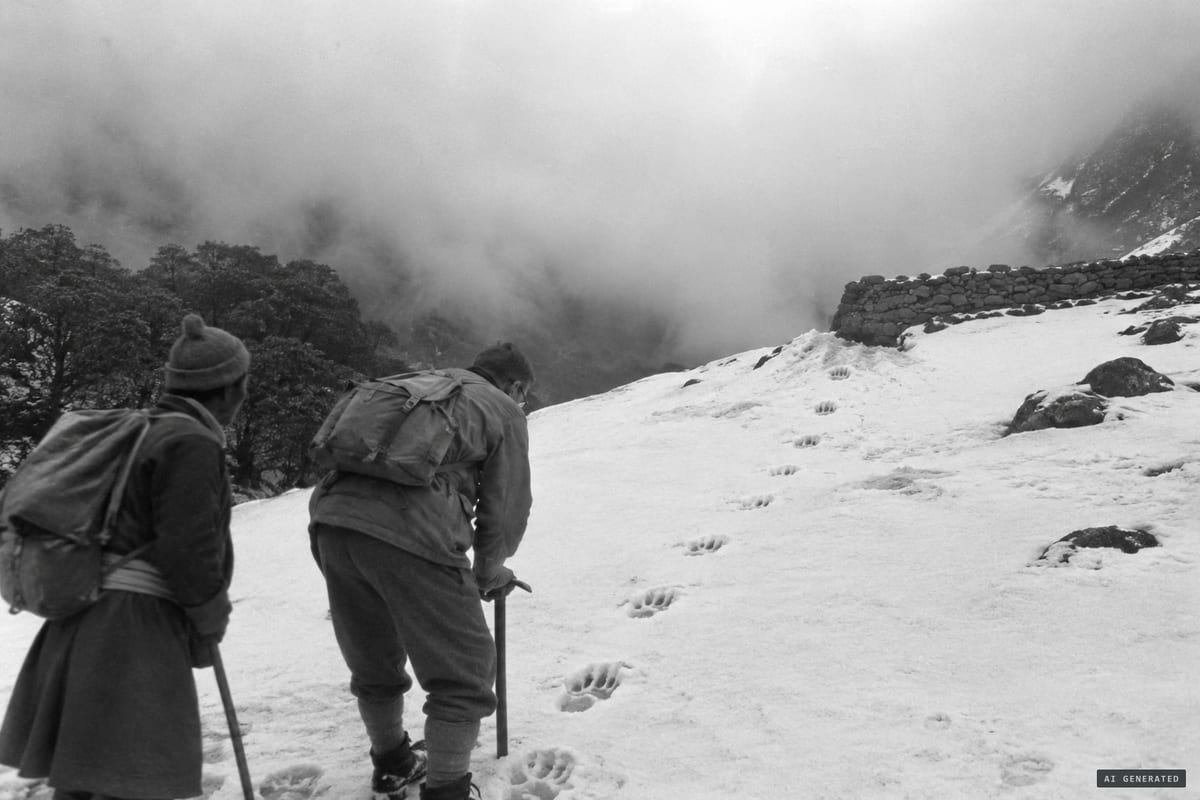 Abbé Pierre Bordet's Yeti tracks at the Barun cols, Makalu region
May 1955. The Makalu region of Nepal. A French geologist and his Sherpa climb toward the Barun cols, heading home from the mountain. Snow begins at the upper edge of the rhododendron forest. Then a trail cuts across the col. Four toes. About 20 centimetres long. Sunk 10 to 15 centimetres into the snow.
-
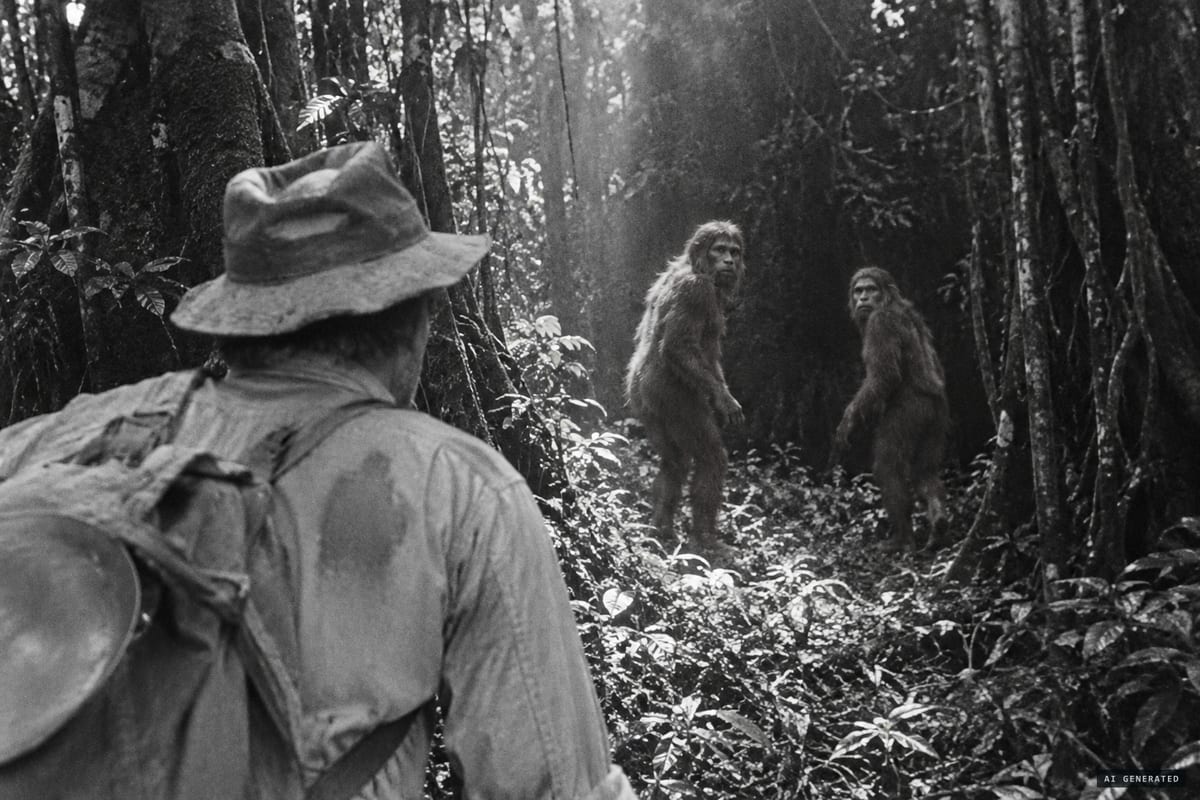 Haines's "Didi" encounter on the Konawaruk River, British Guiana
1910. British Guiana. A man named Haines was prospecting for gold in the forest along the Konawaruk River. He was unarmed.
-
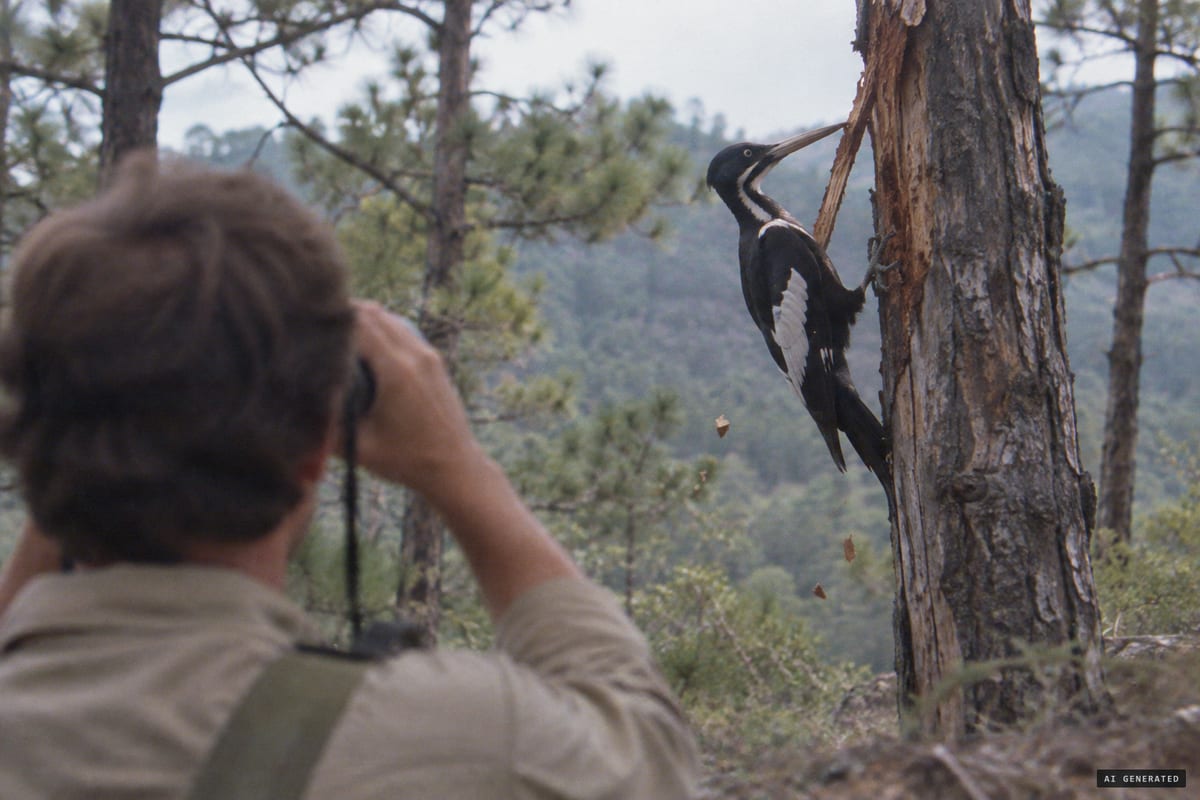 Rediscovery of the Cuban ivory-billed woodpecker at Ojito de Agua (1986)
Eastern Cuba. A hilly pine forest called Ojito de Agua. On 16 March 1986, Cuban biologists Giraldo Alayón and Alberto Estrada saw a female ivory-billed woodpecker, a bird many considered extinct.
-
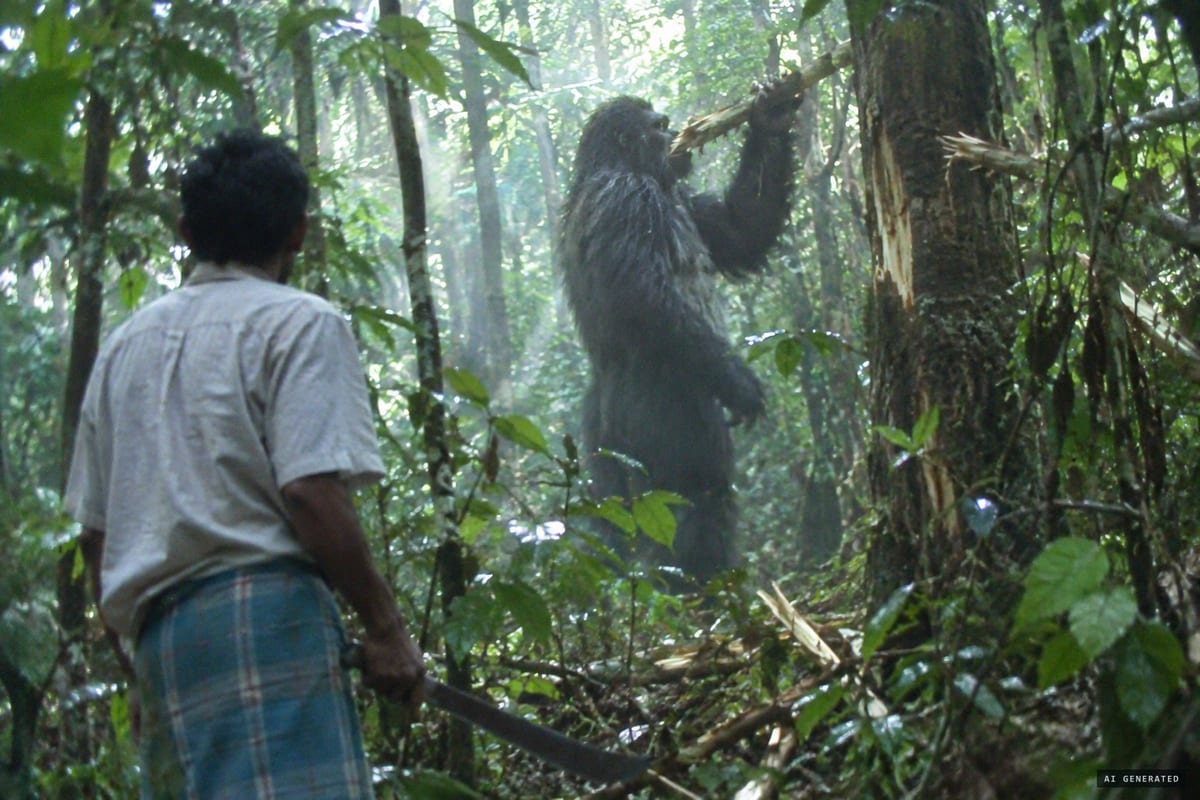 The Garo Hills "Yeti Hair" Samples
November 2003. On the fringes of Nokrek National Park, in the Garo Hills of Meghalaya, a woodcutter named Nelbison Sangma said he saw a mande burung. The forest man. For three consecutive days. He described something about 10 feet tall, part man, part ape, breaking branches off trees and eating their sap.
-
 The Apple Maps Nessie satellite image
April 2014. A satellite image of Loch Ness went around the world. At the northern end of the loch, a pale, elongated shape seemed to sit just under the water. It had trailing white tendrils and what looked like two flippers. Experts speculated it could be nearly 100 feet long.
-
 Loch Ness V-shaped wake video
2001. Loch Ness. The water lay flat and calm. No boats were in view. A camera set up on land caught it anyway. A large V-shaped wake, cutting across the still surface.
-
 Helena, Montana: Man Shot At After Being Mistaken for Bigfoot
A Sunday in December 2018. Public land in the North Hills outside Helena, Montana. A 27-year-old man was setting up targets when the shooting started. One bullet hit about 3 feet to his left. Another went by on his right. He ran for cover and heard more shots.
-
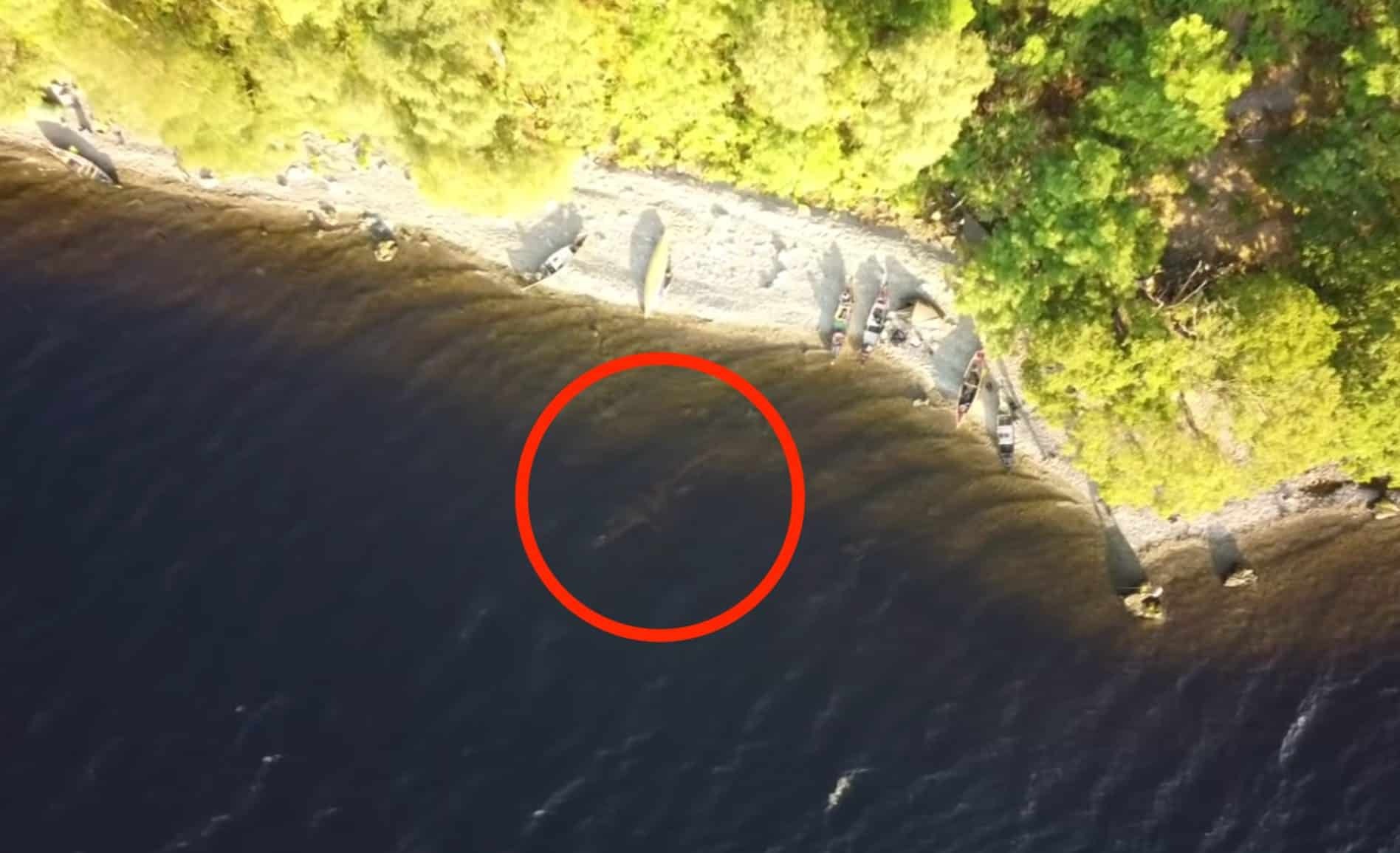 The Richard Mavor Drone Footage, Loch Ness
August 2021. Richard Mavor and a group of friends were three days into a 62-mile charity canoe trip. At a remote spot on the south shore of Loch Ness, they moored their canoes for the night. Mavor's drone was in the air.
-
 Ronald Kaulback's "bare-footed man" tracks, upper Salween, eastern Tibet
1936. The upper Salween, in south-eastern Tibet. Ronald Kaulback, a British explorer and surveyor, was searching for the source of the river. High in the snow, at about 16,000 feet, he found something else.
-
 The Nullarbor Nymph
Boxing Day, 1971. Kangaroo shooters at Eucla, a tiny town on the edge of the Nullarbor Plain, reported something strange. A wild white woman. Long, blond hair. Half-naked, wearing little more than kangaroo skins, and running with a mob of kangaroos.
-
 Eric Wilkinson rediscovers Leadbeater's possum
April 3, 1961. Night in the forests east of Marysville, Victoria. A 22-year-old museum assistant named Eric Wilkinson heard something rustling in the undergrowth. His spotlight picked out a tiny animal with a long, thin, brushy tail.
-
 The Black Panther of the Province of Bari, Puglia
February 2021. The countryside of the province of Bari, in Puglia. Residents reported a large black cat moving through the fields. Police officers saw it too. Some witnesses photographed it. Some filmed it.
-
 The Lake Bathurst Water Animal
November 1821. A fine morning at Lake Bathurst, New South Wales. E. S. Hall was walking beside the marsh when something began casting up the water. It made a noise like a porpoise. Only the head showed. From about 100 yards, it looked like a bull-dog's head, but perfectly black.
-
 The Ottosen Bigfoot Wave and Sheriff Marvin Andersen's Investigation
Ottosen, Iowa. July 1978. The complaints started coming in to the sheriff. On the night of July 27, 9-year-old Donette Henkins saw a short, hairy, apelike animal with fangs and deep-set eyes. Three days later her sister Dawn, 11, came back in screaming.
-
 The Lake Ripley Monster and the Resort Platform
July 1896. Lake Ripley, Wisconsin. A resort's floating platform sat on the water, chained to the bottom of the lake. Then something came up from below. Witnesses on the shore saw the platform thrown into the air. The anchor chain snapped. They described a head that resembled an elephant, on a neck and body nearly 20 feet long. Then it sank back beneath the surface.
-
 Dr. Vazgen Karapetyan and the Captured Wild Man of Dagestan
Dagestan. December 1941. A military doctor is called to examine a prisoner unlike any he has seen. The man is naked and barefoot. About 180 cm tall. His chest, back and shoulders are covered in shaggy dark brown hair, "much like that of a bear." He does not speak. Vazgen Karapetyan extends his hand and says "Hello." Nothing comes back. Only eyes that are "dull and empty."
-
 The Elmendorf Beast
Spring 2004. Chickens were disappearing from Devin McAnally's farm near Elmendorf, just south-east of San Antonio, Texas. The birds seemed drained of blood. The meat was left behind.
-
 The Dobhar-chú of Glenade Lough and the death of Grace Connolly
September 1722. Grace Connolly walked down to the shore of Glenade Lough in County Leitrim to wash clothes. She never came home. Her husband, Terence McGloighlin, found her body. Asleep on top of it lay a beast from the lake. A Dobhar-chú. The water hound.
-
 Felicity, the Cannich Puma (Kerrow Farm, Glen Affric, 1980)
Glen Affric, 1976. Jessie Chisholm of Tomich reported a big black cat near the forest by the cottage. Over the following years came more reports. Big cats seen. Big cats heard. At Kerrow Farm near Cannich, farmer Ted Noble found sheep savaged, their bones crushed, and saw a big cat stalking the Shetland ponies.
-
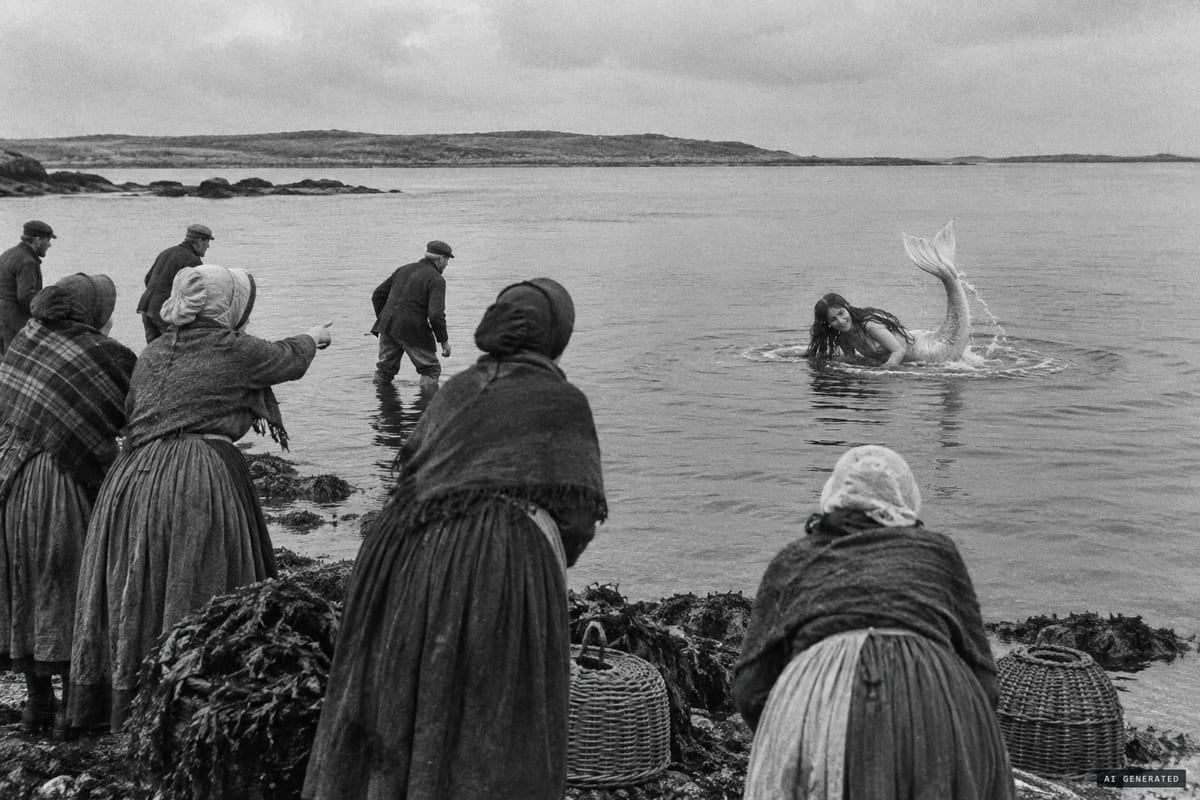 The Benbecula Mermaid: Stoned at Grimnis, Buried at Nunton (c. 1830)
Benbecula. The Outer Hebrides. Around 1830, people were cutting seaweed on a reef at Grimnis. One woman went to the lower end of the reef to wash her feet. She heard a splash in the calm sea. A few feet away was a creature in the form of a woman in miniature.
-
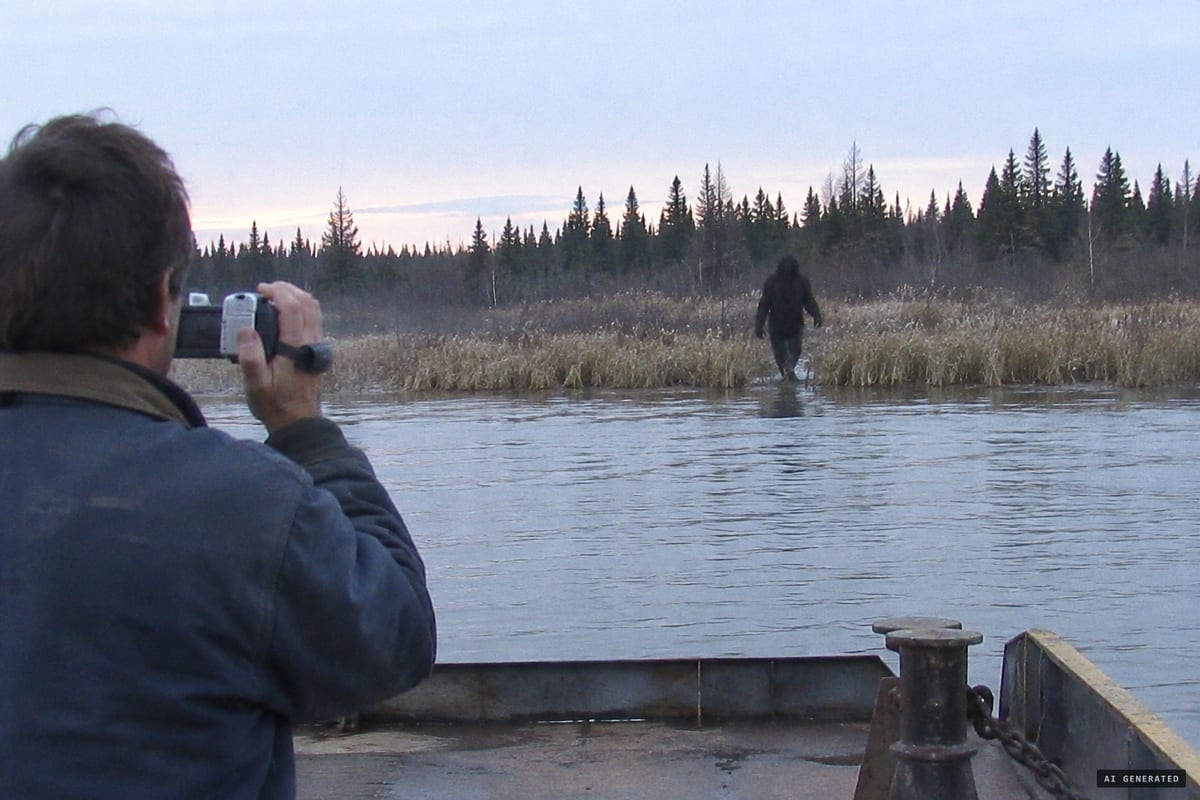 Bobby Clarke's Nelson River Sasquatch Video, Norway House
April 16, 2005. Just after dawn on the Nelson River. Bobby Clarke was taking a vehicle barge across the water at Norway House, Manitoba. On the far bank, he saw something. A big, black figure. Massive. Walking upright, calf-deep in the water, through the bulrushes.
-
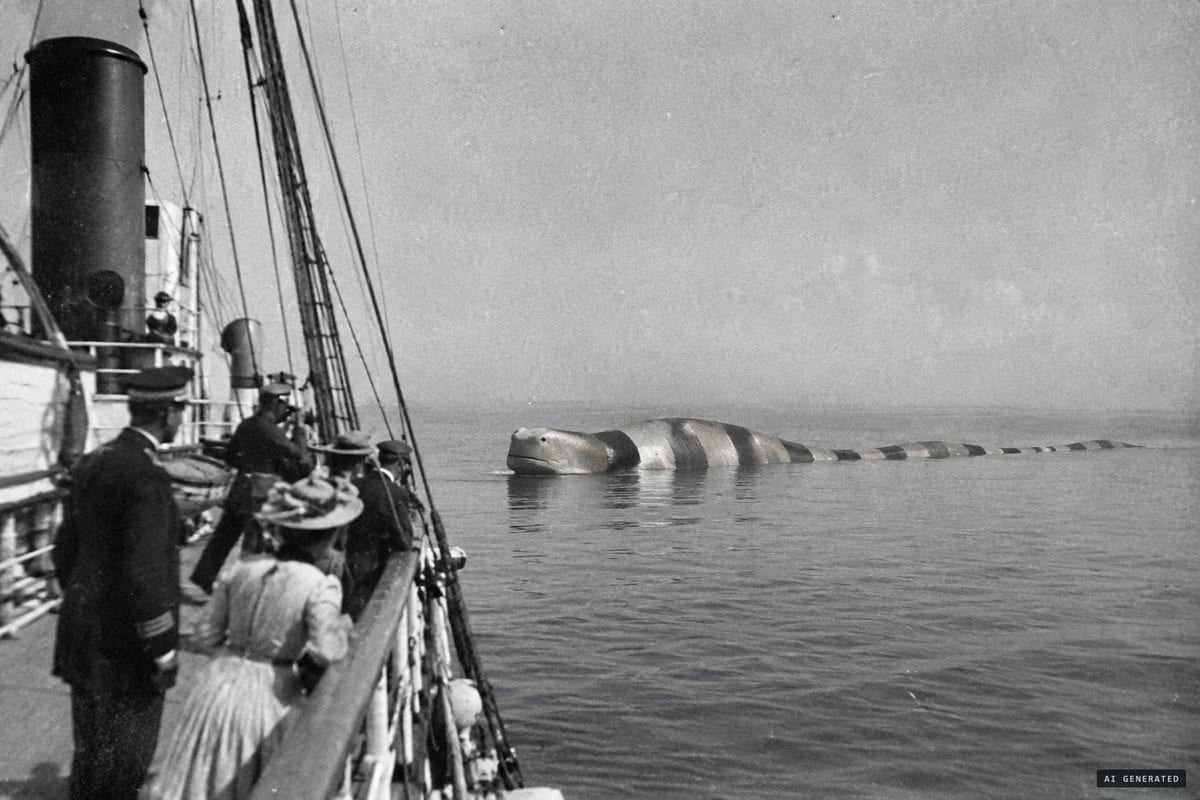 The SS Nestor sea serpent
Monday, 11 September 1876. Half-past ten in the morning. The steamer Nestor was crossing the Strait of Malacca, bound for Shanghai. The weather was fine. The sea was smooth. Then the third officer called out. A shoal.
-
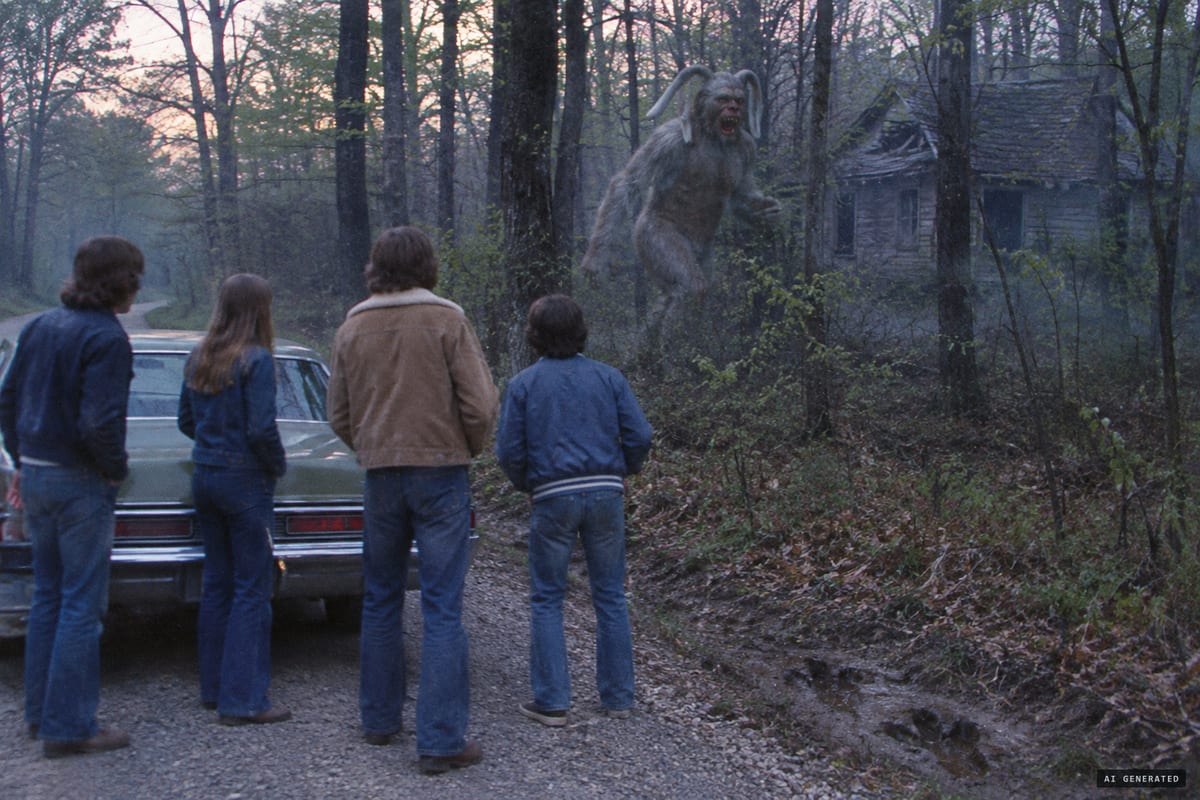 Cohomo, the Cole Hollow Road Monster
Spring 1972. Cole Hollow Road, in the wooded bluffs between East Peoria and Pekin, Illinois. An 18-year-old named Randy Emert said something was out there. Something white and hairy, between eight and twelve feet tall. It let out a long screech, he said, like an old steam engine whistle, only more human.
-
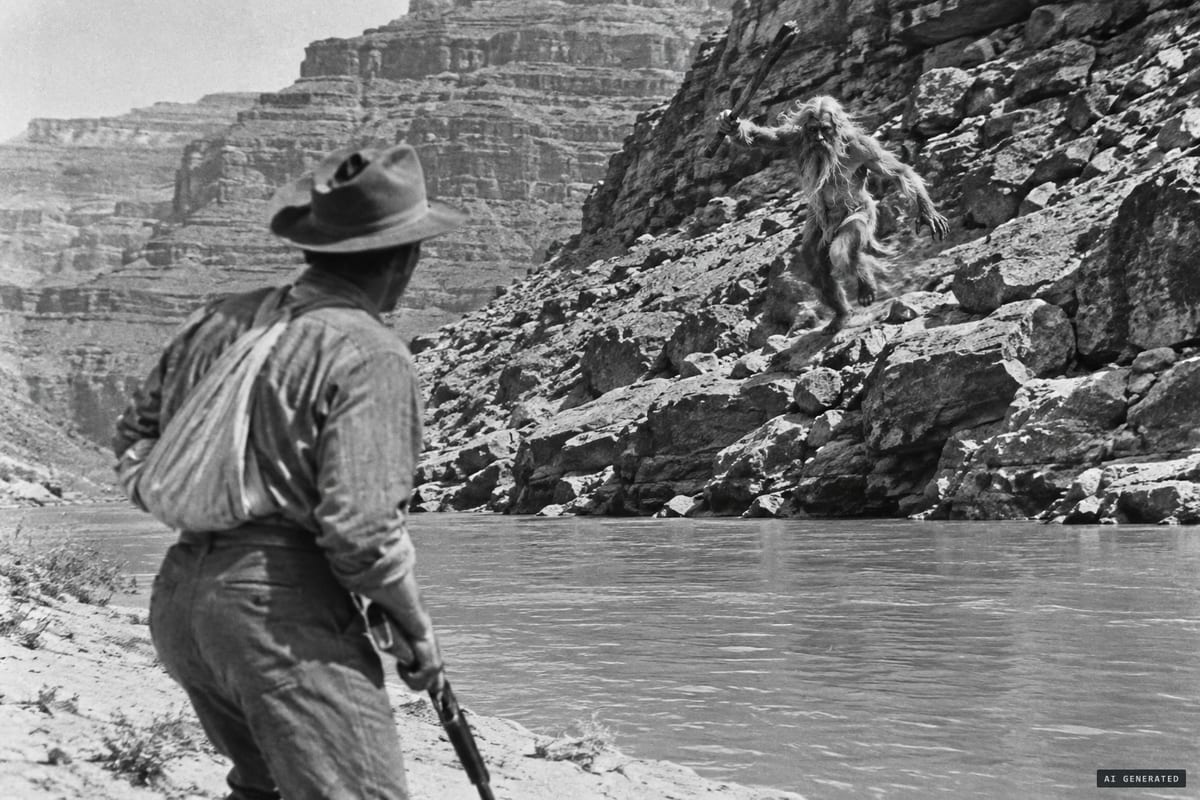 I. W. Stevens and the Wild Man of the Grand Canyon
Northwestern Arizona, about 1901. I. W. Stevens of Cedar, Colorado, was there on business. A broken arm kept him idle, so he hunted beaver along the river at the lower end of the Grand Canyon. On the third day he saw a head on a bench of rocks. Then the whole figure. A naked man with long white hair, a matted beard to his knees, fiery green eyes and claws at least two inches long.
-
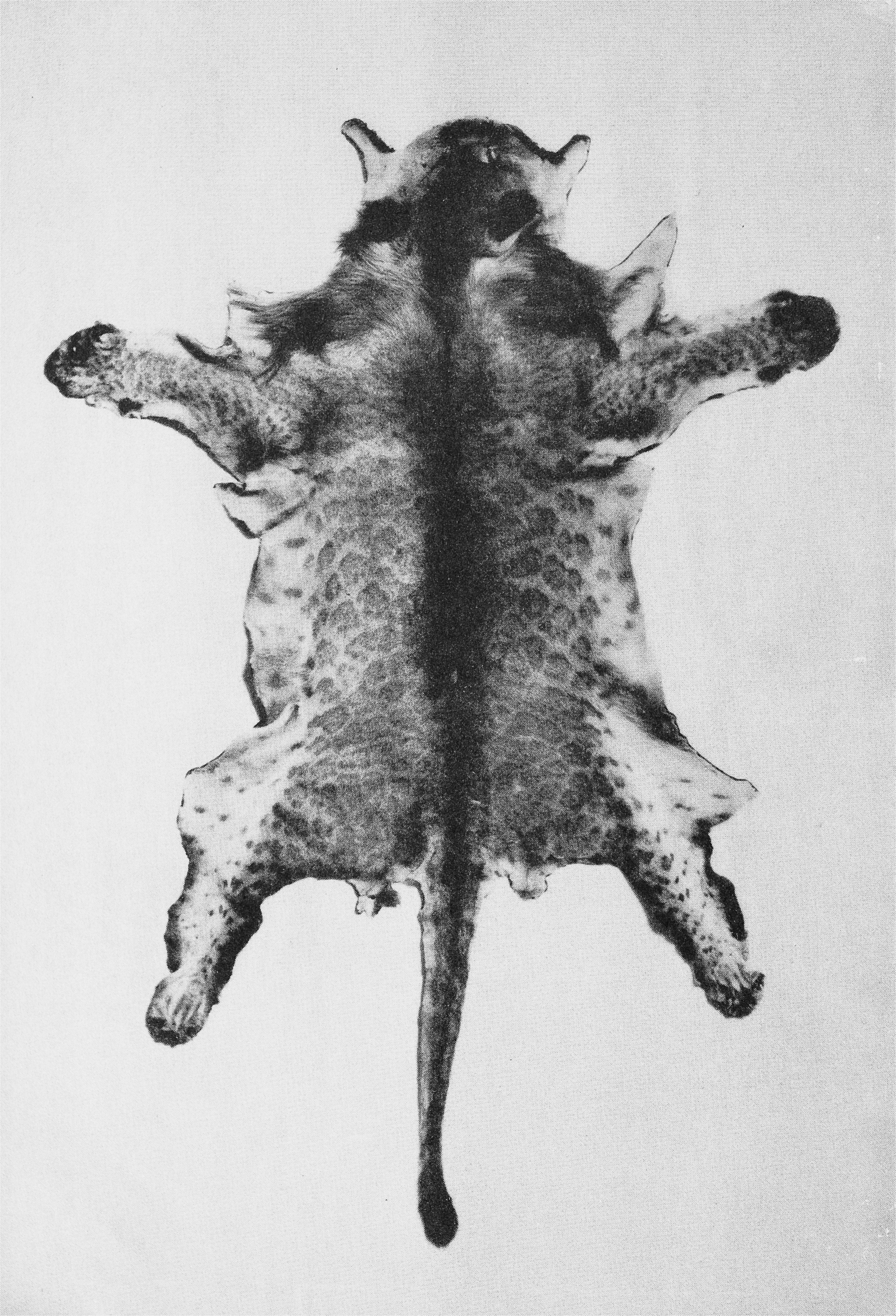 Michael Trent's marozi: the spotted lions of the Aberdare Range
Kenya, 1931. High in the Aberdare Range, at about 10,000 feet, a settler named Michael Trent shot two lions. A male and a female. Smallish adults. And spotted. Their skins carried large rosettes, like a jaguar's, running in lines across the flanks, shoulders and thighs. The male's mane was insignificant.
-
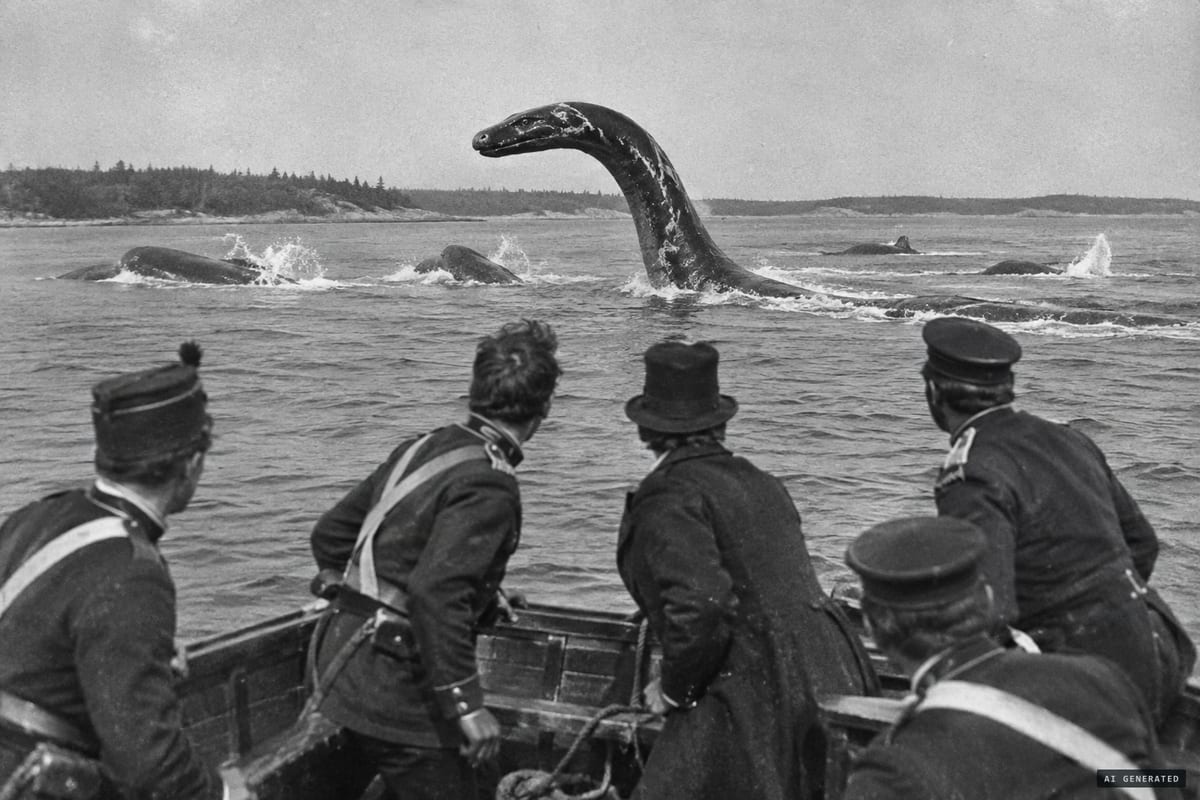 The British Officers' Sea Serpent of St. Margaret's Bay
May 15th, 1833. A small boat carried five men from the Halifax garrison on a fishing trip toward Mahone Bay. Three were officers of the Rifle Brigade. One was an artillery lieutenant. One was the Ordnance Storekeeper.
-
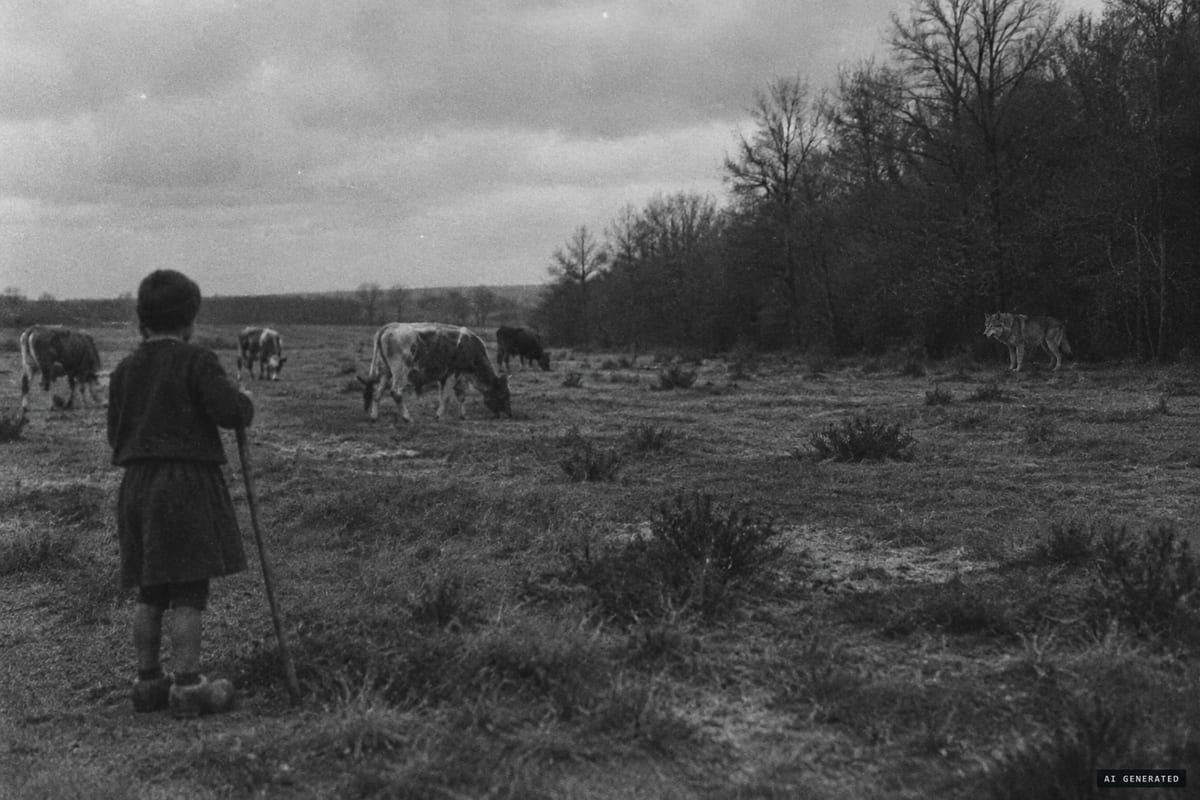 The Beast of Benais: the man-eating beasts of Touraine, 1693-1694
19 February 1693. Saint-Patrice, in the north-west of Touraine. Nine-year-old Pierre Boireau was found half eaten. Five days later a mother found the remains of her daughter Antoinette, 7, on the heath of Continvoir.
-
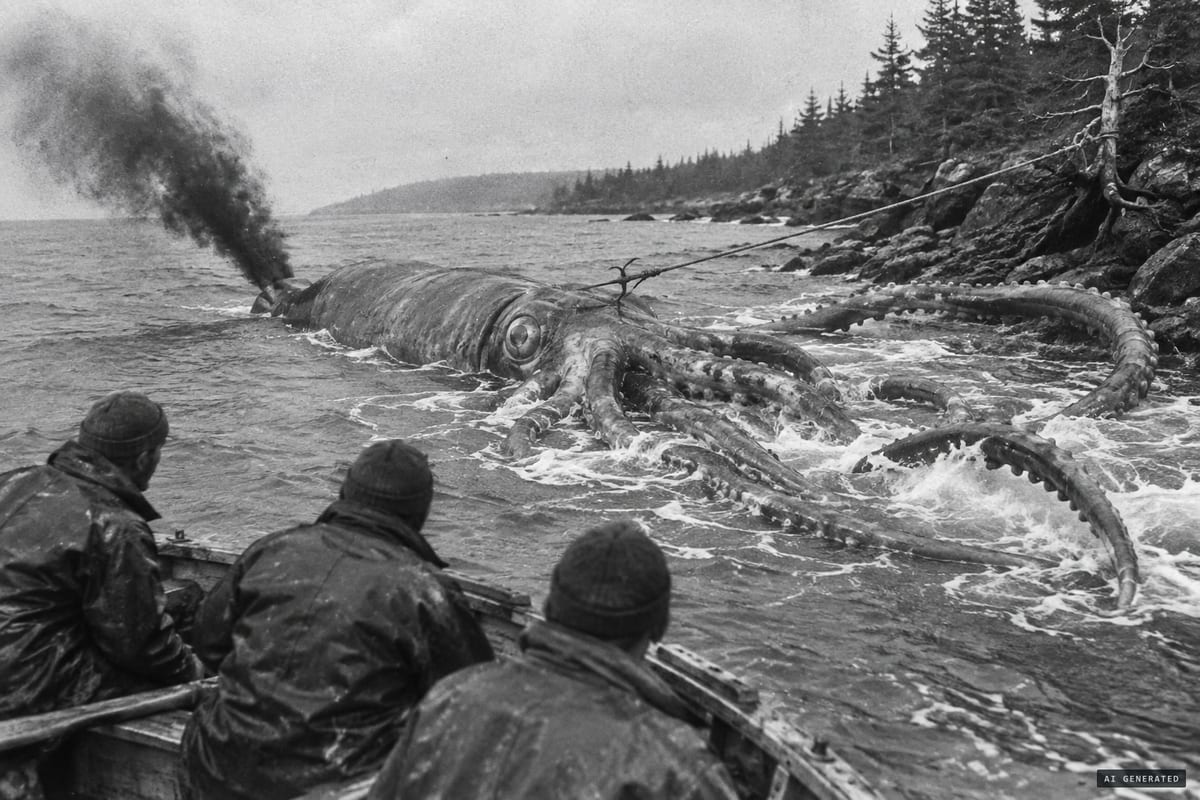 The Thimble Tickle giant squid: three fishermen moor a stranded "devil-fish" in Notre Dame Bay
November 2, 1878. Thimble Tickle, Newfoundland. Three fishermen rowed toward a bulky shape near the shore, thinking it might be part of a wreck. It was not. It was a huge animal with large glassy eyes, aground on an ebbing tide, churning the water into foam with immense arms. At times the jet from its funnel ran black as ink.
-
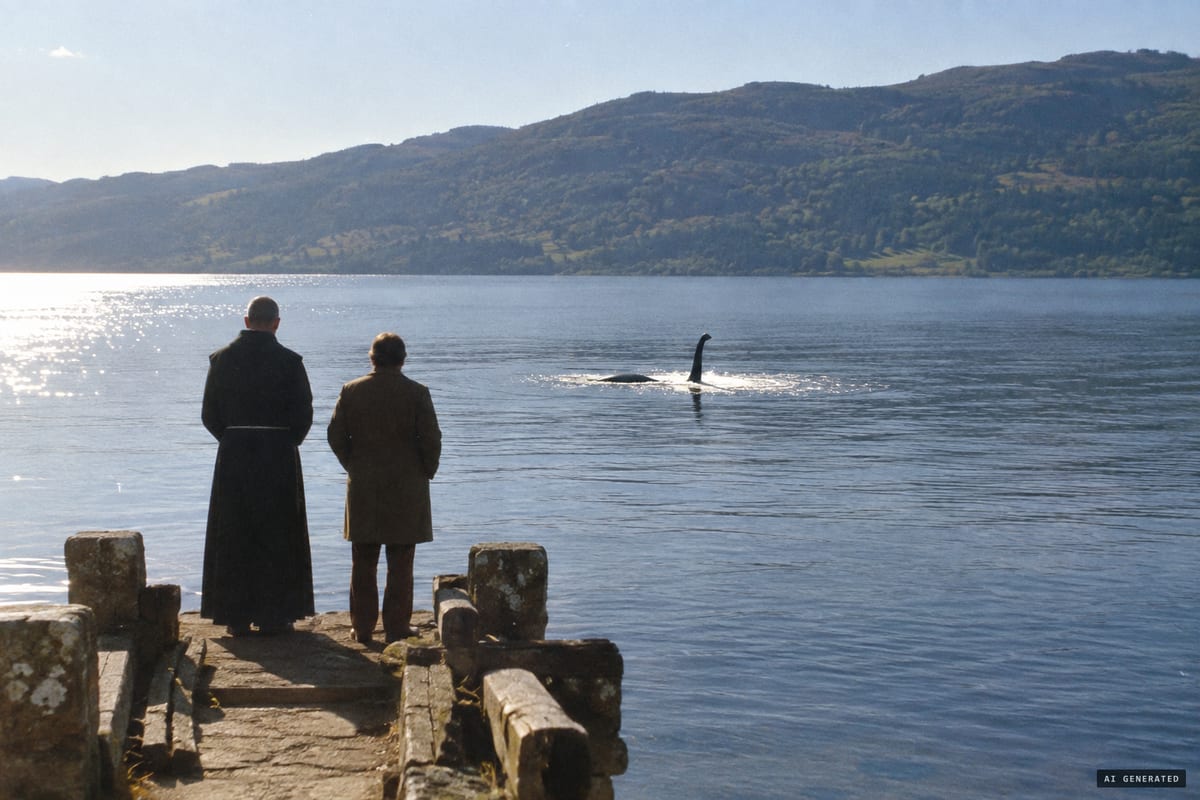 Fr Gregory Brusey and Roger Pugh: the Loch Ness sighting from Fort Augustus Abbey
Mid-October 1971. A calm, sunny morning at Fort Augustus, at the south-western end of Loch Ness. Fr Gregory Brusey, a Benedictine monk and master organist, walked the abbey grounds with his friend Roger Pugh, an organist visiting from London. The water was smooth. Then, about 200 yards out, it churned.
-
 Kawekaweau killed by an Urewera chief in the Waimana Valley
1870. The Waimana Valley, in the Urewera country of New Zealand's North Island. A chief pulled at the loose bark of a dead rātā tree. Underneath was a large lizard. He killed it.
-
 Lake Tianchi Monster: two heads chasing each other on Heaven Lake (1962)
Mid-August 1962. High on Changbai Mountain, the crater lake called Heaven Lake was free of ice. Zhou Fengying, of the Jilin Province meteorological equipment supply station, was watching through six-power binoculars. In the northeast corner, two heads broke the surface. Dog-sized. Blackish-brown.
-
 Johnnie, the St. Johns River Monster: Buck Dillard's Lake Dexter sighting, 1953
1953. Lake Dexter, a quiet widening of the St. Johns River beside Astor, Florida. River guide Buck Dillard had taken a Missouri couple out fishing. Then a head broke the surface.
-
 Paul DeMara's Okanagan Lake Videotapes
July 24, 1992. Okanagan Lake, off Kelowna, British Columbia. Paul DeMara was filming the water. He caught "something or some things" moving, "traveling just below the surface of the water at a fairly good speed." Then a boat towing a water-skier appeared in the frame. It crossed their path. The skier fell into the water near the object.
-
 The Amomongo Attacks at Sag-ang, La Castellana, Negros Occidental
June 2008. The foot of Mount Kanlaon, on the island of Negros. Over two nights, two men from Barangay Sag-ang were attacked separately. Salvador Aguilar said a "hairy creature with long nails" came at him. He escaped, with scratches on different parts of his body. Elias Galvez was rescued by his companions.
-
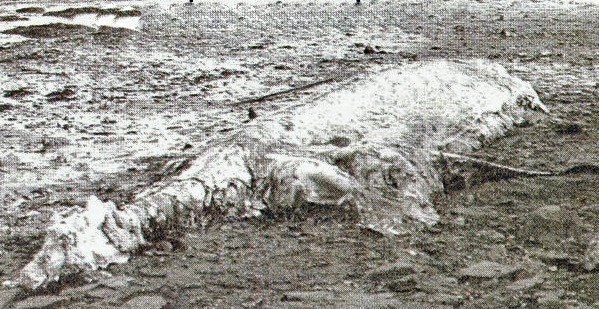 The Querqueville Sea Monster Carcass
February 1934. The beach at Querqueville, just west of Cherbourg. Something had washed up near the aviation camp. It was about 8 metres long. It had a long neck and a head that resembled a camel's. Its fins bore long white hair, like thick horsehair. Crowds came on foot, by bicycle and by car to see "la bête". Sailors from a harbour tug said they had seen the animal at sea six weeks before.
-
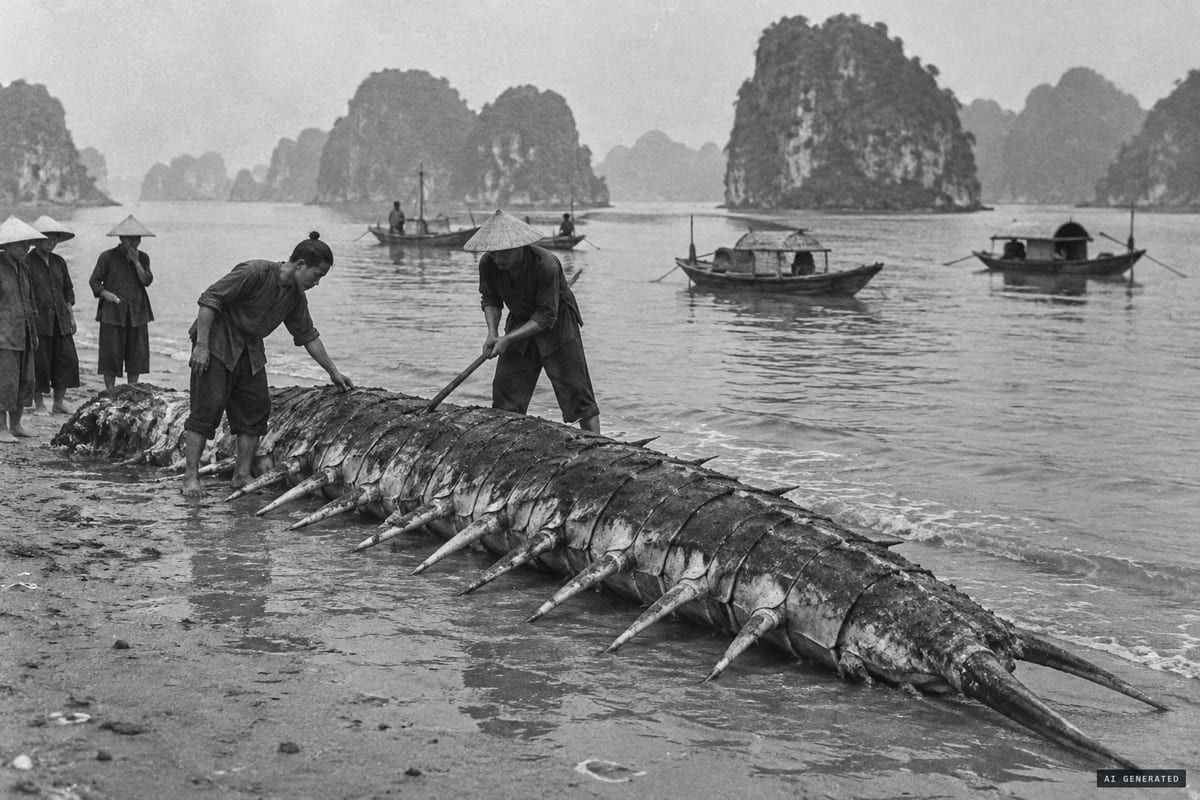 The Con Rít carcass of Hongay, Bay of Along, 1883
1883. The shore at Hongay, on the Bay of Along in Tonkin. Something has washed in from the sea. It is headless and rotting, about 60 feet long, built of identical armour-plated segments. Each segment carries a pair of spines. When a local strikes it with a stick, it rings like sheet-metal.
-
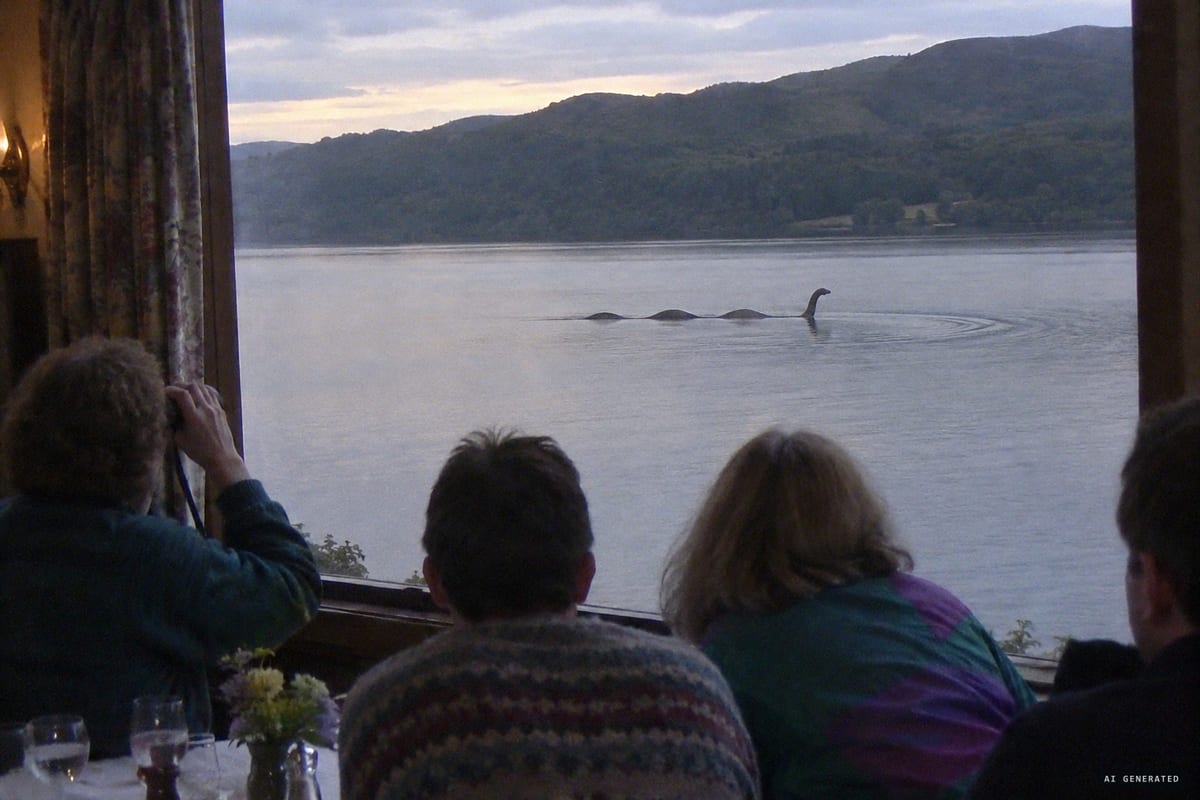 Lizzie of Loch Lochy: the three-humped creature seen from the Corriegour Lodge Hotel
September 1996. Loch Lochy. In the dining room of the Corriegour Lodge Hotel, guests left their dinner and rushed to the picture window. Something dark was out on the water. About twelve feet long. Three humps. A curved head.
-
 Kelly Nash's Cadborosaurus footage, Nushagak Bay, Alaska
Nushagak Bay, Alaska. 2009. A commercial fisherman named Kelly Nash pointed his camera at the water and kept it running for several minutes. What he filmed, by the accounts that followed, was not one animal but many. Ten to fifteen of them. Some smaller, like young.
-
 The "Oriental Yeti" of Sichuan
Sichuan province, China. 2010. Locals reported spotting what they thought was a bear. Hunters set a trap. What they caught was something else.
-
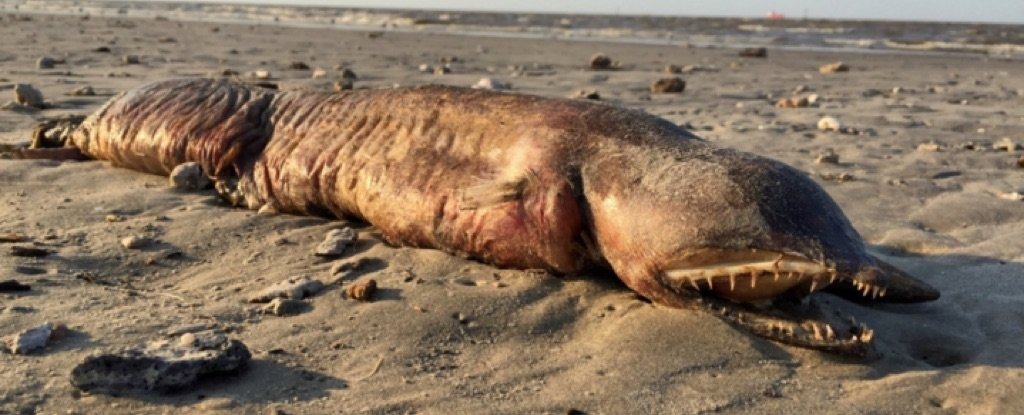 The Fanged, Faceless Sea Creature of Texas City After Hurricane Harvey (2017)
Two weeks after Hurricane Harvey. A beach in Texas City, Texas. Preeti Desai of the National Audubon Society was there to see what the storm had done to bird habitats. A couple of yards away lay something she could not name. Long. Bloated. Lined with fang-like teeth. And, it seemed, without a face.
-
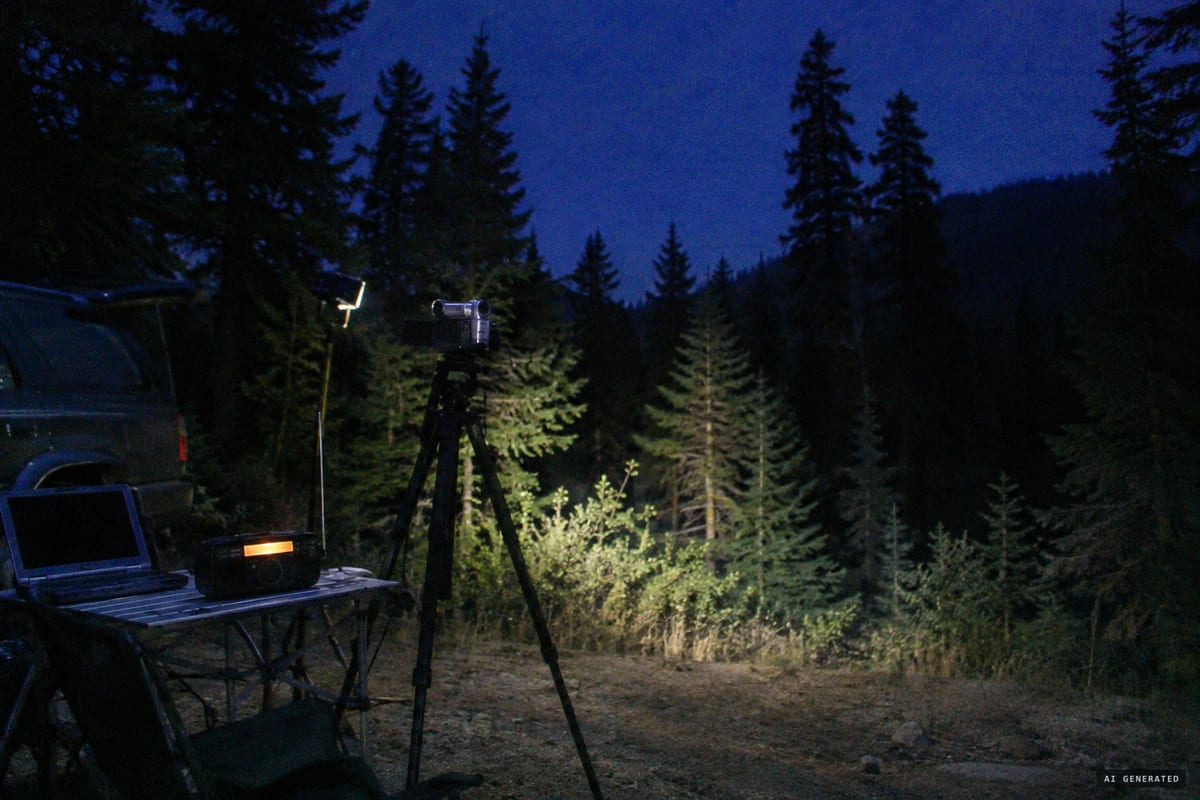 The Happy Camp "Captured Bigfoot" Claim
Summer 2005. Happy Camp, California. A Bigfoot promoter named Tom Biscardi was running a paid webcast expedition in the Siskiyou County woods. On the overnight radio show Coast to Coast AM, he said he was "98% sure" of a capture. Then, on a Friday in August, he went further. A Bigfoot, he said, was "in captivity." 8 feet. 400 lbs. Wounded, and nursed back by doctors.
-
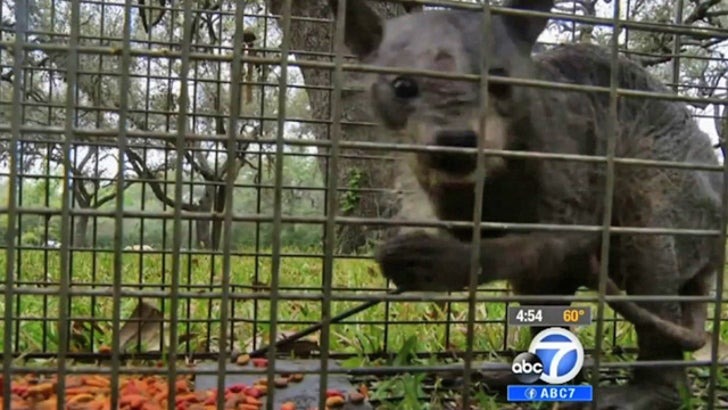 The Ratcliffe Chupacabra Capture
A Sunday night in Ratcliffe, DeWitt County, South Texas. A couple saw an animal eating corn in a tree on their property. The husband trapped it. Jackie Stock looked into the cage. "Bubba, that looks like a baby chupacabra."
-
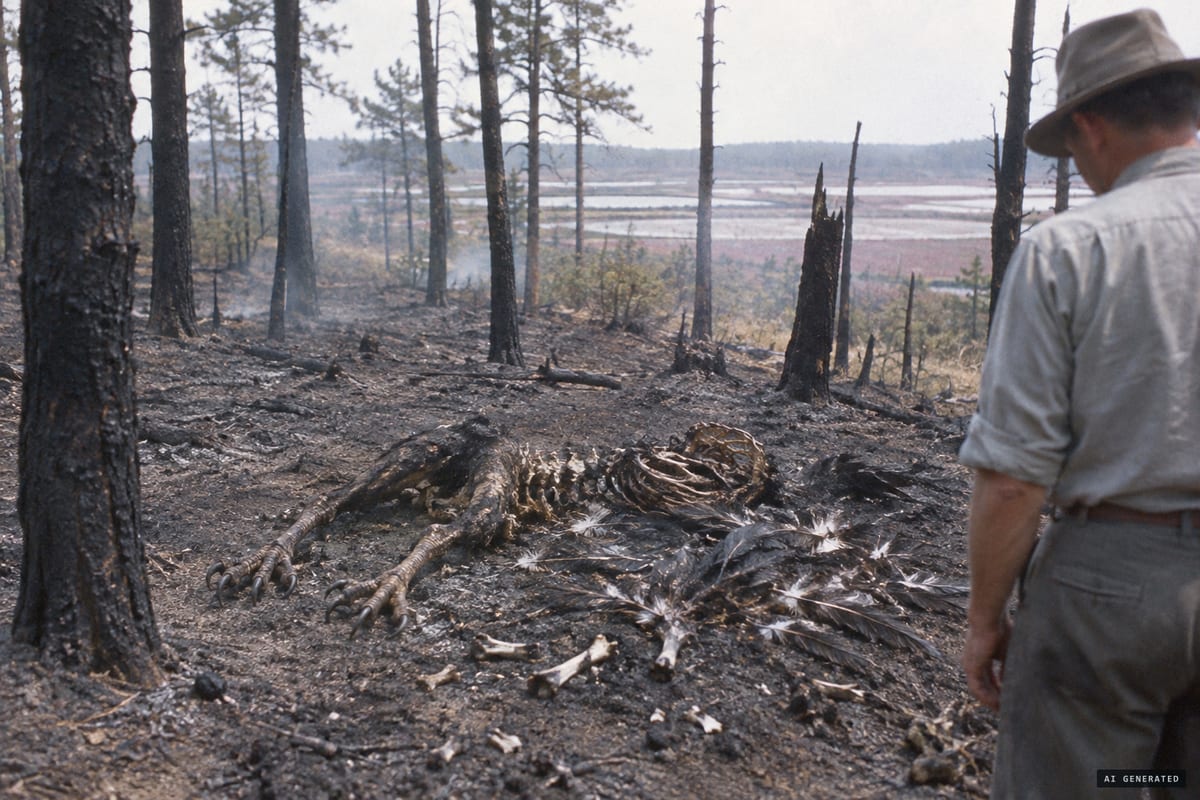 The Jersey Devil "Bones" Find, Wharton Tract
Summer, 1957. Fires burned through the Wharton Tract, deep in the pine barrens of central South Jersey. Near the cranberry bogs at Hampton Furnace, a member of the Bureau of Forestry found something in the burned ground. Hindlegs. Claws. A partial skeleton. Feathers.
-
 The Ingushetia "Female Yeti"
December 2011. The mountains of Ingushetia, in Russia's North Caucasus. A hunter fired at what he took for a bear as it seized a ram. The animal rose onto two legs and disappeared into the forest. Days later, Interfax reported that border guards had caught it. A female, said minister Bagaudin Marshani. Almost two metres tall. Upright like a human. "Honestly, I've never seen anything like it."
-
 George, the mountain pygmy possum: a fossil species found alive on Mount Hotham
August 1966. A ski lodge on Mount Hotham, high in the Victorian Alps. Skiers noticed something in the hut that did not belong. It looked like a strange rat. Some say it was stealing the bacon from their stove.
-
 The Mineral Point Vampire
March 1981. Mineral Point, Wisconsin. Patrol officer Jon Pepper drove past Graceland Cemetery on a routine night patrol and saw someone standing among the graves. He went in. He got within 15 feet and called out. The figure did not answer. It just stood there.
-
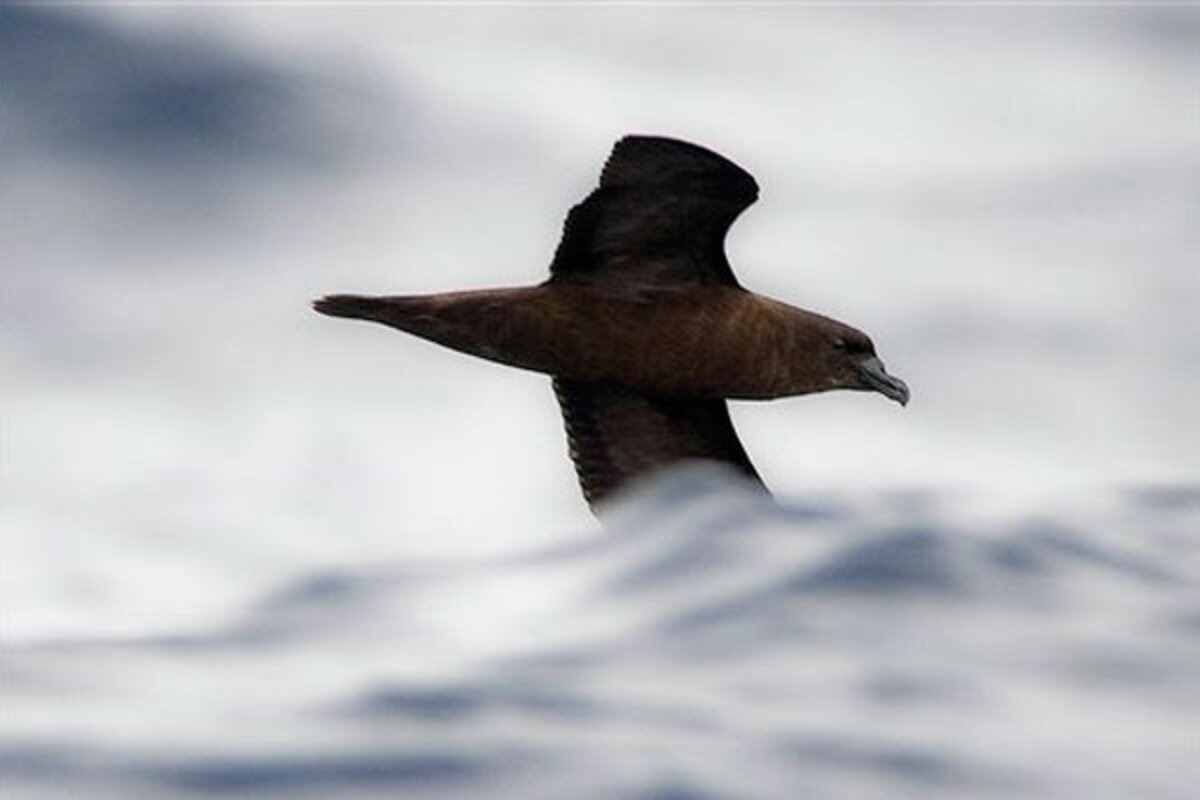 The Fiji petrel photographed at sea for the first time off Gau Island, Fiji
May 2009. A chartered sport-fishing boat waits about 25 nautical miles south of Gau, in Fiji. Behind it spreads a pungent slick of fish oil and offal.
-
 The Santa Marta sabrewing rediscovered
Mid-2022. The Sierra Nevada de Santa Marta, northern Colombia. Yurgen Vega was leaving the area where he had been working. A hummingbird caught his attention. He got out his binoculars. It was a Santa Marta sabrewing.
-
 Gissar Range yeti: Nina Grineva's night-watch sighting
August 1980. The Gissar mountains of Soviet Tajikistan. An expedition of yeti hunters kept watch through the night. Nina Grineva was on the vigil. And she saw it. A yeti, six feet high.
-
 Francis McPartland's seal-like animals at Swan Bay, Great Lake, Tasmania
The Great Lake. High on Tasmania's Central Plateau. Around 1870, Francis McPartland looked out across the water near Swan Bay and saw three or four animals. Together. Splashing about.
-
 The Sandusky Bay sea serpent crated by two Cincinnati men
21 July 1931. Late in the day, off Sandusky, Ohio. Two Cincinnati men said a huge serpent rose out of the Lake Erie waters beside their boat. They said they hit it over the head twice with an oar. Then they towed it ashore. On the beach, it began to stir. So they coiled it into a packing box and nailed it tightly shut.
-
 The Trussle and Rumboll sighting, Lake Nahuel Huapi (c. 1976 to 1978)
An autumn afternoon on Lake Nahuel Huapi. The water was very calm. Near Bariloche, Coca and Vincent Trussle lived at Cari Hue, a house with an exceptional view of the lake. They saw something very strange. Barely a kilometre closer to Bariloche, their friends Hilda and Bill Rumboll are said to have seen the same thing at the same time.
-
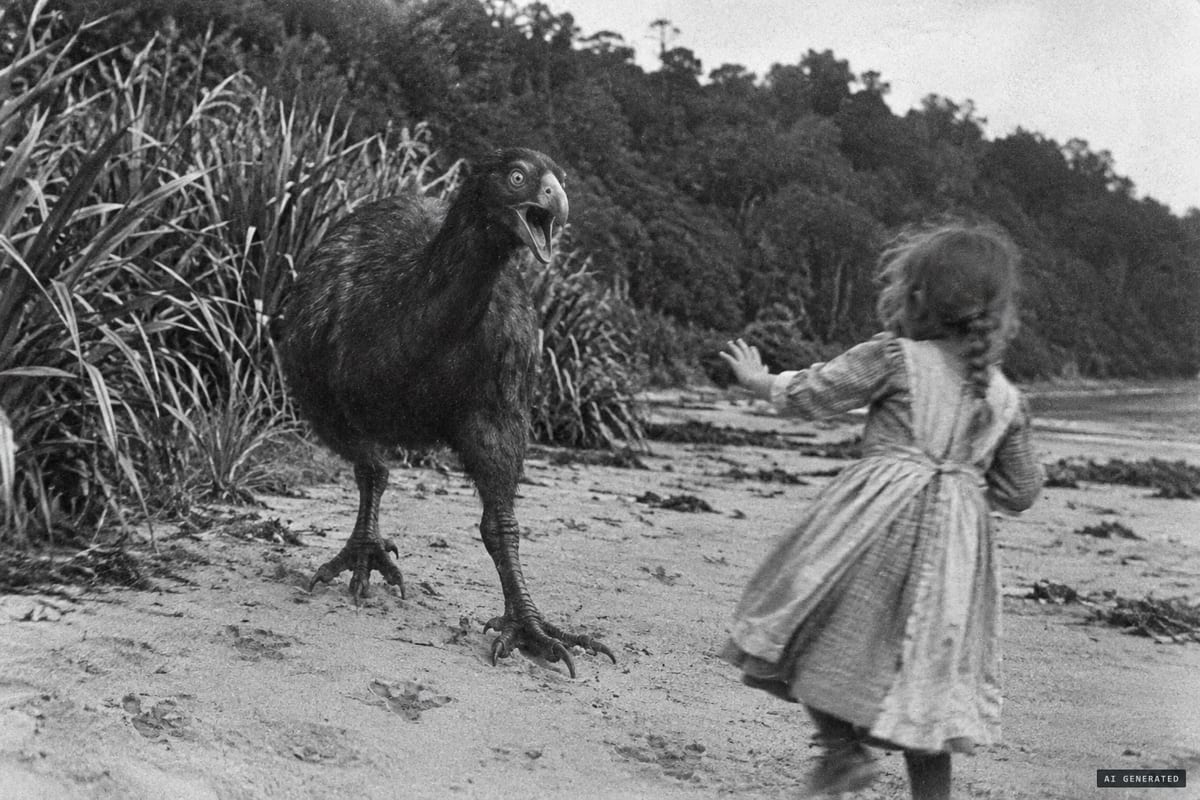 Alice McKenzie touches a big navy-blue bird on the sand at Martins Bay
Martins Bay, New Zealand. Around 1880. The most remote settlement in the country. A young girl named Alice McKenzie found a big bird lying on the sand, sunning itself. Its plumage was navy-blue. It had no tail. She stroked its back. She tried to tie its leg. Then it rose with a harsh, grunting cry and pecked at her. She ran home.
-
 The Barkey Sighting and the Lake De Smet Sea Serpents
Lake De Smet, Wyoming. A ranch couple were fixing fence on the banks. They were skeptics. They had lived near the lake for 25 years and had never seen the serpents. Then they saw two. Mrs. Barkey said "they looked like a long telephone pole with lard buckets attached." The animals made a great commotion and swam as fast as a horse could trot.
-
 Anatoly Pechersky and son see the Aidakhar in Lake Kok-Kol
Summer 1975. Lake Kok-Kol, in the Karakistak valley of southern Kazakhstan. Anatoly Pechersky and son Volodya were camping on the shore. They had come looking for something. Local tradition called it Aidakhar. The dragon.
-
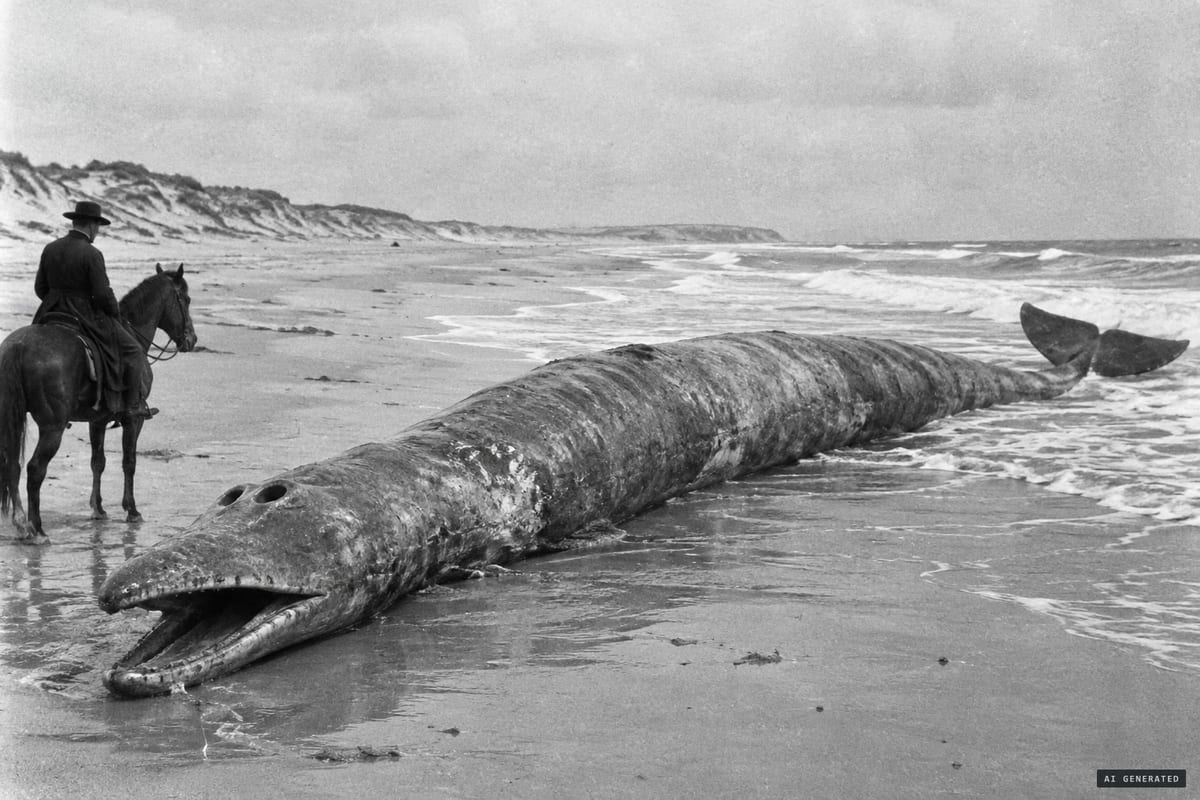 The Bishop of Adelaide's Dead Sea Serpent at Coffin Bay (1891)
Late 1891. The Anglican Bishop of Adelaide was riding along the sea beach near Coffin Bay, South Australia. In a letter to a friend, he said he came across a dead sea serpent. About 60 ft long. A 5 ft head like that of an enormous snake. Two blowholes on top. No teeth. A tail like a whale's.
-
 The Webb brothers' hairy man at Pearces Creek
Night in the ranges above the Cotter River. Three Webb brothers were camped near Pearces Creek, out looking for their cattle. Something was walking along the far side of the range. Then it came down toward them, breathing heavily. The dogs became terrified and crouched against the men. Joseph Webb saw it. He sang out, "here the thing is," and fired.
-
 The St. François Xavier sea serpent off Point Stephens, 1925
Monday, 2 February 1925. About 6:30 pm. The French steamer St. François Xavier was running south from Nouméa to Newcastle, abeam of the Port Stephens lighthouse on the coast of New South Wales. Several officers and part of the crew looked over the side. There, they reported, lay a huge dark yellow sea serpent. About 60 ft long. Lying in five coils. Within a few feet of the ship.
-
 The Moehau Hairy Man: Vera Marshall's Sighting and J. P. Grey's Expedition
Early October 1969. The Moehau Range, at the northern end of New Zealand's Coromandel Peninsula. Mrs Vera Marshall of Sydney was on holiday with her husband, walking a bush track. Then she came face to face with something much like a gorilla. When it saw them, it took off into the bush.
-
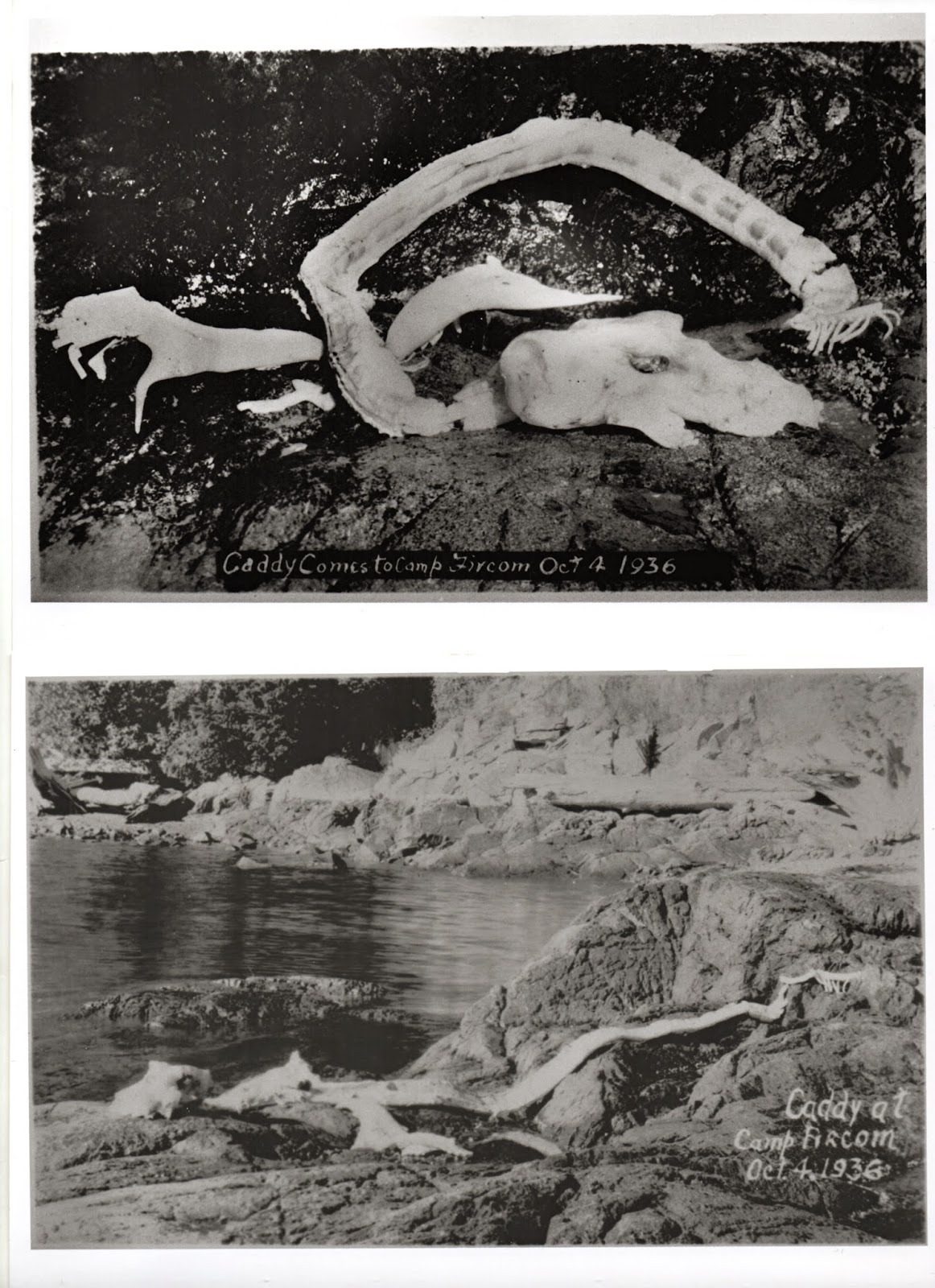 The Camp Fircom "Caddy" carcass postcards
October 4, 1936. A beach at Camp Fircom, a church camp on Gambier Island in British Columbia. Something lay there. A skull-like head with a hole for an eye. A long, thin, segmented body. Two finger-like projections at the front.
-
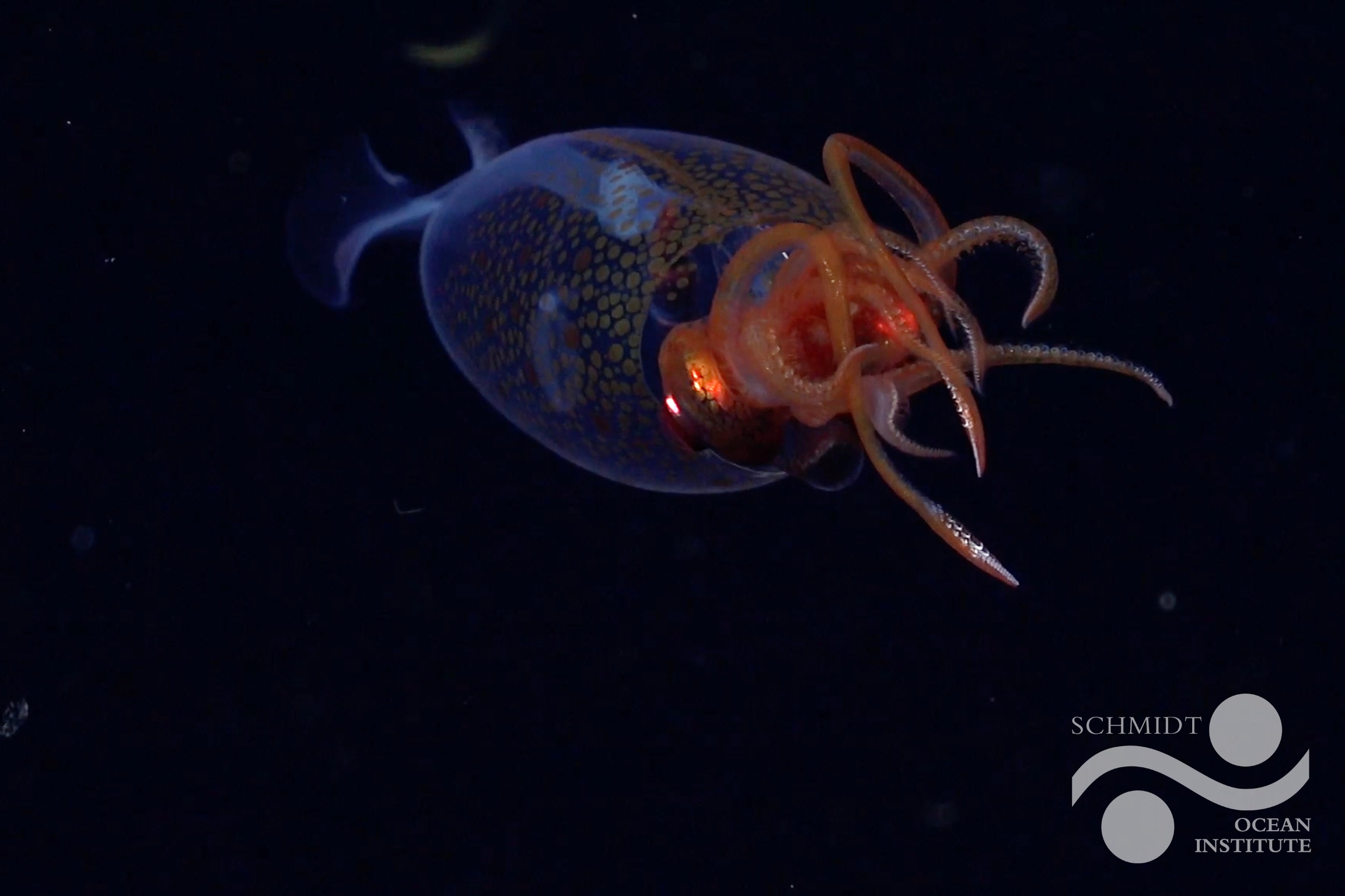 First footage of a live colossal squid, filmed by ROV SuBastian
9 March 2025. The South Atlantic, near the South Sandwich Islands. About 600 m down, the cameras of ROV SuBastian found a ghostly shape hovering in midwater. A juvenile squid, about 30 cm long. Its body was clear as glass. Its eyes shone. Its arms fanned out from its head.
-
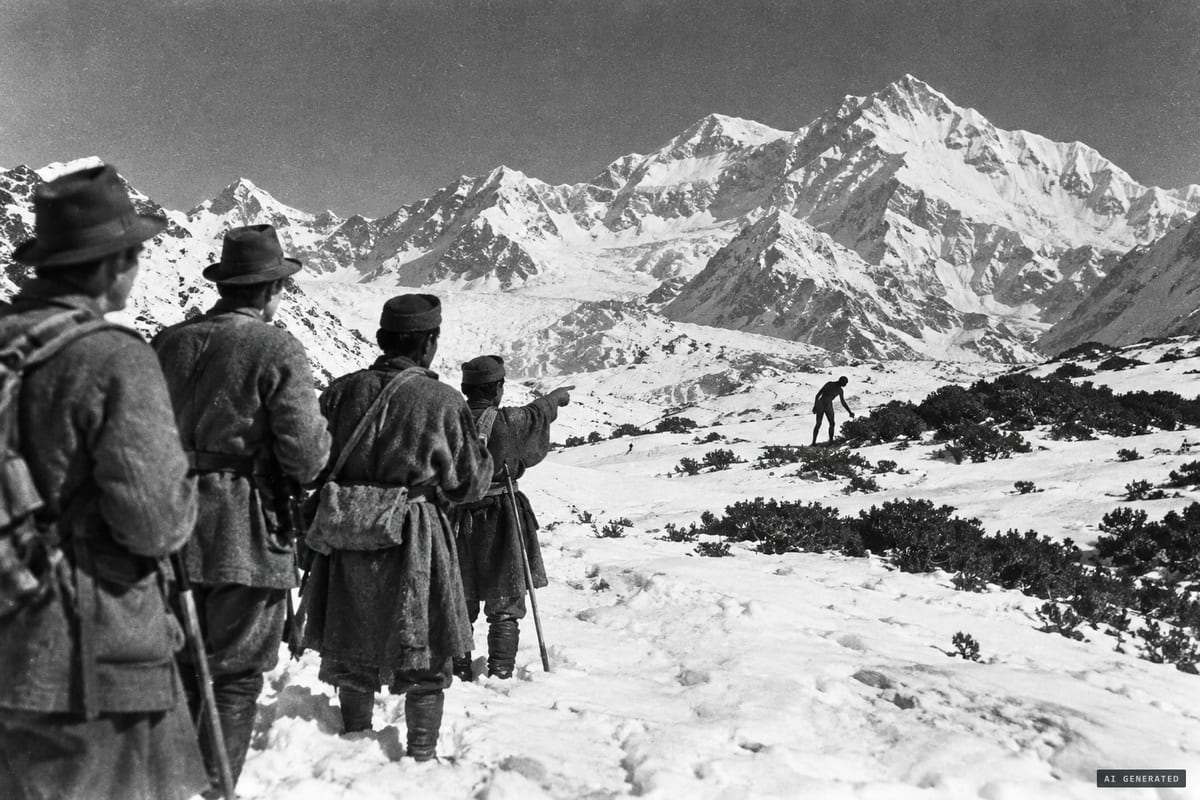 N. A. Tombazi's Yeti Sighting near the Zemu Glacier, Sikkim Himalaya (1925)
1925. The southern glaciers of Kangchenjunga, in the Sikkim Himalaya. About 15,000 ft up, the porters of a photographic expedition pointed across the snow. Something was moving out there.
-
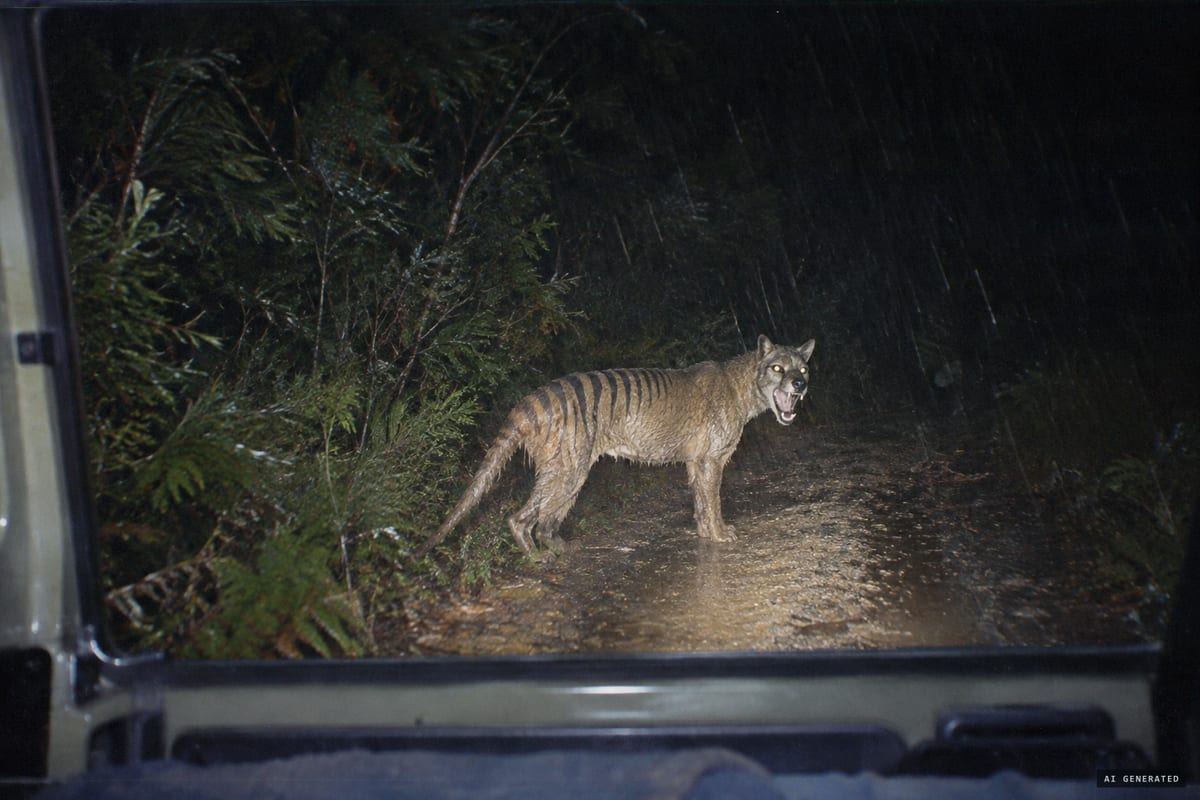 Hans Naarding's thylacine sighting near Togari, Tasmania (1982)
Autumn 1982. A disused forest track near Togari, in Tasmania's far north-west. A howling gale. Horizontal rain. Hans Naarding of the Tasmanian Parks and Wildlife Service lay asleep in the back of his Landcruiser.
-
 The Barque Pauline Sea Serpent Off Cape Roque
8 July 1875. The barque Pauline was off Cape Roque, Brazil, carrying coal to Zanzibar. Her crew watched three large sperm whales. Then one of them was caught. Two coils of what seemed a huge serpent wrapped its body, head and tail standing 30 feet clear. For about 15 minutes it went on. Then the serpent dragged the whale under, head first.
-
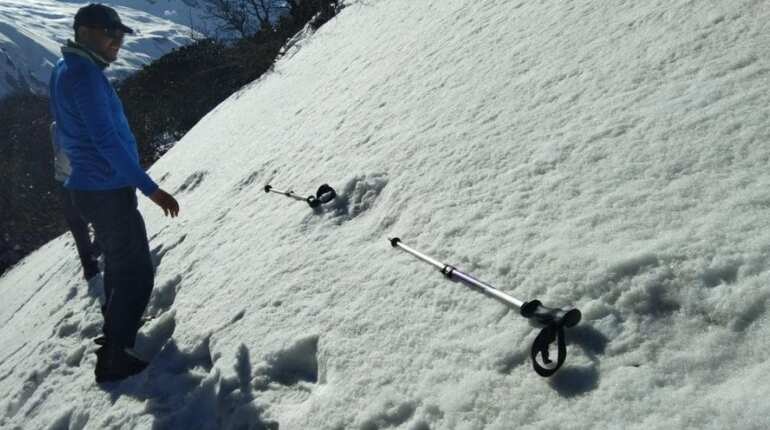 Indian Army "Yeti" footprints near Makalu Base Camp (2019)
April 9, 2019. An Indian Army mountaineering team is acclimatising high in the Barun valley of eastern Nepal, close to Makalu Base Camp. In the snow, they find a line of enormous impressions. Each one measures 32 by 15 inches. They photograph them. They film them.
-
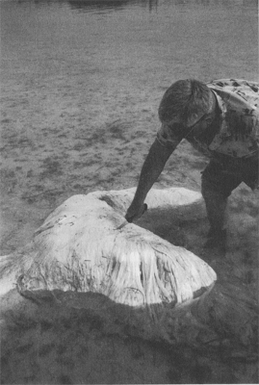 The Bermuda Blob: Teddy Tucker's Carcass at Mangrove Bay
Bermuda. 1988. A pale mass washed into Mangrove Bay, at the island's western end. Teddy Tucker, a renowned local diver and fisherman, went to look.
-
 Lachlan Stuart's Three Humps Photograph, Loch Ness
Loch Ness. A July morning in 1951. Lachlan Stuart, a Forestry Commission worker, had got up at about 6:30 to milk his cow. Out on the water, something moved. He took it for a motorboat. Then a second hump rose behind the first.
-
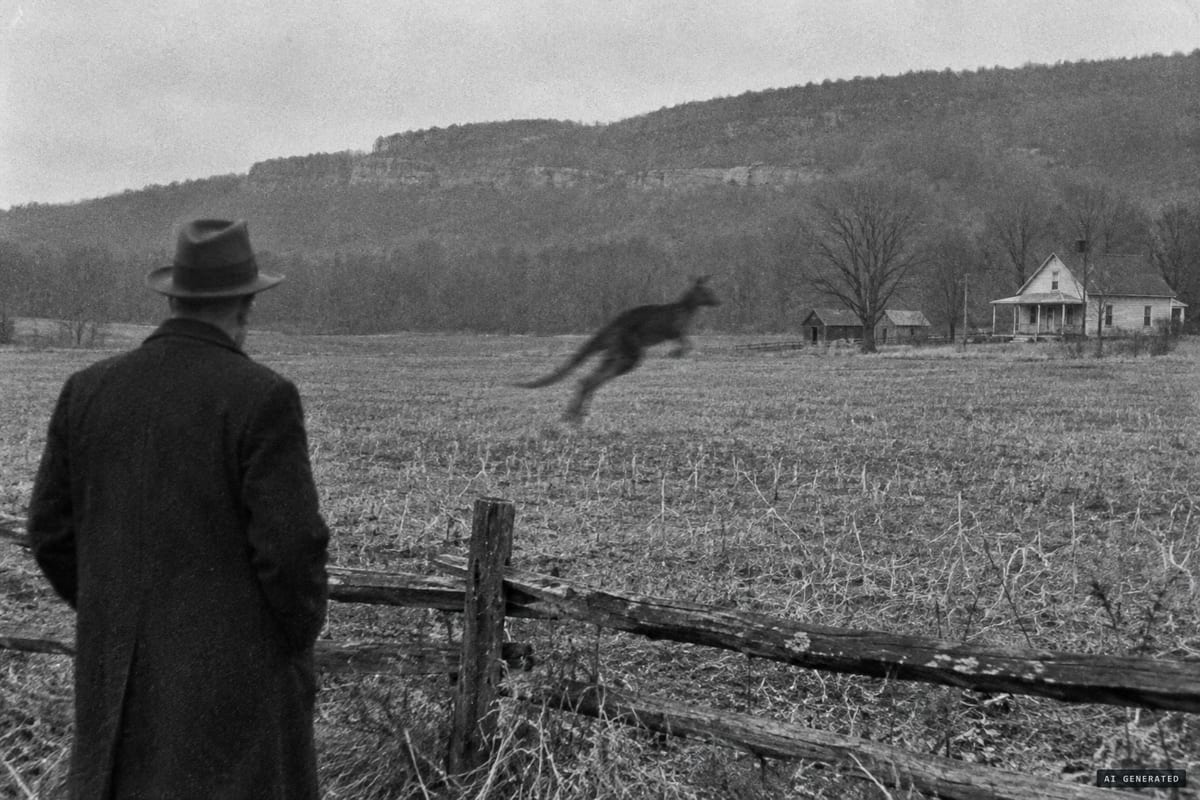 The South Pittsburg Killer Kangaroo
January 1934. In the Hamburg community near South Pittsburg, Tennessee, something was killing the animals. German police dogs. Geese. Ducks. Then the Rev. W. J. Hancock saw it cross a field. "It was as fast as lightning and looked like a giant kangaroo running and leaping across the field," he said.
-
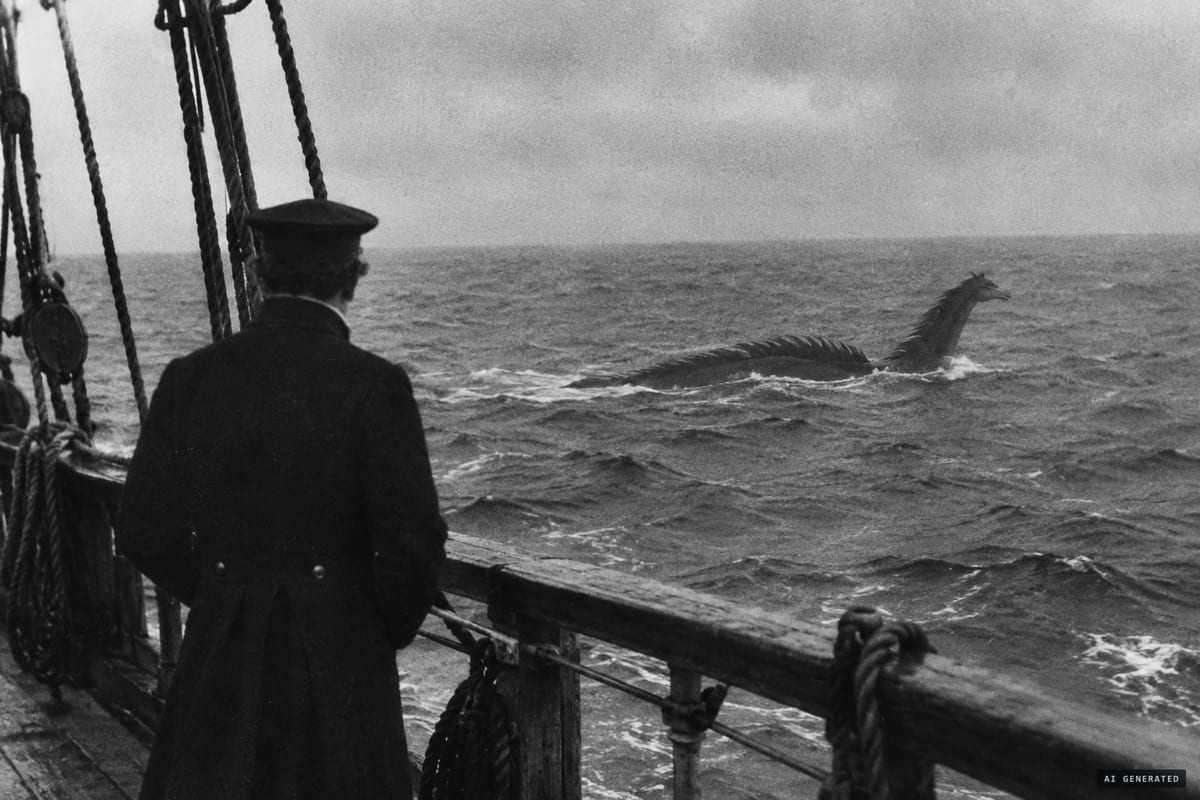 The HMS Plumper Sea Serpent
New Year's Eve, 1848. A newly commissioned Royal Navy ship, HMS Plumper, was in the open Atlantic, nearly due west of Oporto. It was morning. An officer on board saw something in the water. A long black creature with a sharp head. It moved slowly, about two knots. Along its back, something like a mane kept washing about in the sea. Then the ship sailed on, and the creature fell too far astern to examine.
-
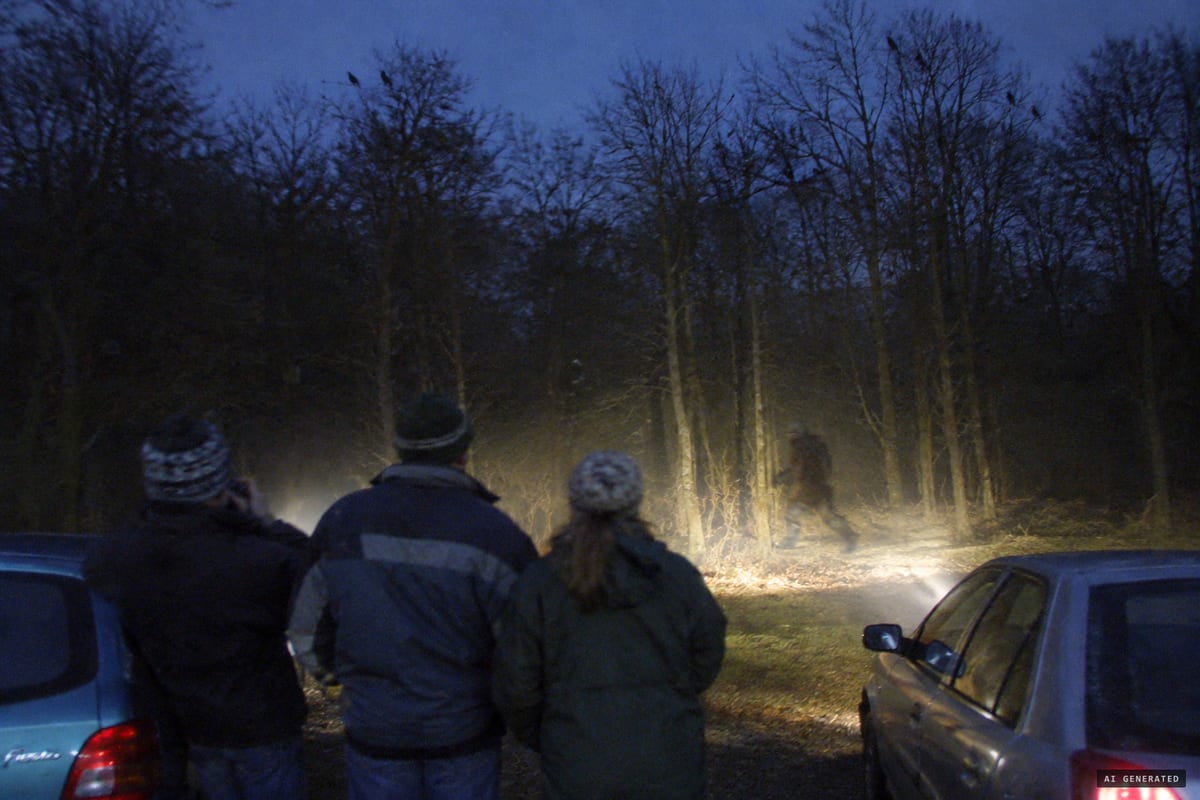 The Bolam Lake Beast: the CFZ Expedition Sighting in Northumberland
Bolam Lake, Northumberland. January 2003. A team from the Centre for Fortean Zoology had come to hunt a creature that local people said walked the woods. On Saturday 18 January, as dusk gathered over the car park, the drivers switched their headlights to full beam. Eight people watched the trees. Five of them, including CFZ director Jon Downes, saw an enormous man shaped figure run from right to left, disappear, and then run back again.
-
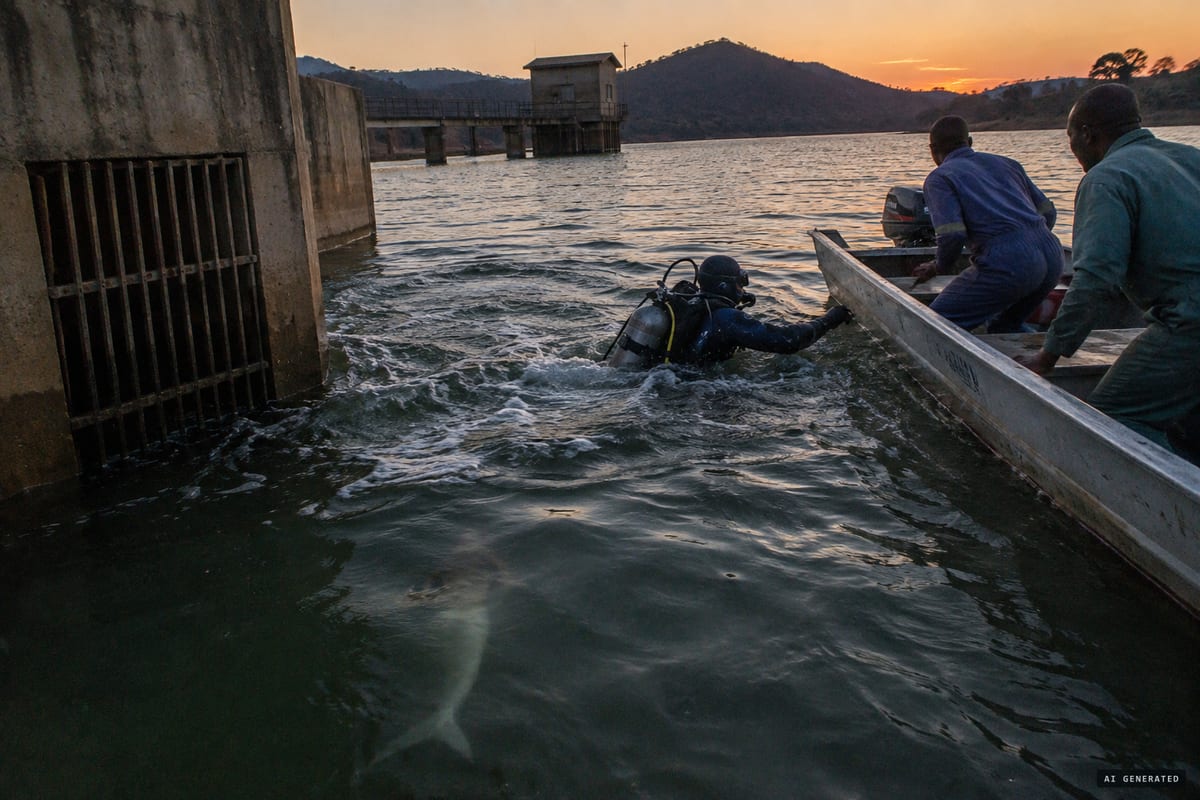 The Zimbabwe Dam Mermaids of Gokwe and Osborne Dam
Two dams in Zimbabwe. Pumps that would not start. Workers who would not go back.
-
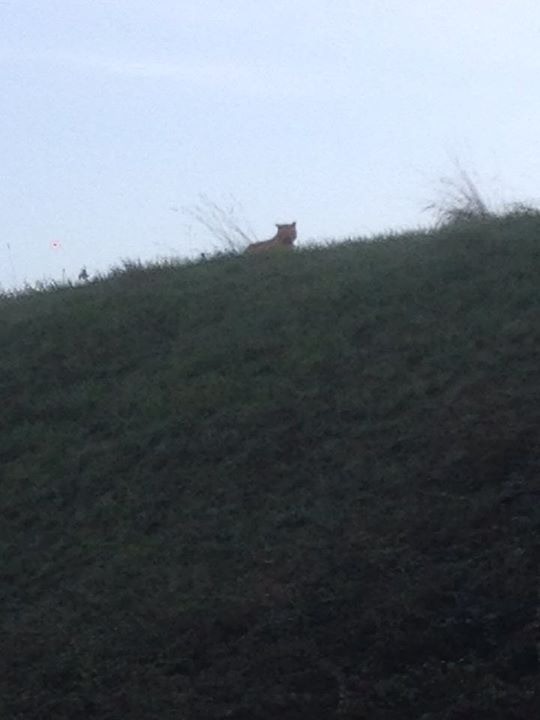 The Montévrain "tiger", Seine-et-Marne
Thursday 13 November 2014. Montévrain, about 40 km east of Paris. Julie Berdeaux pulled into the car park of the Intermarché supermarket and parked against a large earth mound. Then she saw a big beast climbing it. She stayed in her car. She took photos. At first she really thought it was a lynx.
-
 Takitarō: four climbers see giant fish in Lake Ōtori, Yamagata (1982)
July 1982. Four climbers rest on the slope of Mount Itō in Yamagata Prefecture. Far below lies Lake Ōtori, a deep lake held back by an old landslide. Someone looks down. V-shaped wakes are moving across the west side of the water. Through binoculars, the climbers see what is making them. Several giant fish. One is judged by eye at about 2 metres.
-
 The Arowhana kumi: a giant lizard on W. D. Lysnar's station
September 1898. Arowhana station, in the bush inland from Gisborne. A Māori bushman was at work when he was startled by something moving toward him. A huge lizard. Some 5 ft long. Advancing.
-
 Memphré: the 1816 Georgeville sightings recorded by Ralph Merry IV
1816. Lake Memphremagog, stretching from Quebec south into Vermont. Settlers around Georgeville began to report something in the water. A serpent, about 30 feet long. A horse-shaped head. A neck held above the water line.
-
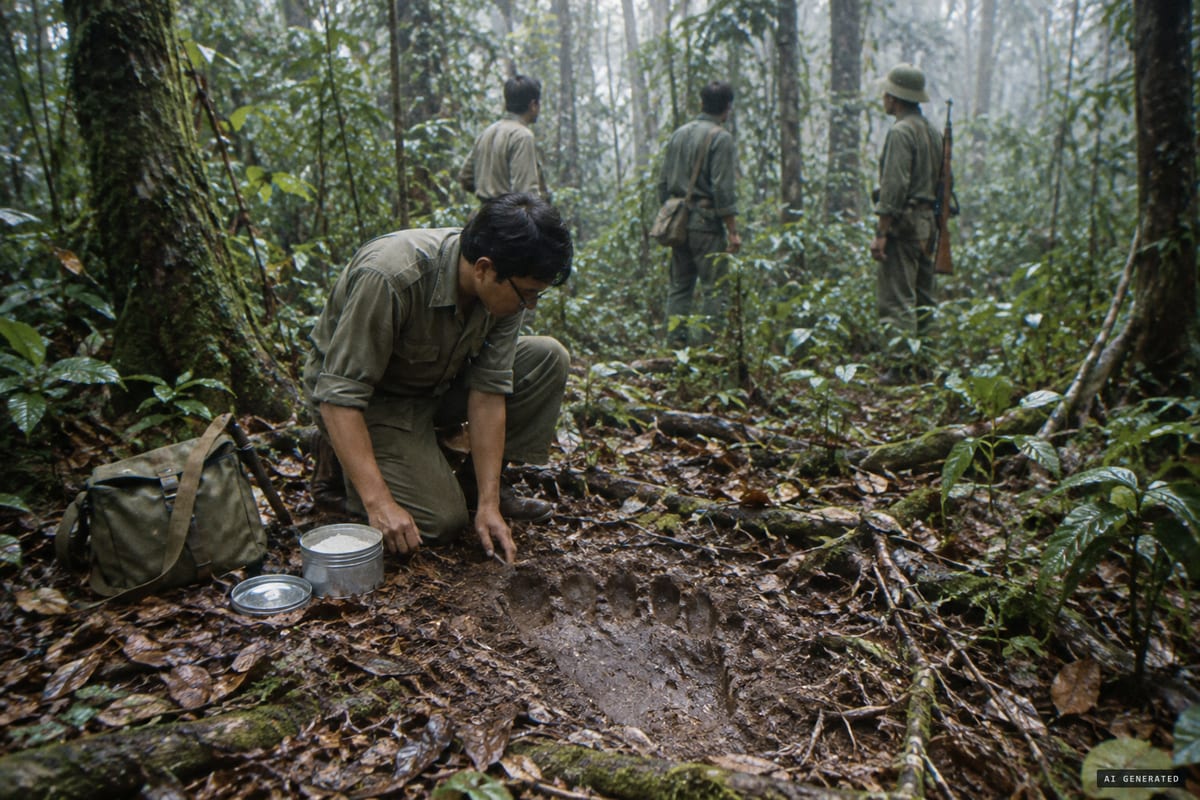 Professor Võ Quý's người rừng footprint cast, Central Highlands, 1974
1974. The war is still on. In the highlands north of Kontum, North Vietnamese and Viet Cong soldiers keep reporting the same thing. Something tall and hairy, walking upright. The reports grow so frequent that a scientific survey is ordered. General Hoàng Minh Thảo wants to know what the local people know of the người rừng, the forest people.
-
 The Schooner Pearl and the Giant Squid, Bay of Bengal 1874
10 May 1874. The Bay of Bengal, east of Ceylon. An hour before sunset, the little schooner Pearl lay becalmed on a flat sea. Half a mile off, a great brownish mass rose slowly out of the water. Captain James Floyd took a rifle and fired. A Newfoundlander in his crew warned him it was a squid.
-
 Julie Green's Memorial Day Sighting of the Pend Oreille Paddler
Memorial Day, 1985. Lake Pend Oreille, North Idaho. Julie Green, a teacher from Coeur d'Alene, was out on the water with friends in the mid afternoon sun. Then a large V-shaped wave crossed about 200 yards in front of her boat. Something was in the water ahead of them. It was undulating, coming in and out of the water.
-
 The Lake Manitou Monster (Meshekenabek), Fulton County, Indiana, 1838
Summer 1838. Fulton County, Indiana. Men named Robinson were fishing on Lake Manitou when something moved through the water, swimming rapidly. They judged it must have measured sixty feet. They made a hasty retreat to the shore, much alarmed.